民用航空法修订

Search documents
新修订的民用航空法正式公布
Xin Lang Cai Jing· 2025-12-28 22:35
Core Viewpoint - The revised Civil Aviation Law, effective from July 1, 2026, aims to enhance passenger rights and promote high-quality development in the civil aviation sector [1][2]. Group 1: Legislative Changes - The revised Civil Aviation Law expands from 215 to 262 articles while maintaining the same number of chapters, focusing on comprehensive management of aviation operations, safety, and service [1]. - A new chapter on "Development Promotion" has been added to provide institutional guarantees and policy support for the growth of the civil aviation industry [1]. Group 2: Passenger Rights Protection - The law emphasizes the protection of passenger rights, particularly in key areas of civil aviation services, to enhance public satisfaction [2]. - It mandates that public air transport companies must adhere to fairness principles when formulating transport conditions and must disclose these terms to passengers [2]. - In cases of flight delays or cancellations, airlines and airport operators are required to minimize disruptions and improve communication regarding passenger services, including ticket changes and accommodation arrangements [2]. Group 3: Compensation and Obligations - The law standardizes compensation responsibilities, applying the same limits for both domestic and international air transport [3]. - It strengthens the obligations of public air transport companies to protect passenger personal information and effectively handle complaints [3].
民用航空法修订 突出航空安全 加强旅客权益保障
Yang Shi Wang· 2025-12-28 12:24
Core Points - The newly revised Civil Aviation Law was officially announced on December 27, consisting of 16 chapters and 262 articles, addressing various aspects such as flight safety, airworthiness management, general aviation, low-altitude economy, passenger rights protection, supervision, and legal responsibilities [1][3] Group 1: Legislative Background - The current Civil Aviation Law was established in 1995 and has been in effect for thirty years, necessitating updates to meet the evolving needs of the aviation industry [3] - The rapid development of China's civil aviation industry since the 18th National Congress has led to improvements in industry scale, service capacity, and safety levels, highlighting the inadequacies of the existing law [3] Group 2: Key Revisions - The revised law emphasizes aviation safety as a top priority, improving safety management systems for critical areas [3] - A new section on "Passenger Rights Protection" has been added, requiring airlines to enhance transportation contract terms and personal information protection, and to standardize processes for informing passengers about flight delays or cancellations [3] Group 3: Safety Enhancements - The law enhances airworthiness management by regulating the entire chain of aircraft design, production, and maintenance [3] - It strengthens institutional designs in flight safety, air defense safety, and operational safety, and introduces a new chapter on "Civil Aviation Security," improving security check systems [3] - The law increases penalties for violations that threaten aviation safety, passenger rights, and market order, aiming to safeguard aviation operations [3]

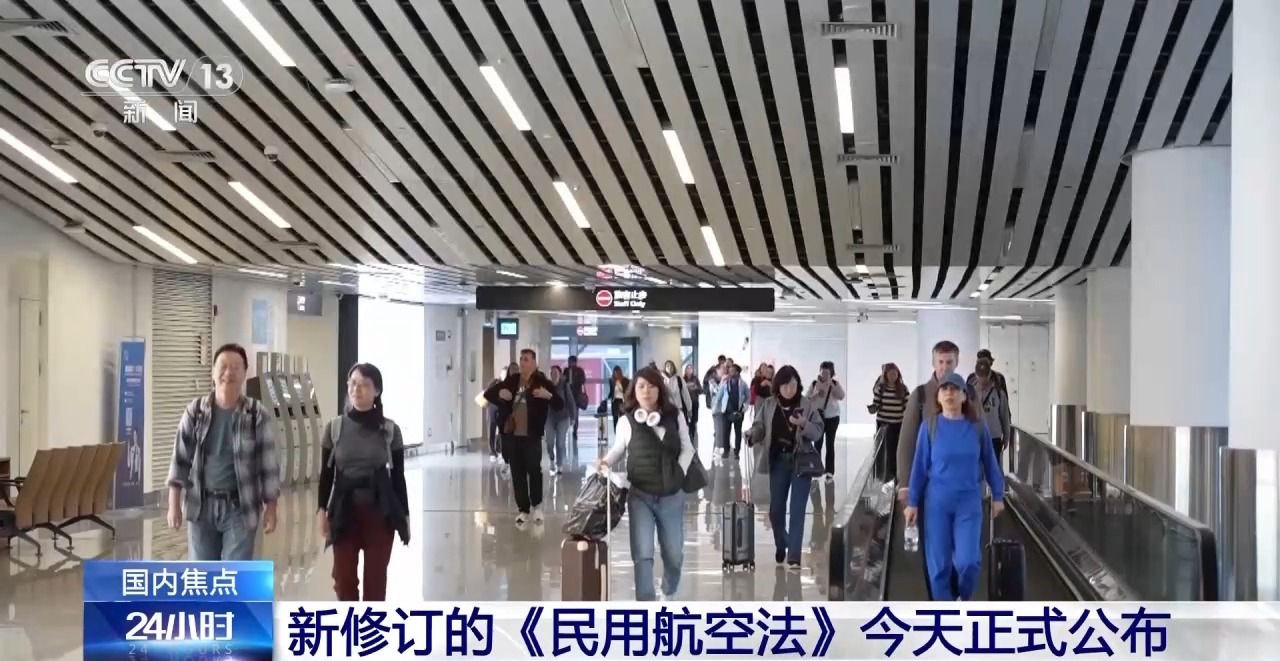
新修订的民用航空法正式公布 适应行业发展新形势
Yang Shi Xin Wen· 2025-12-27 22:25
Core Viewpoint - The newly revised Civil Aviation Law, effective from July 1, 2026, marks a significant advancement in the legal framework for civil aviation in China, providing robust legal support for the high-quality development of the aviation industry [1][5]. Group 1: Key Features of the Revision - The revised Civil Aviation Law consists of 16 chapters and 262 articles, addressing various aspects such as flight safety, airworthiness management, general aviation, low-altitude economy, passenger rights protection, supervision, and legal responsibilities [1][3]. - The revision emphasizes aviation safety as a top priority and aims to improve safety management systems for critical areas [3]. - The law aims to balance national conditions with international regulations, enriching the content to better support the high-quality development of the aviation sector [1][5]. Group 2: Industry Context and Necessity for Revision - The existing Civil Aviation Law, established in 1995, has been in place for thirty years and is no longer fully aligned with the current needs of the rapidly developing aviation industry [5]. - Since the 18th National Congress of the Communist Party, China's civil aviation sector has seen significant growth in scale, service capacity, and safety levels, necessitating updates to the legal framework [5]. - The comprehensive revision is expected to clarify the boundaries between government and market roles, address development challenges, and eliminate systemic barriers, thereby fostering a more conducive environment for technological innovation and industry upgrades [7].
受权发布丨中华人民共和国主席令(第六十五号)
Xin Hua Wang· 2025-12-27 11:28
Group 1 - The Civil Aviation Law of the People's Republic of China has been revised and approved by the 19th meeting of the Standing Committee of the 14th National People's Congress on December 27, 2025 [2] - The revised law will come into effect on July 1, 2026 [2]
中国修改民用航空法 促进民航领域国际合作和对外开放
Zhong Guo Xin Wen Wang· 2025-12-27 09:02
Core Viewpoint - The revised Civil Aviation Law in China, effective from July 1, 2026, aims to enhance international cooperation and openness in the civil aviation sector, providing institutional guarantees and policy support for the industry's development [1][2]. Group 1: International Cooperation and Market Openness - The new law emphasizes equal benefit and win-win cooperation, promoting international collaboration in civil aviation and participation in the formulation of international aviation standards [1]. - It aims to advance high-level openness in the civil aviation transport market and enhance international competitiveness, including provisions for opening air rights based on agreements with foreign governments [1]. Group 2: Low-altitude Economy Development - The law includes multiple institutional arrangements for the development of the low-altitude economy, clarifying the national policy direction to promote this sector [1]. - It mandates measures to optimize low-altitude airspace resource allocation and the establishment of regulatory service platforms for civil low-altitude flight and applications [1]. Group 3: Aviation Safety and Passenger Rights - The revised law strengthens civil aviation safety assurance systems, granting captains the authority to take necessary measures in special circumstances [2]. - It includes a dedicated chapter on safety management responsibilities, security checks, and the formulation and filing of safety plans, prohibiting actions that jeopardize civil aviation transport safety [2]. - Passenger rights protection is highlighted, requiring airlines and airport operators to minimize delays or cancellations due to their own reasons and to enhance communication regarding ticket changes and accommodation arrangements for affected passengers [2].
新修订的民用航空法,明年7月1日起施行
Xin Lang Cai Jing· 2025-12-27 05:18
Core Viewpoint - The newly revised Civil Aviation Law will strengthen the management of civil unmanned aerial vehicles (UAVs) and will take effect on July 1, 2026 [1] Group 1: Management of Civil UAVs - The revised Civil Aviation Law mandates that entities involved in the design, production, import, maintenance, and flight activities of civil UAVs must apply for airworthiness approval from the relevant civil aviation authority, except for those exempted by regulations [1] - Organizations producing civil UAVs are required to assign a unique product identification code to each UAV they manufacture, in accordance with national regulations [1] Group 2: Aviation Safety Enhancements - The revised law explicitly prohibits the use of lasers that could interfere with visual navigation aids at airports and lists specific behaviors that could negatively impact the electromagnetic environment of airports [1] - It allows aviation transport companies and civil airports to take necessary measures if their safety operation capabilities are insufficient [1] - The law also includes improvements to legal responsibilities and related provisions [1]
人大常委会 | 新修订的民用航空法自2026年7月1日起施行
Xin Hua She· 2025-12-27 04:29
Core Points - The National People's Congress Standing Committee approved a revised Civil Aviation Law, effective from July 1, 2026, aimed at regulating civil aviation activities and ensuring safety and order in the sector [1][2]. Group 1: Legislative Changes - The revised Civil Aviation Law consists of 16 chapters and 262 articles, aligning with the central government's decisions and adapting to new developments in the civil aviation industry [1]. - The law enhances regulations for civil unmanned aerial vehicles (UAVs), requiring entities involved in their design, production, import, maintenance, and operation to obtain airworthiness permits from the relevant authorities [1]. Group 2: Safety Measures - The law explicitly prohibits the use of lasers that could affect visual navigation aids at airports and outlines specific behaviors that could disrupt the electromagnetic environment of airports [2]. - It allows airlines and civil airports to take necessary measures when their safety operation capabilities are insufficient [2]. Group 3: Legal Responsibilities - The revised law also includes improvements to legal liability provisions, ensuring accountability within the civil aviation sector [3].
新修订的民用航空法,自2026年7月1日起施行
Xin Jing Bao· 2025-12-27 03:09
Core Viewpoint - The newly revised Civil Aviation Law, effective from July 1, 2026, aims to enhance the regulation of civil aviation activities, ensuring safety, order, and the protection of rights within the industry [1][2]. Group 1: Legislative Changes - The revised Civil Aviation Law consists of 16 chapters and 262 articles, aligning with the central government's decisions and adapting to new developments in the civil aviation sector [1]. - The law includes measures to support the high-quality development of the civil aviation industry, including the manufacturing, transportation, and low-altitude economy sectors [1]. Group 2: Management of Unmanned Aerial Vehicles - The law strengthens the management of civil unmanned aerial vehicles (UAVs), requiring entities involved in their design, production, import, maintenance, and operation to apply for airworthiness approval from the relevant authorities [1]. - Manufacturers of UAVs must assign a unique product identification code to each UAV produced, in accordance with national regulations [1]. Group 3: Aviation Safety Enhancements - The revised law explicitly prohibits the use of lasers that could affect the visual navigation aids at airports and lists specific behaviors that could disrupt the electromagnetic environment of airports [1]. - It allows airlines and civil airports to take necessary measures if their safety operation capabilities are insufficient [1]. Group 4: Legal Responsibilities - The revised Civil Aviation Law also includes improvements to the legal responsibility clauses, ensuring accountability within the civil aviation sector [2].
航班延误或取消原因及时告知旅客
Xin Lang Cai Jing· 2025-12-23 19:08
Core Viewpoint - The draft amendment of the Civil Aviation Law is being reviewed, focusing on regulations for unmanned aerial vehicles (UAVs) and passenger rights in the event of flight delays and cancellations [1] Group 1: Regulations on Unmanned Aerial Vehicles - The draft includes a provision requiring entities involved in the design, production, import, maintenance, and operation of civil UAVs to apply for airworthiness approval from the civil aviation authority, with certain exceptions [1] - Organizations producing civil UAVs must assign a unique product identification code to each UAV they manufacture, in accordance with national regulations [1] Group 2: Passenger Rights and Flight Operations - The draft introduces regulations aimed at enhancing passenger rights concerning flight delays and cancellations, addressing public concerns [1] - Public air transport enterprises and airport operators are mandated to reasonably allocate capacity and resources, and to improve the inspection and maintenance of facilities to minimize delays or cancellations caused by their own issues [1] - It is required that public air transport enterprises and airport operators promptly and accurately inform passengers about the reasons for flight delays or cancellations and provide updates on flight status [1]
一批重要法律草案提请审议回应“民之所盼” 涉及诸多重要领域
Yang Shi Wang· 2025-12-23 01:40
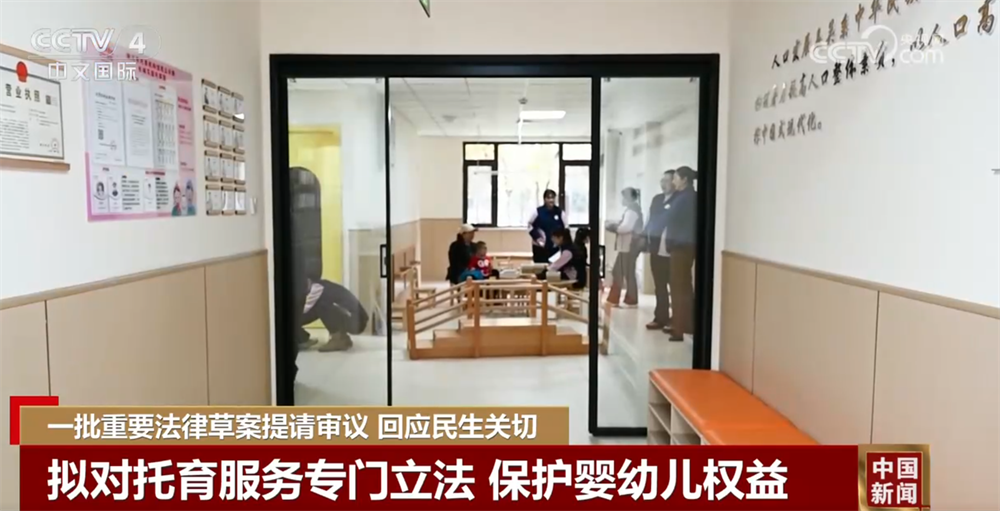
Group 1 - The draft law on childcare services aims to protect the rights of infants and toddlers, mandating that local governments include affordable childcare services in basic public services [2] - The draft emphasizes the protection of infants' rights, prohibiting childcare personnel from harming their physical and mental health, and requiring immediate protective measures in case of suspected harm [2][4] - The draft law will establish entry permits for childcare institutions and staff, standardizing service content and promoting the overall development of infants' physical and mental health [4] Group 2 - The revised trademark law aims to strengthen the enforcement against trademark infringement, with specific prohibitions on using the names, flags, and emblems of the Communist Party of China as trademarks [6] - The draft includes penalties for misleading use of registered trademarks, with fines of up to 50,000 yuan for non-compliance, and severe cases may lead to the cancellation of trademark registrations [8] Group 3 - The civil aviation law revision addresses public concerns regarding flight delays and cancellations, requiring airlines and airports to manage resources effectively to minimize such occurrences [11] - The draft mandates timely and accurate communication from airlines and airports regarding the reasons for flight delays or cancellations, enhancing transparency for passengers [11]