
行业高质量发展

Search documents
地缘局势不稳,恒指恐受压
Guodu Securities Hongkong· 2026-03-02 03:05
Group 1: Market Overview - The Hang Seng Index experienced fluctuations, closing at 26,630.54, up 0.95% on the last trading day of February, but down 2.76% for the month [3] - The index has fallen below key moving averages, indicating potential pressure due to geopolitical tensions, particularly with the U.S.-Iran situation [3] - The trading volume for the day was 288.4 billion HKD, reflecting active market participation despite the overall monthly decline [3] Group 2: Company Performance - China Everbright Water reported a 17.37% decline in annual profit to 842 million HKD, with revenue decreasing by 21.85% to 5.355 billion HKD [11] - The company aims to leverage opportunities in the environmental sector and focus on high-quality development amid China's 14th Five-Year Plan [11] - Baidu's adjusted profit fell by 42%, with its stock price showing volatility, while other tech stocks like Tencent and JD.com had mixed performances [4] Group 3: Industry Dynamics - IDC forecasts a 12.9% decline in global smartphone shipments for the year, marking the largest drop in history, driven by memory chip shortages [9] - The report anticipates that smartphone sales will decrease by 0.5% this year, with a slight recovery expected in 2024 [9] - The ongoing challenges in chip supply are expected to persist, affecting pricing and availability in the second half of the year [9] Group 4: Financial Developments - Bank of China Hong Kong successfully assisted the Indonesian government in issuing offshore RMB and Euro-denominated bonds, totaling approximately 31.1 billion RMB [12][13] - The bond issuance attracted significant interest, with order values reaching 170.4 billion RMB and 94.8 billion Euro, indicating strong market confidence [13] - This issuance is part of a broader strategy to enhance Hong Kong's offshore bond market and facilitate international financing for Indonesia [13]
严禁网络大V引流!上海召集75家公募总经理、督察长开会,传递重磅信号
21世纪经济报道· 2026-02-12 13:43
Core Viewpoint - The meeting held on February 2 in Shanghai marked a significant shift in the regulatory landscape for public funds, emphasizing compliance and risk management as core strategic issues for fund companies [3][4]. Group 1: Meeting Overview - The meeting was attended by representatives from the China Securities Regulatory Commission (CSRC), Shanghai Securities Regulatory Bureau, and general managers or compliance officers from 75 public fund companies [2]. - Key topics discussed included high-quality industry development, compliance in operations, and the need for a balance between investment correction and governance [3]. Group 2: Regulatory Changes - The meeting underscored the importance of compliance, elevating it from a specialized department task to a core company strategy [4]. - A notable shift in regulatory pressure was observed, with the focus moving from compliance officers to general managers, indicating a higher level of accountability [5][6]. - The meeting introduced several strict regulations, including a ban on collaborations with unqualified internet influencers for fund sales and the cessation of net asset value estimation functions [8][9]. Group 3: Compliance and Risk Management - Fund companies are required to enhance risk prevention in key areas such as sales, marketing, and suitability management, addressing emerging risks in the market [8]. - Specific compliance requirements were outlined, including the prohibition of sales activities with unqualified internet influencers and the need for live marketing personnel to have proper qualifications [9]. Group 4: Internal Control and Business Development - Fund companies are encouraged to conduct self-assessments for risk identification and to improve their emergency response capabilities [12]. - The meeting promoted differentiated development strategies, urging firms to leverage their unique resources and research advantages to create competitive edges in niche markets [12]. Group 5: Industry Culture and Knowledge Competitions - The meeting highlighted the importance of fostering a financial culture that prioritizes compliance, integrity, and innovation [12]. - Recognition was given to outstanding teams and individuals in the 2025 Shanghai Fund Industry Knowledge Competition, emphasizing the commitment to continuous learning and compliance [14].


机械工业年度成绩单发布:利润转正、外贸总额创新高
第一财经· 2026-02-05 05:24
Core Viewpoint - In 2025, the mechanical industry in China showed a positive trend with an 8.2% year-on-year increase in value added for enterprises above designated size, outperforming national industrial and manufacturing growth rates by 2.3 and 1.8 percentage points respectively. The industry achieved a record high operating revenue of 33.2 trillion yuan and a total profit of 1.7 trillion yuan, marking a 5.9% year-on-year growth after a previous decline [2][3][6]. Group 1: Economic Performance - The mechanical industry achieved a total operating revenue of 33.2 trillion yuan in 2025, a 6.0% increase year-on-year, surpassing the national industrial growth rate by 4.9 percentage points [6]. - The total profit for the mechanical industry reached 1.7 trillion yuan, with a year-on-year growth of 5.9%, which is 5.3 percentage points higher than the national industrial average [6]. - The value added of major economic sectors within the mechanical industry, including automotive manufacturing, electrical machinery, and general equipment manufacturing, all experienced growth, with automotive manufacturing leading at 11.5% [6]. Group 2: Challenges and Risks - The mechanical industry faced challenges such as a decline in fixed asset investment, which fell by 2.3% year-on-year, marking a significant drop of 7.4 percentage points compared to the previous year [9]. - The industry experienced a continuous decline in profit margins, with the operating revenue profit margin at 5.14%, down 0.04 percentage points from the previous year, and lower than the national industrial average by 0.17 percentage points [7]. - Accounts receivable in the mechanical industry reached 9.9 trillion yuan by the end of 2025, a 7.1% increase year-on-year, representing 36.0% of the total accounts receivable in the national industry, which poses a significant challenge for cash flow and operational stability [10]. Group 3: Future Outlook - Looking ahead to 2026 and the "14th Five-Year Plan" period, the mechanical industry is expected to face increased external risks and challenges, including geopolitical tensions and a complex international trade environment [13]. - Despite these challenges, favorable conditions for high-quality development are accumulating, such as ongoing macroeconomic adjustments and the implementation of major infrastructure projects, which are expected to drive market demand [13][14]. - The industry is projected to maintain a stable operational trend, with major indicators expected to grow at around 5.5% in 2026, supported by strategic policy implementations [14].

机械工业年度成绩单发布:利润转正、外贸总额创新高
Di Yi Cai Jing· 2026-02-05 03:16
Core Viewpoint - The mechanical industry in China is experiencing steady growth, with key indicators showing positive trends in 2025, despite facing challenges such as structural supply-demand issues and competitive market pressures [1][3][4]. Group 1: Economic Performance - In 2025, the added value of large-scale enterprises in the mechanical industry grew by 8.2%, surpassing the national industrial and manufacturing growth rates by 2.3 and 1.8 percentage points respectively [1][3]. - The total operating revenue reached 33.2 trillion yuan, marking a record high and a year-on-year increase of 6.0%, which is 1.1 percentage points higher than the national industrial average [3][4]. - The total profit amounted to 1.7 trillion yuan, reversing the previous year's decline with a year-on-year growth of 5.9%, exceeding the national industrial growth rate by 5.3 percentage points [3][4]. Group 2: Industry Challenges - The mechanical industry is facing a decline in profit margins, with the operating profit margin at 5.14%, down 0.04 percentage points from the previous year, and lower than the national industrial average by 0.17 percentage points [4]. - The fixed asset investment growth rate has decreased, with a year-on-year decline of 2.3%, marking a significant drop of 7.4 percentage points compared to the previous year [5]. Group 3: Accounts Receivable Issues - Accounts receivable in the mechanical industry have been rapidly increasing, totaling 9.9 trillion yuan by the end of 2025, which is a year-on-year increase of 7.1% and represents 36.0% of the national industrial accounts receivable [6]. - The average collection period for accounts receivable has extended to 100.1 days, which is 2.4 days longer than the previous year and significantly exceeds the national industrial average by 32.2 days [6]. Group 4: Future Outlook - The mechanical industry is expected to face increased risks and challenges in 2026, including geopolitical tensions and a complex international trade environment, but favorable conditions for high-quality development are also accumulating [9]. - The industry is projected to maintain a stable operational trend, with major indicators expected to grow at around 5.5% in 2026, supported by macroeconomic policies and ongoing infrastructure projects [9].

浙江省食药检院与海康威视签署战略合作协议
Xin Lang Cai Jing· 2026-02-04 03:50
Group 1 - The core viewpoint of the article is the strategic cooperation between Zhejiang Food and Drug Inspection Research Institute and Hangzhou Hikvision Digital Technology Co., Ltd. to enhance the development of scientific instruments [1] Group 2 - The collaboration will focus on technological innovation, application validation, project cooperation, and achievement transformation in the field of scientific instruments [1] - The partnership aims to promote the improvement of independent research and development capabilities in scientific instruments and contribute to high-quality industry development [1]

中广核高层带队,接连拜访三大发电央企集团
Zhong Guo Dian Li Bao· 2026-02-04 01:13
Core Viewpoint - China General Nuclear Power Group (CGN) is strengthening collaborations with major power companies in nuclear energy, new energy, and technological innovation to promote high-quality development in the energy sector and contribute to the construction of a strong energy nation [2][4][6]. Group 1: Collaboration with China Huaneng - CGN's Chairman Yang Changli and General Manager Pang Songtao visited China Huaneng to discuss deepening cooperation in nuclear power projects, new energy, and digital control technologies [2]. - Yang expressed gratitude for China Huaneng's support and highlighted the successful collaboration on projects like Shidaowan Nuclear Power [2]. - Both parties aim to solidify existing cooperation and enhance collaboration in various fields to contribute to the energy sector's development [3]. Group 2: Collaboration with China Datang - CGN's leadership met with China Datang to discuss enhancing industrial cooperation, particularly in nuclear energy project operations and technological innovation [4]. - Yang congratulated China Datang on its achievements and emphasized the importance of their partnership, citing successful projects like Ningde Nuclear Power [4]. - The focus is on further collaboration in nuclear and new energy projects to support the construction of a strong energy nation [5]. Group 3: Collaboration with State Power Investment Corporation - CGN engaged in discussions with State Power Investment Corporation (SPIC) to reinforce cooperation in nuclear energy, new energy, and policy alignment [6]. - Yang acknowledged SPIC's ongoing support and highlighted the fruitful outcomes of their partnership [6]. - The goal is to deepen practical cooperation in energy projects to contribute to the construction of a strong energy nation and achieve high-level technological self-reliance [7].




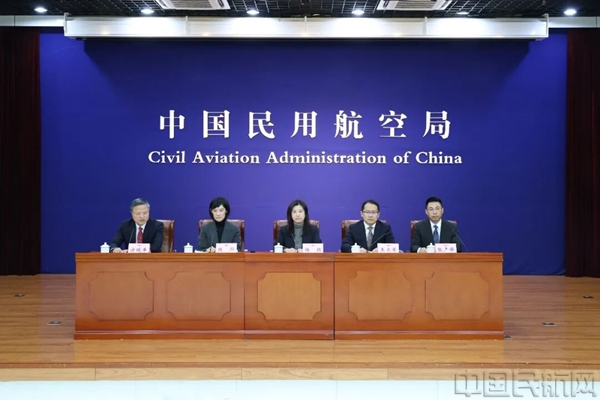
民航局解读新修订民用航空法:全维度完善民航法治体系 为行业高质量发展护航
Zhong Guo Min Hang Wang· 2026-01-19 13:05
Core Viewpoint - The newly revised Civil Aviation Law of the People's Republic of China, consisting of 16 chapters and 262 articles, will take effect on July 1, 2026, and aims to enhance flight safety, passenger rights, and industry development [1][3]. Group 1: Flight Safety and Management - The revision strengthens flight safety and operational safety through improved airworthiness management and the establishment of a dedicated chapter on civil aviation security [3]. - It optimizes the entry conditions for transport and general aviation enterprises and increases penalties for violations [3][4]. Group 2: Industry Development - The law supports the development of new business models in general aviation and low-altitude economy, simplifying approval processes and enhancing resource allocation [3][4]. - A new chapter on "Development Promotion" outlines policies to support the civil aviation manufacturing industry, key technology research, and international cooperation [3]. Group 3: Passenger Rights Protection - The law introduces a dedicated chapter on passenger rights protection, systematizing and legalizing previous regulations [4]. - It mandates airlines to improve transport contract terms, enhance personal information protection, and optimize processes for handling flight delays or cancellations [3][4]. Group 4: Regulatory Improvements - The law encourages innovative regulatory methods using big data and emphasizes strict penalties for actions that threaten aviation safety and passenger rights [3][4]. - It expands the types and scope of administrative penalties to enhance legal deterrence [3]. Group 5: Airport Management - The revision establishes a structured legal framework for airports, categorizing them into general provisions, transport airports, and general airports [7]. - It recognizes civil airports as public infrastructure and outlines responsibilities for various stakeholders in airport construction and operation [7].
重要会议召开,释放明确信号→
Jin Rong Shi Bao· 2026-01-16 12:47
Core Viewpoint - The 2026 financial regulatory work meeting emphasizes a comprehensive deployment of financial regulation, focusing on risk prevention, strong regulation, and promoting high-quality development to support the "14th Five-Year Plan" [1] Group 1: Risk Prevention and Resolution - The meeting prioritizes the effective resolution of risks in small and medium-sized financial institutions, aiming to manage existing risks and prevent new ones, particularly in the real estate sector [2][3] - A systematic approach will be adopted for risk prevention, focusing on high-risk institutions through coordinated efforts between central and local authorities [2][3] - The regulatory focus will shift from mere scale expansion to substantive risk control, enhancing classification and tiered regulation [3] Group 2: Promoting High-Quality Development - The meeting calls for improving the capacity for high-quality development in the financial sector, emphasizing the need for orderly competition and optimizing institutional layout [4] - The strategy of "reducing quantity and improving quality" will guide the restructuring of financial institutions, focusing on eliminating inefficient and high-risk entities [4][5] - Regulatory measures will target disordered competition, ensuring financial institutions concentrate on their core businesses and adhere to capital constraints [4][5] Group 3: Strengthening Financial Regulation - The meeting outlines the need to enhance and perfect financial regulation, focusing on substantive risks and improving the capacity for lawful regulation [6][7] - The "Golden Supervision Project" will be accelerated, marking a shift towards digital and intelligent regulation to improve risk identification and oversight capabilities [6][7] - The regulatory framework will evolve towards precision, differentiation, and collaboration, ensuring effective consumer protection and preventing cross-market risks [7] Group 4: Enhancing Financial Services for Economic and Social Quality - The meeting emphasizes the need to improve financial services for the economy, focusing on major strategies and sectors, including support for consumer demand and small enterprises [8][9] - Financial institutions will be encouraged to develop integrated financial solutions that link investments in physical assets with human capital [9][10] - Internal mechanisms will be optimized to enhance service delivery, particularly for technology-driven and small enterprises, through improved credit evaluation and risk management [10]
金融监管总局:深入整治无序竞争 持续规范行业秩序
Mei Ri Jing Ji Xin Wen· 2026-01-15 13:17
Core Viewpoint - The Financial Regulatory Administration held a meeting on January 15, 2026, emphasizing the need to enhance the industry's high-quality development capabilities [1] Group 1 - The meeting called for a comprehensive plan to steadily advance the reduction and quality improvement of small and medium-sized financial institutions [1] - There is a focus on rationally optimizing the layout of financial institutions [1] - The meeting highlighted the importance of addressing disorderly competition and continuously regulating industry order [1] Group 2 - Banks and insurance institutions are urged to concentrate on their main businesses and pursue differentiated development [1] - The meeting also promotes a high level of financial openness to the outside world [1]
取消光伏和电池出口退税 有利产业进化和财政资源优化
Mei Ri Jing Ji Xin Wen· 2026-01-12 13:41
Core Viewpoint - The Ministry of Finance and the State Taxation Administration announced adjustments to the export tax rebate policy for photovoltaic and battery products, effective from April 1, 2026, with a complete cancellation of the VAT export rebate for these products, indicating a shift towards a mature industry that no longer requires policy support [1][2]. Group 1: Policy Changes - From April 1, 2026, the VAT export rebate for photovoltaic products will be completely canceled, and the rebate rate for battery products will be reduced from 9% to 6% until December 31, 2026, after which it will also be canceled [1]. - The export tax rebate rates for certain products, including photovoltaic and battery products, were previously reduced from 13% to 9% starting December 1, 2024, reflecting a trend towards decreasing support for these mature industries [1][4]. Group 2: Industry Impact - The removal of the export tax rebate will increase export costs for companies, leading to market consolidation where less competitive firms may be eliminated, while leading companies with scale and technology will strengthen their market positions [3]. - The photovoltaic industry has seen a significant drop in export prices, with prices for photovoltaic modules falling over 60% from $0.24 per watt to $0.09 per watt, resulting in a 33% year-on-year decline in export value for 2024 [2][3]. Group 3: Economic Implications - The adjustment of export tax rebates is expected to redirect fiscal resources towards domestic demand and social welfare, addressing challenges such as insufficient effective demand and overcapacity in certain sectors [3]. - The policy changes are part of a broader strategy to optimize fiscal resource allocation, allowing for more targeted support in areas like consumer subsidies and employment assistance, which are crucial for stabilizing economic expectations [3][4].