
旅客权益保护

Search documents
民航局解读新修订民用航空法:全维度完善民航法治体系 为行业高质量发展护航
Zhong Guo Min Hang Wang· 2026-01-19 13:05
Core Viewpoint - The newly revised Civil Aviation Law of the People's Republic of China, consisting of 16 chapters and 262 articles, will take effect on July 1, 2026, and aims to enhance flight safety, passenger rights, and industry development [1][3]. Group 1: Flight Safety and Management - The revision strengthens flight safety and operational safety through improved airworthiness management and the establishment of a dedicated chapter on civil aviation security [3]. - It optimizes the entry conditions for transport and general aviation enterprises and increases penalties for violations [3][4]. Group 2: Industry Development - The law supports the development of new business models in general aviation and low-altitude economy, simplifying approval processes and enhancing resource allocation [3][4]. - A new chapter on "Development Promotion" outlines policies to support the civil aviation manufacturing industry, key technology research, and international cooperation [3]. Group 3: Passenger Rights Protection - The law introduces a dedicated chapter on passenger rights protection, systematizing and legalizing previous regulations [4]. - It mandates airlines to improve transport contract terms, enhance personal information protection, and optimize processes for handling flight delays or cancellations [3][4]. Group 4: Regulatory Improvements - The law encourages innovative regulatory methods using big data and emphasizes strict penalties for actions that threaten aviation safety and passenger rights [3][4]. - It expands the types and scope of administrative penalties to enhance legal deterrence [3]. Group 5: Airport Management - The revision establishes a structured legal framework for airports, categorizing them into general provisions, transport airports, and general airports [7]. - It recognizes civil airports as public infrastructure and outlines responsibilities for various stakeholders in airport construction and operation [7].

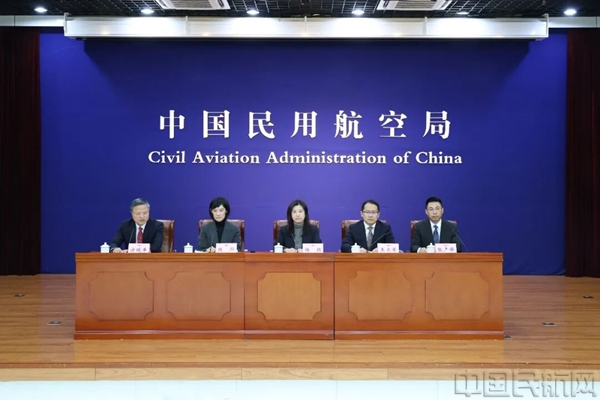
民航局:新修订《民用航空法》优化航班延误或取消处置流程
Bei Jing Shang Bao· 2026-01-19 10:00
Core Viewpoint - The newly revised Civil Aviation Law of the People's Republic of China aims to enhance flight safety, improve passenger rights, and promote high-quality development in the aviation industry through comprehensive amendments across various aspects of civil aviation [1][2]. Group 1: Overview of the New Civil Aviation Law - The revised Civil Aviation Law consists of 16 chapters and 262 articles, covering areas such as flight safety, airworthiness management, airport management, general aviation, low-altitude economy, passenger rights protection, supervision, and legal responsibilities [1]. - Key amendments include strengthening civil aviation safety guarantees, promoting high-quality industry development, increasing passenger rights protection, and improving regulatory measures [1]. Group 2: Passenger Rights Protection - The law mandates airlines and service providers to enhance passenger transport contract terms, strengthen personal information protection, and optimize processes for handling flight delays or cancellations [1]. - Specific provisions include timely information disclosure regarding flight delays or cancellations, and ensuring proper arrangements for ticket changes, accommodation, and complaint handling [2]. - The law also standardizes compensation liability limits for domestic and international airlines [1].
民航法修订草案,促进解决航班延误补偿问题
Nan Fang Du Shi Bao· 2025-12-22 15:10
Core Viewpoint - The revision of the Civil Aviation Law in China aims to enhance passenger rights protection by mandating airlines and airports to improve service quality and transparency regarding flight delays and cancellations [1][2]. Group 1: Legislative Changes - The draft revision requires public air transport enterprises and airport operators to reasonably arrange capacity and resources, and to strengthen the inspection and maintenance of facilities to reduce flight delays or cancellations caused by their own reasons [1]. - The revision addresses long-standing issues of passengers' lack of information rights and compensation, marking a shift towards legally mandated protections for air travelers in China [1]. Group 2: Compensation Standards - Current compensation standards for domestic airlines are low, with passengers receiving minimal benefits for delays ranging from 1 to 4 hours, such as meal provisions, and only limited monetary compensation for longer delays [1]. - For delays over 8 hours, passengers may receive a compensation of 450 yuan or equivalent benefits, while some low-cost carriers explicitly state they do not provide compensation for any reason [1]. Group 3: International Comparisons - The revision presents an opportunity for China to raise compensation standards, drawing on practices from other countries, such as the EU, where passengers are entitled to compensation based on flight distance and delay duration [2]. - Under EU regulations, compensation can reach up to 600 euros for long-haul flights delayed over 4 hours, which has led to increased caution among European airlines regarding flight cancellations [2]. Group 4: Responsibility and Transparency - Protecting passenger rights involves not only financial compensation but also clear delineation of responsibilities, as seen in Canada's recent amendments to its Air Passenger Protection Regulations, which expand the scope of airline liability [3]. - The lack of clear standards in China regarding what constitutes an airline's responsibility versus force majeure complicates the situation, highlighting the need for transparent information to alleviate passenger anxiety [3]. - The draft revision aims to improve information transparency, providing a legal basis for enhancing service quality in the Chinese aviation market [3].
航班延误有规可依 商标注册条件明确
Xin Lang Cai Jing· 2025-12-19 17:25
Group 1: Legislative Meetings - The 19th meeting of the 14th National People's Congress Standing Committee will be held from December 22 to 27 in Beijing, focusing on strengthening passenger rights protection, clarifying trademark registration conditions, and enhancing state-owned asset management and supervision [1] Group 2: Environmental Law Code Draft - The ecological environment code draft has completed its second review, and the various sections will be combined into a complete draft for a third review [2] - The general provisions will enhance the roles of the people's courts and procuratorates in ecological environment protection and improve the credit supervision system [2] - The pollution prevention section will refine regulations on the management of straw and leaf burning and strengthen the supervision of solid waste transfer across provinces [2] - The ecological protection section will enhance international cooperation in marine ecological protection and deep-sea exploration [2] - The green low-carbon development section will further strengthen the institutional measures for developing a circular economy [2] - The legal responsibilities section will improve penalties and the ecological environment damage compensation system [2] Group 3: Civil Aviation Law Revision Draft - The civil aviation law revision draft aims to strengthen passenger rights protection and adapt to new developments in the civil aviation sector [3] - The revision will enhance the airworthiness certification management system and establish a chapter on development promotion to support civil aviation growth [3] - It will also strengthen flight safety guarantees and clarify prohibited actions that jeopardize civil aviation transport safety [3] - The draft will unify compensation responsibilities for domestic and international air carriers regarding transport conditions, flight delays, and cancellations [3] Group 4: State-Owned Assets Law Draft - The state-owned assets law draft is a foundational and comprehensive law that clarifies the management of various types of state-owned assets [4] - It establishes a management system for state-owned assets, including planning, usage, maintenance, and risk management [4] - The draft emphasizes the leadership of the Party in managing and supervising state-owned assets to promote high-quality development [4] Group 5: Trademark Law Revision Draft - The trademark law revision draft will be reviewed to enhance intellectual property protection and address prominent issues in the trademark field [6] - It will clarify overall requirements for trademark work, registration conditions, and optimize the trademark authorization process [6] - The draft aims to strengthen trademark management and protect the legitimate interests of all parties involved [6]
民航法拟规定:航班延误或取消,航空公司应为旅客安排食宿
Nan Fang Du Shi Bao· 2025-06-23 06:38
Core Points - The revision of the Civil Aviation Law aims to enhance passenger rights protection, particularly in cases of flight delays and cancellations [1][2] - The draft amendment specifies that airlines and airport operators must provide "accommodation" arrangements instead of just "meal" arrangements for affected passengers [1] - The amendment includes requirements for airlines to disclose their transportation terms and conditions, ensuring passengers are informed about ticket sales, refunds, changes, boarding, and baggage transport [1] Group 1 - The draft amendment emphasizes the need to improve the quality of civil aviation services [1] - It mandates timely information announcements and effective service for passengers during flight disruptions [1] - The amendment builds on existing consumer protection laws, ensuring compliance with regulations regarding passenger rights [2]