
气候变化适应

Search documents
中低收入国家企业层面的气候变化适应(英)2026
Shi Jie Yin Hang· 2026-02-24 03:05
Investment Rating - The report does not explicitly provide an investment rating for the industry. Core Insights - Firms in low- and middle-income countries (LMICs) face significant challenges due to climate change, which affects their operations and profitability through various mechanisms such as reduced labor productivity and disrupted supply chains [3][4] - Despite the theoretical incentives for firms to adapt to climate change, market frictions in LMICs often inhibit these adaptation efforts [4][5] - The evidence indicates that while firms are attempting to adapt to climate change, they encounter barriers such as limited information and financial constraints [5][6] Summary by Sections 1. Introduction - Climate change disproportionately impacts LMICs, leading to increased temperatures and extreme weather events that affect firm operations and economic growth [3] 2. Analytical Framework - The framework focuses on how firms combine capital, labor, and other inputs to maximize profits while adapting to climate change [7][8] 3. Firm Expectations About Climate Change - Firms often underestimate weather-related risks, which can lead to inadequate preparation for climate impacts [12][13] - Survey evidence shows that many firms are aware of climate risks but may not accurately assess their vulnerability [14][15] 4. Demand - Weather shocks can increase demand for certain firms, particularly in sectors closely tied to weather outcomes [23][24] - Extreme weather often leads to lower sales due to a combination of reduced demand and productivity [25][26] 5. Labor - Climate change significantly impacts labor availability and productivity, with weather-driven migration redistributing labor across regions [30][31] - Labor productivity declines with increasing temperatures, with estimates showing a consistent reduction across various LMIC contexts [39][40] 6. Capital - Firms must consider both physical risks to capital from climate events and the financial implications of climate change when making investment decisions [51][52] - Evidence suggests that firms may upgrade capital when rebuilding after disasters, but the ability to do so varies significantly across contexts [54][58]
中国39城试点“气候适应型城市”,打造气候韧性新样本
2 1 Shi Ji Jing Ji Bao Dao· 2025-11-19 11:50
Core Viewpoint - The "Adaptation to Climate Change in China" thematic side event at COP30 emphasizes China's commitment to both mitigation and adaptation strategies in addressing climate change challenges [1][2]. Group 1: China's Climate Adaptation Strategy - China has implemented the "National Adaptation Strategy for Climate Change 2035," promoting provincial and urban initiatives to enhance climate resilience through a collaborative framework [1]. - The new round of national contributions includes the goal of building a climate-adaptive society by 2035, elevating the focus on adaptation capabilities [1]. Group 2: International Cooperation and Partnerships - Climate adaptation is framed as a necessary response for humanity's future, with China advocating for deeper international cooperation and partnerships in climate adaptation efforts [2]. - The establishment of bilateral and regional early warning cooperation platforms is highlighted as a means to foster a community of life between humans and nature [2]. Group 3: Early Warning Systems and Innovations - China is actively implementing the "Early Warning Promotion Action Plan for Climate Change Adaptation (2025-2027)" and has introduced the "Mazu" early warning system to enhance global disaster risk reduction efforts [2]. - The event showcased innovative practices in climate adaptation, including the release of a collection of typical cases for climate-adaptive cities and the "Mazu" early warning tool [2][3]. Group 4: Participation and Collaboration - The side event gathered over 150 representatives from government, research institutions, and international organizations to discuss climate adaptation experiences and policies [3]. - Notable presentations included insights from foreign academicians on China's health adaptation experiences and climate resilience [3].
《联合国气候变化框架公约》第三十次缔约方大会在巴西贝伦开幕
人民网-国际频道 原创稿· 2025-11-11 09:52
Core Points - The 30th Conference of the Parties (COP30) to the United Nations Framework Convention on Climate Change has opened in Belem, Brazil, focusing on climate change issues such as energy transition, climate financing, and adaptation [1][3] - The conference aims to unite countries to find common solutions to the climate crisis and accelerate a just transition [1][3] Group 1: Conference Objectives and Highlights - COP30 President Andre Correa Dourado emphasized the urgent need for an action agenda to address the global climate crisis, aiming to integrate climate action with economic activities and job creation [3] - The Executive Secretary of the UNFCCC, Simon Steele, noted that the Paris Agreement is making tangible progress, with expectations of a 12% reduction in greenhouse gas emissions by 2035 based on new national contributions [3] Group 2: Participation and Activities - The conference is expected to last until November 21, attracting representatives from over 190 countries and regions, including government officials, international organizations, scientists, entrepreneurs, and NGOs [4] - The "China Corner" series of events commenced, featuring discussions on ecological civilization, climate change responses, and South-South cooperation, highlighting China's achievements in energy transition and carbon management [5]


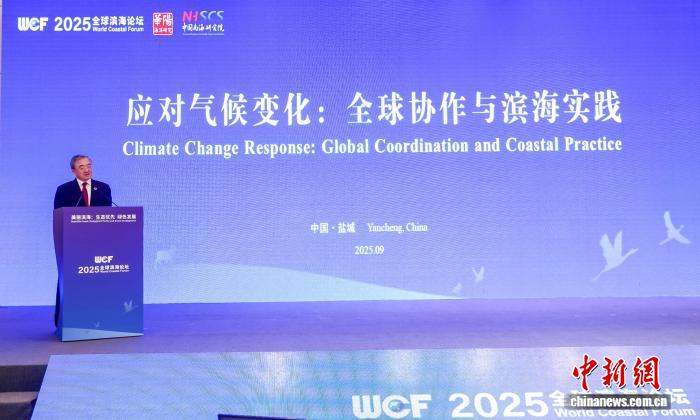
刘振民:海洋与气候治理协同 共同保护滨海生态
Zhong Guo Xin Wen Wang· 2025-09-25 06:50
Core Viewpoint - Liu Zhenmin emphasizes the interconnection between marine and climate governance, highlighting their mutual influence and the need for global cooperation in addressing these critical issues [3][4]. Group 1: Climate and Marine Issues - The acceleration of global ocean warming poses a threat to the ocean as a significant carbon sink [3]. - Ocean warming is affecting global weather patterns, leading to an increase in extreme weather events [3]. - The melting of ice in the polar regions and glaciers is occurring at an accelerated pace [3]. - The ocean plays a crucial role in climate change mitigation, acting as the largest natural carbon sink and providing pathways for low-carbon energy transition [3][4]. Group 2: China's Actions and Achievements - As of June 2025, China has created 9,200 hectares of new mangroves, bringing the total mangrove area to 30,300 hectares, making it one of the few countries with a net increase in mangrove area [3]. - China's natural and socio-economic systems have shown significant improvements in adaptive capacity, particularly in coastal areas [3]. - China supports other developing countries in monitoring, early warning, and disaster reduction through South-South cooperation [3]. Group 3: Global Cooperation and Support - Liu Zhenmin calls for shared experiences and coordinated efforts among countries to address the complexities of climate and marine issues [4]. - The international community has recognized the importance of adaptation since the inception of climate change discussions, with developed countries expected to support developing nations [4]. - There remains an imbalance in focus between emission reduction and adaptation, with ocean warming presenting severe challenges to local livelihoods and health [4]. - Developed countries are urged to provide funding, technology, and capacity-building support to developing nations as per the UN Framework Convention on Climate Change [4].
开展跨区域适应行动,提升青藏高原气候韧性
Zhong Guo Huan Jing Bao· 2025-08-01 00:12
Core Viewpoint - The implementation of the "Sichuan Province Tibetan Plateau Climate Change Adaptation Action Plan (2025-2035)" aims to enhance the climate resilience of the Tibetan Plateau region in Sichuan, which is crucial for addressing the adverse impacts of climate change and ensuring sustainable development [1][2][3]. Group 1: Background and Importance - The Tibetan Plateau is a sensitive and vulnerable area significantly affected by global climate change, with an average temperature increase of 0.24°C per decade since 1961, surpassing global and provincial averages [1][2]. - The region encompasses nearly half of Sichuan's territory and includes areas with complex natural environments, making it particularly susceptible to climate change impacts [1][2]. Group 2: Action Plan Details - The action plan is the first cross-regional climate adaptation initiative in China, focusing on enhancing the climate adaptability of the Tibetan Plateau [1][2]. - It aligns with national strategies, such as the "National Climate Change Adaptation Strategy 2035," and emphasizes the need for comprehensive climate risk assessments and adaptation measures [2][3]. Group 3: Key Areas and Initiatives - The action plan identifies 11 key areas for climate adaptation policies, including ecosystems like glaciers, wetlands, grasslands, and sectors such as agriculture, tourism, and urban construction [3]. - It proposes six major engineering projects aimed at enhancing climate resilience, including risk perception, technological innovation, and disaster prevention initiatives [3]. Group 4: Implementation and Future Steps - The successful implementation of the action plan requires coordinated efforts among various departments and the integration of climate adaptation principles into broader planning and policy frameworks [4]. - Future actions will focus on technological innovation, climate financing, and public awareness campaigns to support sustainable development and ecological protection in the Tibetan Plateau [4].
2025年“全国低碳日”主场活动在杭州举办 上海碳普惠平台正式上线运营
Ren Min Ri Bao· 2025-06-25 22:13
Group 1 - The 13th "National Low Carbon Day" was held on June 25, 2024, in Hangzhou, Zhejiang Province, with the theme "Carbon Road Pioneers, Green Future" [1] - The "China Climate Change Adaptation Progress Report (2024)" was released, indicating that China will continue to implement the "National Climate Change Adaptation Strategy 2035" and make progress in key adaptation work [1] - The "Product Carbon Footprint Management System Progress Report (2025)" revealed that by the end of 2024, over 70 national standards for product carbon footprint accounting and more than 100 group standards in specific fields have been developed [1] Group 2 - The Shanghai Carbon Benefit Platform was officially launched on June 25, 2024, allowing users to accumulate carbon credits through green transportation methods [2] - The platform has been in trial operation for nearly 8 months, attracting over 100,000 participants and involving nearly 300 companies in opening institutional carbon accounts [2] - The platform has launched two carbon benefit trading products, with a total of over 40,000 tons of emission reductions traded [2]