汽车以旧换新补贴政策暂停

Search documents
“比较冷”,比亚迪,跌了
3 6 Ke· 2025-12-02 02:27
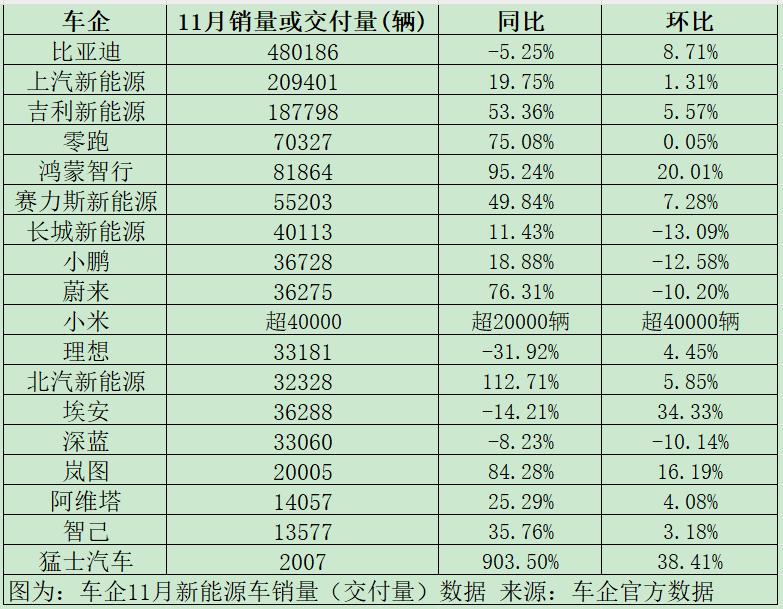
Core Viewpoint - The automotive industry in November showed a mixed performance, with some leading companies experiencing a slowdown in sales growth, while others achieved significant increases in sales [1][17]. Group 1: Sales Performance - BYD's November sales reached 480,186 units, a year-on-year decrease of 5.25%, with domestic sales dropping by 26.81% [1][3][8]. - Other companies like SAIC and Geely saw significant year-on-year growth in their electric vehicle sales, with SAIC's sales at 209,401 units (up 19.75%) and Geely's at 187,798 units (up 53.36%) [2][10]. - New energy vehicle sales for November showed a total of 474,175 units produced, with a cumulative year-on-year increase of 7.29% [5]. Group 2: Emerging Players - New energy vehicle startups like Leap Motor achieved impressive results, with November deliveries reaching 70,327 units, completing their annual target ahead of schedule [14]. - Other new entrants, such as Xiaomi and XPeng, also reported strong performance, with Xiaomi estimated to exceed 350,000 units in total deliveries for the year [14][15]. Group 3: Market Trends - The anticipated year-end sales surge, known as the "tailwind" effect, appears to be cooling down, with many companies reporting lower growth rates compared to the previous year [17]. - NIO's CEO noted that recent policy changes, such as the suspension of vehicle trade-in subsidies in various regions, have impacted the market, leading to a decline in new orders [18][19].


“比较冷”!比亚迪,跌了
中国基金报· 2025-12-01 15:39
Core Insights - The automotive industry in China is experiencing a mixed performance in November, with some leading companies showing a slowdown in sales growth or declines, while others achieve record sales [2][4][20] - BYD's November sales reached 480,186 units, a year-on-year decrease of 5.25%, and domestic sales fell by 26.81% [5][8] - New energy vehicle companies like Leap Motor and others have successfully met their annual delivery targets ahead of schedule [14][15] Sales Performance - BYD's November sales were 480,186 units, failing to surpass the 500,000 mark [5][6] - In contrast, SAIC and Geely saw significant year-on-year growth in their new energy vehicle sales, with increases of 19.75% and 53.36%, respectively [8][9] - Leap Motor's November deliveries reached 70,327 units, contributing to a total of 536,100 units delivered in the first eleven months of 2025, exceeding their annual target [14][15] Market Trends - The anticipated year-end sales surge, known as the "tailwind" effect, appears to be cooling off, with many companies reporting lower growth rates compared to the previous year [20] - The suspension of vehicle trade-in subsidies in several regions has impacted the market, leading to a decline in new orders [20][21] - NIO maintains its fourth-quarter delivery guidance, expecting to deliver between 120,000 and 125,000 units, despite market challenges [21] Competitive Landscape - Geely's new energy vehicle penetration rate reached a record high of 60.50% in November, driven by strong sales from its Galaxy brand [9][11] - Leap Motor and Xiaomi are also on track to exceed their revised annual delivery targets, indicating a competitive shift in the market [14][16] - The performance of state-owned enterprises like Lantu and Avita has also improved, with significant year-on-year sales growth [17][18]

“比较冷”!比亚迪 跌了
Zhong Guo Ji Jin Bao· 2025-12-01 15:20
Core Viewpoint - The automotive industry in November showed a mixed performance, with some leading companies experiencing a slowdown in sales growth or declines, while others achieved record sales figures [2][16]. Group 1: Sales Performance - BYD's November sales reached 480,186 units, a year-on-year decline of 5.25%, with domestic sales dropping by 26.81% [3][7]. - Other companies like SAIC New Energy and Geely New Energy reported significant growth, with sales increasing by 19.75% and 53.36% respectively [9][12]. - New energy vehicle sales for Geely's Galaxy brand surged by 76% in November, contributing to its overall growth [9][12]. Group 2: New Energy Vehicle Trends - The overall new energy vehicle market is seeing a shift towards higher-end models, with companies like Geely making significant strides in this area [12]. - New entrants like Leap Motor and Xpeng have exceeded their annual delivery targets ahead of schedule, indicating strong market performance [14][15]. Group 3: Market Challenges - The anticipated year-end sales surge, known as the "tailwind" effect, appears to be cooling off, with many companies reporting lower growth rates compared to the previous year [16][17]. - The suspension of vehicle trade-in subsidies in several regions has created uncertainty in the market, affecting new orders and sales expectations [17][18]. Group 4: Future Outlook - Despite current challenges, industry leaders express optimism about long-term market recovery, suggesting that overall demand will stabilize over time [20].