汽车消费偏好

Search documents
德勤:超6成中国人下一辆车准备买30万元以上的汽车,燃油车仍是首选
Xin Lang Cai Jing· 2026-01-10 00:54
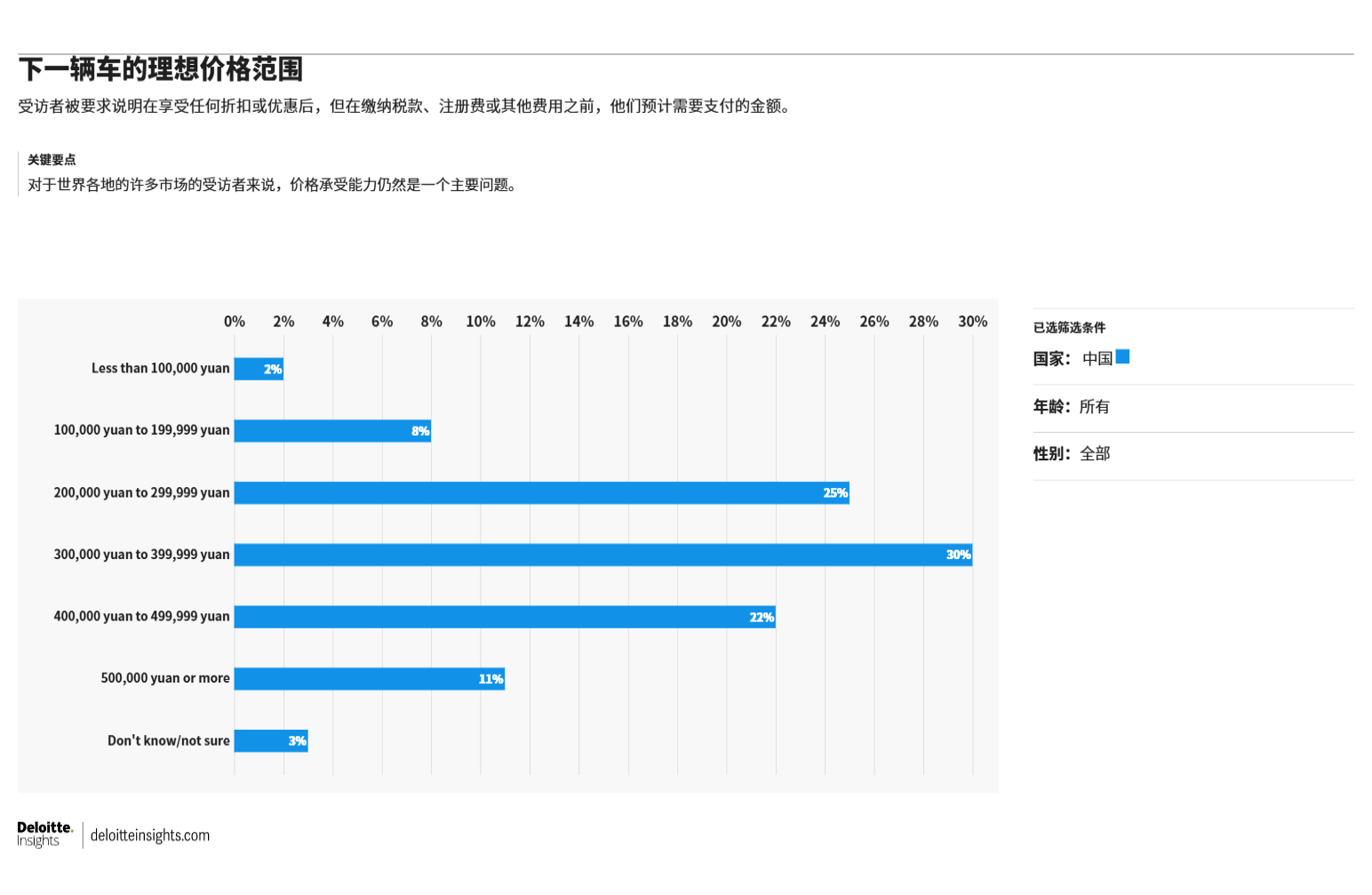
Group 1 - The core finding of the Deloitte Global Automotive Consumer Study indicates that over 60% of Chinese respondents plan to purchase vehicles priced at 300,000 yuan and above [1][2] - The highest proportion of consumer price preference is in the 300,000-399,900 yuan range, accounting for 30%, followed by 400,000-499,900 yuan at 22%, and 500,000 yuan and above at 11%, collectively exceeding 63% [1][2] - The survey data is derived from the 2026 Global Automotive Consumer Research Report, which has been conducted annually for 14 years, based on a questionnaire distributed to over 28,500 consumers across 27 countries from October to November of the previous year [2] Group 2 - In terms of vehicle type preferences, fuel vehicles remain the most favored, comprising 41% of respondents, while pure electric vehicles account for 20%, hybrid vehicles for 19%, and plug-in hybrids for 17% [3]

【重磅深度】谁在坚持买油车?
东吴汽车黄细里团队· 2025-08-15 15:40
Core Viewpoint - The article discusses the reasons why car owners prefer gasoline vehicles over electric vehicles, highlighting factors such as cost-effectiveness, charging infrastructure, and concerns about battery technology and long-distance travel anxiety [4][5][29]. Group 1: Research Methodology - The research is based on a sample of 26 car owners from 7 major brands and 13 models, focusing on popular gasoline vehicles in various price ranges [3][11]. - The sample includes owners of Audi (A6L, Q5L), BMW (3 Series, 5 Series), Mercedes-Benz (GLC), Volkswagen (Sagitar, Passat, Tiguan L), Toyota (Corolla, RAV4, Camry), Nissan (Sylphy), and General Motors (Envision) [3][11]. Group 2: Reasons for Choosing Gasoline Vehicles - Nearly all interviewed car owners agree that gasoline vehicles offer high cost-performance, with many expressing a strong preference for them [4][11]. - Concerns about the long-term costs of electric vehicles, particularly regarding battery replacement after ten years, lead to skepticism about their overall affordability [4][11]. - Approximately 50% of respondents lack the conditions to install dedicated charging stations [4][11]. - Many owners believe that electric vehicle battery technology is not yet mature, contributing to their hesitance [4][11]. - Long-distance travel anxiety remains a significant concern for potential electric vehicle buyers [4][11]. Group 3: Perception of Electric Vehicle Advantages - While owners acknowledge that the per-kilometer cost of electric vehicles is lower, this advantage diminishes for those who drive less than 10,000 kilometers annually [5][11]. - Features such as aesthetics, smart driving, and additional comforts are seen as secondary benefits that do not outweigh the fundamental acceptance of electric vehicles [5][11]. Group 4: Preference for Luxury Brands (BBA) - Owners define luxury vehicles by their social attributes and trust in high-quality brands, with BBA (BMW, Benz, Audi) being recognized for their long-standing reputation [6][11]. - The willingness to consider electric vehicles from luxury brands often stems from previous experiences with BBA, where buyers may prioritize family needs or a change of taste [6][11]. Group 5: Factors Influencing Purchase Decisions - The primary factors influencing the purchase of gasoline vehicles include brand reputation, price, and practicality, with aesthetics and advanced driving features being less significant [28][29]. - The lack of charging infrastructure is the most cited reason for not purchasing electric vehicles, with 42% of respondents indicating this as a barrier [29][30]. - Concerns about battery technology and long-distance travel capabilities are also significant factors, with 15% and 12% of respondents citing these issues, respectively [33][35]. Group 6: Future Considerations for Electric Vehicle Purchases - Many respondents express a willingness to consider electric vehicles in the future, contingent upon improvements in charging infrastructure and vehicle quality [36][37]. - A common sentiment among respondents is to wait until electric vehicles have proven reliability and cost-effectiveness compared to gasoline vehicles [36][37].