沉默的螺旋

Search documents
活跃在评论区里的青年|T-ask调研
腾讯研究院· 2026-03-25 08:33
Group 1 - The article highlights the complexity of emotional expression among young internet users in China, revealing that 77.1% have experienced moments of hesitation before posting comments online, indicating a significant gap between true feelings and expressed opinions [2][33]. - A survey conducted by Tencent Research Institute collected 1008 valid responses from young internet users aged 18-35, showcasing a demographic primarily composed of working professionals and students, with a notable presence from various city tiers [3][6]. - The findings suggest that the comment section has evolved from being a mere supplement to content into an integral part of content consumption, with 72.6% of respondents frequently checking comments [10][11]. Group 2 - The survey indicates that users primarily seek to view others' opinions (74.0%), gather more information (66.8%), and find emotional resonance (52.1%) in comment sections, reflecting a shift towards using comments for validation and connection rather than just information [12][13]. - The emotional landscape of comment sections is complex, with an average sentiment score of 3.09, leaning slightly negative, and a near-equal distribution of positive and negative emotions among users [16][17]. - A significant 39.4% of respondents believe that the overall atmosphere of comment sections has become more negative over the past year, highlighting a growing concern about the emotional climate online [17]. Group 3 - The article discusses the phenomenon of "yin-yang humor" in comments, where 62.9% of respondents perceive underlying dissatisfaction in humorous expressions, suggesting that humor often masks genuine grievances [21][22]. - Topics that trigger negative emotions in comments include social equity, employment, gender issues, educational pressure, and housing prices, all of which are directly related to the concerns of young people [23]. - The concept of "Doom Scrolling" is introduced, indicating that frequent exposure to negative content can lead to a decline in mental health and an increase in pessimism, with a clear correlation between comment browsing frequency and negative emotional outcomes [26][29]. Group 4 - The article emphasizes the "spiral of silence" theory, where 77.1% of respondents have refrained from expressing their thoughts due to feelings of futility, fear of online backlash, and a sense of powerlessness, indicating a troubling trend in public discourse [32][36]. - The perception of freedom of expression among respondents is low, with an average score of 3.01, suggesting that many feel their true opinions are not adequately represented in online discussions [37]. - The emotional dynamics in comment sections are shown to influence real-world judgments and actions, with 62.9% of respondents admitting that online sentiments have affected their offline decisions [29][30]. Group 5 - The article reveals significant differences in emotional perceptions and engagement levels across different city tiers, with first-tier cities reporting the most negative sentiments and lower-tier cities showing more positive or neutral feelings [42][43]. - The findings suggest that second-tier cities have the highest engagement in comment sections, while lower-tier cities exhibit a tendency to observe rather than participate, reflecting varying levels of social pressure and educational background [43][44]. - The article concludes that while comment sections have their issues, they also provide a platform for emotional expression and community connection, emphasizing the need for a balanced approach to managing online discourse [46][47].



看完西贝,重新思考消费者沟通
Xin Lang Cai Jing· 2025-10-13 08:13
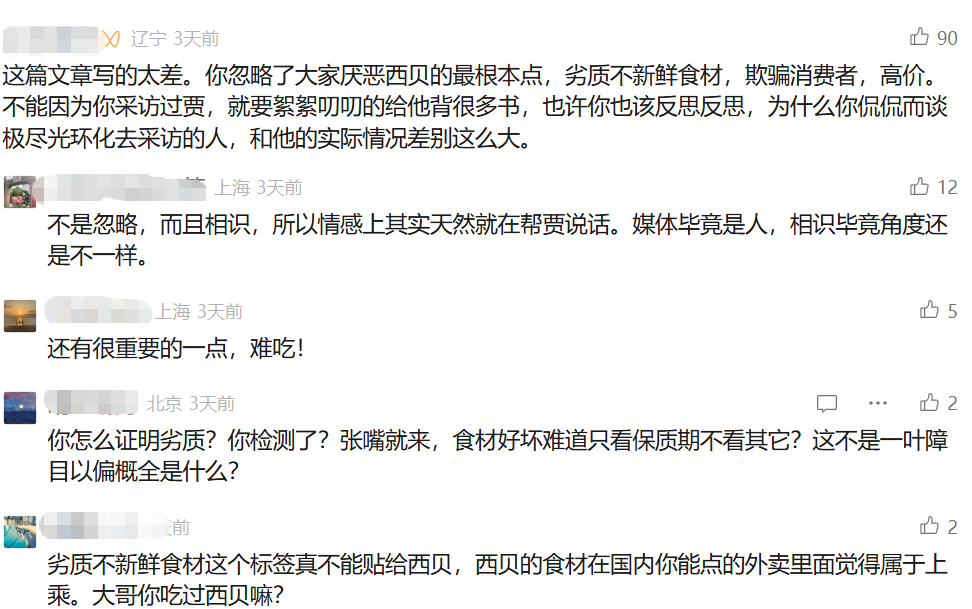
Core Viewpoint - The main issue with Xibei lies in consumer communication, particularly regarding the perception of pre-prepared dishes and their pricing [3][5][6] Group 1: Consumer Perception - There is a disconnect between industry standards for pre-prepared dishes and consumer expectations, leading to misunderstandings [3][5] - Consumers often prioritize their own standards over industry norms, as illustrated by the example of Thunder Technology, which adapted to consumer feedback regarding product quality [4][5] - The failure to effectively communicate with consumers has resulted in a negative perception of Xibei's offerings [5][6] Group 2: Public Relations Strategy - Xibei's decision to open its kitchen to the public was criticized as a poor public relations move, as it did not align with consumer expectations [7][9] - The company’s approach to addressing the controversy has been seen as overly technical and lacking in emotional resonance, failing to engage consumers effectively [37][39] - The reliance on data and professional arguments in public discourse has not resonated with the general public, leading to a one-sided narrative against Xibei [34][36] Group 3: Brand Image and Communication - The brand's image has been negatively impacted by stories that portray its leadership as arrogant, which can deter consumer support [46][47] - Effective consumer communication requires brands to empathize with consumer perspectives and avoid challenging their basic understandings [60][62] - The concept of "knowledge curse" suggests that brands may struggle to communicate effectively if they assume consumers share their level of industry knowledge [59][62]