两山理论

Search documents
白沙:依托元门机场打造低空经济产业链
Hai Nan Ri Bao· 2026-02-09 02:49
Core Insights - Baisha County aims for a GDP growth of over 6% and fixed asset investment growth of over 10% this year, focusing on ecological protection and green development while enhancing its contribution to the Hainan Free Trade Port [2] Group 1: Economic Development - The county plans to leverage the "zero tariff" policy to optimize the overall planning of Yuanmen Airport and establish a low-altitude economy industrial chain, including R&D, manufacturing, maintenance, rescue, and training [2] - Baisha targets to cultivate cross-border e-commerce enterprises with an annual transaction volume exceeding 5 million yuan [2] - The county aims to attract 10 projects with planned investments exceeding 2.6 billion yuan and to plan over 20 major provincial and county projects [2] Group 2: Agricultural and Industrial Upgrades - Baisha will promote agricultural development through new industrialization concepts, including the construction of a new grain storage facility and the enhancement of 7,200 acres of high-standard farmland [2] - The county plans to complete the construction of 20,000 acres of organic tea gardens and achieve a target of 20 million yuan in industrial output value, with over 70% from green industries [2] Group 3: Tourism and Cultural Development - The county aims to enhance key cultural and tourism projects, targeting to receive over 1.4 million tourists throughout the year [2] Group 4: Ecological and Environmental Initiatives - Baisha will strengthen ecological protection, ensuring that urban sewage collection rates remain above 75% and that the plastic ban compliance rate in agricultural markets reaches 90% [3] - The county plans to complete afforestation and greening of 15,000 acres and deepen the integration of ecological protection with industrial development [3] Group 5: Rural Revitalization and Urban Development - The county aims to promote urban-rural integration, targeting an average growth of over 10% in collective economic income for villages [3] - Baisha will implement special planning for the Hainan Tropical Rainforest National Park and construct eight harmonious villages [3]
山上呵护生态 山下提升业态
Xin Lang Cai Jing· 2026-01-30 18:43
Core Viewpoint - The transformation of the Daqingshan area from a barren landscape to a vibrant winter tourism destination is attributed to over a decade of ecological restoration efforts, showcasing the successful integration of ecological protection and economic development [2][3]. Group 1: Ecological Restoration - A comprehensive ecological restoration initiative has led to the closure of 292 polluting enterprises, the demolition of 600,000 square meters of illegal constructions, and the planting of nearly 18 million trees and flowers, resulting in approximately 98,000 acres of land being reforested [3]. - The forest coverage rate in the area has stabilized at 41%, providing a solid ecological foundation for the current tourism activities [3]. Group 2: Economic Development - The new district is implementing a development philosophy that balances ecological protection with economic growth, exploring pathways for green and prosperous coexistence [3]. - The "North Xinjiang Ecological Tour" route has been established, connecting various scenic spots and enhancing tourism opportunities, with new business models such as "music + tourism" and "events + tourism" emerging [3]. Group 3: Rural Development - Watermill Village, part of the Daqingshan National Nature Reserve, has developed into a model for eco-tourism, featuring 167 independent lodges and various local businesses, contributing to the local economy [4]. - All 24 administrative villages in the new district have reported collective economic incomes exceeding 200,000 yuan annually, with half of them surpassing 1 million yuan [5]. Group 4: Quality of Life Improvements - Significant improvements in rural living conditions have been achieved, with over 98% of households now connected to municipal sewage systems and the widespread adoption of modern sanitation facilities [7]. - The integration of urban and rural services has enhanced the quality of life for residents, with streamlined access to government services and healthcare [7]. Group 5: Sustainable Development Model - The successful creation of a "National Ecological Civilization Construction Demonstration Zone" illustrates that ecological protection can be a unique advantage for high-quality development [7]. - The region serves as a practical example of sustainable development, demonstrating that ecological beauty can lead to economic prosperity and improved living standards for residents [7].
金观平:规则引领生态环境科学治理
Jing Ji Ri Bao· 2026-01-29 03:01
Core Viewpoint - The revised "Regulations on Nature Reserves of the People's Republic of China" reflects a shift towards balancing ecological protection with economic development, emphasizing the need for improved legal frameworks to manage nature reserves effectively [1][2]. Group 1: Legislative Changes - The revision marks a necessary step in China's natural protection efforts, transitioning from a focus on quantity to quality in management [1]. - The new regulations introduce a "scientific and differentiated" governance approach, moving away from a one-size-fits-all model to a more tailored management strategy [2]. Group 2: Economic Integration - The revised regulations aim to integrate nature reserves into regional economic and social development plans, promoting a consensus on the unity of protection and development [3]. - The practice of "under-forest economy" exemplifies this integration, allowing farmers to benefit from ecological conservation while communities share in the ecological value [3]. Group 3: Governance Principles - The introduction of "differentiated management" principles categorizes reserves into core and general protection areas, facilitating a balance between strict protection and reasonable utilization [2]. - This approach supports the development of green industries such as eco-tourism and under-forest cultivation, creating legal avenues for sustainable economic activities [2].
绿色赋能发展 厚植民生福祉
Xin Lang Cai Jing· 2026-01-28 22:02
Core Viewpoint - The article emphasizes the importance of ecological environment protection as a long-term benefit for society, highlighting the government's commitment to enhancing the quality of life through sustainable practices and green development initiatives in Tianjin [1]. Group 1: Government Initiatives - The government work report outlines a clear path for achieving a good ecological environment as a fundamental aspect of public welfare, focusing on pollution prevention, green production, and living methods, and promoting carbon peak initiatives [1]. - Specific actions include intensifying efforts in air pollution control and enhancing environmental performance during heavy pollution periods, aiming for a harmonious coexistence between humans and nature [1]. Group 2: Local Development and Community Engagement - The development of the "green low-carbon demonstration town" in Datangzhuang reflects a successful model for integrating green energy with local tourism and community improvement, showcasing how ecological advantages can be transformed into economic benefits [3]. - Villagers in Datangzhuang are actively participating in low-carbon initiatives, such as installing solar panels, which not only contribute to environmental sustainability but also provide additional income through surplus energy sales [2]. Group 3: Expert Recommendations - Experts suggest that the integration of green resources into local economies can enhance community welfare and drive sustainable development, advocating for the expansion of clean energy applications and the promotion of low-carbon lifestyles [6]. - The focus should be on creating a diverse range of economic activities that leverage green technologies, thereby fostering job creation and enhancing the overall quality of life in rural areas [6].
中国式现代化贵州实践迈出新的坚实步伐
Xin Lang Cai Jing· 2026-01-25 22:24
Group 1: Digital Economy and Infrastructure - The digital economy in Guizhou is expected to reach a scale of 280 billion by 2025, with an annual growth rate of 16.2% during the 14th Five-Year Plan period [1] - There are currently 50 key data centers under construction or in operation, with a total computing power expected to exceed 150 EFLOPS, of which intelligent computing accounts for over 97% [1] - The integration level of the digital economy and traditional industries in Guizhou is projected to reach 63.5 by the end of Q3 2025, an increase of 3.4 from the end of 2024 [1] Group 2: Urbanization and Population Growth - Guizhou's new urbanization strategy aims to enhance the spatial layout of towns, with a focus on the integration of Guiyang and Guian, and support for Zunyi as a provincial sub-center [1] - By the end of 2024, the permanent population of Guiyang is expected to exceed 6.6 million, marking the highest annual growth among provincial capital cities in China [1] - The province has renovated 786,800 old residential units and 5,667 back streets and alleys during the 14th Five-Year Plan, significantly improving industrial development and population aggregation [1] Group 3: Agricultural Modernization - Guizhou is focusing on high-quality agricultural development while ensuring food security, emphasizing the cultivation of key industries such as beef cattle, tea, chili, and medicinal materials [1] - The province has achieved the largest planting scale in the country for several crops, including chili, prickly pear, and yam since the beginning of the 14th Five-Year Plan [1] Group 4: Tourism Development - The tourism industry in Guizhou has seen over 2 million visitors in two years, with significant cultural events and performances contributing to the region's vibrant tourism brand [2] - The province is accelerating its development into a world-class tourist destination by enhancing resources, customer service, and overall tourism infrastructure [2] Group 5: Industrial Development and Investment - The Ningde Times battery production base in Guizhou is expanding with a new project that will have an annual capacity of 30 GWh for power and energy storage batteries [3] - The province is leveraging its rich mineral resources to develop deep processing industries and is focusing on new industrialization and urbanization projects [3][4] - From January to November 2025, Guizhou plans to introduce 863 major projects with an expected investment of 548.69 billion, with 652 projects already signed [4] Group 6: Quality of Life and Social Development - Guizhou has implemented the "Six Six Employment Stabilization Plan," maintaining an annual urban employment increase of around 600,000 [5] - The province has added 154,000 public school places and established five national regional medical centers, improving access to quality services for residents [6] - Environmental protection efforts have been prioritized, with a focus on reducing pollution and enhancing the green economy, contributing to the province's competitive advantage [6]
生态向美 产业向绿 绘就绿色转型广西新图景
Xin Lang Cai Jing· 2026-01-22 21:16
Core Viewpoint - Guangxi Zhuang Autonomous Region is focusing on ecological protection and green development, achieving significant economic and environmental benefits through innovative reforms and sustainable practices [4][5][11]. Ecological Protection - Guangxi has a forest coverage rate of 62.5% and maintains high air and water quality, with 98.1% of days having good air quality and 100% of surface water meeting quality standards [5]. - The region emphasizes ecological conservation as a foundation for improving living standards, integrating high-quality development with environmental protection [5][6]. - Guangxi has implemented comprehensive environmental protection measures, achieving 100% coverage in heavy metal risk assessments [5][6]. Economic Development through Ecology - The "Ecology+" model promotes sustainable agriculture and aquaculture, integrating solar energy with ecological practices, leading to a 20% increase in aquaculture output [6]. - By 2025, Guangxi aims to complete afforestation of 4.34 million acres and restore 17,700 acres of mangroves, with an estimated ecological value exceeding 8 trillion yuan [6][8]. - The region has created 19 national ecological civilization demonstration zones, benefiting over 5 million farmers through ecological industrialization [6][8]. Forest Economy - Guangxi's forest resources are being utilized to develop a sustainable forest economy, with a total forest stock of 930 million cubic meters [7][8]. - The region has successfully implemented a forest reform mechanism that has led to over 15 million acres of collective forest land being managed at scale, providing jobs for nearly 70,000 farmers [8]. - The total output value of the forestry industry in Guangxi has surpassed 1 trillion yuan, making it the first province in China to achieve this milestone [8]. Green Industry Transformation - Guangxi is enhancing the "green" aspect of its industries to achieve high-quality development, with a focus on carbon neutrality and pollution reduction [9][10]. - The region's renewable energy capacity has seen an annual increase of 40%, with total installed capacity reaching 113 million kilowatts by October 2025 [9]. - Guangxi has established 105 national-level green factories and 11 green parks, significantly improving resource utilization efficiency [10]. Future Outlook - Guangxi plans to strengthen its circular economy initiatives and expand green electricity trading, aiming for over 50% of energy from non-fossil sources by 2030 [11].


襄阳保康县入选全国第一批美丽乡村先行区
Xin Lang Cai Jing· 2026-01-22 08:53
Core Viewpoint - Baokang County in Hubei Province has been recognized as one of the first batch of beautiful rural pilot areas, highlighting its commitment to ecological and green development while transitioning from resource extraction to sustainable tourism and agriculture [1][2] Group 1: Recognition and Achievements - Baokang County is the only county in Hubei to be included in the first batch of beautiful rural pilot areas, alongside 23 other counties nationwide [1] - The county has received multiple national accolades, including being named a national ecological civilization construction demonstration county and a "Two Mountains" practice innovation base [2] Group 2: Ecological and Economic Transformation - Baokang County is located in a major phosphate mining area, covering 1,022 square kilometers, and has shifted from a resource-extraction economy to one focused on ecological restoration and tourism [1] - The county has successfully transformed its economic model from mining to selling scenic views, promoting the integration of agriculture and tourism [1] Group 3: Environmental Quality and Sustainability - By 2025, Baokang aims to achieve 352 days of good air quality, with a good rate of 96.7%, and has maintained 100% compliance in water quality for national and provincial monitoring sites [2] - The county has implemented effective waste management practices, achieving a 97% rate of harmless treatment for rural waste, contributing to improved environmental conditions [1]
争创“两个典范”,在守好生态家底前提下实现后发赶超
Hai Nan Ri Bao· 2026-01-22 01:14
Core Viewpoint - The article emphasizes the strategic opportunities presented by the Hainan Free Trade Port's closure operations, highlighting the need for the Baisha Li Autonomous County to leverage these advantages for high-quality development while preserving its ecological integrity [2]. Group 1: Development Strategy - Baisha aims to transform the advantages of the closure policies into tangible development outcomes, focusing on high-quality development as a fundamental task [2]. - The county has successfully established itself as the first county-level "Two Mountains" practice innovation base in Hainan and is the only county selected for the first batch of national rural revitalization demonstration projects [2]. - The development strategy includes five key industries: tropical characteristic high-efficiency agriculture, quality ecological resource processing, health economy linked to the tertiary sector, tourism economy integrating agriculture and culture, and new productivity formats [2][3]. Group 2: Ecological and Rural Development - The county plans to enhance its ecological advantages by expanding the value realization channels of ecological products and implementing horizontal ecological compensation mechanisms [3]. - There is a commitment to improving rural infrastructure and ensuring the sustainability of village collective economies, while preventing large-scale poverty [3]. - The strategy includes promoting urban-rural integration and enhancing the quality of life in rural areas, moving from ecological and environmental beauty to a comprehensive improvement in living and cultural aesthetics [3]. Group 3: Economic Growth and Quality Improvement - The focus is on urban renewal and town construction, with an emphasis on enhancing the quality of urban development through the establishment of "three small towns and three bases" [4]. - The county aims to modernize its industrial system by strengthening key industries such as forestry, tea, natural rubber, health economy, low-altitude economy, and ethnic cultural sports [4]. - Efforts will be made to improve project implementation and attract investment by aligning with market rules post-closure operations, ensuring projects are completed and operational efficiently [4]. Group 4: Community Engagement and Governance - The county emphasizes the importance of party building to foster a proactive and capable workforce for the Free Trade Port's development [5]. - There is a commitment to achieving high-quality development through practical efforts and a focus on tangible results, reflecting a determination to actively participate in the modernization of Hainan [5].
生态向美,产业向绿,绘就绿色转型广西新图景
Zhong Guo Fa Zhan Wang· 2026-01-19 08:01
Core Viewpoint - The article emphasizes the importance of comprehensive green transformation in Guangxi as a key strategy for sustainable development, highlighting the region's achievements in ecological protection and economic growth through innovative practices. Group 1: Ecological Protection and Achievements - Guangxi has achieved a clean energy generation share of 66.3% and surpassed a total output value of over 1 trillion yuan in the forestry and grassland industry [1] - The region boasts a forest coverage rate of 62.5%, with 98.1% of days having good air quality and 100% of surface water meeting quality standards, placing it among the top in the country [1] - Guangxi is recognized as a global biodiversity hotspot, with over 30 endangered species and four internationally important wetlands [2] Group 2: Innovative Economic Models - The "Ecological+" model in Guangxi promotes a circular agricultural system, integrating photovoltaic power generation, water management, and ecological farming, leading to a 20% increase in aquaculture output [3] - The region has created various ecological brands, enhancing its agricultural supply chain and achieving a total ecological value assessment exceeding 8 trillion yuan [3] Group 3: Forestry and Economic Development - Guangxi's forest stock volume is 930 million cubic meters, with innovative economic models in forest management contributing to sustainable development and rural revitalization [4] - The province has implemented a forestry reform mechanism that has led to over 15 million acres of collective forest land being managed, benefiting nearly 70,000 farmers [5] Group 4: Green Industry and Low-Carbon Transition - Since the 14th Five-Year Plan, Guangxi has focused on increasing the "green content" of its industries, establishing a comprehensive carbon peak and carbon neutrality policy framework [7] - The region's renewable energy capacity has seen an annual growth of 40%, with a total installed capacity of 113 million kilowatts by October 2025, and a significant increase in green electricity trading [8] Group 5: Future Plans and Goals - Guangxi aims to enhance its circular economy planning and expand green electricity trading, targeting a non-fossil energy share of over 50% by 2030 [10]
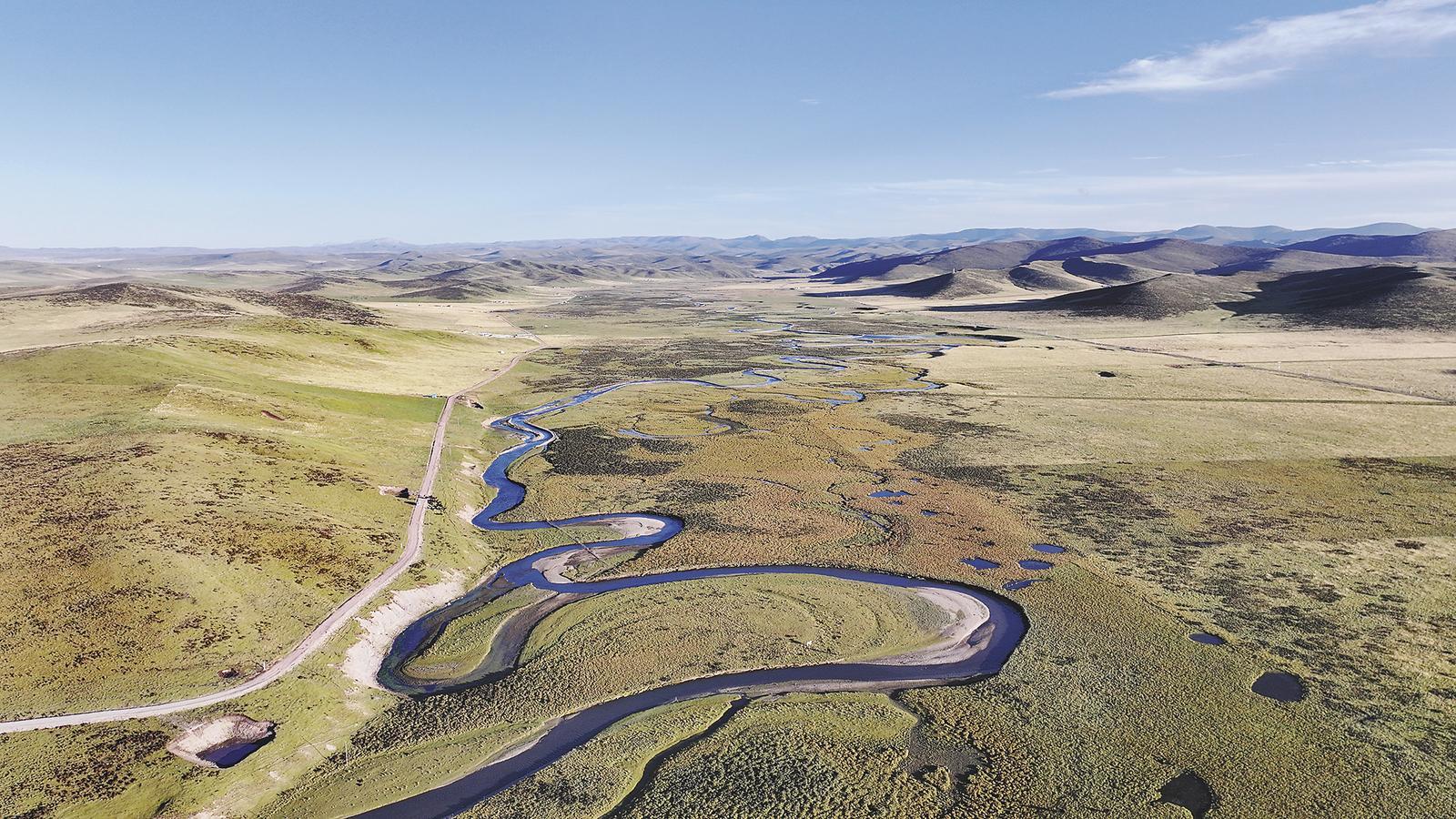
三江源头的绿色长卷
Xin Lang Cai Jing· 2026-01-16 18:01
Core Viewpoint - Qinghai Province is committed to ecological protection as a priority, integrating carbon reduction, pollution control, and green growth to promote a comprehensive green transformation of its economy and society [6][8]. Group 1: Ecological Protection Initiatives - Qinghai has established a natural protection system centered on national parks, with 75% of its protected areas designated as national parks [8]. - The successful integration and optimization of natural protected areas have led to the creation of 83 sites across seven categories [8]. - The Sanjiangyuan National Park has shown significant ecological improvements, with wildlife populations steadily increasing [8][10]. Group 2: Technological Support for Conservation - Qinghai is advancing the construction of an ecological environment big data center to enhance monitoring and regulatory capabilities [9]. - The implementation of 5G technology has enabled live streaming of rare wildlife events, promoting public awareness and appreciation for nature [9]. Group 3: River and Land Management - Ongoing "sand reduction" initiatives in the Yellow River basin aim to stabilize riverbanks and enhance ecological conditions [10][11]. - Comprehensive projects are underway to restore and protect the ecological integrity of the Yellow River, including the construction of protective structures and reforestation efforts [10][11]. Group 4: Economic Benefits from Ecological Protection - The development of eco-tourism around the Gangshika Snow Mountain has created a green industry chain, generating significant employment and income for local communities [12][13]. - The establishment of the Dandunling Scenic Area has transformed into a popular urban leisure destination, showcasing the economic potential of ecological restoration [12][13]. Group 5: Community Engagement and Benefits - Approximately 80,000 ecological forest rangers have been employed, with many coming from impoverished families, resulting in increased income for these households [13]. - The synergy between ecological protection and community welfare is evident, as local populations benefit from conservation efforts while contributing to environmental stewardship [13].