波动率控制策略

Search documents
算法抛售风暴降至?高盛:标普500若跌破6707点,或触发800亿美元系统性卖盘
Jin Rong Jie· 2026-02-09 00:48
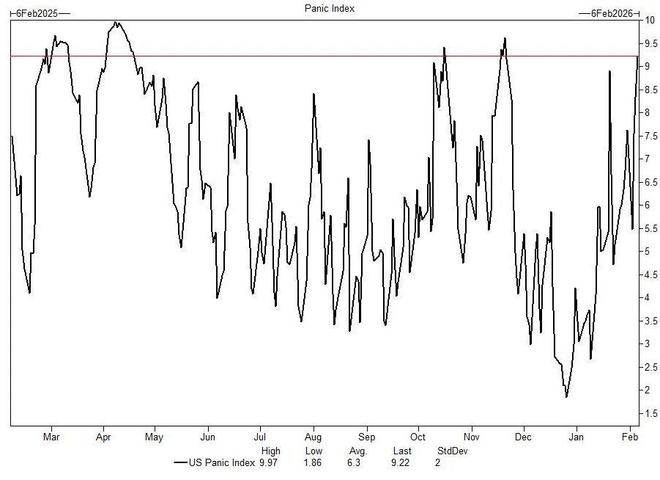
Core Insights - The article discusses the potential for further selling pressure in the U.S. stock market due to trend-following algorithmic funds, as indicated by Goldman Sachs' analysis [1][4] - The S&P 500 index has breached a short-term trigger point for Commodity Trading Advisors (CTAs) to sell stocks, with an estimated $33 billion in potential selling pressure if the market declines further [1][5] - Investor anxiety has increased significantly, with the fear index nearing "extreme fear" levels [1][3] Group 1: Market Trends and Indicators - The S&P 500 index rose by 2% last Friday, marking its largest single-day gain since May of the previous year, following a week of significant declines [3] - The average size of optimal liquidity for the S&P 500 has dropped over 70% this year, indicating a significant deterioration in market liquidity [3][4] - The current market liquidity is characterized by a shift from "long gamma" to a neutral or short gamma position among options traders, which may exacerbate market volatility [4][5] Group 2: Investor Behavior and Market Dynamics - Retail investors have shown signs of fatigue, with a net selling of $690 million in the last two trading days, indicating a shift from the previous "buy the dip" strategy [7] - Seasonal factors suggest that February is typically a weak month for the S&P 500 and Nasdaq 100, as the supportive capital flows from January diminish [7] - Systematic strategies, such as risk parity and volatility control, are currently positioned at high risk levels, which may lead to significant de-risking actions if market volatility remains elevated [5]


高盛交易员:本周美股将面临持续抛压
Hua Er Jie Jian Wen· 2026-02-09 00:32
Core Viewpoint - The U.S. stock market is experiencing continued selling pressure despite a strong rebound, with Goldman Sachs indicating that trend-following funds may continue to sell this week, leading to increased volatility and potential market fluctuations [1][2]. Group 1: Trend Following and Selling Pressure - The S&P 500 index has triggered short-term thresholds for trend-following strategies (CTA), leading to expected net selling in the upcoming week regardless of market direction [1][2]. - Goldman Sachs estimates that if the market weakens, approximately $33 billion in selling could be triggered, while an upward movement could still result in about $8.7 billion in selling [1][2][5]. - The "threshold effect" indicates that if the S&P 500 falls below 6707 points, it could trigger an additional $80 billion in systematic selling over the next month, amplifying downward pressure on the market [2]. Group 2: Liquidity and Volatility - The liquidity in the S&P 500 has significantly decreased, with the top-of-book liquidity dropping from an average of approximately $13.7 million to about $4.1 million [3]. - The shift in options market positions from positive gamma to negative gamma is expected to exacerbate intraday volatility, as traders may need to buy on the way up and sell on the way down to hedge their positions [3]. Group 3: Other Systematic Strategies - Other systematic strategies, such as risk parity and volatility control, still have significant room to reduce positions, with current allocations at the 81st and 71st percentiles, respectively [4]. - These strategies are more dependent on sustained changes in realized volatility, which could lead to increased selling pressure if volatility remains high [4]. Group 4: Seasonal Factors and Retail Investor Behavior - Seasonal trends suggest limited support for the market, as February is historically a weaker month for the S&P 500 and Nasdaq 100 due to the decline in supportive fund flows from January [6]. - Retail investor activity has shown signs of cooling, with a recent net selling of approximately $690 million, indicating a decreased willingness to buy on dips compared to previous trends [6]. Group 5: Market Reactions and External Influences - The recent volatility in the market is partly attributed to the launch of new AI automation tools by Anthropic PBC, which has led investors to reassess disruption risks, affecting the valuations of software, financial services, and asset management stocks [7]. - Goldman Sachs notes that client inquiries have focused on systematic strategies and fund flows, reflecting a market environment where short-term price movements are more influenced by trading flows than by fundamentals [7].
算法抛售风暴降至?高盛:标普500若跌破6707点或触发800亿美元系统性卖盘
Xin Lang Cai Jing· 2026-02-09 00:29
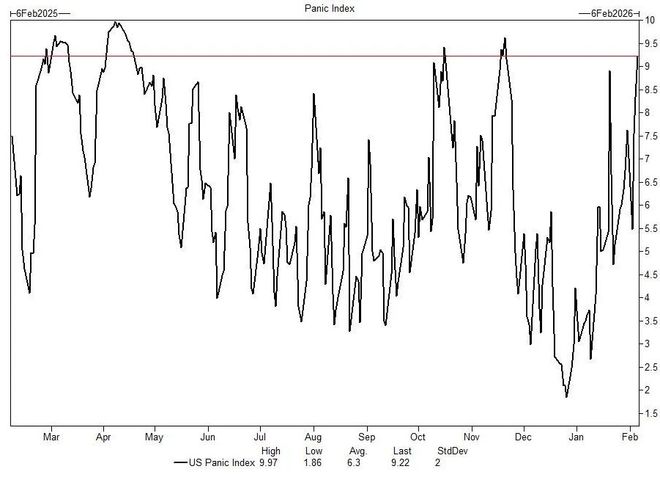
Group 1 - The S&P 500 index has broken the short-term trigger point for Commodity Trading Advisors (CTA) to sell stocks, indicating potential further selling pressure from trend-following algorithmic funds in the coming week [1][4] - Goldman Sachs estimates that if the stock market declines again, it could trigger approximately $33 billion in selling pressure this week, with an additional potential $80 billion in systematic selling if the S&P 500 falls below 6707 points [1][3] - The market's liquidity has significantly deteriorated, with the average size of optimal liquidity orders dropping from about $13.7 million to approximately $4.1 million, a decline of over 70% [3][4] Group 2 - The volatility index (VIX) reached a level of 9.22, indicating that the market is nearing an "extreme fear" state, reflecting heightened investor anxiety [1][3] - Retail investors have shown signs of fatigue, with a net selling of $690 million in the last two trading days, suggesting a shift from the previous "buy the dip" strategy [6] - Seasonal factors indicate that February is historically a weak month for the S&P 500 and Nasdaq 100 indices, as the supportive capital flows from January dissipate [6]