系统性策略

Search documents
算法抛售风暴降至?高盛:标普500若跌破6707点,或触发800亿美元系统性卖盘
Jin Rong Jie· 2026-02-09 00:48
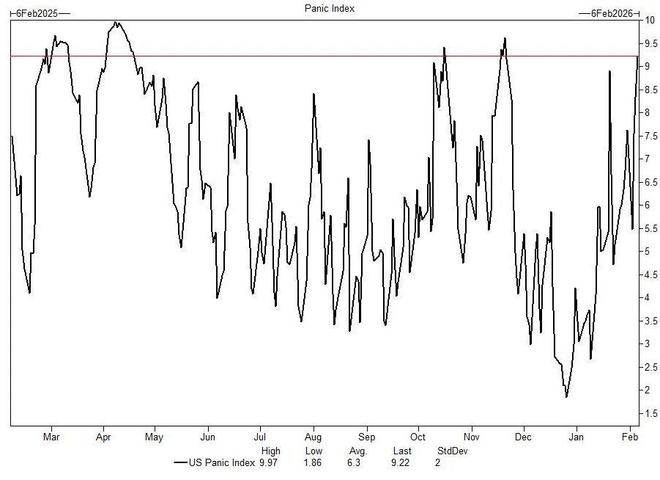
Core Insights - The article discusses the potential for further selling pressure in the U.S. stock market due to trend-following algorithmic funds, as indicated by Goldman Sachs' analysis [1][4] - The S&P 500 index has breached a short-term trigger point for Commodity Trading Advisors (CTAs) to sell stocks, with an estimated $33 billion in potential selling pressure if the market declines further [1][5] - Investor anxiety has increased significantly, with the fear index nearing "extreme fear" levels [1][3] Group 1: Market Trends and Indicators - The S&P 500 index rose by 2% last Friday, marking its largest single-day gain since May of the previous year, following a week of significant declines [3] - The average size of optimal liquidity for the S&P 500 has dropped over 70% this year, indicating a significant deterioration in market liquidity [3][4] - The current market liquidity is characterized by a shift from "long gamma" to a neutral or short gamma position among options traders, which may exacerbate market volatility [4][5] Group 2: Investor Behavior and Market Dynamics - Retail investors have shown signs of fatigue, with a net selling of $690 million in the last two trading days, indicating a shift from the previous "buy the dip" strategy [7] - Seasonal factors suggest that February is typically a weak month for the S&P 500 and Nasdaq 100, as the supportive capital flows from January diminish [7] - Systematic strategies, such as risk parity and volatility control, are currently positioned at high risk levels, which may lead to significant de-risking actions if market volatility remains elevated [5]


算法抛售风暴降至?高盛:标普500若跌破6707点或触发800亿美元系统性卖盘
Xin Lang Cai Jing· 2026-02-09 00:29
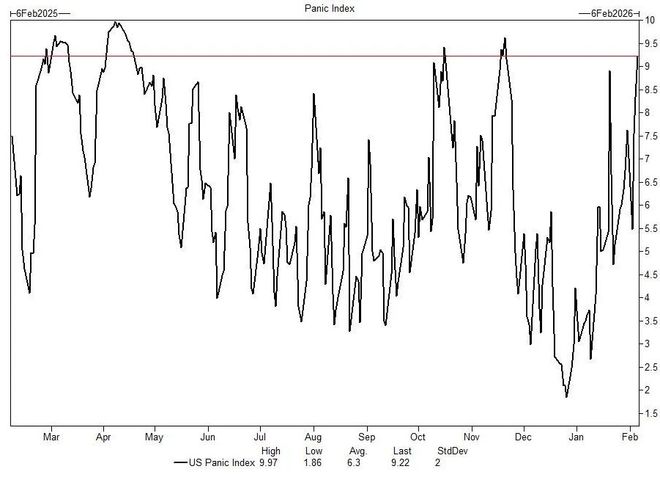
Group 1 - The S&P 500 index has broken the short-term trigger point for Commodity Trading Advisors (CTA) to sell stocks, indicating potential further selling pressure from trend-following algorithmic funds in the coming week [1][4] - Goldman Sachs estimates that if the stock market declines again, it could trigger approximately $33 billion in selling pressure this week, with an additional potential $80 billion in systematic selling if the S&P 500 falls below 6707 points [1][3] - The market's liquidity has significantly deteriorated, with the average size of optimal liquidity orders dropping from about $13.7 million to approximately $4.1 million, a decline of over 70% [3][4] Group 2 - The volatility index (VIX) reached a level of 9.22, indicating that the market is nearing an "extreme fear" state, reflecting heightened investor anxiety [1][3] - Retail investors have shown signs of fatigue, with a net selling of $690 million in the last two trading days, suggesting a shift from the previous "buy the dip" strategy [6] - Seasonal factors indicate that February is historically a weak month for the S&P 500 and Nasdaq 100 indices, as the supportive capital flows from January dissipate [6]
刚刚,特朗普又整大活了!
Ge Long Hui· 2025-06-07 06:41
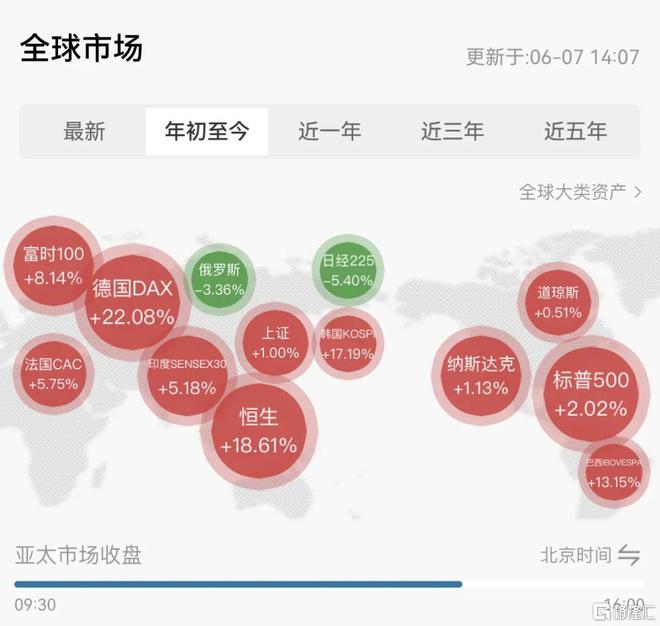
Group 1: U.S. Stock Market Performance - The U.S. stock indices closed higher on Friday, with the non-farm employment data for May exceeding expectations, alleviating recession fears [1] - The S&P 500 index surpassed the 6000-point mark for the first time since February 26, with year-to-date gains of 2.02% for the S&P 500, 1.13% for the Nasdaq, and 0.51% for the Dow Jones [2] Group 2: Diverging Opinions on Market Outlook - Morgan Stanley's chief equity strategist, Lakos Bujas, reversed his previous bearish outlook, now predicting the S&P 500 will close at 6000 points this year, citing a potential short squeeze and increased buying from institutional investors [5] - Bank of America strategist Michael Hartnett issued a warning that the global stock market, after reaching new highs, is approaching a technical "sell" signal, indicating a potential market correction [5][6] Group 3: Global Capital Flows and Asian Market Attraction - In May, foreign investors bought approximately $10.6 billion worth of Asian stocks, marking the largest net inflow in 18 months [12][13] - Goldman Sachs raised its earnings growth forecast for the Asia-Pacific region, excluding Japan, to 9%, driven by stronger macroeconomic growth in China and the U.S. [14] - Major financial institutions, including Morgan Stanley, JPMorgan, Goldman Sachs, and HSBC, are optimistic about China, citing valuation advantages and low investor positioning in Chinese stocks [15][16][17][18]