
流域共治

Search documents
唱响新时代太湖美,常州持续贡献“上游担当”
Xin Lang Cai Jing· 2026-01-17 13:35
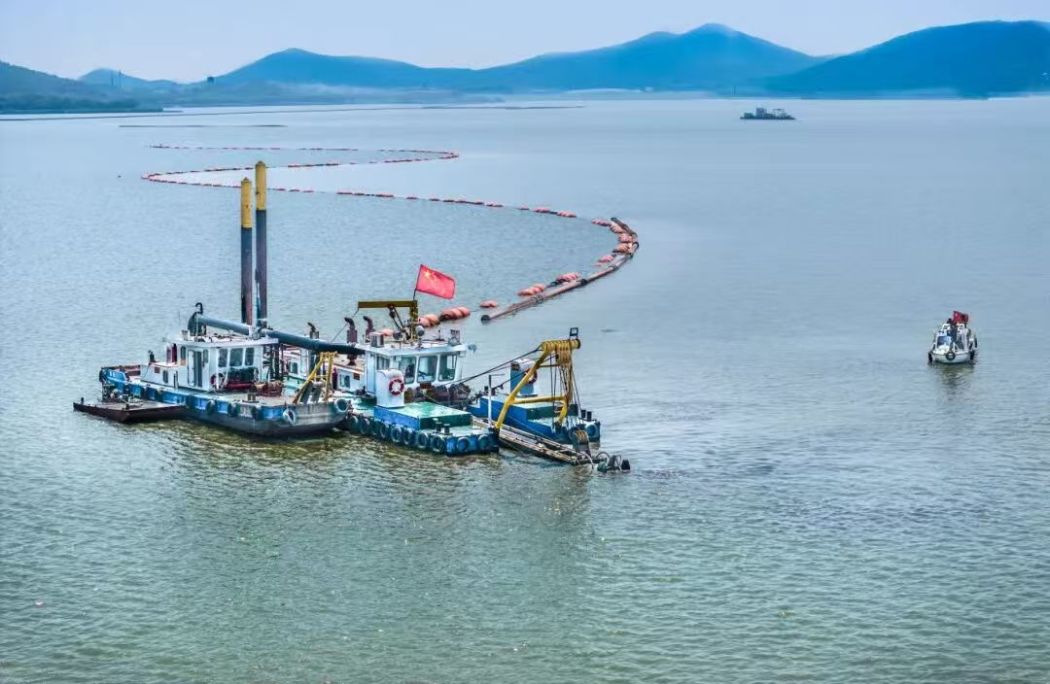
Core Viewpoint - The comprehensive governance of Taihu Lake in Changzhou has shown significant improvements in water quality, with total phosphorus levels improving by 4.7% year-on-year, and multiple indicators reaching their best levels since 2007 [1][4]. Group 1: Water Quality Improvement - In 2025, Taihu Lake's water quality has stabilized at Class III for two consecutive years, marking a historic breakthrough in water governance [1]. - The total phosphorus in Changzhou's water area has improved, with a 5.1% year-on-year reduction in Duhu Lake and a historic achievement of Class III water quality in Changzhou's Changdang Lake [4]. - The overall quality of the water environment in the Changzhou basin has seen multiple breakthroughs, contributing to the narrative of "New Era Taihu Beauty" [4]. Group 2: Pollution Control Measures - Since the start of a new round of comprehensive governance in 2023, Changzhou has prioritized sediment dredging to reduce internal pollution sources, completing 500 million cubic meters of dredging by the end of 2025 [4]. - The city has implemented 195 key projects focused on controlling pollution from domestic, industrial, and agricultural sources, significantly enhancing the overall water quality [7]. - The total phosphorus levels in three main rivers flowing into Taihu Lake improved by 25% year-on-year, with some rivers achieving Class III water quality for the first time [7]. Group 3: Industrial Transformation - Changzhou has established a surface treatment industrial park to centralize management and pollution control, leading to a 20% reduction in ammonia nitrogen and a 5% reduction in heavy metals in wastewater [10]. - The city is promoting green transformation in traditional industries, with 2,192 problematic enterprises undergoing remediation, resulting in a reduction of 1,193 tons of major pollutants [10]. - The "Hazardous Waste, Dispersed, Low Efficiency" comprehensive governance project has been recognized as a national model for green and low-carbon initiatives [10]. Group 4: Future Plans - Changzhou aims to continue its efforts in pollution prevention and ecological system optimization, promoting a vision of a beautiful Taihu Lake with both ecological restoration and vibrant economic development [11].

三个100% 杭州治水有什么门道?
Hang Zhou Ri Bao· 2025-12-25 02:21
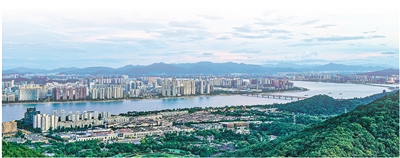
Core Viewpoint - Hangzhou's water quality management has achieved significant success, with 100% compliance in key water quality metrics, ensuring the safety of drinking water for its citizens [1][3][6] Group 1: Water Quality Achievements - From January to October this year, Hangzhou achieved a 100% rate for surface water quality at or above Class III, as well as 100% compliance in water function area standards and drinking water source quality [1] - The city's efforts in water management have resulted in stable and excellent water quality in major rivers and lakes, providing the highest level of drinking water safety for millions of residents [1][6] Group 2: Systematic Water Management - The core of Hangzhou's water management strategy is the "Five Water Co-governance," which includes pollution control, flood prevention, drainage, water supply assurance, and water conservation, emphasizing an integrated approach [3] - Continuous monitoring and management of pollution sources have been implemented, including the completion of inspections and corrective measures for newly identified pollution outlets [3][5] Group 3: Collaborative River Basin Governance - Hangzhou has initiated cross-regional cooperation for water governance by forming the "Qiantang River Basin Water Environment Co-governance Alliance" with four other cities, marking a new phase in collaborative water management [4] - The alliance aims to enhance water quality through institutional innovation and collaborative mechanisms, contributing to the ecological protection of the Qiantang River basin [4][5] Group 4: National Leadership in Water Management - Hangzhou's water management practices have gained recognition as exemplary models across the country, with successful cases in ecological restoration and industrial water management being highlighted as replicable solutions [6] - The city’s efforts in maintaining water quality and environmental protection serve as a benchmark for other regions, showcasing a commitment to sustainable development and ecological civilization [6]
丽江实现泸沽湖保护与发展共赢
Zhong Guo Huan Jing Bao· 2025-05-29 01:43
Core Viewpoint - The article highlights the ecological protection and high-quality development of Lugu Lake in Yunnan Province, emphasizing the successful implementation of the "lake revolution" strategy to maintain water quality and promote sustainable tourism [1][2]. Group 1: Ecological Protection Measures - Lijiang City has committed to preventing any wastewater from entering Lugu Lake, implementing various measures including ecological relocation and strict law enforcement to transition from "people entering the lake" to "people retreating from the lake" [2][3]. - The ecological red line along the lakeshore has been established at 26.15 kilometers, with an ecological yellow line of 52.7 kilometers, and the core ecological protection area is now 2.4 times larger than the original first-level protection area [3]. - The construction of new commercial facilities in the scenic core area is prohibited, with a daily visitor capacity limited to 12,000 [3]. Group 2: Infrastructure and Waste Management - A total of 17 waterfront platforms and 6 docks have been dismantled, along with 180 guesthouses and 95 illegal constructions, resulting in a reduction of 142,500 square meters of building area and 94,300 square meters of land occupation [3]. - Wastewater treatment infrastructure has been expanded, with 20 pumping stations and 81 kilometers of sewage pipelines constructed, achieving full coverage of sewage collection in local villages [3][4]. - Two sewage treatment plants capable of processing 4,000 tons per day have been built, meeting Class A discharge standards, alongside a project for garbage reduction processing [3][4]. Group 3: Collaborative Governance - Lijiang City has strengthened collaborative governance through the implementation of the "1+3" plan for the joint protection and management of Lugu Lake, establishing various coordination and enforcement mechanisms [4]. - Monthly water quality monitoring is conducted at multiple points, ensuring that the water quality meets standards, with a 100% compliance rate for national and provincial monitoring sections [5]. - A budget of 112 million yuan has been allocated for the establishment of a smart management center for Lugu Lake, integrating water quality monitoring and other systems [4]. Group 4: Community Involvement and Sustainable Development - A "government + enterprise + community" management mechanism has been established, allowing local communities to play a central role in both protection and development [6]. - Local residents are encouraged to participate in tourism through eco-friendly activities, reducing agricultural pollution while benefiting from sustainable income sources [6]. - The integration of traditional culture into tourism provides immersive experiences for visitors while ensuring that local communities benefit from ecological protection efforts [6].