
五水共治

Search documents
杭州临安打造“昌小环”品牌,深耕“五水共治”
Zhong Guo Huan Jing Bao· 2026-01-08 09:25
Core Viewpoint - The recognition of Changhua Creek as a provincial-level "Beautiful River and Lake" case exemplifies the successful ecological transformation and effective environmental protection efforts led by the Changhua team under the Hangzhou Lin'an Ecological Environment Bureau [1] Group 1: Ecological Protection Efforts - The "Changxiaohuan" brand integrates regulatory enforcement and public service, utilizing technology and legal frameworks to enhance ecological protection in the Changhua Creek watershed [1][2] - High-spectral drones are employed for real-time monitoring, allowing for precise identification of pollution sources and water quality indicators, thus improving the efficiency of environmental oversight [2] - A "one enterprise, one file" regulatory mechanism is established to ensure compliance with environmental standards, encouraging enterprises to actively participate in pollution reduction [3] Group 2: Enforcement and Compliance - The "Changxiaohuan" brand maintains a zero-tolerance policy towards environmental violations, employing a combination of regular inspections and surprise checks to combat illegal discharges and waste dumping [3] - Enforcement teams are equipped with advanced tools for monitoring and documenting violations, ensuring strict penalties for offenders and promoting a culture of compliance [3] Group 3: Community Engagement and Education - The initiative emphasizes the importance of community involvement in ecological protection, particularly through educational programs targeting children to instill environmental awareness from a young age [4] - Activities such as interactive workshops and field trips are organized to teach children about water conservation and the ecological significance of Changhua Creek, fostering a culture of environmental stewardship [4] Group 4: Future Directions - The recognition of Changhua Creek is seen as a new starting point for deepening ecological protection efforts, with plans to continue innovating regulatory services and enhancing community engagement [5] - The focus will remain on prioritizing ecological health and sustainable development to ensure the ongoing success of the "Beautiful River and Lake" initiative [5]
三个100% 杭州治水有什么门道?
Hang Zhou Ri Bao· 2025-12-25 02:21
Core Viewpoint - Hangzhou's water quality management has achieved significant success, with 100% compliance in key water quality metrics, ensuring the safety of drinking water for its citizens [1][3][6] Group 1: Water Quality Achievements - From January to October this year, Hangzhou achieved a 100% rate for surface water quality at or above Class III, as well as 100% compliance in water function area standards and drinking water source quality [1] - The city's efforts in water management have resulted in stable and excellent water quality in major rivers and lakes, providing the highest level of drinking water safety for millions of residents [1][6] Group 2: Systematic Water Management - The core of Hangzhou's water management strategy is the "Five Water Co-governance," which includes pollution control, flood prevention, drainage, water supply assurance, and water conservation, emphasizing an integrated approach [3] - Continuous monitoring and management of pollution sources have been implemented, including the completion of inspections and corrective measures for newly identified pollution outlets [3][5] Group 3: Collaborative River Basin Governance - Hangzhou has initiated cross-regional cooperation for water governance by forming the "Qiantang River Basin Water Environment Co-governance Alliance" with four other cities, marking a new phase in collaborative water management [4] - The alliance aims to enhance water quality through institutional innovation and collaborative mechanisms, contributing to the ecological protection of the Qiantang River basin [4][5] Group 4: National Leadership in Water Management - Hangzhou's water management practices have gained recognition as exemplary models across the country, with successful cases in ecological restoration and industrial water management being highlighted as replicable solutions [6] - The city’s efforts in maintaining water quality and environmental protection serve as a benchmark for other regions, showcasing a commitment to sustainable development and ecological civilization [6]

首获“大禹鼎”金鼎,宁波以数字化赋能水治理|水征文选登
Zhong Guo Huan Jing Bao· 2025-11-11 03:10
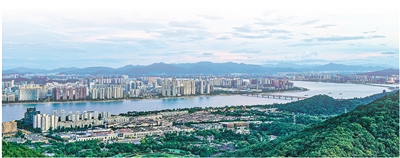
Core Points - Ningbo City has been awarded the highest honor "Dayu Ding" for its "Five Water Governance" initiative in 2024, marking a significant achievement in environmental management [1] - The city has implemented an innovative "1+8" water governance policy system, focusing on various specialized actions to enhance water quality and ecological protection [1] - A total investment of 8.6 billion yuan has been allocated for 174 water governance projects this year, emphasizing targeted management strategies [1] Group 1 - Ningbo's "Five Water Governance" initiative aims to improve water environment quality and marine ecological protection through coordinated efforts [1] - The city has introduced a feedback mechanism for river and lake governance, transitioning from individual management to collaborative management [2] - A "Green Water Bank" points system has been established to encourage public participation in water conservation efforts [2] Group 2 - Future plans include enhancing data connectivity for surface water and marine monitoring, aiming for a comprehensive digital management system [2] - The ongoing development of the "Yong You Bi Shui" digital water governance application will integrate data resources for better analysis and decision-making [2]
学习贯彻党的二十届四中全会精神 “十五五”任务书⑤丨加快经济社会发展全面绿色转型 建设美丽中国
He Nan Ri Bao· 2025-10-30 23:41
Group 1: Water Management and Ecological Protection - The article emphasizes the importance of water management and ecological protection in the context of China's modernization and the 14th Five-Year Plan, highlighting the need for a modern water network and efficient water resource utilization [2] - The provincial water authority plans to implement 97 major projects to enhance the water network, ensuring better water resource allocation and management [3] - The focus is on the "Five Water Governance" strategy, which includes water environment, ecology, resources, safety, and culture, aimed at contributing to the modernization of the Central Plains [2][3] Group 2: Flood Control and Climate Resilience - The article discusses the need to enhance flood control responsibilities and improve responses to climate change, particularly extreme weather events, through a comprehensive flood prevention system [4] - It highlights the implementation of various engineering and non-engineering measures to strengthen flood defense capabilities [4] Group 3: Ecological Restoration and Green Development - The article outlines the successful ecological restoration efforts in the Henan province, transforming previously damaged mining areas into green spaces, which has led to significant ecological and economic benefits [5][6] - The province has secured 4 billion yuan in national funding for major ecological protection and restoration projects, covering an area of 1.8 million acres [5] - The integration of ecological restoration with economic development is emphasized, showcasing how restored areas can enhance local livelihoods through the cultivation of economic crops [6]
浙江金华 天蓝水碧气象新
Jing Ji Ri Bao· 2025-10-26 21:55
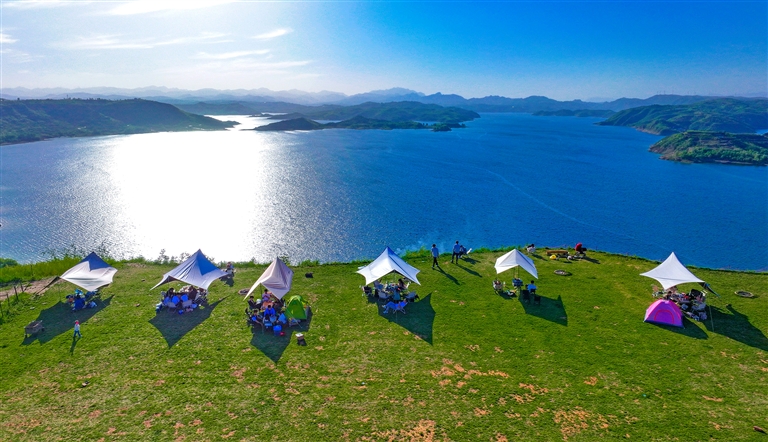
Group 1 - The article highlights the transformation of the ecological environment and economic development in Jinhua, Zhejiang, emphasizing the balance between industrial growth and environmental protection [1][2] - The local government initiated a comprehensive water treatment campaign, resulting in the closure of over 20,000 crystal processing workshops and the relocation of the industry to designated parks, promoting a shift from low-end to high-end production [1] - Jinhua's efforts in water quality improvement have led to a 100% increase in surface water quality above Class III standards, earning the highest award in the "Five Water Co-Governance" initiative for 11 consecutive years [1] Group 2 - The modern hardware industry in Yongkang, a representative of Jinhua's traditional industries, is facing challenges due to pollution from high-temperature emissions from furnaces [2] - A pilot project for waste heat recovery has been initiated, with five companies participating, including Shunhu Aluminum and Feijian Industry, which have implemented technologies to reduce natural gas consumption and carbon emissions [2] - The project is expected to reduce approximately 40,000 tons of carbon dioxide emissions annually once fully implemented [2] Group 3 - Innovative projects in Jinhua include the establishment of the "Panda Pig Paradise" to promote the "Jinhua Two-Headed Black Pig" and the development of smart bird-watching technology by Unijia Intelligent Technology [3] - Green finance initiatives, such as the "Flower Wood Loan" product from Jinhua Chengtai Rural Commercial Bank, have provided 3.083 billion yuan in loans to support the flower and tree industry and other green projects [3] - The ecological resources in Jinhua are being effectively converted into economic benefits, enhancing the livelihoods of local residents and expanding the pathways for the "Two Mountains" concept [3]
为家门口的河流写下新时代绿色编年史
Ren Min Ri Bao· 2025-05-18 22:02
Core Viewpoint - The article highlights the transformation of the Xin Kai River in Hangzhou, driven by the dedicated efforts of local community members, particularly Hu Fuqing, who has documented the river's changes over a decade through meticulous records and active participation in river conservation efforts [2][3][4]. Group 1: River Conservation Efforts - Hu Fuqing, a community river guardian, has been actively monitoring the Xin Kai River since 2015, recording over 3700 entries in 21 notebooks, covering more than 10,000 kilometers [2][4]. - The river's water quality has significantly improved, with earlier records noting pollution and debris, while recent entries reflect clear water and the absence of floating waste [3][5]. - The local government has implemented a comprehensive river management system, involving 1.2 million river guardians across various levels, promoting community engagement in water conservation [11][12]. Group 2: Community Involvement - The initiative has inspired local residents to join river protection efforts, with 69,000 registered volunteers participating in conservation activities [11]. - The community has seen a shift in perception, with more residents actively engaging in river monitoring and cleanup efforts, reflecting a growing environmental consciousness [10][13]. - The program has also led to the establishment of a digital platform for efficient monitoring and reporting of river conditions, enhancing the effectiveness of conservation efforts [9]. Group 3: Economic and Social Impact - The improvements in the river's condition have contributed to the overall development of the surrounding area, transforming it into a vibrant community with new economic opportunities [15][16]. - The article notes that the cultural and economic activities in the region have flourished, with a reported increase in the added value of the cultural industry by 6.5% year-on-year [16]. - The integration of ecological preservation with urban development is seen as a model for sustainable growth, aligning with broader national goals of modernization and environmental harmony [16].