
流量劫持

Search documents
强制跳转、流量劫持,市场监管总局向手机行业“三宗罪”亮剑
Bei Ke Cai Jing· 2025-11-27 14:32
Core Points - The article discusses the recent compliance guidance issued by the State Administration for Market Regulation in Shenzhen, focusing on unfair competition in the mobile phone and application platform sectors, highlighting the prevalence of irrational competition and the detrimental practices employed by some companies [1][4] Group 1: Unfair Competition Practices - The article identifies three main unfair competition practices in the mobile industry, referred to as the "three sins": traffic hijacking, forced redirection, and malicious incompatibility [1][8] - Traffic hijacking involves companies using technical means to mislead users into downloading apps from their own stores instead of third-party platforms, thereby infringing on user choice and harming competitors [2][6] - Forced redirection is characterized by misleading prompts and technical barriers that prevent users from accessing desired applications, which has been reported as a significant pain point for users [3][8] Group 2: Impact on Users and Market - These unfair practices not only disrupt user experience but also undermine the competitive order in the market, leading to long-term harm to the innovation vitality of the digital economy [4][11] - Users have reported experiencing complex and frustrating download processes due to misleading compatibility warnings and forced redirections, which ultimately benefit the manufacturers' own app stores [2][3] Group 3: Legal and Regulatory Responses - Legal experts indicate that these practices violate various laws, including the Anti-Unfair Competition Law and the Consumer Rights Protection Law, which protect user rights and fair competition [8][9] - The article mentions ongoing efforts by regulatory bodies to establish clearer standards and guidelines to combat these unfair practices, including the introduction of safety requirements for "shake to trigger" advertisements [10][11] Group 4: Industry Reactions and Future Directions - The article notes that major smartphone manufacturers and e-commerce platforms have not yet responded to inquiries regarding compliance with the new guidelines [9] - There is a call for a multi-faceted governance approach involving government enforcement, industry self-regulation, and public awareness to effectively address and mitigate unfair competition behaviors [11]
鲁大师被指“捉迷藏”式割韭菜:精准屏蔽北京IP,还怕用户找周鸿祎投诉
Yang Zi Wan Bao Wang· 2025-11-20 15:18
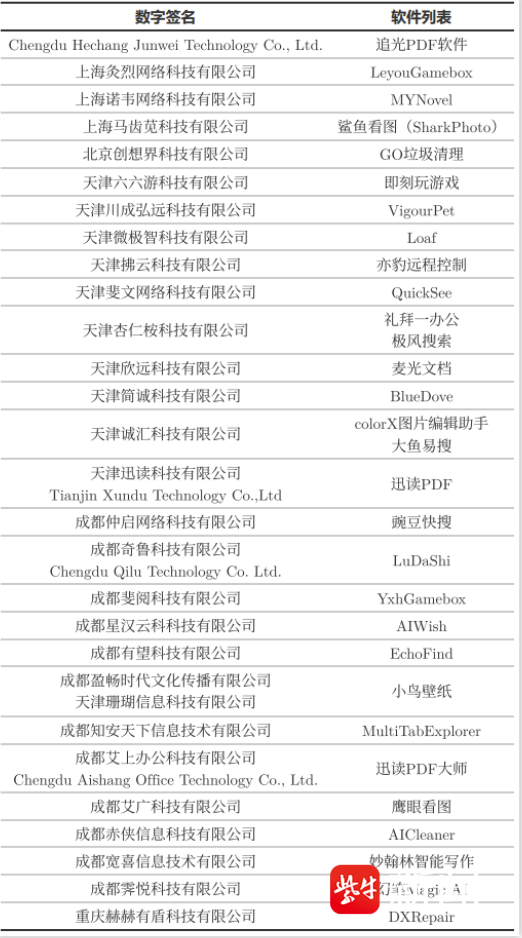
Core Viewpoint - The report by Huorong Security Lab reveals a large-scale promotion scheme involving multiple companies, including Chengdu Qilu Technology Co., Ltd. (operator of LuDaShi), which employs covert methods to hijack user traffic and silently install software while implementing targeted "anti-detection" strategies [1][3]. Group 1: Companies Involved - Chengdu Qilu Technology Co., Ltd. is identified as the operator of LuDaShi, which is part of a broader network of companies engaged in traffic hijacking [1][3]. - Other companies listed in the report include Chengdu Hechang Junwei Technology Co., Ltd., Shanghai JiuLie Network Technology Co., Ltd., and several others, each associated with specific software products [2]. Group 2: Promotion Tactics - The report details various promotional tactics used by these companies, such as browser pop-up ads for games, silent installation of third-party software without user consent, and manipulation of web links to earn commissions [3][5]. - A notable tactic includes the dynamic control of software promotion through cloud-based configuration commands, allowing for targeted advertising based on user location and behavior [3][5]. Group 3: Evasion Strategies - The software employs complex "hide-and-seek" strategies to evade detection, including geographic targeting based on user IP addresses and halting promotions if technical analysis tools are detected on the user's device [5][6]. - The report highlights specific detection logic within LuDaShi's promotion module that prevents advertising if the user has visited certain complaint-related websites or social media pages associated with 360's founder Zhou Hongyi [7][10]. Group 4: Response and Updates - On the same day the report was released, LuDaShi pushed two software updates, which vaguely mentioned "bug fixes" and "enhanced user experience," without addressing the allegations of traffic hijacking [10]. - As of the report's publication, LuDaShi has not publicly responded to the specific accusations made in the Huorong Security report [10].

98%用户曾下载的电脑管家,在“暗算”小白用户
2 1 Shi Ji Jing Ji Bao Dao· 2025-11-19 11:48
Core Insights - A recent technical report by the endpoint security company Huorong has identified nearly 30 domestic software applications suspected of traffic hijacking and malicious promotion [2] - The report particularly highlights the well-known software "Ludashi," which allegedly deceives users by setting fake close buttons during game advertisement promotions and third-party plugin downloads [2] - Ludashi is also accused of inserting rebate parameters into links on platforms like JD.com and Baidu, extracting a commission from users' natural searches [2] - The report has caused significant concern within the cybersecurity community, not only due to the involvement of a prominent security software but also for revealing strategies to evade regulation [2] - The software reportedly monitors users' online activities, such as visits to technical forums and the 12315 complaint website, and social media interactions with figures like Zhou Hongyi, the chairman of 360 [2] - If users are identified as knowledgeable rather than "computer novices," the software can cease promotions at any time [2] - As of the report's publication, both Ludashi and 360 have not provided comments, while Huorong has opted not to conduct interviews but is willing to respond to inquiries through official statements [2]

98%用户曾下载的电脑管家,“劫持”小白用户
2 1 Shi Ji Jing Ji Bao Dao· 2025-11-19 08:13
Core Viewpoint - The report by Huorong highlights the presence of "rogue software" in the domestic PC ecosystem, particularly focusing on the well-known software Lu Da Shi, which is accused of deceptive advertising practices and traffic hijacking [2][3][10]. Group 1: Allegations Against Lu Da Shi - The report identifies Lu Da Shi as engaging in misleading practices, such as setting fake close buttons to trick users into downloading third-party software [2][4]. - Lu Da Shi is also accused of inserting rebate parameters into links on platforms like JD.com and Baidu, allowing the software to earn commissions without user consent [5][9]. - The software's operations are said to be controlled by a cloud-based configuration system, which allows for real-time adjustments to promotional strategies based on user behavior [5][6]. Group 2: Industry Context and Impact - The report indicates that Lu Da Shi, once a leading system evaluation software with a market share of nearly 99%, has seen a decline in user engagement and revenue due to changing market dynamics and regulatory challenges [10][11]. - The company's revenue heavily relies on online traffic monetization, with 99.9% of its income coming from this source, particularly from advertising, which has surged by 153% despite a general downturn in the advertising industry [11]. - The report suggests that the software's reliance on gray income models is a response to the challenges of finding stable monetization avenues in a competitive market [10][11]. Group 3: Regulatory and Legal Challenges - The report discusses the historical context of "rogue software" in China, noting previous attempts to combat it through collective lawsuits and the formation of advocacy groups, which have had limited success [12][13]. - Legal experts highlight the difficulties in defining and prosecuting "rogue software," as it often operates in a gray area between legitimate software and malware, complicating enforcement efforts [12][14]. - Recent regulations have begun to clarify the boundaries of acceptable advertising practices, but enforcement remains challenging due to the technical sophistication of these software programs [13][14].