消费两极化

Search documents
私有化失败转向台球,商务男装金利来另辟蹊径
Bei Jing Shang Bao· 2025-12-22 13:05
Core Insights - Goldlion, known as the "King of Suits," is seeking new growth paths by entering the billiards apparel market, opening its first billiards store in Wuhan, which features professional billiards clothing and an interactive experience area [1][3] - The company has faced declining performance in its traditional business of men's formal wear, with revenue dropping from over HKD 1.8 billion at its peak to HKD 1.2 billion [4][5] - The billiards market in China is growing, with a projected market size of RMB 872 billion in 2024, reflecting a 20.5% year-on-year increase, and the number of billiards clubs increasing at an annual rate of 12% [8][9] Company Strategy - Goldlion aims to position its billiards brand as a fashionable, high-quality leisure brand targeting middle-class male consumers aged 25-45, combining professional equipment with social experiences [3][8] - The company has previously attempted to diversify its offerings, launching new product lines and series to attract different consumer segments, but these efforts have not significantly improved its performance [7][8] - Goldlion's management believes that billiards aligns with its brand philosophy of balancing tradition and innovation, hoping to attract younger consumers through this new venture [8][9] Industry Context - The men's formal wear industry is experiencing widespread challenges, with several brands, including Seven Wolves and Youngor, reporting declines in revenue and profit [5][6] - The market for men's apparel is becoming polarized, with lower-priced segments growing while higher-priced segments face pressure from international brands and private label products [6] - The demand for billiards apparel may not match the popularity of the sport itself, as many consumers enjoy playing billiards but are reluctant to purchase specialized clothing [8]


消费两极化下,美团点评商家长效经营的“双循环”破局之道!
Sou Hu Cai Jing· 2025-11-09 17:12
Core Insights - The current consumer market is experiencing polarization, forcing merchants on platforms like Meituan to navigate between low-price competition and high-end offerings [1][2] - The key to achieving long-term profitability lies in balancing short-term growth with long-term brand building through a dual-cycle operational strategy [1][2] Short-term Cycle for New Stores - New or single stores should focus on creating a "quality + flow" positive cycle to quickly activate cash flow and build an initial customer base, rather than relying solely on price cuts [1] - Essential strategies include optimizing operational scores, refining quality group purchases, and designing targeted promotional activities to enhance competitiveness [1] - Utilizing a comprehensive marketing matrix, including live streaming and holiday promotions, can effectively capture high-intent customer traffic [1] Long-term Cycle for Established Stores - Established chain stores need to transition from merely fulfilling orders to building a brand, leveraging platform resources like exclusive member discounts and targeted customer recommendations [2] - By accumulating data assets through quality product offerings, stores can enhance their operational quality and gain more exposure during platform promotions [2] - This creates a growth flywheel of resource allocation, conversion accumulation, brand enhancement, and further resource acquisition [2] Overall Strategy for Merchants - The competition in Meituan's ecosystem is no longer just about marketing tools but about the ability to integrate various resources effectively [2] - Merchants are encouraged to embrace new scenarios and tools, using short-term cycles for immediate gains while establishing long-term brand barriers [2] - Finding a balance between cost-effectiveness and high quality is crucial for sustaining profitability in a polarized market [2]


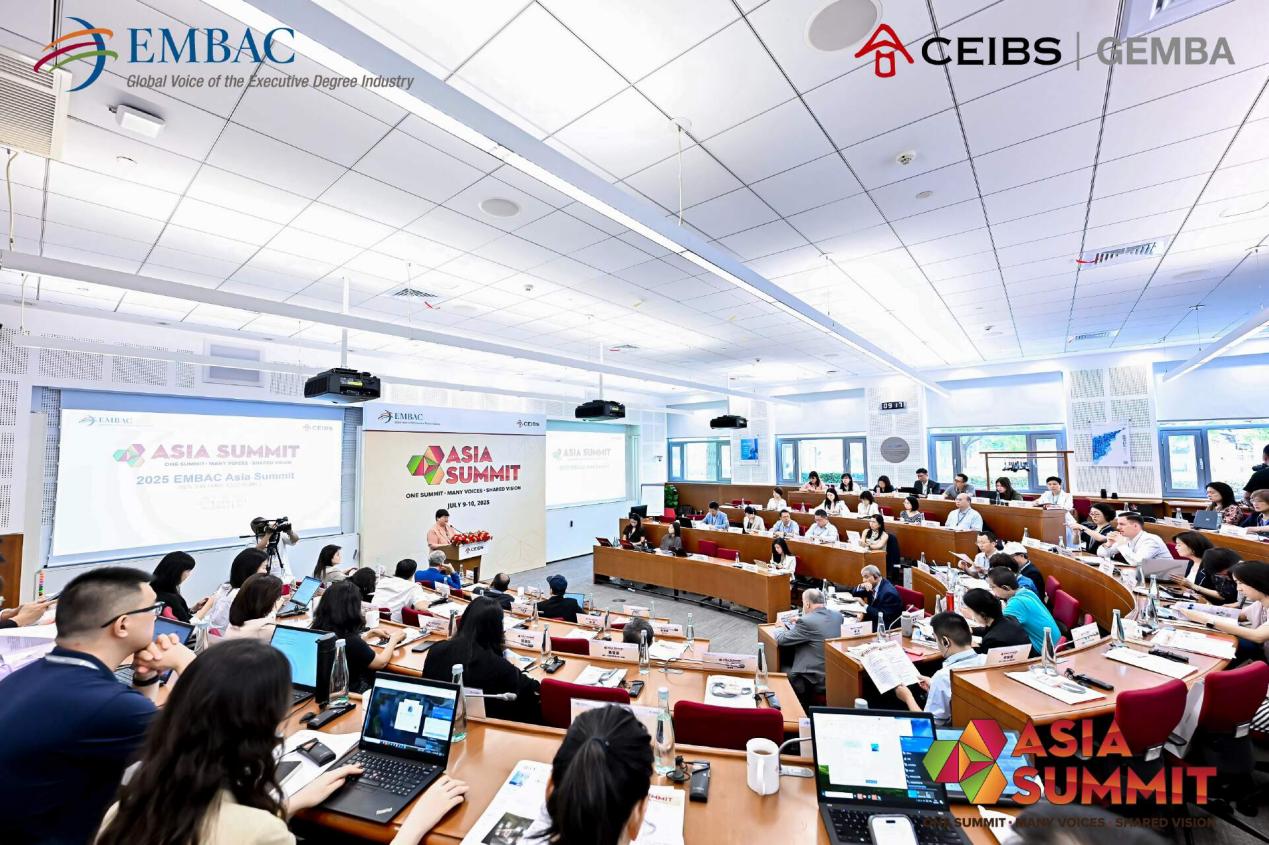
2025全球EMBA委员会亚洲峰会在中欧国际工商学院举行
Zhong Guo Jin Rong Xin Xi Wang· 2025-07-11 06:11
Core Insights - The 2025 Global EMBA Committee Asia Summit was held at CEIBS Shanghai campus, gathering top business school experts, executives, and industry elites to discuss trends, challenges, and innovations in business education [1][26] - The summit aimed to break traditional educational silos and build a future learning community [1] Group 1: Key Themes from Presentations - CEIBS President Wang Hong emphasized the need for management education to adapt to changes in the global business environment, focusing on three areas: deep transformation of cutting-edge academic knowledge, global dissemination of local wisdom, and educational empowerment through digital technology [3] - The summit highlighted four macro trends in global business education: a rebound in application numbers, geopolitical factors influencing study destinations, a decline in Chinese applicants' interest in the U.S., and a shift in skill demands towards AI and strategic thinking [6] - Fudan University’s Management School Dean Lu Xiongwen noted that over 90% of Chinese universities have management programs, creating a vast market for EMBA and MBA education driven by economic growth and innovation [8] Group 2: Discussions on Market Dynamics - The first roundtable discussion focused on the evolving expectations of companies regarding professional degrees, emphasizing the need for tailored short-term management courses that integrate industry insights [13] - The second roundtable explored the disruptive power of KOLs and KOCs in digital marketing, highlighting a shift from centralized to decentralized marketing strategies [15] - The final roundtable discussions addressed the impact of AI on education, with experts sharing insights on how AI can both challenge and empower educational practices [21] Group 3: Future Directions - The summit concluded with a high-level leadership roundtable discussing the challenges of higher education development, emphasizing the importance of cultivating leaders with a global perspective and social responsibility [23] - Participants expressed a strong desire for more high-level exchange activities to support the internationalization and innovation of Asian business education [26]