消费抵制

Search documents
优衣库下架宝可梦联名产品
Bei Jing Wan Bao· 2026-02-03 11:05
Core Viewpoint - The recent controversy surrounding Pokémon's association with historical and political issues has led to the removal of Pokémon collaboration products from major retailers like Uniqlo and Li Ning, highlighting the sensitivity of cultural and historical contexts in marketing strategies [1] Group 1: Product Removal - Uniqlo and Li Ning have removed Pokémon collaboration products from their online stores following the controversy, including Uniqlo's UT and UTME custom T-shirts and canvas bags featuring Pokémon designs [1] - Customer service representatives from Li Ning indicated a lack of clarity regarding the reasons for the product removal, while Uniqlo staff confirmed that all Pokémon-related items were taken off the shelves [1] Group 2: Consumer Reactions - Consumers expressed disappointment over Pokémon's actions, emphasizing that the brand's historical and political insensitivity is unacceptable, particularly given its appeal to the younger generation with purchasing power [1] - Some consumers have stated they will no longer consider purchasing any Pokémon-related products, indicating a potential long-term impact on brand loyalty due to the controversy [1] Group 3: Cultural Commentary - Commentary from the Junzhengping Studio highlighted the significance of the Yasukuni Shrine, where war criminals are enshrined, and criticized Pokémon's activities as disrespectful to historical justice and the sentiments of affected nations [1]

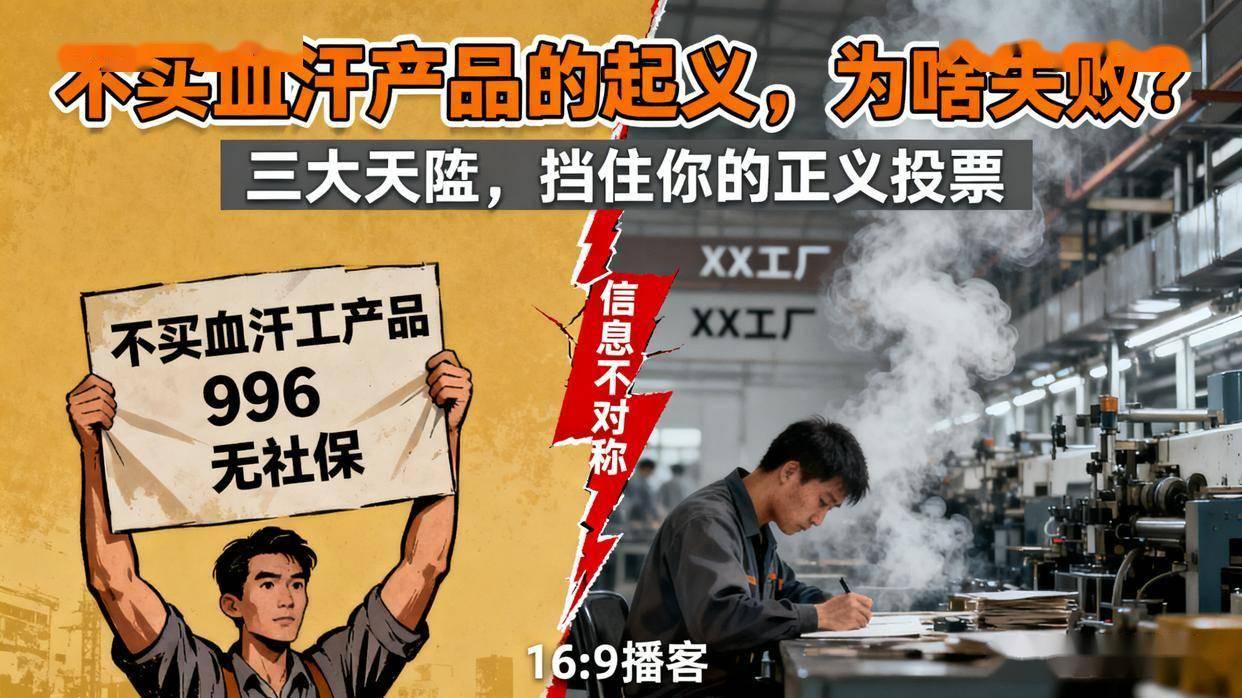
用“不消费”倒逼996企业倒闭?别天真了,这才是劳动者唯一的出路
Sou Hu Cai Jing· 2025-09-28 17:42
Core Viewpoint - The article discusses the challenges of consumer boycotts against "sweatshop" products, highlighting the information gap that consumers face in understanding labor compliance and the systemic issues that prevent effective change in labor rights protection [1] Information Dilemma: The Invisible "Sweatshops" - Consumers struggle to access genuine labor compliance information due to companies' reluctance to disclose sensitive data, often citing business confidentiality [3] - The complexity of supply chains makes it difficult for consumers to trace back to original suppliers, leading to a lack of transparency [3][4] - Different labor regulations across regions and internal management chaos within companies further complicate the situation, making it hard for consumers to make informed ethical choices [4] Reality of Choices: Cost Considerations - Workers prioritize cost-effectiveness in their purchases due to limited incomes and rising living expenses, leading them to seek high-value products [5] - The prevalence of e-commerce and price transparency drives consumers to focus on getting better quality for the same price, reinforcing the importance of cost-performance ratio in their buying decisions [5][6] True Solution: Institutional Transparency - The article emphasizes the need for improved legal frameworks to protect workers' rights, as existing labor laws do not adequately cover new employment forms like gig work [8] - Regulatory bodies are becoming more professional and utilizing big data to monitor compliance, aiming to enhance oversight and reduce violations [9] - The role of labor unions is highlighted as crucial in negotiating better conditions and providing legal support for workers, fostering a more inclusive dialogue in workplaces [9][10]