消费者知情权与选择权

Search documents
消费者知情权选择权如何保障
Xin Lang Cai Jing· 2026-02-06 16:47
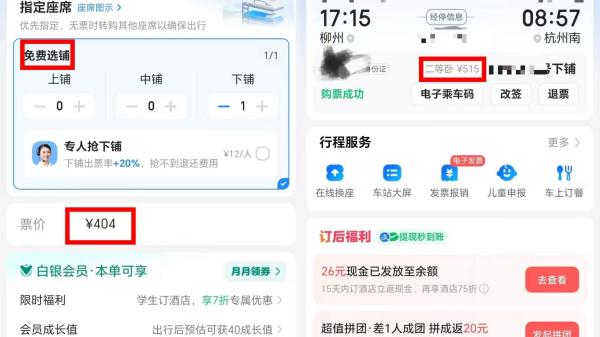
Core Viewpoint - The core focus of the article revolves around the "right to know" concerning pre-prepared meals, emphasizing the importance of transparency in food preparation methods within the restaurant industry [1] Group 1: Regulatory Framework - The State Council's Food Safety Office, the Market Supervision Administration, and the Ministry of Commerce have drafted an announcement encouraging food service providers to voluntarily disclose their food processing methods [1] - The announcement states that if pre-prepared meals, central kitchen products, or pre-packaged foods are used, the disclosed information must be truthful and accurate [1] Group 2: Industry Analysis - Professor Liu Peng from Renmin University of China notes that the encouragement of voluntary disclosure rather than mandatory requirements is based on several practical considerations, including the absence of legal obligations and the lack of established industry practices [1] - International experiences generally favor voluntary disclosure of processing methods by companies, which aligns with the proposed approach in the announcement [1] Group 3: Implementation Guidelines - The announcement outlines various methods for food service providers to disclose information, such as labeling on menus or ordering apps, descriptions on company websites or public accounts, prominent displays in stores, and responses to consumer inquiries [1] - Industry insiders believe that this approach effectively balances the principles of information disclosure with flexibility, providing clear direction for companies while allowing room for execution [1]
从强制“默认勾选”到“隐形诱导” 揭秘购票平台搭售套路
Yang Shi Xin Wen· 2026-01-08 00:38
Core Viewpoint - The article highlights the increasing complexity and hidden costs associated with third-party ticket purchasing platforms, which have evolved from overt bundling practices to more subtle forms of consumer manipulation, such as price sorting traps and visual misdirection [1][5]. Group 1: Consumer Experiences - A consumer from Guangxi reported a discrepancy in ticket pricing, where a ticket initially priced at 404 yuan ended up costing 515 yuan due to undisclosed service fees during the payment process [3][4]. - Another consumer from Sichuan experienced a "speed trap," where a ticket advertised at 50 yuan unexpectedly cost 72 yuan upon payment, with no clear indication of additional fees until after the transaction was completed [4]. Group 2: Regulatory Context - Current regulations prohibit default selection of add-on services like insurance and expedited packages, requiring clear consumer notification for bundled offerings [5][12]. - Despite the reduction in forced bundling, the complexity of additional services and page designs has increased consumer burden, with over half of surveyed users identifying hidden consumption traps as a significant issue [5]. Group 3: Common Tactics Used by Platforms - **Trap One: Misleading Price Sorting** - Platforms often display the lowest price option first, but consumers must purchase additional services to access that price, misleading them into thinking they are getting the best deal [7][12]. - **Trap Two: Visual Misleading** - Page designs can create the illusion that additional services are optional, while they are actually bundled with the ticket price, leading to unexpected charges at checkout [8][10]. Group 4: Industry Insights - The evolution from forced bundling to hidden inducements reflects a profit-driven approach by platforms, where basic ticket sales serve as a means to attract customers, while the real revenue comes from various add-on services [11][12]. - Experts emphasize the need for improved transparency in the purchasing process and stronger regulatory oversight to protect consumer rights [12].