
深度本土化战略

Search documents
20%+连续增长六年,拉美电商蓝海,年轻消费者正用“分期”入场
3 6 Ke· 2025-12-19 09:19
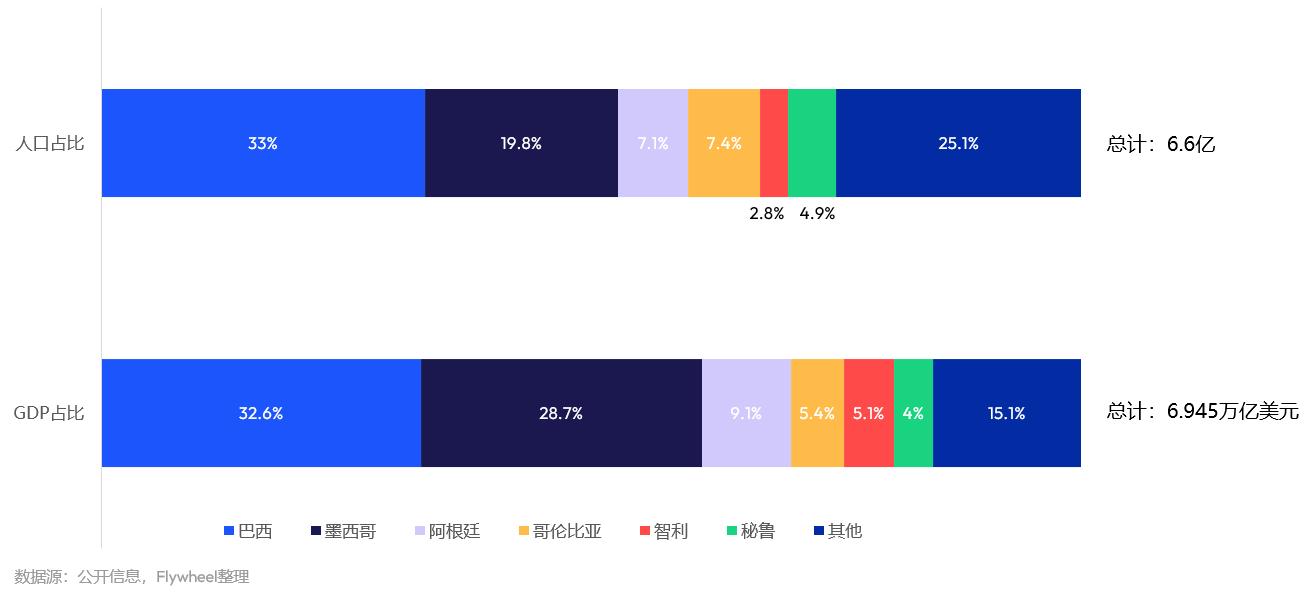
Core Insights - Latin America is emerging as a new growth market for e-commerce, with a total transaction value expected to reach $633 billion in 2024, showing a strong growth rate of over 20% from 2019 to 2024 [1] - The region's growth is supported by favorable demographics, with over 660 million people and a young population, as well as a GDP per capita exceeding $10,000, providing a solid economic foundation for e-commerce [1][3] - E-commerce penetration in Latin America is still low, accounting for only 12%-15% of total retail sales, indicating significant room for growth compared to China and mature markets [3] Demographics and Economic Overview - By 2024, the number of e-commerce users in Latin America is projected to exceed 310 million, representing about 47% of the region's total population, with a year-on-year growth rate of 31% [3] - Brazil and Mexico are the largest e-commerce markets in the region, contributing over 60% of the region's GDP and nearly two-thirds of its e-commerce market share [1] Young Consumer Characteristics - The young generation in Latin America is driving market growth, characterized by preferences for quality living, early enjoyment of products, diverse experimentation, and online purchasing [4][9][11][16] - Urbanization has led to a significant increase in the demand for high-quality, smart, and personalized products, with over 80% of the population living in urban areas [6][8] - High inflation has influenced young consumers to adopt installment payment methods, with nearly 60% of e-commerce transactions using this approach [9][11] Market Trends and Consumer Behavior - The e-commerce market is experiencing rapid growth in various product categories, including health and beauty, fashion, and home products, with annual growth rates ranging from 9% to 12% [14] - Major shopping events like Black Friday and local festivals are significantly boosting online sales, with a projected 31% year-on-year growth in online sales during Black Friday in 2024 [16] - Mobile devices are becoming the primary channel for e-commerce, accounting for approximately 70% of traffic since 2020 [16] Unique Market Characteristics - Latin America faces challenges such as high electricity costs and aging infrastructure, creating opportunities for energy-efficient appliances [20][22] - The region's diverse culinary culture necessitates adaptable kitchen appliances, with products like air fryers and multi-functional cooking devices gaining popularity [23][25] - A compact living environment drives demand for efficient cleaning appliances, with a projected growth rate of 4.2% in the cleaning appliance market by 2029 [28][29] Strategic Considerations for Market Entry - Companies looking to enter the Latin American market must understand local infrastructure, cultural nuances, and consumer preferences to tailor their product offerings and marketing strategies [18][30] - The complex political and economic landscape requires businesses to adopt localized strategies, including compliance with local regulations and establishing reliable logistics networks [30]

奥迪中国总裁:安全是绝不妥协的领域
Di Yi Cai Jing· 2025-12-02 00:46
"安全是绝不妥协的领域。绝大多数新规要求(我们)已完全满足,坚决支持旨在提升行业安全标准的 法规。"奥迪中国总裁罗英瀚(JohannesRoscheck)近日对第一财经记者表示。 罗英瀚称,奥迪的核心任务是依托两大合作伙伴(一汽奥迪和上汽奥迪),将最佳产品引入中国市场。 明年主力产品阵容全面革新,包括基于PPE平台的全新纯电车型,以及AUDI品牌新产品。 当前中国汽车市场竞争格局重塑,特斯拉、蔚来、问界等新能源汽车品牌在高端市场销量的攀升,分流 了传统豪华车品牌份额。外资豪华车企普遍转变了打法,尤其是在中国消费者看重的智能化领域,奥 迪、奔驰和宝马通过不同方式实施了深度本土化战略,这主要源于中国消费者对高端汽车的要求和期待 不同于全球其他地区的消费者。 AUDI 和PPE首款产品E5 Sportback和奥迪Q6-etron均在今年下半年推向市场。而相较于燃油车时代,外 资豪华车企的电动车产品的定价策略有所调整,起售价格门槛相对下调。比如,AUDI和奔驰最新电动 车平台首款产品的价格拉到了25万元上下。 奥迪中国管理层此前在接受记者采访时表示,根据调研,到2030年,高端汽车消费市场中75%的增量将 来自新能 ...
深布局校园体育 阿迪达斯预告明年加码户外市场
Jing Ji Guan Cha Wang· 2025-11-23 14:21
Core Viewpoint - Adidas is focusing on engaging with China's Generation Z through strategic partnerships and localized initiatives, particularly in the realm of sports and fashion. Group 1: Engagement with Youth - Adidas participated as the title sponsor in the CURA national relay finals, emphasizing its commitment to the youth market in China [1] - The company has established the University Sports Community in collaboration with 12 prestigious universities to promote sports development and innovation [1][2] - Adidas CEO Bjorn Gulden has made multiple visits to China, highlighting the importance of direct engagement with local youth [1] Group 2: Product Customization and Market Trends - The launch of the LOCKER ROOM platform allows for customized team apparel, catering to the specific needs of university teams [2] - Adidas recognizes a shift in the younger generation's demand for sports products that blend functionality, personalization, and social aspects [2] - The company is also focusing on the women's sports market, introducing new product lines that reflect the diverse interests of young women in sports and fashion [2] Group 3: Competitive Landscape and Market Strategy - Adidas faces competition from various niche brands in the outdoor sports sector, as consumer interest in activities like skiing and cycling grows [3] - The company aims to support both traditional sports and emerging activities, such as street dance and outdoor sports, to capture a broader market [3][4] - Adidas plans to increase its focus on outdoor and hiking segments in the coming year, indicating a strategic shift to meet evolving consumer preferences [4] Group 4: Localization and Cultural Integration - The Shanghai Creative Center plays a crucial role in Adidas's localization strategy, producing designs that resonate with Chinese consumers [4][5] - The center has successfully launched products that incorporate traditional Chinese elements, showcasing the brand's commitment to cultural integration [5] - Adidas emphasizes a strategy of "in China, for China, and loving China," ensuring that its operations and products are deeply rooted in the local market [5]

丰田汽车:最好的全球化,是深度本土化
Mei Ri Jing Ji Xin Wen· 2025-04-29 15:05
Core Viewpoint - Toyota is shifting its strategy in China from being a "conservative" player to embracing "structured transformation," focusing on deep localization to redefine survival rules for multinational car companies in the Chinese market [1][4]. Group 1: Localization Strategy - Toyota has upgraded China from being its "largest market" to a "global innovation hub," emphasizing a philosophy that the best globalization is achieved through deep localization [1][5]. - The appointment of Li Hui as the first Chinese general manager of Toyota China marks a significant shift of strategic decision-making power from Tokyo to local teams [4]. - The establishment of the ONE R&D system integrates research centers from various partners to enhance the efficiency of electric vehicle technology development [4]. Group 2: Research and Development - Toyota has implemented a new system where the Regional Chief Engineer in China leads the entire process from user research to sales strategy, fundamentally reshaping product definition logic [1][4]. - The launch of multiple BEV products led by Chinese chief engineers at the Shanghai Auto Show demonstrates the success of this localized R&D approach [4]. Group 3: Safety and Technology - In the context of the smart driving market, Toyota emphasizes that the core of intelligent driving technology should be "assistance rather than replacement," focusing on reliability through real-world data [2]. - Toyota's commitment to safety is reflected in its significant investments in safety technologies, ensuring that cost considerations do not compromise safety standards [3]. Group 4: Future Outlook - The vision for future Toyota vehicles includes more models developed by Chinese engineers, offering customized products and services tailored to local consumers [5]. - This deep localization and innovation strategy, termed the "temperature revolution," aims to provide a model for global automotive industry transformation [5].
