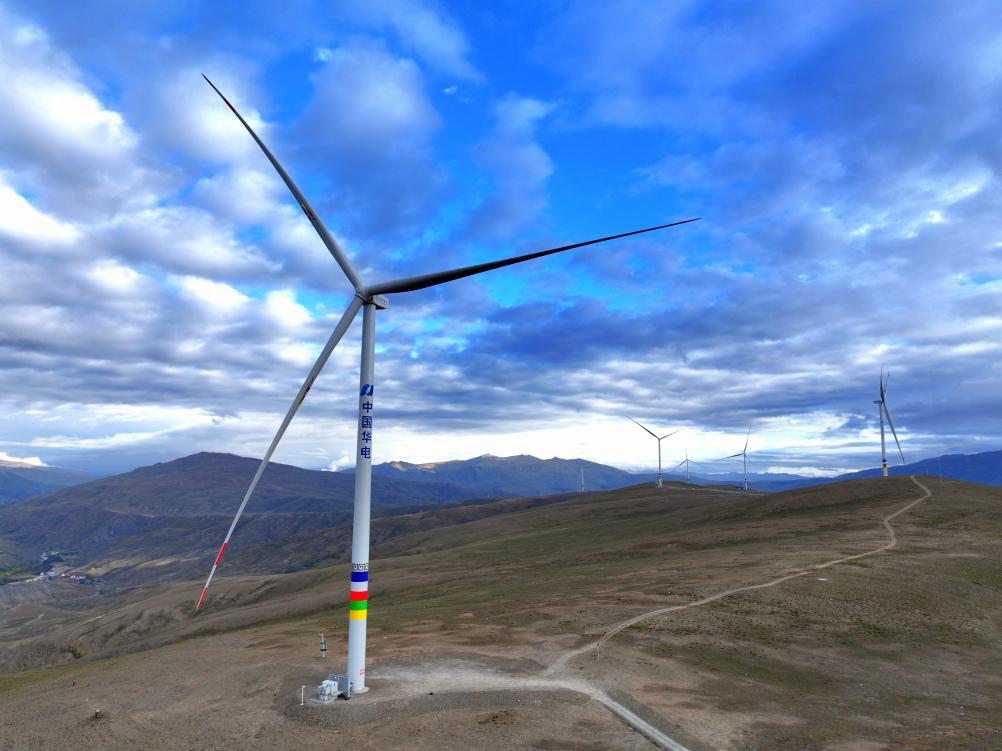
清洁能源基地建设

Search documents
中国电力建设企业协会会长王思强:能源基建新浪潮即将掀起
Zhong Guo Neng Yuan Wang· 2026-04-01 03:56
Core Insights - The conference held on March 31, 2026, in Haikou, Hainan, reviewed the achievements of the power construction industry over the past five years and outlined a systematic deployment for quality and safety work in the next five years [1] - China has become the world's largest country in terms of installed power generation capacity and electricity consumption, with seven core indicators in clean energy and solar power ranking first globally [1] - The country has established the world's largest power grid and is the only nation fully mastering UHV transmission technology, showcasing its strength in manufacturing with over 90% of global photovoltaic components and more than 70% of wind power equipment produced in China [1] Industry Strategy Signals - The national planning has released three strategic signals: a clear signal for system restructuring, the establishment of clean energy bases as a development mainline, and a breakthrough in cross-industry integration [2] - The government will support strategic frontiers like controllable nuclear fusion and new energy storage, with a focus on building 47 clean energy bases as part of a ten-year non-fossil energy doubling action [2] - The integration of energy with digital economy and advanced manufacturing is expected to create significant new growth opportunities during the 14th Five-Year Plan period [2] Key Work Focus for 2026 - The China Electric Power Construction Enterprise Association will focus on five key areas: green transformation, technological innovation, and the implementation of "two optimizations, three innovations, and five breakthroughs" [3] - The association aims to improve the group standard management system and promote the compilation of hundreds of group standards while advancing the national electric power award [3] - Collaboration with local governments will be strengthened, with plans to establish zero-carbon power industrial parks in regions like Shanxi and Changzhi [3] Safety and Development Requirements - The association has outlined five clear requirements for the industry: establishing a safety development concept, accelerating green low-carbon transformation, enhancing technological innovation, improving standardization, and strengthening the workforce [4] - A dual prevention mechanism for risk control and hidden danger investigation will be implemented to ensure zero accidents [4] - The industry is encouraged to integrate green concepts throughout the entire lifecycle of power construction projects and to develop a carbon emission accounting system [4]

西北电网跨区直流及750千伏工程 投产规模创新高
Zhong Guo Dian Li Bao· 2026-01-09 01:22
Core Insights - The Northwest Power Grid is set to achieve a record scale of cross-regional direct current and 750 kV projects by 2025, with the addition of 4 new cross-regional direct current projects and 35 new 750 kV projects, supporting national energy security and regional economic development [1] - By 2025, the direct current delivery capacity of the Northwest Power Grid will exceed 95 million kW, an increase of 24.6 million kW compared to 2024, surpassing the total increase during the 13th Five-Year Plan period [1] - The construction of key 750 kV projects will enhance the structure of the Northwest main grid, improving both power delivery capacity and supply reliability [1][2] Project Details - In 2025, the Northwest Power Grid will see the completion of 15 new substations, 36 main transformers, and 57 new lines, marking a historic high in scale [1] - The successful implementation of these projects is attributed to effective coordination between the State Grid Northwest Branch and relevant government departments, ensuring timely and safe operation [1] Strategic Importance - During the 14th Five-Year Plan period, the total scale of the Northwest Power Grid is expected to grow by over 50% compared to the end of the 13th Five-Year Plan, reinforcing its role in power security and resource optimization [2] - The developments in the Northwest Power Grid are crucial for supporting the construction of clean energy bases and the implementation of the new era's western development strategy [2]
西北电网2025年跨区直流及750千伏工程投产规模创历史新高
Zhong Guo Neng Yuan Wang· 2026-01-06 08:59
Core Insights - The Northwest Power Grid is set to achieve a record scale of cross-regional direct current and 750 kV projects by 2025, with the addition of 4 cross-regional direct current projects and 35 new 750 kV projects, enhancing national energy security and supporting high-quality regional economic development [1][3] Group 1: Project Developments - By 2025, the Northwest Power Grid's direct current transmission capacity will exceed 95 million kilowatts, an increase of 24.6 million kilowatts compared to 2024, surpassing the total increase during the "13th Five-Year Plan" period [1] - Key 750 kV projects, including the Shaanxi Xiazhou to Gansu Qingyang North and Xinjiang Huan Tarim Basin ring network, will further optimize the main grid structure, enhancing both power transmission capacity and supply reliability [3] Group 2: Infrastructure Expansion - In 2025, the Northwest Power Grid will see the construction of 15 new substations, 36 main transformers, and 57 new lines, marking a historic high in scale [3] - The total scale of the Northwest Power Grid is expected to grow by over 50% compared to the end of the "13th Five-Year Plan," reinforcing its role in power security and cross-regional resource optimization [3]

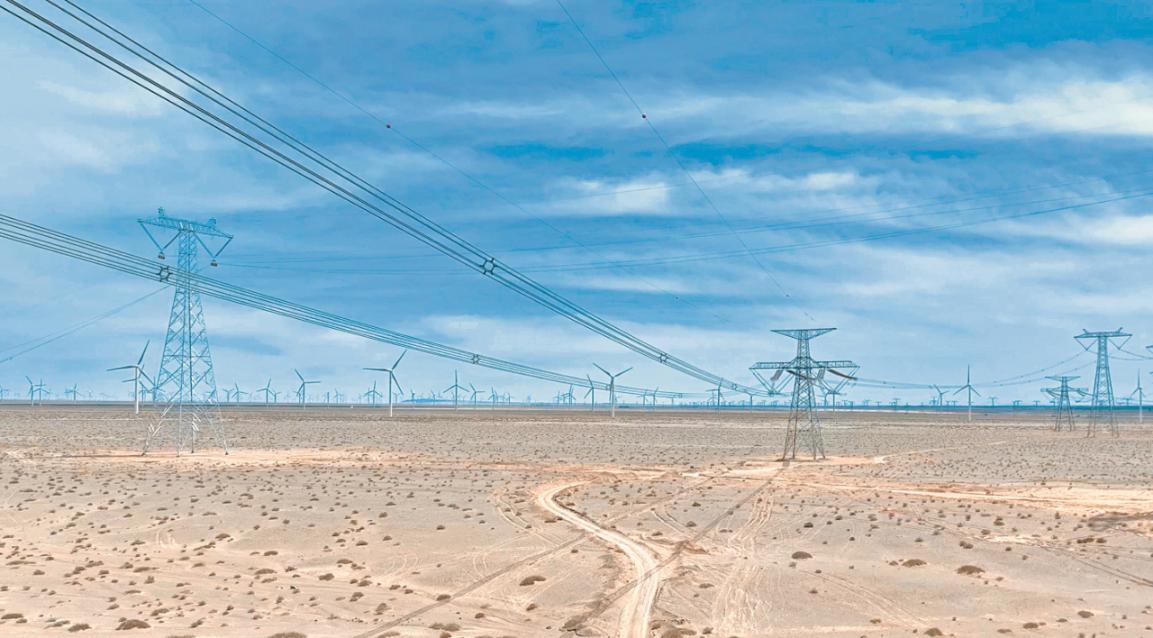
中核、中石油、华能、华电、国能、三峡,先后与这一省高层会谈
Zhong Guo Dian Li Bao· 2025-12-01 10:50
Core Insights - Multiple state-owned energy enterprises, including China National Nuclear Corporation, China National Petroleum Corporation, and China Huaneng Group, are intensifying cooperation with Inner Mongolia Autonomous Region and Baotou City in areas such as renewable energy development, intelligent coal mining, green electricity conversion, clean energy base construction, and nuclear industry [1][3][5][6][10] Group 1: Cooperation and Strategic Development - The leadership of China Huaneng Group met with Inner Mongolia's top officials to discuss collaboration in modern energy economy and the development of a clean, low-carbon energy system during the 14th Five-Year Plan [3][5] - Inner Mongolia aims to enhance traditional energy security and increase renewable energy utilization, indicating significant cooperation potential with China Huaneng [3][5] - China Huaneng Group plans to increase investment in Inner Mongolia, focusing on energy supply security and the construction of large clean energy bases [5] Group 2: China National Petroleum Corporation's Engagement - China National Petroleum Corporation's chairman met with Inner Mongolia's government officials to discuss practical cooperation and the integration of oil and gas with renewable energy [6] - The company aims to advance its refining transformation and digitalization efforts while contributing to the energy sector's modernization in Inner Mongolia [6] Group 3: China National Nuclear Corporation's Focus - China National Nuclear Corporation's leadership engaged with Baotou City officials to strengthen strategic cooperation in the nuclear industry [8][10] - The corporation emphasized the importance of aligning its development strategy with Baotou's industrial advantages, particularly in steel, rare earths, and equipment manufacturing [10] - There is a mutual interest in establishing a nuclear fuel industry cluster and promoting technological innovation in Baotou [10]
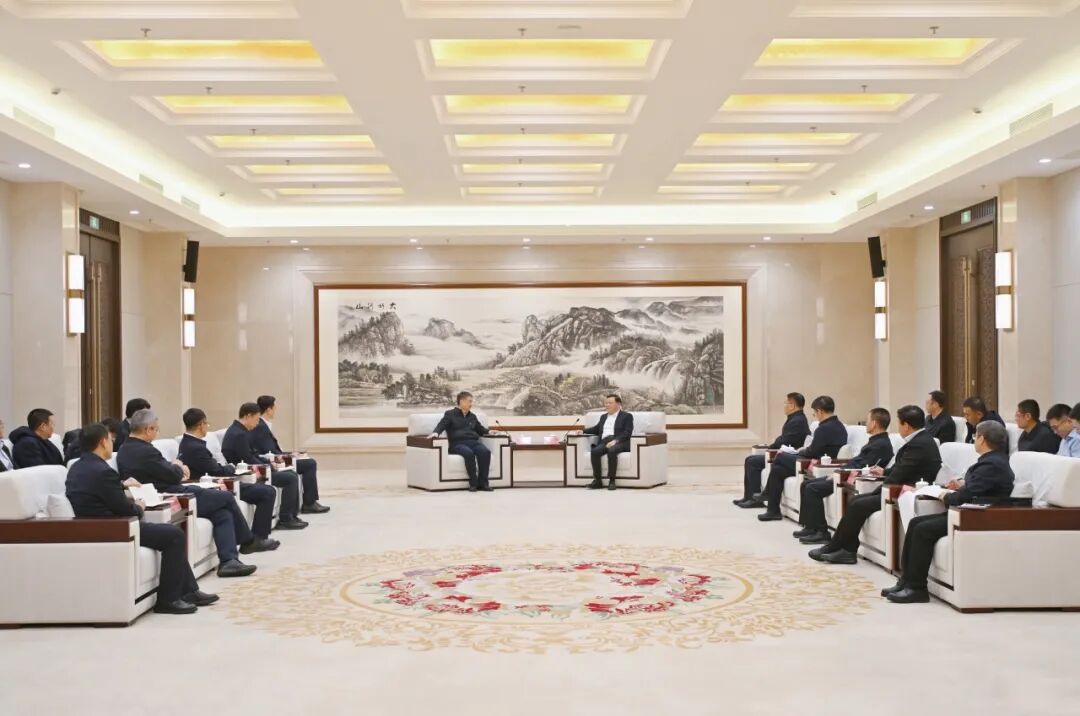
西藏立足特色培育产业体系
Jing Ji Ri Bao· 2025-10-18 10:30
Group 1: Economic Development - The Tibet Autonomous Region has seen significant development in industries such as specialty agriculture and animal husbandry, clean energy, cultural tourism, and highland light industry since the 10th Party Congress [1] - The region has established the first national barley industry technology system, cultivating 78 high-quality varieties and developing over 80 types of barley products [1] - The Daga Pu Village in Naqu City operates the world's highest and Tibet's largest independent grid-connected energy storage project, which has generated over 95 million kilowatt-hours of electricity since its operation [1] Group 2: Clean Energy - Tibet is accelerating the construction of a national clean energy base, focusing on a new energy development pattern of "one base, two demonstrations" [1] - The first clean energy equipment industrial park in Tibet has been established, achieving over 23 million yuan in industrial product sales since its launch [1] Group 3: Cultural Tourism - The cultural tourism industry in Tibet is thriving, with efforts to integrate natural scenery with cultural resources, leading to the development of premium tourism routes and products [2] - In the first three quarters of this year, Tibet received 63.71 million domestic and international tourists, a year-on-year increase of 11.21%, and achieved a total tourism expenditure of 73.67 billion yuan, up 9.87% year-on-year [2]
绿电照高原——西藏奋力推进国家清洁能源基地建设
Xin Hua Wang· 2025-10-04 21:30
Core Insights - Tibet has successfully initiated its first cross-regional green electricity transaction with Shanghai, delivering 7.85 million kilowatt-hours of electricity, which is expected to reduce coal consumption by 24,100 tons and cut carbon dioxide emissions by 60,100 tons [1] - The region is rapidly advancing its clean energy base construction, focusing on hydropower, solar, and wind energy, with a target for renewable energy to account for over 50% of installed capacity by the end of 2024 [1][6] - The completion of significant projects like the Batong Hydropower Station and the largest solar-storage power station in Tibet marks a substantial step in enhancing energy supply and reliability [2][5] Renewable Energy Development - The Batong Hydropower Station has a total installed capacity of 750,000 kilowatts and an average annual generation of 3.375 billion kilowatt-hours, sufficient to power 1.75 million households for a year [2] - The Huaneng Jiawa Phase I solar-storage power station has an installed capacity of 250,000 kilowatts and a storage system capable of storing excess energy for nighttime use [2] - The Huadian Quxiong Wind Power Project, with a total capacity of 40 megawatts, is expected to reduce carbon emissions by approximately 74,400 tons annually [5] Grid Infrastructure and Connectivity - The construction of the unified power grid in Tibet has achieved a reliability rate of 99.6%, significantly improving electricity supply across the region [8] - The Qinghai-Tibet DC Phase II expansion has doubled the transmission capacity between Qinghai and Tibet to 1.2 million kilowatts, addressing winter electricity shortages [9] - The completion of multiple "electricity highways" has enhanced the connectivity of Tibet's power grid, facilitating increased electricity consumption and economic growth [9] Economic Impact - In the first seven months of 2025, Tibet's total electricity consumption reached 9.773 billion kilowatt-hours, reflecting a year-on-year growth of 13.33%, the highest growth rate in the country [9] - The average per capita electricity consumption in Tibet is projected to reach 4,404.8 kilowatt-hours by 2024, a 162.89% increase since 2012 [8]