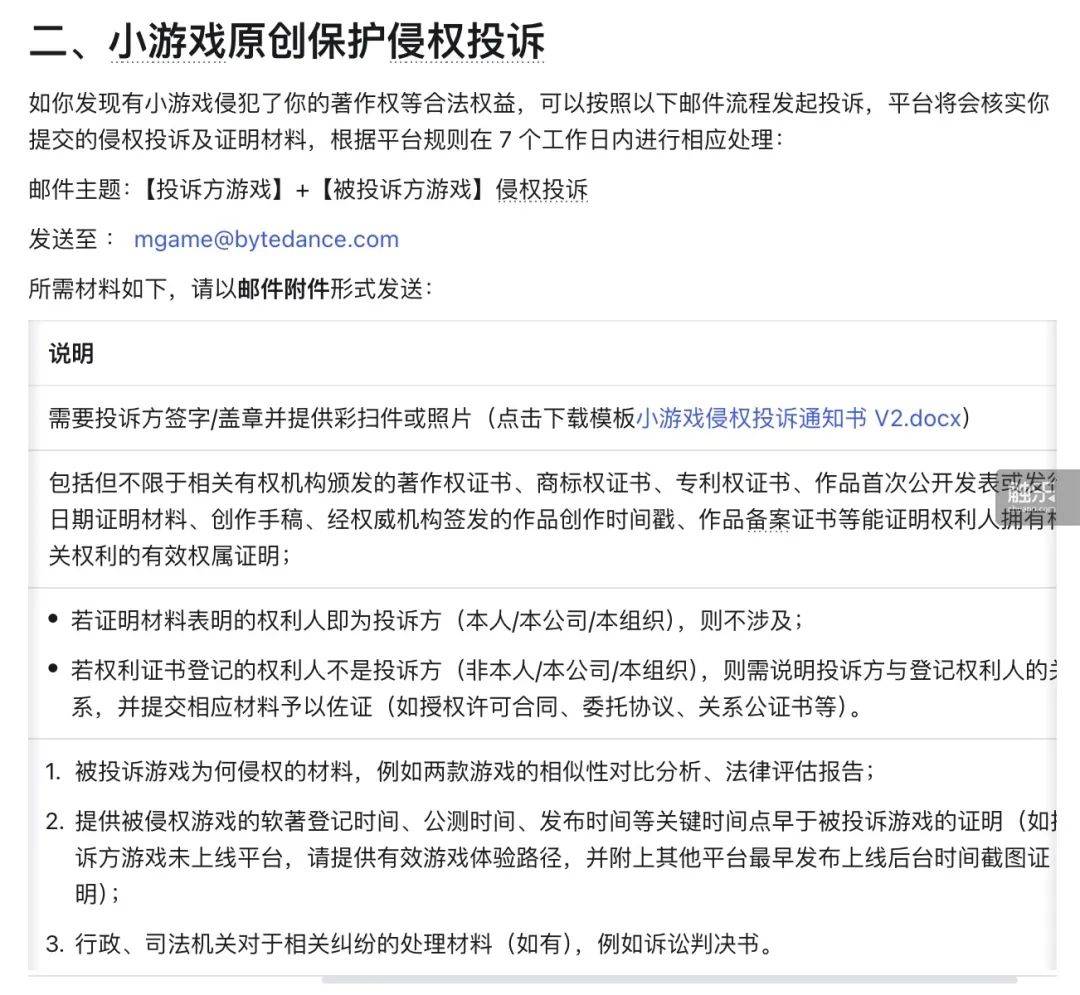
游戏侵权

Search documents
索尼与腾讯达成临时协议 暂停《荒野起源》所有宣传
Xi Niu Cai Jing· 2025-12-05 09:58
Core Viewpoint - Sony and Tencent have reached a temporary agreement regarding the infringement case of "Horizon" series by Tencent's upcoming game "Wild Origin" [2] Group 1: Legal Proceedings - Tencent has agreed to suspend all marketing and public testing activities for "Wild Origin" until the key hearing in early 2026, and the game will not be released before Q4 2027 [2] - A motion to dismiss hearing and an injunction hearing are scheduled for January 29, 2026, with Tencent submitting its response to Sony's injunction request by December 17, 2025, and Sony's rebuttal due by January 2, 2026 [2] Group 2: Allegations - Sony has filed a lawsuit against Tencent in a California federal court, accusing Tencent's "Wild Origin" of being a "copycat clone" of its "Horizon" series [2] - The lawsuit claims that "Wild Origin" closely resembles "Horizon" in gameplay mechanics, story themes, artistic style, and design of mechanical creatures, particularly highlighting the similarity between the red-haired hunter character and Horizon's protagonist, Aloy, which could confuse players [2] Group 3: Game Development Impact - Following the lawsuit, "Wild Origin" has been removed from the Steam page, some artistic materials have been modified, and the release plan has been quietly postponed [2]

小游戏市场,“快”是终极奥义?
Hu Xiu· 2025-07-10 12:36
Core Viewpoint - The article discusses the challenges and complexities faced by game publishers in dealing with copyright infringement and the increasing prevalence of unauthorized use of game licenses, particularly in the mini-game sector. Group 1: Complaints and Infringement Issues - A player reported issues with accessing a game after spending over 20,000 yuan, suspecting foul play by the game company [1] - The publisher confirmed that the game in question was not theirs, indicating a case of license theft [2][3] - Complaints about unauthorized use of game licenses have become more common, especially with the rise of mini-games that also require licenses [4] Group 2: Complaint Handling Process - Publishers have established processes for handling complaints, which include gathering evidence and submitting it to the relevant platforms [4][9] - Platforms like Douyin and Kuaishou have specific requirements for processing infringement complaints, with varying response times [7] - Publishers must retain documentation for at least five years to support their claims [8] Group 3: Regulatory Environment and Market Dynamics - The regulatory environment for game licenses is strict, with significant penalties for unauthorized use, but finding infringers can be challenging [15][16] - The mini-game market has seen rapid growth, with revenues exceeding 200 billion yuan in 2023 and projected to reach nearly 400 billion yuan in 2024 [16] - Major platforms like WeChat, Douyin, and Kuaishou are increasingly involved in the mini-game sector, creating a competitive landscape [17] Group 4: Developer Experiences and Monetization - Developers face high costs and lengthy processes to obtain game licenses, with some abandoning the process due to complexity [36][47] - The monetization strategies in mini-games are evolving, with a shift towards in-app purchases (IAP) over ad-based revenue models [35][36] - Developers are adapting their games to fit the mini-game format, often prioritizing quick engagement and monetization [34] Group 5: Future Outlook and Industry Support - Recent government policies are expected to facilitate the licensing process and support the growth of the gaming industry [49] - The industry is at a crossroads, with opportunities for growth but also significant challenges related to regulation and competition [48]