小游戏市场

Search documents
7成上市游戏公司看好的赛道,也要变天了?
Xin Lang Cai Jing· 2026-01-13 11:33
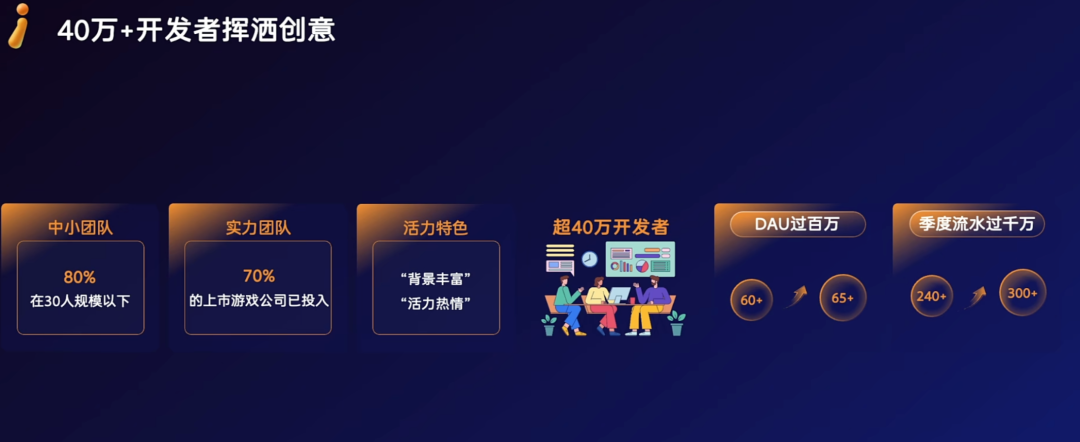
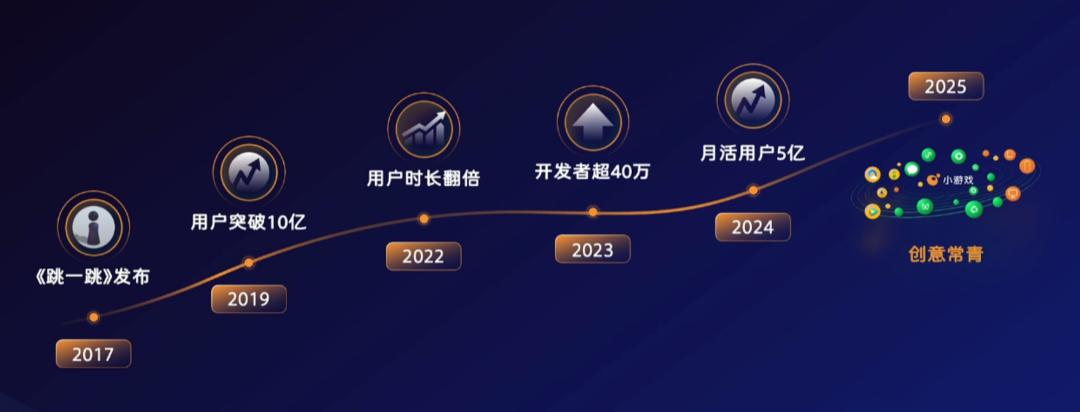
Core Insights - The mini-game market in China has become a focal point in the gaming industry, with significant growth and revenue data attracting numerous developers, but the market dynamics are shifting as competition intensifies and growth rates slow down [1][27] - By 2025, the domestic mini-game market is projected to generate revenue of 53.535 billion yuan, with a year-on-year growth rate of 34.39%, although this represents a slowdown compared to previous explosive growth [1][27] - Major companies are increasingly dominating the market, with over 70% of listed gaming companies investing heavily in mini-games, raising the industry entry barriers to the level of native apps [1][27] Platform Development - WeChat mini-games remain the largest platform in China, with over 400,000 developers and more than 300 teams generating over 10 million yuan in quarterly revenue [2][28] - The active user base on WeChat mini-games has surpassed 500 million, with a 10% increase in user online time expected in 2025 compared to 2024 [2][28] - Douyin mini-games have also seen remarkable growth, with revenue increasing by 100% and active user numbers rising by 120% in 2025 [4][30] Product Trends - WeChat mini-games have successfully explored heavy game genres, with several SLG, RPG, and card games achieving stable growth [4][30] - Douyin's unique short video ecosystem enhances content distribution, significantly impacting player engagement and revenue generation [6][31] - The revenue scale of WeChat and Douyin mini-games is expected to account for over 90% of the total domestic mini-game market [6][31] Manufacturer Segmentation - The mini-game market has seen a clear tiered structure, with large companies dominating the first tier, including over 70% of listed gaming firms [11][33] - Companies like Sanqi Interactive and Diandian Interactive lead the first tier, leveraging strong operational capabilities to produce multiple blockbuster games [13][35] - The second tier consists of niche market leaders that have emerged from the mini-game sector, maintaining high hit rates through rapid product iteration [15][37] Competitive Landscape - The competition in the mini-game market has evolved from a focus on traffic to a comprehensive strength competition involving product quality, traffic acquisition, long-term operations, and technological reserves [20][42] - The demand for higher quality mini-games is pushing developers to innovate and differentiate their products, moving towards a model that closely resembles native apps [21][43] - AI technology is becoming a critical competitive barrier, significantly enhancing the efficiency of game development, marketing, and customer service [25][47] Market Evolution - The mini-game industry is transitioning from rapid growth to a phase of meticulous cultivation, indicating that future opportunities will favor those who focus on quality content and technological mastery [26][48] - The market's slowdown is not a sign of diminishing returns but rather a necessary evolution towards sustainable growth and high-quality development [26][48]

一条千亿级赛道雏形初现,领跑者是这家广东大厂
3 6 Ke· 2025-12-24 11:23
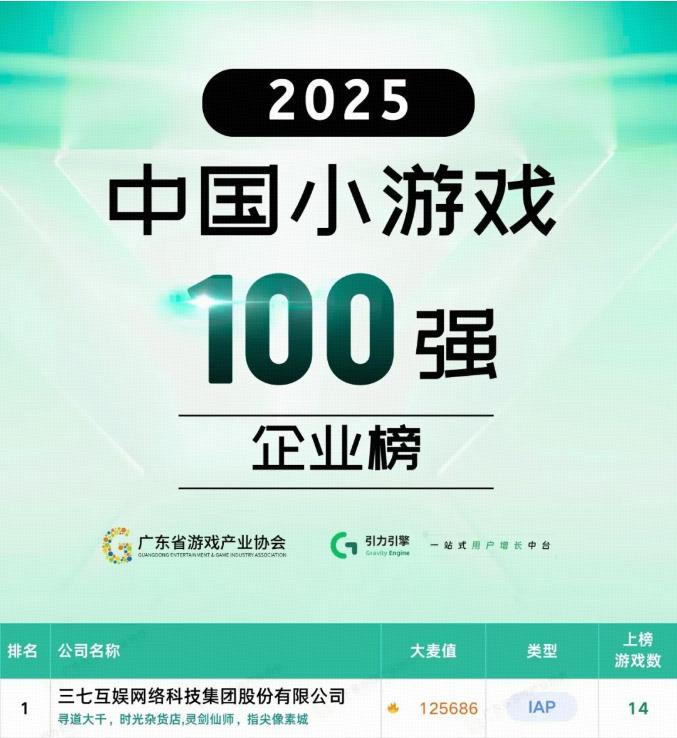
Core Insights - The "Top 100 Mini Game Companies in China 2025" list was released, highlighting significant growth in the mini game sector, with a projected revenue increase of 40% year-on-year in the first half of 2023 [1][9] - The mini game market is expected to become highly competitive by 2026, especially after a new agreement between Apple and Tencent regarding a 15% commission on payments within WeChat mini games [1] Company Highlights - 37 Interactive Entertainment ranked first in the list, attributed to its ability to adapt to industry changes and continuously refine its positioning [2][5] - The year 2023 marked a breakthrough for 37 Interactive, with successful game launches like "Seeking the Dao" and "Soul Chapter," which solidified its competitive edge in the mini game market [4] - 37 Interactive has a strong product matrix with 14 games listed in the top 100, showcasing its capability as a "hit-making machine" [4][12] Competitor Analysis - Second place was taken by Dream Dragon Path, known for its popular game "Shoot the Zombie," with five games listed in the top 100 [6] - BoKe Technology emerged as a dark horse, jumping from 15th to 3rd place, indicating a successful year with multiple products entering the top ranks [7][8] - Tencent, ranked 7th, focuses on adapting its classic games into mini game formats, achieving notable success despite a smaller number of releases [8] Market Trends - The mini game market in Guangdong is projected to generate significant revenue, with expectations of reaching 283.61 billion RMB in 2025, accounting for 80.85% of the national revenue [9] - The competitive landscape is intensifying, with a notable concentration of top companies in Guangdong and Shenzhen, indicating a robust regional advantage in the mini game sector [9]

数娱工场丨从手机到“大屏”!小游戏中心“破壁”微信PC端,直播成新增长极
Xin Hua Cai Jing· 2025-12-10 10:20
Core Viewpoint - The recent launch of the "Mini Game Center" on the WeChat PC version signifies a shift in the development path of WeChat mini games from a mobile-only focus to a "mobile + desktop" collaborative phase [1][6]. Group 1: WeChat Mini Game Center Features - The new Mini Game Center homepage allows users to quickly access recently played games, with a "Find Games" page featuring "Discover" and "Leaderboard" sections for game recommendations and rankings [4]. - Tencent previously showcased a PC mini game experience area at the Guangzhou CICF Comic Festival, indicating a strategic move to enhance content beyond mobile limitations [6]. Group 2: Market Dynamics and Competition - The mini game market is characterized by rapid updates and a high turnover rate, with November data showing a monthly turnover rate exceeding 20% for the top 50 mini games [7]. - Major companies like Tencent, NetEase, ByteDance, and Kuaishou are entering the mini game space, intensifying competition and shifting the market from a casual to a more resource-driven phase [8]. Group 3: Market Growth and Revenue - The mini game sector saw a sales revenue of 23.276 billion yuan in the first half of the year, reflecting a year-on-year growth of over 40%, significantly outpacing other gaming segments [9]. - The monetization model of mini games, which includes ad views and in-app purchases (IAP), is evolving, with IAP now accounting for 65.7% of revenue, indicating a maturing user payment habit [9]. Group 4: User Engagement and Developer Landscape - WeChat mini games have reached 500 million monthly active users, with users playing an average of six games monthly and daily online time increasing by 10% compared to 2024 [10]. - The ecosystem has attracted over 400,000 developers, with more than 70% being small teams of fewer than 30 people [10]. Group 5: Challenges and Market Saturation - The mini game market faces challenges such as severe homogenization and user fatigue due to the prevalence of similar game types, which can lead to rapid declines in popularity for certain titles [11]. - There is a pressing need for innovation in gameplay and user experience to sustain long-term engagement and product lifecycle [11]. Group 6: Emergence of Mini Game Live Streaming - Mini game live streaming has emerged as a new growth area, with significant revenue generated through platforms like video accounts and Douyin, enhancing user engagement and conversion rates [12]. - The integration of live streaming with mini games is creating a more interactive and engaging user experience, which is expected to further expand the market [14]. Group 7: Future Market Projections - The domestic mini game market is projected to exceed 60 billion yuan by 2025, indicating substantial growth potential [14].


大厂「疯抢」的小游戏赛道,中小团队还有机会吗?
3 6 Ke· 2025-10-16 09:57
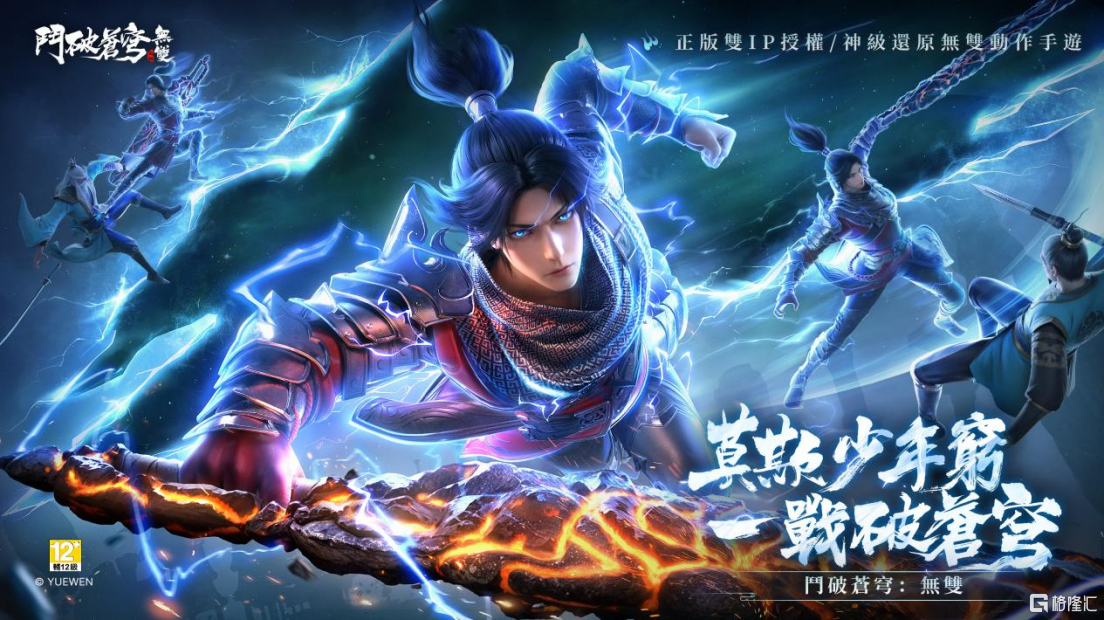
Core Insights - The Chinese gaming market, despite being perceived as saturated, continues to evolve with the emergence of mini-games, which have shown significant growth in recent years [1][3] - The mini-game market generated revenue of 39.836 billion yuan in the past year, marking a year-on-year growth of 99.18%, with 500 million monthly active users, only 10% of whom overlap with the mobile gaming market [1][3] Group 1: Market Dynamics - The success of mini-games is attributed to their reliance on social platforms, ease of access, and strong social sharing attributes, alongside lower development costs compared to traditional mobile games [3][6] - Currently, 70% of listed gaming companies are investing in the mini-game sector, with notable products like "Endless Winter" and "Seeking the Great Thousand" leading the market [3][6] Group 2: Challenges for Small Teams - The entry of large companies into the mini-game market has increased operational costs, making it harder for small teams, which constitute 80% of the market, to compete [5][6] - As competition intensifies, the marginal returns on purely creative gameplay are diminishing, making it difficult for new mini-games to achieve significant user acquisition without substantial marketing budgets [8][9] Group 3: Opportunities for Small Teams - Despite challenges, small teams remain a vital part of the mini-game ecosystem and can leverage partnerships with larger platforms for support in product development and marketing [9][10] - Companies like ByteDance and Kuaishou are providing financial incentives and technical support to developers, helping to reduce marketing costs and enhance product competitiveness [10][12] Group 4: Evolution of Game Development - The mini-game sector is evolving similarly to the mobile game market, with a shift towards combining creative gameplay with established genres to meet user expectations [6][17] - Traditional mobile game content is increasingly influencing mini-game development, with many existing mobile games being adapted for mini-game platforms [17][19] Group 5: Future Directions - The unique social and high-sharing characteristics of mini-games may lead to distinct developmental paths compared to traditional mobile games, emphasizing the importance of innovation and adaptation to platform features [19][20] - Developers are encouraged to focus on gameplay creativity while relying on professional teams for technical optimization and commercialization, allowing them to carve out a niche in the growing mini-game market [20]
一度登顶榜首,传奇在小游戏崛起?营销逻辑如何?
3 6 Ke· 2025-09-25 00:57
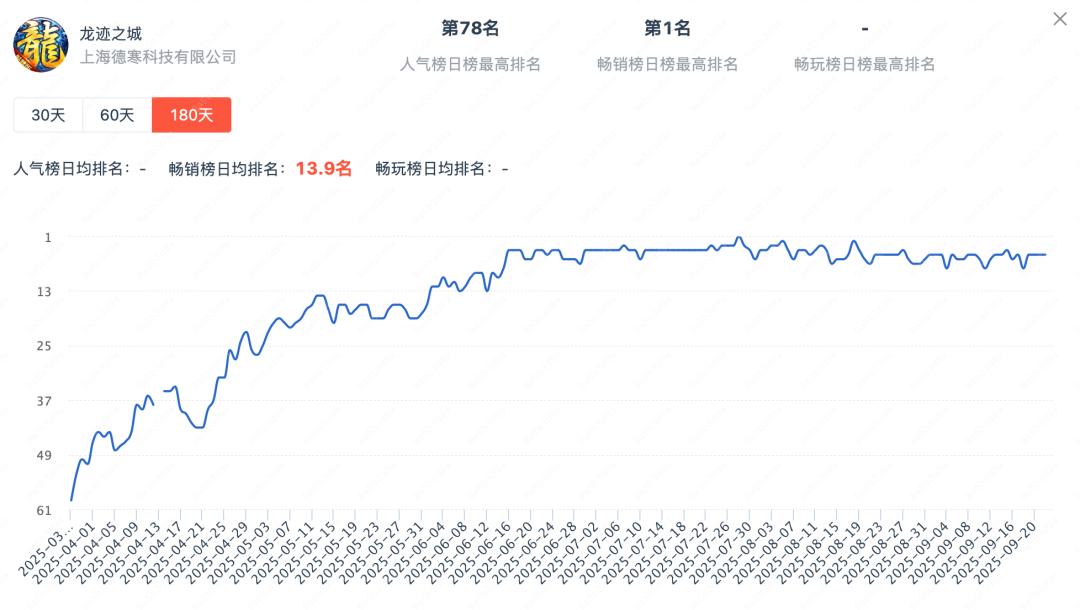
Group 1 - The core strategy of "Dragon Trace City" has shown significant growth in rankings, entering the TOP20 on May 4 and TOP10 on June 4, maintaining its position within the TOP10 since June 14 [3][6] - Key promotional periods include the May Day and Dragon Boat Festival holidays, which led to increased user spending and contributed to the game's ranking success [6] - The marketing strategy involved a substantial increase in advertising spend, with daily ad placements exceeding 10,000 in early July [7][17] Group 2 - The marketing materials for "Dragon Trace City" have evolved, with a notable increase in AI-generated content and a focus on popular characters, particularly featuring a significant presence of celebrity endorsements [8][10] - The marketing approach has shifted to include more female-oriented content and a diverse range of celebrity endorsements as of July [13][17] - The game has utilized traditional nostalgic elements in its marketing, emphasizing themes of nostalgia, cool effects, and low-cost gameplay [15][17] Group 3 - The game's social media presence began to gain traction in late August, with increased content on platforms like Weibo and short video sites, contributing to its sustained ranking [20][23] - "Dragon Trace City" has successfully leveraged its partnership with WeChat to enhance its visibility and revenue potential, marking a shift in how legendary products are marketed [27][28] - The industry is witnessing a trend where more legendary products are entering the mini-game market, indicating a growing opportunity for new entrants [30] Group 4 - The target demographic for legendary games is expanding, with a focus on attracting younger users, as evidenced by promotional efforts at events like CJ [31] - The potential for legendary games in the mini-game sector is significant, with new titles like "Flame Awakening" also achieving high rankings, suggesting a competitive landscape [30]
最强逆袭:暴涨600%,从ST到游戏之王
Ge Long Hui· 2025-09-18 13:21
Core Viewpoint - The article discusses the significant stock price increase of ST Huatuo, highlighting its transformation from a company facing financial scandals to a leading player in the gaming industry, driven by its subsidiary, Point Interactive, and the success of its game "Whiteout Survival" [1][17][20]. Company Overview - ST Huatuo, previously known for automotive parts manufacturing, has shifted its focus to gaming, becoming the most profitable gaming company in A-shares with projected revenues exceeding 20 billion yuan in 2024 [5][6][17]. - The company’s stock price has surged from under 4 yuan to nearly 20 yuan, marking a sixfold increase from its lowest point of 2.99 yuan in July 2024 [1][14]. Financial Performance - In 2024, ST Huatuo reported revenues of 226.2 billion yuan, a year-on-year increase of 70.27%, and a net profit of 12.13 billion yuan, up 131.51% [17]. - The gaming segment, particularly Point Interactive, has become the core of ST Huatuo's business, contributing significantly to its revenue growth [19][20]. Market Dynamics - The mini-game market in China has seen substantial growth, with revenues surpassing 398 billion yuan in 2024, indicating a strong potential for future expansion [27]. - Point Interactive's success is attributed to the rise of mini-games and the trend of game exports, with its flagship game "Whiteout Survival" generating over 1.9 billion USD in global revenue by the end of 2024 [20][21]. Future Outlook - ST Huatuo is expected to apply for the removal of its ST designation by November 2024, which could trigger a positive market reaction [18][38]. - Despite the promising growth, concerns remain regarding the company's past financial mismanagement and the potential impact of high valuations on future performance [36][40].


海外收入占比超30%、小游戏成增长极,中手游(0302.HK)战略调整打开盈利新周期
Ge Long Hui· 2025-08-28 10:07
Core Viewpoint - The gaming industry is experiencing accelerated differentiation due to technological iterations and market changes, with the company reporting a significant mid-term performance despite short-term pressures from core self-developed projects [1] Group 1: Financial Performance - The company achieved revenue of 763 million yuan in the first half of 2025, with an adjusted net loss of 638 million yuan, but managed to generate positive operating cash flow of 108 million yuan [1] - The overseas business revenue reached 235 million yuan, a year-on-year increase of 33.2%, and accounted for 30.8% of total revenue, up from 14.1% in the same period last year [2] Group 2: Globalization and Mini-Games - The company's globalization strategy has become a core driver to counter domestic market pressures, with overseas revenue becoming a significant performance pillar [2] - Mini-games have emerged as a new growth engine, with actual sales revenue reaching 23.276 billion yuan, a year-on-year growth of 40.2%, and user scale surpassing 500 million [6] Group 3: IP Operations and Technological Innovation - The depth of IP operations is crucial for gaming companies to navigate through cycles, with the company reporting IP authorization revenue of 33.1 million yuan, a year-on-year increase of 134.8% [11] - The company is leveraging its IP advantages to explore Web3 opportunities, with plans for a reality asset on-chain initiative and a decentralized esports platform [15] Group 4: Future Outlook - The company is expected to turn around its performance with the launch of several new games and the ongoing celebration of the 30th anniversary of the "Xianjian Qixia Chuan" IP [18]

对话张俊波:小游戏、车机……Unity中国在做下一个风口
3 6 Ke· 2025-08-13 06:37
Core Viewpoint - Unity China has officially announced its independent operation, focusing on the development of mini-games and deep involvement in automotive applications, while facing criticism regarding its strategic decisions and market focus [1][3]. Group 1: Independent Operation - The decision for Unity China to operate independently was a natural progression, with the user base growing from 300,000 to 4.8 million since 2017, marking a nearly tenfold increase [3][4]. - Unity China aims to provide tailored resources and services for domestic developers, addressing the limitations imposed by the overseas version of Unity due to network constraints [4][5]. Group 2: Market Strategy - Unity China has introduced a new pricing strategy that significantly reduces the financial burden on developers, allowing teams with investments between $200,000 and $2 million to only purchase one Pro version and pay a 2.5% installation fee [5][6]. - The company is focusing on enhancing the quality of mini-games, with a shift from reliance on advertising to a model where IP accounts for 60-70% of the market [10][11]. Group 3: Game Development and Support - Unity China has evaluated over 1,000 mini-games and launched more than 100, with some achieving significant revenue, such as "Phantom Abyss," generating $300,000 monthly [11][13]. - The company is working on automating the game publishing process to lower entry barriers for developers, aiming to support a wider range of games [14][15]. Group 4: Automotive Applications - Unity China is actively involved in the automotive sector, collaborating with over 30 manufacturers to enhance in-car experiences through 3D visualization and interactive features [26][29]. - The company sees potential in car games, emphasizing the need for games that leverage the vehicle's hardware capabilities and provide an engaging user experience [27][29].

小游戏市场,“快”是终极奥义?
Hu Xiu· 2025-07-10 12:36
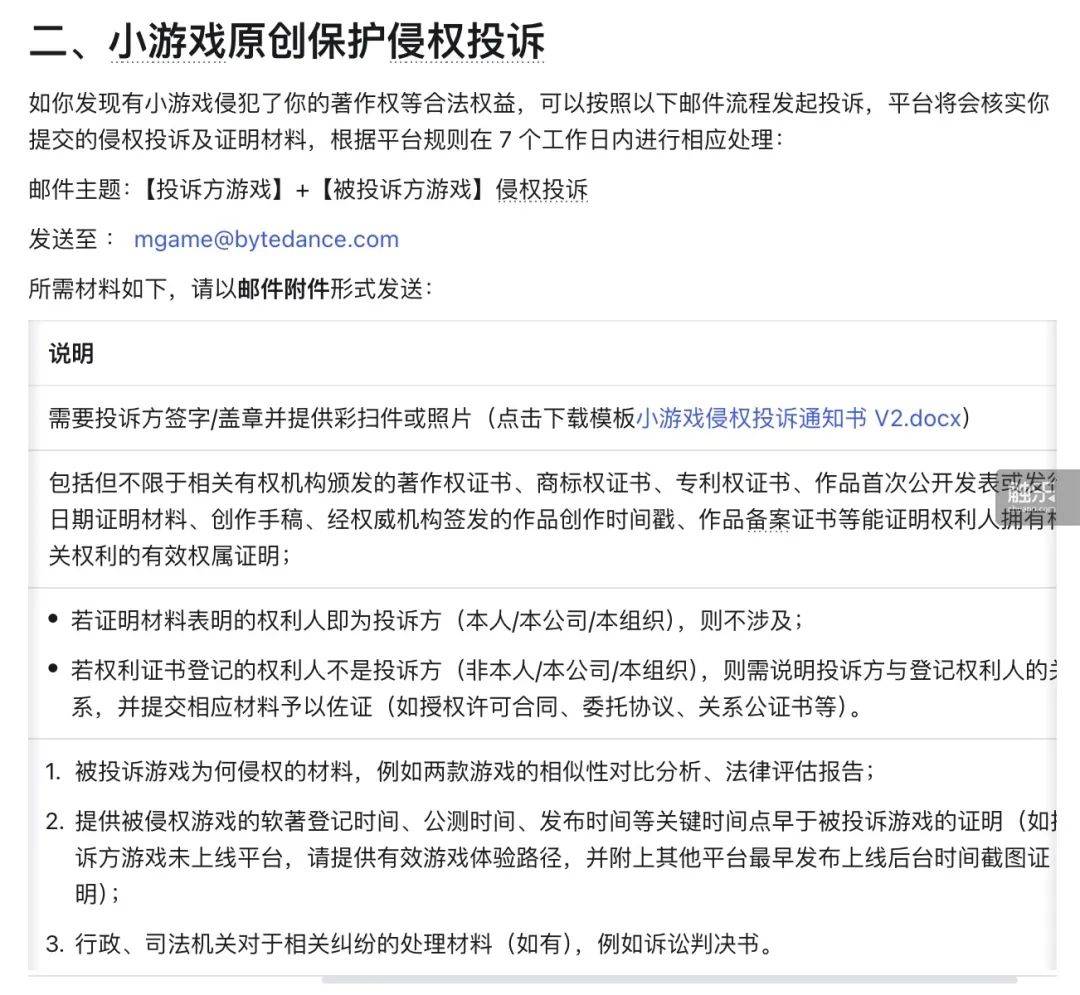
Core Viewpoint - The article discusses the challenges and complexities faced by game publishers in dealing with copyright infringement and the increasing prevalence of unauthorized use of game licenses, particularly in the mini-game sector. Group 1: Complaints and Infringement Issues - A player reported issues with accessing a game after spending over 20,000 yuan, suspecting foul play by the game company [1] - The publisher confirmed that the game in question was not theirs, indicating a case of license theft [2][3] - Complaints about unauthorized use of game licenses have become more common, especially with the rise of mini-games that also require licenses [4] Group 2: Complaint Handling Process - Publishers have established processes for handling complaints, which include gathering evidence and submitting it to the relevant platforms [4][9] - Platforms like Douyin and Kuaishou have specific requirements for processing infringement complaints, with varying response times [7] - Publishers must retain documentation for at least five years to support their claims [8] Group 3: Regulatory Environment and Market Dynamics - The regulatory environment for game licenses is strict, with significant penalties for unauthorized use, but finding infringers can be challenging [15][16] - The mini-game market has seen rapid growth, with revenues exceeding 200 billion yuan in 2023 and projected to reach nearly 400 billion yuan in 2024 [16] - Major platforms like WeChat, Douyin, and Kuaishou are increasingly involved in the mini-game sector, creating a competitive landscape [17] Group 4: Developer Experiences and Monetization - Developers face high costs and lengthy processes to obtain game licenses, with some abandoning the process due to complexity [36][47] - The monetization strategies in mini-games are evolving, with a shift towards in-app purchases (IAP) over ad-based revenue models [35][36] - Developers are adapting their games to fit the mini-game format, often prioritizing quick engagement and monetization [34] Group 5: Future Outlook and Industry Support - Recent government policies are expected to facilitate the licensing process and support the growth of the gaming industry [49] - The industry is at a crossroads, with opportunities for growth but also significant challenges related to regulation and competition [48]
美国取消对华EDA出口限制,A股IPO受理数已超去年 | 财经日日评
吴晓波频道· 2025-07-03 17:36
Group 1: Employment Data - In June, the ADP employment numbers in the U.S. decreased by 33,000, marking the first negative growth since March 2023, with May's figures revised down to an increase of only 29,000 [1] - The service sector saw a significant decline, losing 66,000 jobs, primarily in professional and business services, as well as healthcare and education [1] - Despite the job losses, year-on-year wage growth remained stable at 4.4%, only slightly down from 4.5% in May [1] Group 2: Trade Relations - President Trump announced that Vietnam agreed to open its market to U.S. products at zero tariffs, while U.S. exports to Vietnam would face at least a 20% tariff [3] - The trade deficit with Vietnam exceeds $123 billion, with the U.S. importing over $136 billion from Vietnam in 2024 [3] - The potential trade agreement could impact China's transshipment trade, as Vietnam's supply chain heavily relies on Chinese technology and materials [4] Group 3: Technology Exports - The U.S. government has lifted some export restrictions on EDA software to China, which could enhance China's semiconductor design capabilities [5] - Major EDA companies hold approximately 82% of the Chinese market, indicating a significant reliance on U.S. technology [5] - The easing of restrictions may encourage Chinese firms to increase their preference for domestic EDA software solutions [6] Group 4: Real Estate Policies - Guangzhou is proposing a "commercial to public loan" policy to convert commercial housing loans to public housing loans when the public loan rate is below 75% [7] - This policy aims to stimulate demand in the real estate market while ensuring liquidity safety [8] Group 5: Gaming Market - Tencent and ByteDance are competing for the burgeoning mini-game market, which is projected to generate revenues of 39.836 billion yuan in 2024, a 99.18% increase year-on-year [9] - The mini-game sector benefits from low entry barriers and high user engagement, making it an attractive area for both companies [10] Group 6: IPO Activity - In the first half of the year, A-share IPO applications exceeded the total for the previous year, with 177 companies applying [11] - The total financing scale reached 38 billion yuan, a 25.53% increase year-on-year [12] - The surge in IPO applications is attributed to companies rushing to submit before the financial reports expire [12] Group 7: Market Trends - A-share new account openings reached 1.65 million in June, a 53% year-on-year increase, with a total of 12.6 million new accounts in the first half of the year [13] - The overall trading volume in June was 26.72 trillion yuan, reflecting a 79.57% increase compared to the previous year [13] - The market's performance in June was characterized by a lack of significant upward momentum, despite the increase in new accounts [14]