
点题整治

Search documents
福建漳州“点题整治”规范物业小区公共收益管理“糊涂账”变“明白钱”
Zhong Yang Ji Wei Guo Jia Jian Wei Wang Zhan· 2025-11-18 01:44
Core Viewpoint - The article highlights the efforts of the Zhangzhou Municipal Commission for Discipline Inspection and Supervision in Fujian Province to address the issue of property management companies encroaching on public revenue belonging to homeowners, emphasizing transparency and accountability in managing public funds [4][12]. Group 1: Problem Identification - The issue of property management companies not disclosing public revenue has been a significant concern among homeowners, leading to a lack of understanding regarding the sources and management of these funds [5][6]. - The Zhangzhou Municipal Commission has identified the need for systematic rectification of prominent issues in the livelihood sector, particularly focusing on public revenue management in residential communities [4][10]. Group 2: Implementation of Solutions - A closed-loop supervision model has been established to clarify revenue and expenditure boundaries, ensuring that public revenue is managed transparently and effectively [4][7]. - The commission has initiated audits of public revenue projects, covering 37 property service companies and 69 property projects, recovering over 14.05 million yuan in public revenue [6][8]. Group 3: Mechanisms for Transparency - Property management companies are now required to establish dedicated accounts for public revenue, with regular disclosures of income and expenditures to enhance transparency [8][11]. - The implementation of a "smart property service management platform" allows homeowners to access financial information online, improving management efficiency and transparency [9][11]. Group 4: Long-term Strategies - The commission is focused on creating a sustainable mechanism to prevent future issues related to public revenue management, including the establishment of clear operational guidelines and regular evaluations of management practices [10][12]. - Continuous engagement with the community is emphasized, with the collection of public suggestions to improve property management and address common grievances [11][12].


纪检监察工作高质量发展·践悟丨深化运用群众点题机制
Zhong Yang Ji Wei Guo Jia Jian Wei Wang Zhan· 2025-09-30 00:04
Core Viewpoint - The article emphasizes the importance of utilizing a "群众点题" (public topic selection) mechanism to address pressing issues in various sectors, particularly in healthcare, education, and social welfare, ensuring that the solutions are aligned with the needs and expectations of the public [6][10][14] Group 1: Focus on Key Issues - The Anhui Provincial Discipline Inspection Commission is focusing on issues related to medical insurance fund fraud and improper use of funds as key areas for supervision and rectification [3] - The Fujian Provincial Discipline Inspection Commission is addressing irregularities in the management of village collective assets, employing methods such as account reviews and community visits to enhance oversight [5] - The article highlights the need for local commissions to identify and prioritize issues that resonate with the public, ensuring that the rectification efforts are effective and impactful [6][7][9] Group 2: Mechanisms for Public Engagement - Local commissions are encouraged to adopt a "群众点题、部门答题、纪委监督、社会评价" (public topic selection, departmental response, disciplinary supervision, social evaluation) approach to ensure that public demands are met effectively [7][10] - The establishment of a systematic process for collecting, summarizing, and analyzing public feedback is crucial for identifying key issues that require attention [8][9] - The use of big data and technology is emphasized to analyze and address the issues affecting public satisfaction and welfare [15][17] Group 3: Collaborative Governance - The article discusses the importance of creating a collaborative governance framework that involves multiple stakeholders in addressing complex issues raised by the public [10][12] - A "同题共答" (same topic joint response) mechanism is proposed to tackle cross-departmental challenges, ensuring that solutions are comprehensive and well-coordinated [10][13] - The need for regular evaluations and feedback mechanisms to assess the effectiveness of rectification efforts is highlighted, ensuring that public concerns are continuously addressed [12][14]
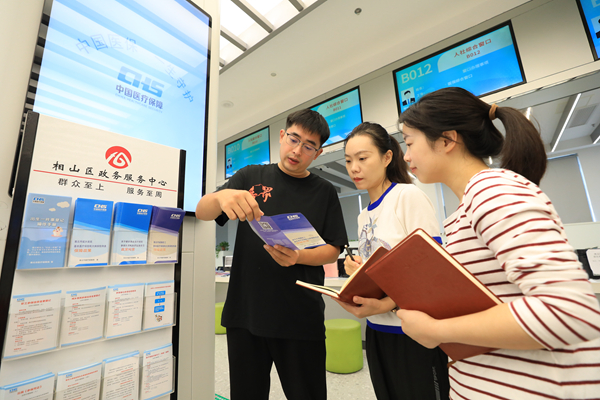
深度关注丨急难愁盼请点题 纪委监督促整治
Zhong Yang Ji Wei Guo Jia Jian Wei Wang Zhan· 2025-09-21 00:30
Core Viewpoint - The article emphasizes the importance of the "point-based rectification" mechanism in addressing public concerns and improving social governance in Fujian Province, highlighting its effectiveness in tackling various social issues through community engagement and multi-department collaboration [6][18]. Summary by Sections Point-Based Rectification Mechanism - The "point-based rectification" initiative allows citizens to voice their concerns, which are then prioritized by government departments for resolution, creating a responsive governance model [6][18]. - The mechanism has evolved over five years, establishing a framework that ensures selected issues are actionable, visible, and assessable [8][12]. Focus on Food Safety - The Fujian Provincial Commission for Discipline Inspection and Supervision has prioritized the safety of school food services, responding to public demand for improved oversight of food safety in schools [7][12]. - Approximately 300,000 students rely on external catering services, making food safety a significant concern for families [7]. Multi-Department Collaboration - Effective governance requires collaboration among various departments to address complex issues, such as food safety, which involves schools, catering services, and local vendors [7][19]. - The initiative has led to the establishment of a monthly supervision mechanism to ensure accountability among involved departments [7][12]. Community Engagement and Feedback - The introduction of an annual evaluation system allows citizens to assess the effectiveness of the rectification projects, ensuring that government actions align with public expectations [12][18]. - The evaluation process is designed to be transparent and objective, with departments required to continue their efforts until they meet community satisfaction standards [12][19]. Broader Implications for Social Governance - The "point-based rectification" approach has broader implications for enhancing social governance, promoting a clearer division of responsibilities among departments, and improving overall governance efficiency [13][16]. - The initiative has led to the development of digital tools and platforms to enhance service delivery and oversight, reflecting a modernized approach to governance [16].
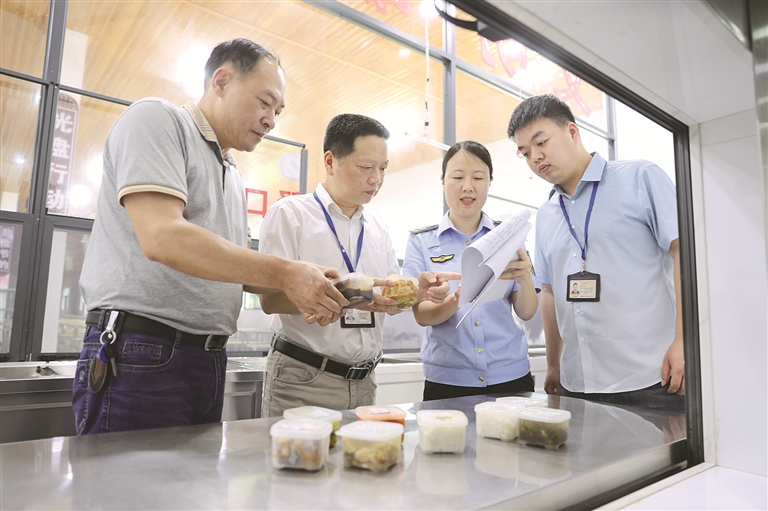
福建深化整治涉企执法问题助力优化营商环境
Zhong Yang Ji Wei Guo Jia Jian Wei Wang Zhan· 2025-08-03 00:37
Core Viewpoint - The article discusses the efforts of the Fujian Provincial Commission for Discipline Inspection and Supervision to improve the business environment by addressing issues related to administrative law enforcement that affect enterprises [3][4][5]. Group 1: Issues Identification - The Fujian Provincial Commission for Discipline Inspection and Supervision has focused on identifying pain points in the business environment, such as slow approval processes and difficulties in handling multi-department management issues [4][5]. - A survey conducted in January received over 20,000 responses from various industries, highlighting the concerns of enterprises [4][5]. - The top issue identified was the "rectification of multiple overlapping administrative law enforcement problems," which received 43% of the votes in a public poll [5]. Group 2: Implementation of Solutions - The Commission has implemented a "point-based rectification" mechanism, allowing enterprises to voice their concerns and participate in the identification of issues [5][6]. - A total of 48 enterprises have been selected as monitoring points for the business environment, with dedicated liaisons collecting feedback on administrative services and law enforcement [5][6]. - The establishment of an integrated administrative law enforcement platform has led to a reduction of over 12,000 inspections, enhancing regulatory efficiency and reducing arbitrary enforcement [7][8]. Group 3: Continuous Improvement and Feedback - The Commission emphasizes the importance of continuous improvement by inviting enterprises and the public to evaluate the effectiveness of the rectification efforts [9][10]. - A systematic approach is being adopted to address regulatory gaps and improve the long-term effectiveness of supervision and governance [10]. - The initiative aims to create a sustainable mechanism for protecting enterprise rights and enhancing the overall business environment in Fujian [10].

风采丨把正风肃纪反腐做到群众心坎上记全国纪检监察系统先进集体、广东省佛山市南海区纪委监委
Zhong Yang Ji Wei Guo Jia Jian Wei Wang Zhan· 2025-05-25 23:41
Core Viewpoint - The South China region, particularly Nanhai District, is actively improving its business environment by addressing corruption and enhancing transparency in project approvals, which has led to increased investor confidence and economic growth [2][3][5]. Group 1: Anti-Corruption Efforts - The Nanhai District Commission for Discipline Inspection and Supervision has been rigorously investigating corruption cases related to enterprises, significantly improving the local business environment [2][3]. - A specific case involved an official, Xie, who was found to have accepted over 4.7 million yuan in bribes, leading to stricter regulations on project approvals [3][4]. - Since 2022, the district has investigated 425 cases related to the business environment, resulting in the recovery of over 276 million yuan in economic losses for enterprises [4][12]. Group 2: Business Environment Improvement - In the first quarter of the year, the total investment signed for new projects in Nanhai District exceeded 30 billion yuan, marking a 15.4% year-on-year increase, reflecting growing confidence in the local business climate [5]. - The district has implemented measures to streamline project approval processes, including joint reviews for significant projects, enhancing transparency [3][4]. Group 3: Community and Infrastructure Development - The district has addressed community issues such as water supply and parking, improving residents' quality of life and facilitating business operations [6][7]. - Initiatives have led to the addition of over 28,000 new parking spaces and the resolution of long-standing water supply issues for local residents [6][7]. Group 4: Rural Asset Management - The Nanhai District has focused on managing collective rural assets, which amount to nearly 60 billion yuan, ensuring proper oversight and preventing corruption in asset transactions [10][12]. - The district has facilitated over 41,000 online transactions related to rural collective assets, with a total transaction value exceeding 17 billion yuan, indicating effective management and increased revenue for local communities [12].
