
燃油对冲

Search documents
燃油附加费翻一倍,全球机票进入涨价时代
36氪· 2026-03-25 10:47
Core Viewpoint - The global airline industry is facing significant challenges due to rising oil prices, which have led to increased ticket prices and potential flight cancellations, particularly affecting countries reliant on oil imports [4][7][16]. Group 1: Rising Fuel Costs - Oil prices have surged from approximately $85-$90 per barrel to between $150-$200, prompting airlines to raise fuel surcharges and ticket prices [9][10]. - Airlines such as Cathay Pacific have increased fuel surcharges significantly, with long-haul flights seeing surcharges rise from 569 HKD to 1164 HKD [9][10]. - The International Air Transport Association (IATA) predicts a general increase in global ticket prices by 9% due to these rising costs [6]. Group 2: Flight Cancellations and Shortages - Countries like Vietnam are facing imminent fuel shortages, with over two-thirds of their aviation fuel imported, leading to potential widespread flight cancellations starting in April [7][13]. - The situation is exacerbated by geopolitical tensions affecting oil supply chains, with countries like Pakistan also warning of fuel supply disruptions [13][14]. - Airlines are preparing for operational adjustments, including flight reductions and increased ground handling capacity to accommodate grounded aircraft [7][13]. Group 3: Financial Impact on Airlines - The airline industry, characterized by high operational costs, is particularly vulnerable to fluctuations in fuel prices, which account for about one-third of total costs [17][21]. - Major Chinese airlines are projected to incur significant fuel costs in 2024, with Air China, China Eastern, and China Southern's fuel costs estimated at 537.20 billion, 454.99 billion, and 549.89 billion RMB respectively [17]. - The financial strain from high fuel prices could lead to a substantial reduction in profitability for airlines, especially those with weaker financial positions [18][21]. Group 4: Regional Disparities - Asian airlines are more exposed to the current crisis due to lower fuel hedging ratios compared to their Western counterparts, making them more susceptible to rising oil prices [20][21]. - Airlines in Europe and the U.S. have historically employed fuel hedging as a risk management tool, which may provide them with more resilience against price shocks [21]. - The overall impact of rising fuel costs is expected to vary significantly across different regions, with Asian and Oceanic airlines facing the most immediate challenges [20]. Group 5: Long-term Industry Outlook - The airline industry is urged to shift from a focus on efficiency to building resilience in light of geopolitical uncertainties and rising operational costs [22]. - Historical precedents indicate that significant fuel price increases can lead to severe financial distress within the industry, as seen during the aftermath of Hurricane Katrina in 2005 [18].

国泰航空是如何盈利百亿的
Bei Jing Shang Bao· 2026-03-12 16:17
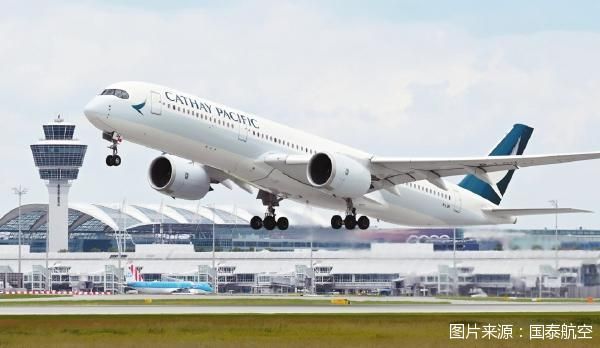
Core Insights - Cathay Pacific reported a net profit of HKD 10.828 billion for 2025, a year-on-year increase of 9.5%, driven by increased capacity, stable passenger volume, and strong cargo demand [1][3] Financial Performance - The airline's passenger revenue reached HKD 72.454 billion, up 15.8% year-on-year, while cargo revenue was HKD 24.279 billion, a 1.2% increase [3] - The group's subsidiary, Hong Kong Express, reported a passenger revenue of HKD 6.394 billion, growing by 6.7% [3] - However, revenue yield declined across the board, with Cathay Pacific's yield down 10.3%, cargo yield down 4.6%, and Hong Kong Express down 15.3% [3] - Hong Kong Express incurred a loss of HKD 999.6 million, with factors such as changing customer preferences and operational challenges impacting profitability [3] Operational Challenges - The average fuel price has surged approximately twofold since early 2023, significantly impacting operational costs [5][6] - Cathay Pacific's fuel consumption increased by 18.8% year-on-year, and the company is implementing a fuel hedging strategy to mitigate price risks [6][7] Strategic Initiatives - Cathay Pacific plans to enhance its investment in the Chinese mainland, expanding its route network and upgrading service offerings [7][8] - The group aims to diversify its route network, particularly in mainland China and Southeast Asia, to reduce reliance on single routes [4] - Cathay Pacific is set to introduce over 100 new aircraft, with significant investments exceeding HKD 100 billion planned for fleet expansion [8] Market Positioning - The group has increased its presence in the Greater Bay Area, with nearly one-third of its revenue now coming from this region [4][8] - Cathay Pacific is focusing on enhancing customer experience by incorporating more Chinese elements into its in-flight services [7][8]

盈利超百亿港元后动作不断:国泰航空2026年加码欧洲航线、上调燃油附加费
Bei Jing Shang Bao· 2026-03-12 14:51
Core Viewpoint - Cathay Pacific has achieved a net profit of HKD 10.828 billion for the fiscal year 2025, marking a 9.5% year-on-year increase, driven by increased capacity, stable passenger volume, and strong cargo demand [1][3] Financial Performance - The group recorded a profit attributable to shareholders of HKD 9.996 billion [3] - Passenger revenue reached HKD 72.454 billion, up 15.8% year-on-year [3] - Cargo revenue was HKD 24.279 billion, reflecting a 1.2% increase [3] - Hong Kong Express, a wholly-owned subsidiary, reported passenger revenue of HKD 6.394 billion, a 6.7% increase [3] - However, revenue yield declined across the board: Cathay Pacific down 10.3%, cargo down 4.6%, and Hong Kong Express down 15.3% [3] - Hong Kong Express incurred a loss of HKD 999.6 million, widening from previous losses [3] Operational Challenges - The rise in oil prices due to geopolitical tensions has significantly impacted operational costs, with fuel prices increasing approximately twofold since January [6][8] - The group plans to maintain a fuel hedging mechanism, with a hedging ratio of 30% for the current year [8] - The suspension of certain Middle Eastern routes due to geopolitical issues has led to increased demand for flights from Hong Kong to Europe [6][8] Strategic Initiatives - Cathay Pacific plans to increase investment in the Chinese mainland, expanding its route network and upgrading service offerings [1][9] - The group added five new destinations in 2025, increasing its total to 24 in mainland China [9] - Hong Kong Express aims to diversify its route network, particularly in mainland China and Southeast Asia, to reduce reliance on single routes [5] Fleet Expansion - The group is set to invest over HKD 100 billion, with plans to introduce more than 100 new aircraft in the coming years [10] - The first new generation long-haul aircraft, Boeing 777-9, is expected to be delivered in 2027 [10] Future Outlook - The group has reported profits exceeding HKD 30 billion for three consecutive years since 2023, marking a significant recovery from previous losses [11] - 2026 is identified as a pivotal year for the group, marking the beginning of a new five-year plan [11]

中国最赚钱航司,给员工发放超11周工资分红
第一财经· 2026-03-11 11:46
Core Viewpoint - Cathay Pacific reported a net profit of HKD 10.828 billion for the year 2025, representing a year-on-year increase of 9.5%, maintaining its position as the most profitable airline in China despite geopolitical challenges affecting the industry [3]. Group 1: Financial Performance - The company announced a profit-sharing scheme for employees, distributing over 11 weeks of eligible wages [3]. - The growth in profit is attributed to increased capacity, stable passenger volume, and strong cargo demand [3]. Group 2: Geopolitical Impact - The ongoing geopolitical situation, particularly in the Middle East, has led to unpredictable changes in passenger and cargo flow, as well as fluctuations in aviation fuel prices [4]. - Fuel prices have reportedly doubled in March compared to January and February, prompting the company to adjust fuel surcharges [4]. - Cathay Pacific is currently maintaining a 30% fuel hedging ratio to mitigate fuel price volatility [4]. Group 3: Operational Adjustments - The company has suspended flights to Dubai and Riyadh until the end of March and is reallocating capacity to other regions, particularly Europe, where flight frequencies to London are being increased [4]. - The shift in passenger routes is evident, with many travelers from the Middle East now opting to transit through Hong Kong to Europe instead [5]. - Cargo operations are also affected, with increased demand for shipments from Hong Kong and Southeast Asia to Europe, although operational adjustments are required due to changes in fuel loading practices [5]. Group 4: Market Outlook - Despite geopolitical tensions, the overall market demand in Hong Kong and the Greater Bay Area remains resilient, although e-commerce demand has slowed following the U.S. cancellation of small tax exemptions [5]. - The company plans to continue expanding its route network, expecting a 10% increase in passenger capacity, which will also support cargo capacity growth [5]. - There is a noted shift in passenger preferences towards premium travel options, prompting the company to invest in improving cabin products and customer experience [5].

小摩:预计国泰航空短期受惠于票价高企但被油价上升所抵消
Zhi Tong Cai Jing· 2026-03-11 06:46
Core Viewpoint - Morgan Stanley maintains an "overweight" rating for Cathay Pacific (00293) and Singapore Airlines, with target prices set at HKD 18 and SGD 8.4 respectively, despite the impact of the Iran conflict on the global airline industry [1] Group 1: Company Performance - Cathay Pacific is expected to report its performance for the previous year today [1] - The airline's operating profit is projected to grow by 18% year-on-year in the second half of 2025, while net profit is expected to remain roughly flat [1] - The resilience in passenger and cargo demand is offset by losses from Hong Kong Express and a one-time supplier settlement gain of HKD 900 million [1] Group 2: Market Conditions - The Iran conflict has led travelers and shippers to reroute through Singapore, Hong Kong, and other Asian hubs, impacting the global airline industry [1] - Both Cathay Pacific and Singapore Airlines have seen stock price declines, but are expected to outperform other global peers due to strong balance sheets, prudent fuel hedging, flexible route networks, and unique access to key corridors [1] Group 3: Financial Considerations - High ticket prices and rising cargo yield are expected to support both airlines in the short term, although these benefits may be offset by oil price trends [1] - While fuel hedging provides short-term cushioning, it remains below the levels of European peers, limiting profit margin protection in a volatile fuel environment [1]