物流数字化转型

Search documents
中金 | 低空科技系列物流篇:立体配送新格局
中金点睛· 2026-02-24 00:00
Core Viewpoint - The article emphasizes that drones are reshaping the logistics delivery paradigm in China, addressing the need for cost reduction and efficiency enhancement in the logistics market, and highlights investment opportunities in the integration of low-altitude economy and logistics [1][5]. Group 1: Market Overview - The Chinese logistics industry has maintained its position as the largest globally for nine consecutive years, with a projected social logistics total exceeding 360 trillion yuan in 2024 [2][5]. - Structural bottlenecks are evident, with logistics costs accounting for 14.1% of GDP, higher than in developed countries, and logistics companies facing challenges such as declining express delivery prices and rising labor costs [2][12]. - Drones are identified as a key solution to these challenges, capable of breaking spatial limitations and reducing time and cost [2][5]. Group 2: Technological Advancements - The commercial viability of logistics drones is accelerating due to technological iterations and industry chain collaboration, with some low-altitude logistics scenarios already achieving lower unit transport costs than traditional models [2][24]. - Drones can reduce operational costs by over 30% and improve efficiency by more than 50% for logistics companies [2][25]. Group 3: Industry Dynamics - Various stakeholders, including drone manufacturers, logistics giants, and cross-industry companies, are positioning themselves within the logistics drone market based on their resource endowments, leading to value release across the industry chain [3][41]. - The estimated market size for China's drone hardware is expected to reach 127.4 billion yuan, with third-party services projected to grow to 8.5 billion yuan annually [3][39]. Group 4: Policy and Regulatory Support - The national policy framework supports the development of low-altitude logistics, with multiple regulations and guidelines established to facilitate the integration of drones into logistics operations [20][21]. - Local governments are also implementing regulations and initiatives to promote the application of drones in logistics, creating a collaborative environment for industry growth [21][22]. Group 5: Application Scenarios - Drones are effectively addressing the logistics challenges in rural and remote areas, significantly reducing costs and improving delivery times [36][37]. - The use of drones in urban areas is alleviating traffic congestion and enhancing delivery efficiency, with examples of successful implementations in cities like Shenzhen and Hangzhou [30][34]. Group 6: Future Market Potential - The potential market for logistics drones is vast, with significant opportunities in both the branch logistics and urban last-mile delivery sectors [38][39]. - The integration of drones into logistics is expected to continue growing, driven by the demand for efficiency improvements and the ongoing development of low-altitude economic policies [39][40].




21架全货机入列!跨越速运提速,京东物流却扩仓,打法反差巨大
Sou Hu Cai Jing· 2026-01-10 21:47
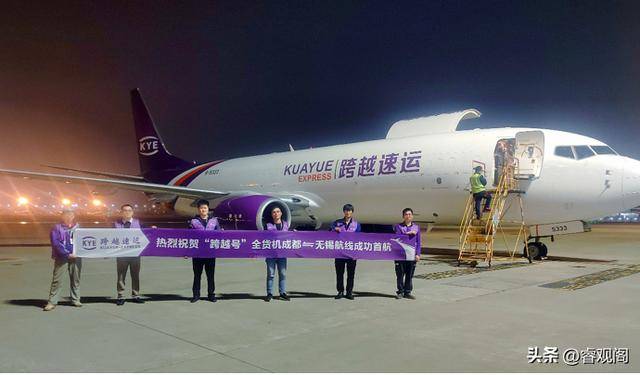
Core Insights - The article discusses the competitive landscape of China's modern logistics industry, focusing on two leading companies: Kuaixue Express and JD Logistics, highlighting their distinct strategies that align with national policies and reshape the industry [1][4]. Group 1: Competitive Strategies - Kuaixue Express has established a high-end air logistics service since its inception in 2007, focusing on B2B services and creating a comprehensive air transport network with 21 cargo planes, achieving industry-leading delivery times of "door-to-door in as fast as 8 hours" [4][6]. - JD Logistics has built a nationwide integrated warehousing and distribution network, operating over 1,500 warehouses with a total area exceeding 30 million square meters, enhancing efficiency in urban and regional deliveries, especially during peak shopping events [6][8]. Group 2: Technological Advancements - Both companies leverage technology as a core driver for their operations, with Kuaixue Express investing billions in a digital system that integrates AI, cloud computing, and big data, significantly improving operational efficiency and reducing cargo damage rates to below 0.03% [9][12]. - JD Logistics employs its "Jinghui System" for supply chain optimization, featuring an AI sorting system that processes over 1,500 items per hour with a 99.99% accuracy rate, drastically reducing sorting time and labor costs [14][15]. Group 3: Market Adaptation and Solutions - Kuaixue Express has developed 21 customized solutions for various industries, achieving a revenue of 18.47 billion yuan in its less-than-truckload (LTL) segment, with a compound annual growth rate exceeding 30% [18][20]. - Following JD Logistics' acquisition of Kuaixue Express in 2025, the synergy between Kuaixue's air network and JD's warehousing and last-mile delivery capabilities is expected to reduce delivery times between key economic regions by 40% [20].
三到哥哥:网络货运还能走多远?
Sou Hu Cai Jing· 2025-12-10 18:09
Group 1: Industry Overview - The core viewpoint is that the online freight industry is transitioning from scale expansion to high-quality development, supported by policies, technology, and market demand, with significant growth potential ahead [1][8] - The industry is expected to see a compound annual growth rate of approximately 12.3% from 2025 to 2030, with the market size projected to exceed 3.2 trillion yuan by 2030 [3] Group 2: Supporting Factors for Long-term Development - A comprehensive policy framework has been established, with national regulations promoting tax compliance and credit system construction, leading to over 3,600 online freight companies completing compliance registration by the end of 2025 [1] - Technological innovations such as AI, big data, and blockchain are driving efficiency improvements, with examples like the collaboration between Alibaba Cloud and JD Logistics achieving an 18% increase in scheduling efficiency and a 35% reduction in manual intervention [3] - Market demand remains robust and diverse, with B2B and B2C models expanding, and cross-border business expected to account for over 20% of the market by 2028 [3] Group 3: Challenges to Overcome - Tax and compliance pressures are significant, with individual drivers struggling to issue VAT invoices, leading to a broken VAT deduction chain, and head companies facing effective VAT rates above 8% [4] - The industry faces challenges in standardizing capacity and service quality, with a concentration of market power among leading platforms, potentially sidelining smaller players lacking differentiated services [6] - Profitability and model transformation pressures exist, as many small platforms rely on single transportation commission revenues, making them vulnerable unless they can adapt to a more integrated service model [6]

菜鸟香港eHub智慧航空货运中心上线超级机械臂
Zheng Quan Ri Bao Wang· 2025-12-02 04:18
Core Insights - The launch of the automated stacking system at the Cainiao Hong Kong eHub marks a significant step towards full digital transformation in logistics, enhancing operational efficiency and customer experience [1][2] Group 1: Automation and Efficiency - The automated stacking system can process packages at a speed of one large package every six seconds, significantly reducing the time goods spend at the cargo station [1] - The eHub has achieved 80% process automation, making it the most digitally advanced air cargo hub in Hong Kong [1] - During trial operations, the system completed the automated stacking of nearly 100 tons of e-commerce goods in just 7 hours, improving efficiency by 20% compared to traditional methods [2] Group 2: Customer Experience and Transparency - The system allows for real-time tracking of goods from security check to stacking, providing full transparency for customers [1] - The automated stacking system supports flexible operation modes and can function 24/7 even during network interruptions, ensuring high fulfillment efficiency during peak seasons [1] Group 3: Future Developments - The company plans to continue enhancing the automation level of the air cargo hub to provide faster, more accurate, and stable service experiences for customers [2] - Cainiao aims to leverage its global e-commerce logistics supply chain and advanced unmanned logistics technology to offer exceptional logistics experiences, including "global five-day delivery" and "next-day delivery from overseas warehouses" [2]
大型"抓娃娃机"护航黑五,菜鸟香港eHub智慧航空货运中心上线超级机械臂
Yang Zi Wan Bao Wang· 2025-12-01 06:21
Core Insights - The launch of the automated stacking system at the Cainiao Hong Kong eHub marks a significant step towards full digital transformation in logistics [1][2] - The system enhances operational efficiency, achieving a 20% increase in productivity compared to traditional methods, and allows for 24/7 operations even during network interruptions [2] Group 1: Automation and Efficiency - The automated stacking system can process large volumes of packages, completing the handling of nearly 100 tons of e-commerce goods in just 7 hours during trial operations [2] - The eHub has achieved 80% process automation, making it the most digitally advanced air cargo hub in Hong Kong [1] Group 2: Customer Experience and Transparency - The system provides full digital tracking from security check to stacking, allowing customers to monitor their cargo status in real-time [1] - The automated operations are designed to enhance customer experience during peak seasons, ensuring efficient handling of millions of packages [1][2] Group 3: Future Developments - The company plans to continue increasing the automation level of the air cargo hub to provide faster, more accurate, and stable service experiences [2] - Cainiao aims to leverage its global logistics network and advanced technology to offer exceptional logistics experiences, including "global five-day delivery" and "next-day delivery from overseas warehouses" [2]
菜鸟香港eHub智慧航空货运中心全面自动化升级
Zheng Quan Shi Bao Wang· 2025-12-01 04:12
Core Insights - The article highlights the launch of an automated stacking system at Cainiao's Hong Kong eHub, marking it as the first fully automated pre-inspection warehouse in Hong Kong, enhancing efficiency in cargo handling and reducing dwell time for goods [1][2] Group 1: Automation and Efficiency - The automated stacking system allows for rapid processing of cargo, achieving a speed of one large package every six seconds, and has automated 80% of the operational processes at the eHub [1] - During a trial operation, the system completed the automated stacking of nearly 100 tons of e-commerce goods in just 7 hours, improving efficiency by 20% compared to traditional methods [2] Group 2: Customer Experience and Transparency - The system provides full digital tracking from security check to stacking, allowing customers to monitor their cargo status in real-time, ensuring transparency throughout the process [1] - The automated system is designed to operate continuously, even during network interruptions, supporting 24/7 operations to meet high demand during peak seasons [1] Group 3: Future Developments - The management of Cainiao's Hong Kong eHub indicated plans to further enhance automation levels, aiming for a higher proportion of automated operations to improve service speed, accuracy, and stability [2] - Cainiao is preparing for the global logistics peak during the year-end shopping season, leveraging its extensive e-commerce logistics network and advanced unmanned logistics technology [2]
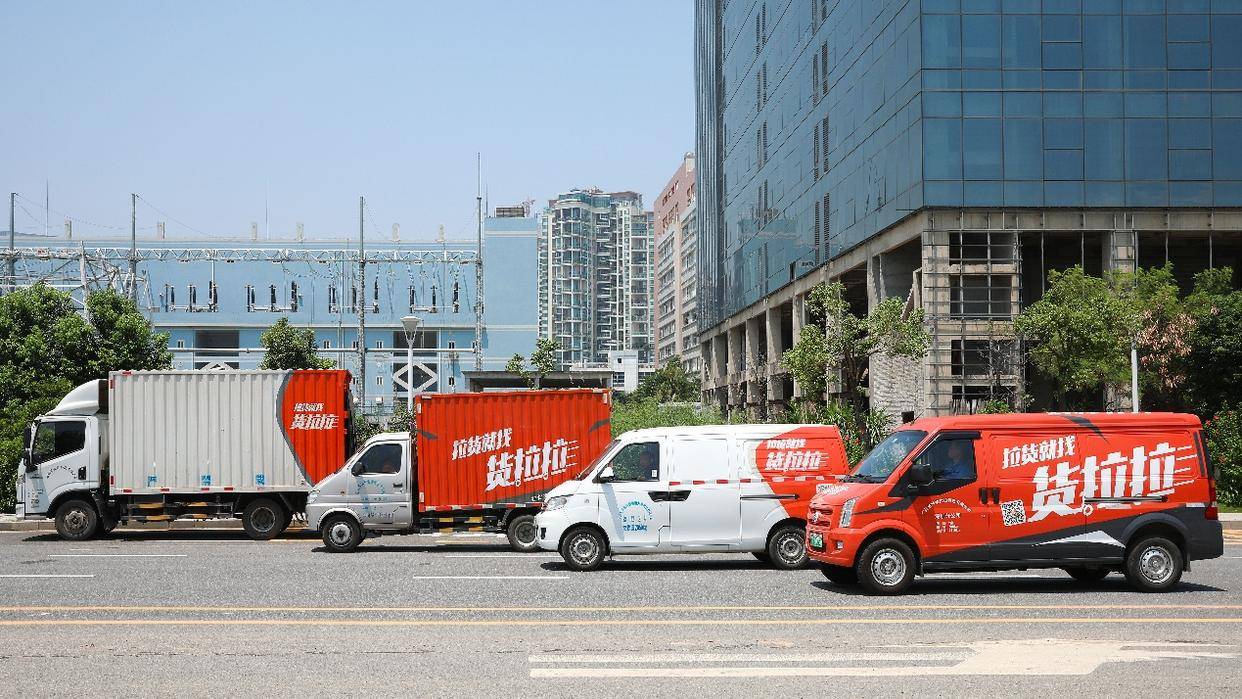
货拉拉六递招股书:规模神话下的变现困局
Sou Hu Cai Jing· 2025-10-31 10:50
Core Viewpoint - The latest prospectus update from Lalamove (the operating entity of Huolala) reveals a mixed performance, with impressive global growth metrics overshadowed by declining monetization rates in its core Chinese market, highlighting the challenges faced by platform-based logistics companies in balancing regulatory compliance and commercial interests [1][8]. Market Overview - The same-city freight market in China has reached a scale of 1.6 trillion yuan in 2024, growing by 8.5% year-on-year, and is expected to rise to 1.73 trillion yuan in 2025 [2]. - The growth is driven by structural factors such as the demand for "hourly delivery" from new retail, increased delivery density from community group buying, and the digital transformation of SMEs [2]. - The contribution from third- and fourth-tier cities is increasing, accounting for 39% of the market in 2024, up 2.3 percentage points from the previous year [2]. Competitive Landscape - Huolala holds a dominant position in the domestic market with a 63.1% market share, while competitors like Kuaigou and Manbang are also vying for market share through various strategies [4]. - The regulatory environment is evolving, with increased scrutiny on driver rights and commission transparency, pushing the industry towards more standardized development [4][22]. Business Expansion - Huolala has diversified its services beyond same-city freight, including moving, less-than-truckload transportation, and enterprise logistics solutions, with diversified logistics services accounting for 40.1% of revenue in the first half of 2025 [6][13]. - The company has expanded globally, entering markets in Southeast Asia and Latin America, with overseas revenue contributing 9.5% of total income [6][13]. Financial Performance - Huolala achieved adjusted profits of $2.72 billion in the first half of 2025, with expectations to exceed $5.4 billion for the full year, driven by cost control and the growth of high-margin enterprise services [7][8]. - The company has seen a significant reduction in operating expenses, with the operating expense ratio dropping from 57.8% in 2022 to 34.1% in 2024 [7]. Monetization Challenges - The monetization rate for Huolala's core domestic freight services has declined for three consecutive years, reaching 9.2% in the first half of 2025, which could limit future revenue growth [11][12]. - The decline is attributed to the company's proactive commission reduction policies, which have decreased revenue per transaction [12]. Strategic Focus - To address the declining monetization rate, Huolala is accelerating its business structure adjustment, focusing on diversified logistics services and overseas markets as new growth engines [12][13]. - The company plans to enhance its high-margin enterprise services and aims to increase their revenue share from 33% to 50% by 2027 [24]. Technological Innovation - Huolala emphasizes technological innovation as a core competitive advantage, with significant investments in R&D, particularly in smart logistics and AI-driven dispatch systems [16][25]. - The company aims to reduce driver idle time and improve operational efficiency through advanced algorithms and the adoption of new energy vehicles [16][25]. Conclusion - Huolala's journey towards IPO reflects the broader transition of platform economies in China, balancing growth with quality and regulatory compliance [26]. - The company's future success will depend on its ability to navigate the challenges of monetization, competition, and regulatory pressures while leveraging its technological and operational strengths [26].