物联网生态

Search documents
CES 2026: 不止于卖屏 BOE(京东方)发布智能座舱
Huan Qiu Wang· 2026-01-09 05:31
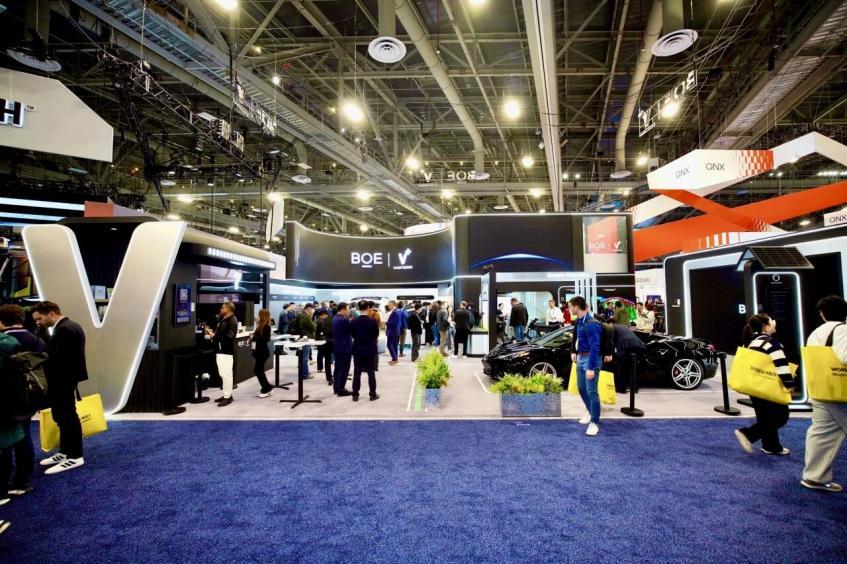
Core Insights - The article highlights BOE's strategic evolution from being a display hardware supplier to a comprehensive smart cockpit solution provider and IoT ecosystem builder, showcased at CES 2026 [3][8][14] Group 1: Product Showcase - BOE's exhibition at CES 2026 featured the global debut of the "HERO 2.0 Smart Cockpit," which defines four key scenarios for smart vehicles: health, entertainment, leisure, and office [3][4] - The display technology included the world's first Micro LED PHUD with 50,000 nits brightness, a 15.6-inch automotive-grade UB Cell central control screen, and the first 17-inch OLED curved terminal, showcasing advancements in flexible displays [6] - BOE introduced a smart independent vehicle amplifier with AI sound quality restoration and a CDR integrated digital broadcasting solution, enhancing the sensory interaction capabilities [6][7] Group 2: Strategic Shift - BOE aims to redefine its image from a display solution company to a comprehensive smart cockpit solution provider, emphasizing a shift towards integrated hardware and software solutions [8][9] - The company is transitioning from being a technology leader to an ecosystem builder, engaging with over 40 global partners to co-create solutions [9] - BOE is implementing an "open innovation platform" to encourage employee creativity and collaboration with external resources, leading to the development of innovative products like smart pet tanks [9][10] Group 3: Globalization and Market Strategy - BOE's globalization strategy focuses on localizing manufacturing and R&D, with existing bases in Vietnam and new facilities in the U.S. and Mexico, aiming for a complete technology and brand chain [11] - The company is committed to a "value war" rather than a "price war," emphasizing continuous technological iteration to enhance product performance and quality [11][12] - BOE recognizes the shift in the display market, where screens are becoming innovation drivers rather than cost items, leading to increased interest from automakers in differentiated solutions [11][12] Group 4: Industry Transformation - The number of Chinese companies at CES 2026 decreased significantly, indicating a structural change in the industry, with leading tech firms like BOE expanding their presence while traditional OEMs decline [13] - This shift reflects a fundamental change in the role of the Chinese supply chain in the global consumer electronics industry, moving from low-cost manufacturing to technology leadership and ecosystem building [13][14] - BOE's approach to international markets has evolved from simple product exports to a symbiotic model that integrates local market needs and innovation culture [13][14]


2026年德国柏林国际消费电子及家电展IFA:全球科技与生活创新的交汇舞台
Sou Hu Cai Jing· 2025-12-12 18:01
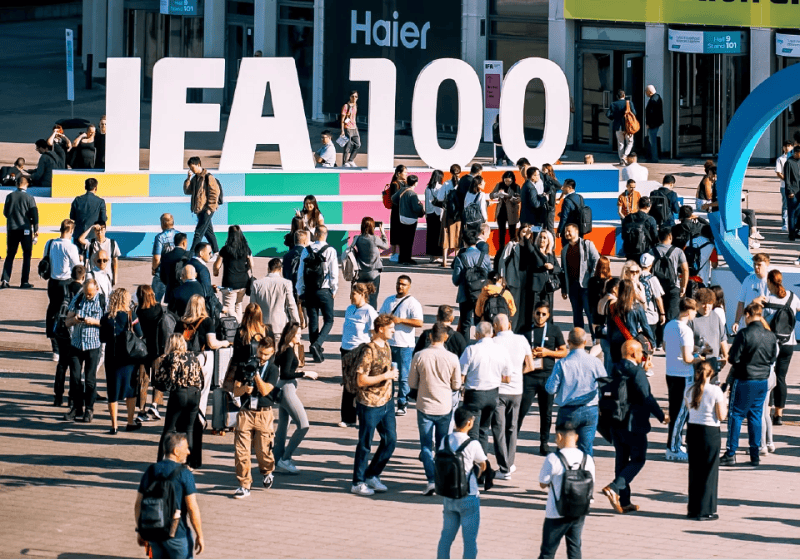
Core Insights - The IFA 2026 will take place from September 5 to 9, 2026, at Messe Berlin, showcasing the latest advancements in consumer electronics and home appliances, with a focus on artificial intelligence, smart homes, green appliances, wearable devices, and IoT ecosystems [1] - The event is expected to attract over 2,000 exhibitors and 240,000 professional visitors, covering an area of 160,000 square meters, emphasizing B2B trade connections and B2C interactive experiences [1] Group 1: Key Themes - The event will focus on four core themes: "Smart Living," "Energy Efficiency," "Health Technology," and "Circular Economy," promoting technology that serves both people and the environment [1] - The Smart Home and Connected Ecosystem section will showcase whole-home smart control systems, AI-driven appliances, voice interaction devices, and cross-brand connectivity solutions, reflecting a user-centered integration trend [3] - The Sustainable Innovation Zone will highlight energy-efficient appliances, modular designs, enhanced repairability, and the use of eco-friendly materials, in response to EU energy efficiency labels and green product regulations [4] Group 2: Product Highlights - The Health and Personal Care Technology section will include smart wearable devices, home health monitoring systems, beauty instruments, and fitness health solutions, addressing the demand for proactive health management in the post-pandemic era [5] - The Mobile Technology and Digital Life area will present smartphones, laptops, audio devices, AR/VR hardware, and accessories, emphasizing performance, portability, and personalized experiences [6] - The Home Appliances and White Goods showcase will feature high-end kitchen appliances, efficient washing machines, heat pump dryers, and air purification devices, reflecting the European market's high standards for integrated functionality and energy efficiency [8] Group 3: Startup and Innovation Focus - The event will provide a dedicated platform for global tech startups, with the iZone area focusing on products surrounding the Apple ecosystem and cutting-edge iTech innovations, attracting developers and channel partners [9] Group 4: Event Logistics - The IFA 2026 is organized by GFU Consumer Electronics & Home Appliances GmbH, with booth reservations now open for Chinese consumer electronics brands, appliance manufacturers, smart hardware companies, component suppliers, and ODM/OEM service providers [10] - The event serves as a strategic platform for Chinese companies to deepen local operations in Europe and establish high-end brand images, linking innovative technology with global consumers [10]
小米集团20251118
2025-11-19 01:47
Xiaomi Group Q3 2025 Earnings Call Summary Company Overview - **Company**: Xiaomi Group - **Date**: Q3 2025 Earnings Call Key Financial Highlights - Total revenue reached **RMB 113 billion**, a **2.5%** year-over-year increase, marking a historical high [2][3] - Adjusted net profit was **RMB 11.3 billion**, up **81%** year-over-year, also a record [2][3] - Gross margin improved to **22.9%**, an increase of **2.5 percentage points** year-over-year [3] Smartphone Performance - Sales of the **Xiaomi 17 series** smartphones grew by **30%** compared to the previous generation, with high-end versions accounting for over **80%** of sales [2][4] - The **Pro Max** model achieved significant success in the **RMB 6,000+** price segment, indicating effective high-end strategy [4][7] - Xiaomi ranked among the top three in global smartphone shipments with a market share of **13.6%** [6] IoT and Smart Home Business - IoT revenue reached **RMB 27.6 billion**, showing continuous growth for seven consecutive quarters with a gross margin of **23.9%** [2][8] - The IoT platform connected over **1 billion devices**, indicating ongoing ecosystem expansion [8][21] - A new smart home appliance factory commenced production with an annual capacity of **7 million units** [8][12] Internet Services and User Engagement - Global monthly active users reached **742 million**, a **8.2%** increase year-over-year [2][9] - Internet services revenue was **RMB 9.4 billion**, up **10.8%**, with a gross margin of **76.9%** [2][11] - Advertising revenue grew to **RMB 7.2 billion**, reflecting a **17.4%** increase [2][12] Electric Vehicle (EV) Business - EV revenue amounted to **RMB 28.3 billion**, with **108,796** units delivered, averaging a post-tax price of **RMB 260,000** [5][14] - The EV segment is identified as a new growth driver for the company [5] Research and Development - R&D expenses reached **RMB 9.1 billion**, a **52.1%** increase year-over-year, with R&D personnel comprising **44.2%** of total employees [5][15] - The company plans to invest over **RMB 200 billion** in R&D over the next five years [10] Strategic Initiatives - Xiaomi aims to enhance product premiumization and intelligence through proprietary chip and operating system development [10] - The company targets entry into the top 100 of the Fortune Global 500 by **2030** [10] Market Position and Challenges - Xiaomi's market share in mainland China reached **14.9%**, with growth in all regions except India [6] - The company faces challenges from rising memory costs, which are expected to pressure gross margins in the coming years [19][30] - Strategies to mitigate cost pressures include price increases and product structure optimization [19] Sustainability and ESG Efforts - Xiaomi's MSCI ESG rating improved from B to A, marking the third consecutive year of improvement [18] Future Outlook - The company plans to continue expanding its overseas market presence, particularly in Southeast Asia and Latin America [27][32] - Xiaomi's strategy includes enhancing operational efficiency in existing stores rather than opening new ones [31][32] This summary encapsulates the key points from Xiaomi Group's Q3 2025 earnings call, highlighting financial performance, market position, strategic initiatives, and future outlook.

雷军回应“成为新首富”!“王炸”要来了,就在今晚
21世纪经济报道· 2025-02-27 10:47
Core Viewpoint - Xiaomi's recent stock surge brought its market capitalization close to 1.5 trillion HKD, briefly making its founder Lei Jun the richest person in China, although this title quickly changed hands again due to stock price adjustments [1][2]. Product Launch and Strategy - Xiaomi is set to hold a significant product launch event featuring two flagship products: the Xiaomi 15 Ultra and the Xiaomi SU7 Ultra, marking a pivotal step in its high-end market strategy [3][4][5]. - The Xiaomi 15 Ultra is a culmination of five years of high-end exploration, featuring a 1-inch main camera and a Leica 200MP super telephoto lens, alongside advanced communication technologies [8][12]. - The Xiaomi SU7 Ultra, priced at 814,900 CNY, boasts impressive performance metrics, including a maximum horsepower of 1548PS and a 0-100 km/h acceleration time of just 1.98 seconds, positioning it against high-end supercars [8][12]. Market Position and Valuation - Xiaomi's stock price rose over 4% to 58.7 HKD per share, reaching a historical high and reflecting a significant valuation shift in the market [14]. - Lei Jun's wealth is primarily derived from Xiaomi Group, the "Kingsoft system" listed companies, and Shunwei Capital, with an estimated total wealth nearing 440 billion CNY [14][15]. - The company's valuation logic is evolving from a reliance on smartphone sales to a diversified business model that includes IoT, electric vehicles, and internet services, enhancing its growth potential [15][16]. Future Outlook - Xiaomi's ongoing investments in AI and electric vehicles are expected to open up broader opportunities for long-term growth, despite short-term stock price volatility [17].