
智能电动车

Search documents
汽车势成,AI渐显——小米集团(1810.HK)首次覆盖
Shanghai Aijian Securities· 2026-03-31 13:35
Investment Rating - The report initiates coverage with a "Buy" rating for Xiaomi Group (1810.HK) [6] Core Insights - The report highlights Xiaomi's strategic positioning in three major sectors: global smartphones, consumer AIoT, and smart electric vehicles, indicating a unique platform company with significant market share [6] - It anticipates a strong revenue growth driven by the automotive business, projecting double-digit growth from 2026 to 2028, with automotive revenue growth rates of 55%, 50%, and 40% respectively [6] - The report emphasizes the potential for Xiaomi to evolve from a "smartphone × AIoT" model to a comprehensive "human-vehicle-home ecosystem" [6] Financial Data and Profit Forecast - Total revenue projections (in million CNY) for Xiaomi are as follows: - 2024: 365,906.35 - 2025: 457,286.69 - 2026E: 539,450.02 - 2027E: 656,374.58 - 2028E: 801,697.62 - Year-on-year growth rates for total revenue are projected at 35.04%, 24.97%, 17.97%, 21.67%, and 22.14% respectively [5][12] - Net profit forecasts (in million CNY) are: - 2024: 23,658.13 - 2025: 41,643.39 - 2026E: 33,830.95 - 2027E: 43,178.52 - 2028E: 54,244.52 - The report notes a significant increase in net profit for 2025, with a year-on-year growth of 76.02% [5][12] Business Segmentation and Valuation - The report provides a breakdown of revenue by business segment for 2026E: - Smartphone × AIoT: 3,750 million CNY - Automotive and AI innovation: 1,644 million CNY - The valuation approach includes a 20x PE for the smartphone × AIoT business and a 1.5x PS for the automotive and AI innovation business, leading to a target market capitalization of approximately 10,018 billion HKD for 2026 [6][16] Market Position and Competitive Landscape - Xiaomi is positioned as a leading player in the global smartphone market, maintaining a top-three ranking for 22 consecutive quarters, with a projected market share of 13.3% by 2025 [6] - The AIoT platform is expected to connect 1.08 billion devices by the end of 2025, establishing Xiaomi as a leader in the consumer IoT space [6] - The report addresses market misconceptions regarding the impact of storage price increases on profitability, suggesting that high-end product offerings and international expansion will provide a strong profit buffer [6]
小米集团-W(01810):首次覆盖:汽车势成,AI渐显
Shanghai Aijian Securities· 2026-03-31 11:23
Investment Rating - The report initiates coverage with a "Buy" rating for Xiaomi Group (1810.HK) [6] Core Insights - The company is positioned as a rare platform that has scaled in three major sectors: global smartphones, consumer AIoT, and smart electric vehicles. As of Q4 2025, Xiaomi ranks among the top three in global smartphone shipments for 22 consecutive quarters, with a projected market share of 13.3% by 2025. The AIoT platform is expected to connect 1.08 billion devices by the end of 2025, establishing a leading position in the consumer IoT market. The automotive segment is projected to deliver 411,000 vehicles in 2025, with strong early demand for the new Xiaomi SU7 model [6][10][12]. Financial Data and Profit Forecast - Total revenue projections (in million CNY) for Xiaomi Group are as follows: - 2024: 365,906.35 - 2025: 457,286.69 - 2026E: 539,450.02 - 2027E: 656,374.58 - 2028E: 801,697.62 - Year-on-year growth rates are expected to be 35.04% for 2024, 24.97% for 2025, and 17.97% for 2026 [5][18]. - Net profit projections (in million CNY) are: - 2024: 23,658.13 - 2025: 41,643.39 - 2026E: 33,830.95 - 2027E: 43,178.52 - 2028E: 54,244.52 - The report anticipates a significant increase in net profit for 2025, with a year-on-year growth rate of 76.02% [5][18]. Business Segments and Valuation - The report estimates that by 2026, the mobile and AIoT business will generate revenue of 375 billion CNY, with a net profit of 31.9 billion CNY. The automotive and AI innovation business is expected to generate 164.4 billion CNY in revenue, with a net profit of 3.3 billion CNY. The valuation method applied is a sum-of-the-parts (SOTP) approach, assigning a PE of 20x for the mobile and AIoT business and a PS of 1.5x for the automotive segment [16][18]. - The target total market capitalization for 2026 is estimated at approximately 10,018 billion HKD, representing an upside potential of 19% from the current market value [6][16]. Key Assumptions - Revenue growth is driven by strong performance in the automotive sector, with expected growth rates of 55%, 50%, and 40% for the automotive business from 2026 to 2028. The report identifies 2026 as a pivotal year for the company, marking a transition to a more profitable phase as the automotive scale effects become evident [6][12]. Catalysts - Key catalysts for growth include the successful launch of new automotive models, expansion in overseas markets, and advancements in AI technology. The report emphasizes the importance of monitoring order conversion rates for the new SU7 model and the company's progress in international markets [6][12].

解密蔚来芯片分拆始末,正规划低端芯片对标地平线J6M|36氪独家
36氪· 2026-03-20 00:10
Core Viewpoint - NIO has achieved its first quarterly profit of over 1.2 billion yuan in Q4 2025 after several quarters of significant losses, attributed to cost control reforms and the restructuring of its chip business [4][18]. Group 1: Financial Performance and Strategy - NIO's financial turnaround is marked by a strategic focus on cost control and restructuring, particularly in its chip business, which has been a major financial burden [5][19]. - The chip business, previously a significant cost center, has been spun off into a separate entity, Nanjing Shenji Technology, to attract external investment and improve financial performance [10][19]. - The successful launch of the M97 chip, developed in collaboration with Aisin Yuan Zhi, is expected to generate substantial revenue through external sales to other automakers [8][19]. Group 2: Chip Development and Market Position - The M97 chip boasts a computing power of over 700 TOPS, positioning it competitively against existing products like Horizon's J6P, which has a computing power of 560 TOPS [8]. - NIO's chip business has been restructured to allow for external sales, with the potential for significant revenue generation through technology licensing fees [19]. - The collaboration with Aisin Yuan Zhi is seen as a strategic move to fill the gap in the high-performance chip market, especially as demand for domestic alternatives to NVIDIA and Qualcomm increases [22][24]. Group 3: Industry Trends and Competitive Landscape - The Chinese automotive market is experiencing a shift towards domestic high-performance chips, driven by cost-cutting pressures among automakers [22][24]. - There is a notable opportunity for NIO and other companies to capitalize on the current market window for domestic chip supply, as many automakers are still reliant on foreign chip solutions [23][24]. - The competitive landscape is evolving, with companies like Xiaopeng also seeking to expand their chip offerings, indicating a growing trend towards self-sufficiency in chip development within the industry [21].


小鹏的2026,没有Plan B
虎嗅APP· 2026-03-08 03:04
Core Viewpoint - Xiaopeng Motors is facing significant challenges in 2026, with fluctuating delivery volumes amid a market downturn and criticism of its L2-level autonomous driving technology, which the chairman describes as a "Frankenstein" solution. The company is urged to balance immediate consumer needs with long-term technological aspirations [2][3][10]. Market Conditions - The automotive market is experiencing a "淘汰赛" (elimination competition) phase, with consumer sentiment becoming increasingly conservative due to changes in subsidy policies and declining incentives for new energy vehicles. January 2026 saw a 13.9% year-on-year drop in retail sales, with February expected to hit a low point for the year [5][6]. - The shift from "增量竞争" (incremental competition) to "存量绞杀" (stock competition) indicates that maintaining monthly sales above 10,000 units is now a baseline requirement rather than a mark of success [6]. Xiaopeng's Performance - In February, Xiaopeng delivered 15,256 vehicles, significantly lower than competitors like Hongmeng Zhixing (28,212), Leap Motor (28,067), and Li Auto (26,421). NIO was the only company among the "蔚小理" trio to achieve a year-on-year growth of 57.6% [8]. - Despite a challenging sales environment, there are signs of recovery as interest in new models, such as the Xiaopeng X9, has increased following a recent technology launch [9]. Consumer Behavior - Consumers are increasingly focused on practical features rather than futuristic technologies. The market has shifted towards valuing immediate, tangible benefits over speculative advancements like flying cars or Robotaxis [10][20]. - A potential buyer expressed hesitation between Xiaopeng and Li Auto, highlighting the importance of practical features like in-car refrigerators for families, which Xiaopeng currently lacks in its SUV offerings [9]. Strategic Adjustments - Xiaopeng is responding to market pressures by introducing financing options and launching new models, including the second-generation VLA and the new Xiaopeng X9 electric version. The company plans to release seven models with advanced range-extending capabilities in 2026 [19]. - The chairman emphasizes that all technology must enhance current product experiences, indicating a shift towards more market-driven strategies rather than purely technological aspirations [19][20]. Industry Reflection - Xiaopeng's struggles reflect broader trends in the Chinese smart electric vehicle industry, where the focus is shifting from rapid growth to meticulous market engagement. The company must learn to balance technological ideals with commercial realities to survive in a competitive landscape [20].

九号公司:2025年净利润同比增长61.84%
Xin Lang Cai Jing· 2026-02-27 10:09
Core Viewpoint - The company announced significant growth in its financial performance for 2025, indicating strong operational results and profitability improvements [1] Financial Performance - The company achieved total operating revenue of 21,325.03 million yuan, an increase of 7,129.22 million yuan compared to the previous year, representing a growth rate of 50.22% [1] - The net profit attributable to the parent company's shareholders was 1,754.55 million yuan, which is an increase of 670.42 million yuan year-on-year, reflecting a growth rate of 61.84% [1] - The basic earnings per share reached 24.39 yuan, up by 9.07 yuan from the previous year, marking a growth rate of 59.20% [1]
恒生科技估值跌至低位,汇添富恒生科技ETF联接发起式(QDII)C(013128)捕捉AI叙事加持下估值修复红利
Sou Hu Cai Jing· 2026-02-22 05:51
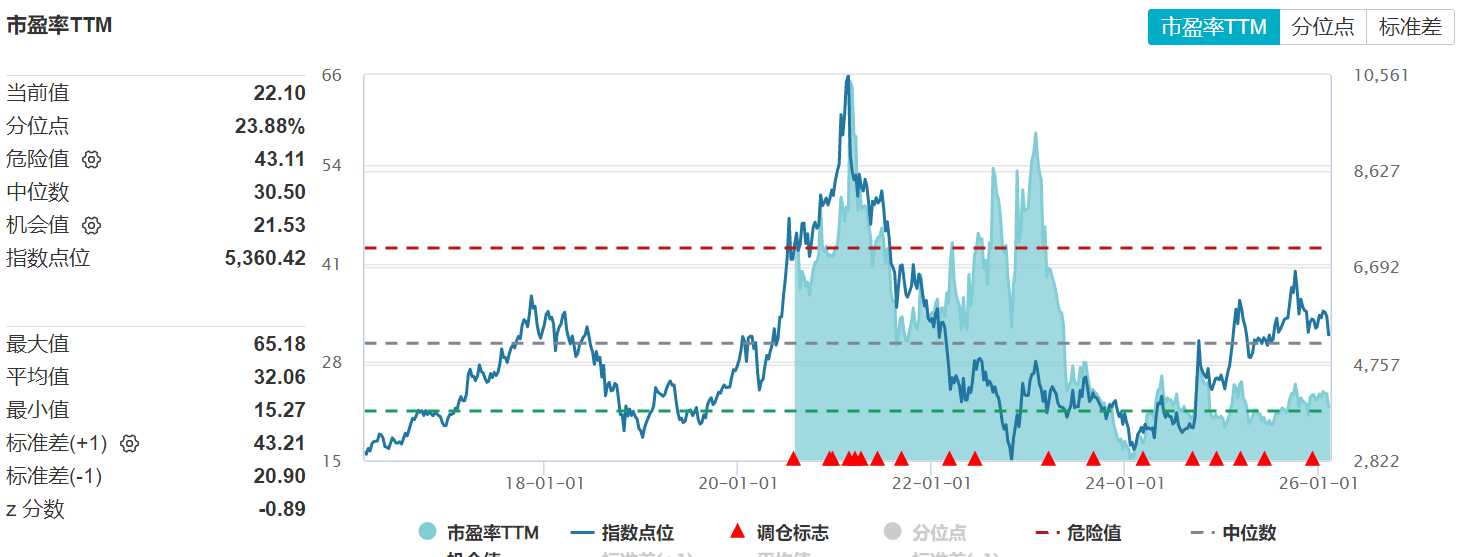
Core Viewpoint - The Hang Seng Tech Index has become increasingly important in the market as AI narratives strengthen, serving as a key benchmark for the tech sector in Hong Kong and a vital tool for investing in Chinese tech assets [1] Valuation and Market Position - The current valuation of the Hang Seng Tech Index has dropped to historically low levels, with a dynamic price-to-earnings ratio (PE-TTM) of approximately 22.10 times as of February 13, 2025, which is below the 25th percentile of the past three years and significantly down from over 60 times at the peak in early 2021 [2] - The price-to-book ratio (PB) stands at about 2.91 times, also in the historical bottom range [2] - Compared to the Nasdaq 100 Index (approximately 34 times PE) and the domestic ChiNext Index (over 40 times PE), the Hang Seng Tech Index shows a significant valuation discount, reflecting multiple pessimistic expectations such as regulatory tightening and macroeconomic slowdown [5] Earnings Improvement and Future Outlook - With the acceleration of AI model commercialization, a recovery in cloud business demand, and the normalization of gaming license issuance, leading internet companies are showing signs of improvement in both revenue and profit [6] - According to Galaxy Securities, the fundamentals of the Hang Seng Tech Index are expected to show significant improvement by the second quarter of 2025, with a year-on-year revenue growth rate of 14.43% and a net profit growth rate of 16.18%, outperforming the overall Hang Seng Index [6] - Excluding the impact of the food delivery price war on Alibaba, Meituan, and JD.com, the core constituents of the Hang Seng Tech Index are expected to see a revenue growth of 13.6% and a Non-GAAP net profit growth of 21.7%, indicating strong profit recovery momentum [6] Market Dynamics and Investment Tools - The Hong Kong stock market has seen significant inflows from foreign and southbound investors, driving strength in traditional sectors like agriculture, food and beverage, and transportation, despite volatility in global software and tech giants [7] - The Huatai Securities report suggests that the peak earnings season for U.S. tech stocks is nearing its end, and there may be catalysts for technology and consumer sectors around the Chinese New Year [7] - The E Fund Hang Seng Tech ETF Connect (QDII) C (013128) is highlighted as a cost-effective tool for investors looking to capitalize on the valuation recovery of the Hang Seng Tech Index, featuring a fee structure that avoids high redemption fees for short-term holders [7][10] Sector Composition - The Hang Seng Tech Index includes leading companies in both internet and hard tech sectors, with over 50% of the index weight attributed to platform companies like Tencent, Alibaba, Meituan, JD.com, and Kuaishou [7][8] - The hard tech segment encompasses companies in the smart electric vehicle supply chain, semiconductor manufacturing, and consumer electronics, capturing both the resilience of consumer internet and the growth potential of industrial internet [8]
动态优化叠加产业前瞻!汇添富恒生科技C(013128)标的指数每季度"换血"背后的增长逻辑
Xin Lang Cai Jing· 2026-02-21 02:36
Group 1 - The core mechanism of the Hang Seng Tech Index is its quarterly rebalancing system, which allows for dynamic optimization of component structure, enabling the index to continuously track industry trends and provide a forward-looking technology allocation tool for investors [1] - The "fast inclusion" rule allows new stocks to be added to the index within 10 trading days if their market capitalization ranks in the top 10 among existing constituents, ensuring the index captures the benefits of large tech IPOs promptly [2] - The index has evolved from being dominated by internet services to a more balanced representation of both soft and hard technologies, with significant changes in component weightings reflecting shifts in the Chinese tech industry [3] Group 2 - The index has seen a gradual decrease in the weight of platform economy stocks while increasing the representation of hard tech companies like semiconductor firms, with hard tech now accounting for 20% of the index [3] - Recent adjustments have included electric vehicle companies, raising the automotive sector's weight to 15%, and AI-related stocks, further increasing the weight of semiconductors and AI hardware to 25% [3] - The index employs a "survival of the fittest" mechanism, removing underperforming stocks and maintaining high profitability and growth quality among its constituents, with removed stocks underperforming the index by an average of 15 percentage points in the following year [4] Group 3 - The index limits the weight of any single constituent to 8% and the top five constituents to a combined 40%, which helps mitigate risks associated with volatility in leading stocks [4] - The Hang Seng Tech Index is characterized by a balanced allocation between soft and hard technologies, with internet platform companies comprising over 50% of the index, while hard tech includes electric vehicle and semiconductor firms [5] - The index's structure captures the resilience of the consumer internet while also positioning itself for growth in the industrial internet space [5]
“马上开小鹏”首轮幸运车主亲述:顺手一点,竟把小鹏X9“抽”回家
Guang Zhou Ri Bao· 2026-02-18 11:07
Core Viewpoint - The article highlights the excitement surrounding the "马上开小鹏" lottery event, where a lucky winner received a Xiaopeng X9 vehicle valued at 329,800 yuan, showcasing the growing popularity of smart electric vehicles in Guangzhou [1][2]. Group 1: Event Summary - The "马上开小鹏" lottery concluded successfully, with two winners announced shortly after the Guangzhou fireworks event [1]. - The winner, Mr. Huang, expressed disbelief and excitement upon receiving the news of his win, emphasizing the unexpected nature of his participation [1]. - The fireworks event on February 17 was described as "crowded" and "stunning," encouraging others to experience it in person [1]. Group 2: Company and Product Insights - Mr. Huang praised Xiaopeng Motors for its intelligent and practical features, particularly highlighting the X9's super extended range technology, which offers over 1,600 kilometers of comprehensive range [2]. - The article notes a shift in perception of "Guangzhou manufacturing," with Xiaopeng Motors and smart driving becoming new symbols of the city [2]. - Xiaopeng Motors plans to give away five vehicles during the Spring Festival, with a second round of the "马上开小鹏" lottery already in progress, inviting more participants to engage with the brand [2].
别等他回国了,贾跃亭忙着在美国“造人”
阿尔法工场研究院· 2026-02-09 00:06
Core Viewpoint - Jia Yueting has not returned to China as promised and has instead ventured further into new business areas, including robotics, while facing ongoing challenges with his electric vehicle company, Faraday Future (FF) [4][21]. Group 1: Robotics Venture - At the National Automobile Dealers Association (NADA) conference in Las Vegas, Jia Yueting introduced three types of robots, ranging from a high-end humanoid robot priced at $243,000 to a $17,000 quadruped security robot, promoting the slogan "Every profession has its own robot" [5][12]. - Following the launch, he reported securing 1,211 paid pre-orders, claiming "release equals sales, sales equals delivery" [5][12]. - FF has also announced a $10 million investment from AIxC, which is a pure equity financing deal, expected to close around February 13 [13]. Group 2: Challenges with Faraday Future - Faraday Future has faced significant issues, including severe delivery delays, financial strain, and internal turmoil, leading to skepticism about its future [9][10]. - The company has struggled to deliver vehicles, with only 17 cars expected to be delivered in 2025, and a total of 10 cars delivered in the first three quarters of the year, with a slight increase to 7 in the fourth quarter [15]. - To maintain its listing status, FF has engaged in stock consolidation and introduced a "partner plan" to convert some equity into creditor trust, indicating a desperate attempt to stabilize the company [15]. Group 3: Debt and Legal Issues - Jia Yueting's personal debt, primarily related to the LeEco crisis, is approximately $12 billion, with over $10 billion repaid through a creditor trust in the U.S. [19]. - Remaining debts under Chinese jurisdiction are around $2 billion, equivalent to approximately 14.2 billion RMB, with ongoing legal actions resulting in over 10.29 billion RMB in unfulfilled debts [19]. - Despite securing $135 million in financing for debt repayment, this amount is insufficient compared to the massive debts left by LeEco [19].

南方基金旗下恒生科技ETF南方(520570)震荡企稳, 机构:估值低位吸引南向资金加仓
Ge Long Hui· 2026-02-06 07:34
Group 1 - The Hang Seng Technology Index opened lower but stabilized, closing at 5355.83 points, down approximately 0.34% from the previous trading day [1] - The Hang Seng Technology ETF (520570) experienced active trading with a turnover of about 160 million yuan and a turnover rate of approximately 6.07%, demonstrating strong resilience and capital support [1] - The current price-to-earnings ratio (PE-TTM) of the Hang Seng Technology Index is 22.18 times, significantly lower than major global technology indices, indicating a historical low valuation [2] Group 2 - Despite short-term pressure from fluctuations in U.S. Federal Reserve policy expectations and global technology sector sentiment, core constituents are making progress in AI commercialization, with companies like Xiaomi and Li Auto advancing their AI initiatives [2] - Southbound capital continues to increase, with a net inflow of 24.98 billion HKD on February 5, marking the highest single-day net inflow since August 2025, and further net purchases exceeding 10 billion HKD on February 6 [2] - The Hang Seng Technology ETF closely tracks the Hang Seng Technology Index, covering 30 of the largest and most liquid technology companies listed in Hong Kong, and is expected to have long-term recovery potential due to low valuations and continuous inflows [3]
