特朗普因素

Search documents
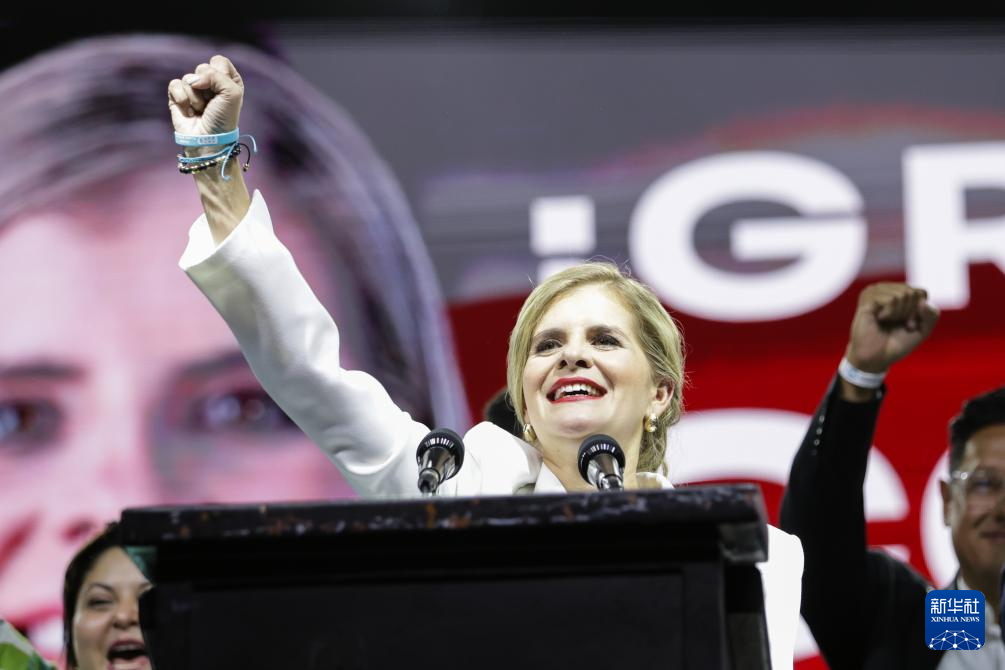
2026年拉美“第一选”:右翼接续执政哥斯达黎加
Xin Hua Wang· 2026-02-02 13:52
Core Viewpoint - The election of Laura Fernández from the right-wing People's Sovereignty Party in Costa Rica is seen as a continuation of the current administration's policies, further solidifying the conservative trend in Latin American politics [2][4]. Election Results - Laura Fernández won the presidential election with 48.51% of the votes, surpassing the legal threshold for election, based on the counting of 88.43% of the ballots by the Costa Rican Supreme Electoral Tribunal [3]. Candidate Background - Laura Fernández, aged 39, previously served as the Minister of National Planning and Economic Policy and Minister of the Presidency under the current president, Rodrigo Chávez [4]. - Fernández's victory is attributed to the support from Chávez and his right-wing coalition, with Chávez's high approval ratings playing a crucial role in her campaign [4]. Policy Continuity - Fernández emphasized the theme of "continuity" in her campaign, advocating for the continuation of Chávez's policies, including fiscal austerity, attracting private investment, enhancing government efficiency through digitalization, and a strong stance against crime [4]. Security Concerns - Rising violent crime, particularly related to drug trafficking and gang conflicts, has become a central issue for voters, with 873 homicides reported in 2025, indicating a high rate relative to the region [4]. - To address security issues, Fernández plans to implement a "state of emergency" in specific areas to combat drug-related crimes and increase penalties for organized crime [5]. Regional Political Trends - The election results in Costa Rica reflect a broader trend in Latin America, where right-wing parties are consolidating power while left-wing movements are declining [6]. - The upcoming elections in several Latin American countries are expected to be influenced by this rightward shift in political dynamics [6]. U.S. Relations - The current Costa Rican government maintains a close relationship with the United States, which is expected to strengthen under Fernández's administration, further aligning with the "pro-U.S." bloc in the region [7]. - Analysts suggest that the rise of right-wing forces in Latin America is influenced by external factors, including the policies of the Trump administration, which actively supported right-wing leaders in the region [7].

21全球观察|澳大利亚工党赢得大选 中澳农业矿业服务业等领域合作空间广阔
2 1 Shi Ji Jing Ji Bao Dao· 2025-05-04 14:30
Group 1: Election Results and Political Landscape - The Australian Labor Party, led by Prime Minister Albanese, won the 2025 federal election, securing over 80 seats in the House of Representatives, allowing for a majority government [1] - The opposition coalition, led by Dutton, acknowledged their defeat, with the coalition being a long-standing alliance of the Liberal and National parties [1] - The election occurred amid a turbulent international situation, reflecting voters' desire for stability in foreign relations and a rejection of populism and unilateralism [1][2] Group 2: Economic and Trade Implications - The new government is expected to maintain a multilateral approach and strengthen economic ties, particularly with countries showing sustainable growth potential, such as China [2] - Australia has seen a significant shift in trade dynamics, with some Australian businesses turning to the Chinese market due to U.S. tariff pressures [2] - The economic growth forecast for Australia is 1.3% in 2024, with GDP showing consistent quarterly increases during the Labor government's term [6] Group 3: Voter Concerns and Policy Focus - Key voter concerns during the election included cost of living, economy, government performance, climate change, and housing, with the Labor Party focusing on welfare policies that resonated with voters [5] - The Labor government has effectively controlled inflation and unemployment, leading to a recent interest rate cut by the Reserve Bank of Australia [6] Group 4: China-Australia Relations - China has been Australia's largest trading partner for 15 consecutive years, with significant exports in agricultural and mineral products [7] - The Labor government's approach has led to a recovery in bilateral trade, with expectations for continued cooperation in sectors like agriculture and clean energy [8] - Chinese investment in Australia is projected to grow by 43% in 2024, indicating a potential rebound in economic relations despite previous investment challenges [8]
加拿大之后是澳大利亚 这一因素推动“对美强硬派”赢得选举
news flash· 2025-05-04 07:37
Core Viewpoint - The Australian Prime Minister Albanese led the Labor Party to victory in the 2025 federal election, influenced by the "Trump factor," which also affected the election results in Canada [1] Group 1: Election Results - The Labor Party's support surged, attributed in part to the "Trump factor," which was acknowledged by both the Liberal and Labor parties [1] - The Liberal Party spokesperson, Senator James Patterson, stated that the "Trump factor" was a significant influence on the election outcome, marking a major setback for conservative parties in Australia [1] Group 2: Comparative Analysis - Similar to Australia, the "Trump factor" also played a role in the Canadian elections, where the Liberal Party, advocating a tough stance against the U.S., saw a rise in support and ultimately won the election in April [1]
21年来首次!澳大利亚现总理连任成功,“特朗普因素”拖累反对党
Di Yi Cai Jing· 2025-05-04 03:32
Group 1 - The Labor Party has secured a majority in the 48th Federal Parliament, allowing it to form a government without needing to collaborate with other parties or independent candidates [1] - Prime Minister Albanese has reiterated policies on healthcare, climate change, renewable energy, and Indigenous rights following the election victory [3][4] - Economic issues, particularly the rising cost of living and housing shortages, were central to the election campaign, influencing voter preferences [3][4] Group 2 - Albanese's government aims to maintain strong ties with the United States while addressing domestic and foreign policy challenges [4] - The opposition, led by Dutton, faced criticism for its economic policies and was unable to effectively counter the Labor Party's narrative on living costs [4][5] - The "Trump effect" negatively impacted Dutton's campaign, as his alignment with Trump alienated some Australian voters [6][7] Group 3 - The bilateral trade relationship between Australia and China has improved under Albanese's government, with trade restrictions being lifted and Australian products returning to the Chinese market [7][8] - The emphasis on rule-based free trade is seen as crucial in the face of global economic challenges, including tariffs and geopolitical conflicts [8]

继加拿大之后,澳选举又出现了“特朗普因素”
Xin Hua She· 2025-05-04 03:22
Core Points - Australian Prime Minister Albanese's Labor Party won the 2025 federal election, influenced by the "Trump factor" which contributed to a shift in voter support [1][5][6] Election Results - The Labor Party is expected to secure over 80 seats in the Australian House of Representatives, surpassing the majority needed to form a government [3] - The opposition coalition led by Dutton conceded defeat, marking a significant loss for the conservative alliance [3] Voter Concerns and Policies - Key voter concerns during the election included cost of living, economy, government performance, climate change, and housing [4] - The Labor Party's campaign focused on welfare policies related to healthcare, housing, tax cuts, and infrastructure, which resonated with the majority of voters [4] - The current Labor government has effectively managed inflation and unemployment, with economic growth reported at 1.3% for 2024 and consistent GDP growth over 13 consecutive quarters [4] Influence of the "Trump Factor" - Both major parties acknowledged the impact of the "Trump factor" on the election outcome, with 48% of voters citing uncertainty from Trump's policies as a significant concern [5][7] - A strong anti-Trump sentiment among Australian voters was noted, with 68% believing Trump's actions were detrimental to Australia [7] - Albanese's campaign linked the conservative coalition to Trump, suggesting that a continuation of their leadership would lead to chaos and division in Australia [7] International Relations and Trade - The Labor government faces strong domestic opposition to U.S. tariffs, with Albanese criticizing the U.S. for its trade policies and asserting Australia's national interests [8] - Recent polling indicated a low level of trust in the U.S. among Australians, with only 36% believing the U.S. acts responsibly on the global stage [8]