独立IPO

Search documents
16倍牛股天普股份重申“无注资” 中昊芯英独立IPO杨龚轶凡买壳成谜
Chang Jiang Shang Bao· 2026-01-18 23:44
Core Viewpoint - The market's expectations regarding Tianpu Co., Ltd. (605255.SH) may be disappointed as the company reiterates that there are no plans for asset injection, despite significant stock price increases driven by speculation about a reverse merger with AI chip company Zhonghao Xinying [1][4][7]. Group 1: Company Background and Ownership Changes - Tianpu Co., Ltd. underwent a change of control in August 2025, with Zhonghao Xinying acquiring a 68.29% stake, making Yang Gongyifan the actual controller of the company [5][6]. - The acquisition involved a three-step process, including share transfers and capital increases, with a total investment of 15.21 billion yuan [5]. - Following the acquisition, the board of directors was rapidly restructured, with most of the original management replaced by Zhonghao Xinying executives [1][5]. Group 2: Financial Performance - As of September 2025, Tianpu Co., Ltd. reported total assets of 865 million yuan and a low debt-to-asset ratio of 6.76% [3][8]. - The company experienced a decline in revenue and net profit for the first three quarters of 2025, with revenues of 230 million yuan and a net profit of 17.85 million yuan, both showing year-on-year decreases [3][14]. Group 3: Regulatory Scrutiny and Market Reactions - Tianpu Co., Ltd. has faced unprecedented regulatory scrutiny, including inquiries and investigations from the Shanghai Stock Exchange and the China Securities Regulatory Commission due to abnormal stock trading and potential information disclosure violations [2][12]. - The company has repeatedly stated that it will not change its main business and that Zhonghao Xinying will not pursue a reverse merger within three years, despite market skepticism [2][7][13]. Group 4: Strategic Implications - Analysts suggest that Yang Gongyifan's acquisition of Tianpu Co., Ltd. may represent a strategic move to provide new momentum for a traditional manufacturing company while offering a buffer for the core technology business [15]. - The future of Tianpu Co., Ltd. will depend on the development and strategic needs of the core technology business under Yang Gongyifan's leadership [15].

天普股份回复上交所问询函:新老团队互补稳主业 中昊芯英独立IPO路径不变
Zheng Quan Ri Bao Wang· 2026-01-17 04:16
Core Viewpoint - Ningbo Tianpu Rubber Technology Co., Ltd. has responded to the Shanghai Stock Exchange's inquiries regarding changes in its board of directors and the impact of its subsidiary Zhonghao Xinying's independent IPO, emphasizing stability in governance and management continuity [1][2]. Group 1: Management Changes - The actual controller of Tianpu has changed to Mr. Yang Gongyifan, with a focus on ensuring stable governance and smooth control transition [1]. - The new board includes experienced members with diverse backgrounds, such as Mr. Yang as chairman and Mr. Fan Jianhai as general manager, aimed at maintaining operational stability and enhancing professional management [1][2]. - Key members from the previous management team remain in their positions to ensure continuity in operations and management [2]. Group 2: Business Operations - The main business of Tianpu, which focuses on high polymer fluid pipeline systems and sealing system components for automobiles, remains unchanged, aligning with previous commitments to business stability [2]. - The governance structure aims to consolidate the company's foundation while enhancing governance capabilities, which is crucial for the ongoing business operations [2]. Group 3: IPO and Independence - Zhonghao Xinying has initiated its independent IPO process, currently in the stage of restructuring, with no plans for a backdoor listing in the next 36 months, ensuring its capital path is independent of Tianpu [2][3]. - The departure of Ms. Kang Xiao and Mr. Chen Jiewen from Zhonghao Xinying to Tianpu is characterized as a normal career move, with no adverse impact on Zhonghao's IPO preparations [3]. - Tianpu has conducted a special review to confirm the independence of its operations and management, ensuring compliance with regulatory requirements [3][4].
天普股份回复上交所问询:换届平稳 中昊芯英独立IPO计划不变
Zhong Guo Zheng Quan Bao· 2026-01-17 04:00
Core Viewpoint - Tianpu Co., Ltd. has responded to the Shanghai Stock Exchange's inquiries regarding the stability of its governance structure, the impact of Zhonghao Xinying's independent IPO, and the independence of the listed company's personnel [1] Group 1: Personnel Changes - The actual controller of Tianpu Co., Ltd. has changed to Yang Gongyi Fan, with the core goal of ensuring stable governance and smooth control transition [2] - The new board includes Chairman Yang Gongyi Fan and non-independent directors Li Chenling and Kang Xiao, complemented by independent directors with accounting and legal backgrounds, forming a diverse governance team [2] - The company has appointed Fan Jianhai, who has extensive experience in the automotive parts industry, as General Manager, and Chen Jie Wen, with experience as CFO at Fosun Hive, as Deputy General Manager and CFO [2] Group 2: Business Stability - The personnel arrangements aim to "consolidate the fundamentals and enhance governance," with no significant changes to the company's main business [3] - The company assures that the plans for its main business have not undergone major changes [3] Group 3: Zhonghao Xinying's IPO - Tianpu Co., Ltd. confirmed that Zhonghao Xinying has initiated its independent IPO process, currently in the shareholding reform stage, with no plans for a backdoor listing in the next 36 months [4] - Key management at Zhonghao Xinying remains stable, with General Manager Yang Gongyi Fan continuing to oversee daily operations, and the selection process for a new Secretary and CFO is underway [4] - The departure of Kang Xiao and Chen Jie Wen from Zhonghao Xinying is characterized as a normal career development move, and their exit does not constitute a "significant adverse change" affecting the IPO [4] Group 4: Governance and Compliance - The company will closely monitor the progress of any investigations and assess their potential impact on the qualifications of directors and senior management [5] - If any disqualifying situations arise, the company will promptly initiate adjustment plans to maintain governance stability and fulfill information disclosure obligations [5]
搭上优必选,A股割草机公司复牌涨停,封单近百亿
21世纪经济报道· 2025-12-25 12:26
Core Viewpoint - The acquisition of approximately 43% of shares in Fenglong Co., Ltd. by UBTECH Robotics, known as the "first humanoid robot stock," marks a significant transaction in the A-share control acquisition wave led by technology companies. The total consideration for this acquisition amounts to 1.665 billion yuan, with a share price of 17.72 yuan, reflecting a 10% discount from the pre-suspension price of 19.68 yuan [1][5][6]. Group 1 - The acquisition strategy involves a combination of "agreement transfer + partial tender offer," which cleverly avoids the requirement for a full tender offer, making it a less costly and more feasible approach for gaining control [3][5]. - The first step of the acquisition includes an agreement to transfer 65.53 million shares (29.99% of total shares) from the controlling shareholder to UBTECH at a price of 17.72 yuan per share, totaling 1.161 billion yuan [5][6]. - Following the agreement transfer, UBTECH will issue a partial tender offer for an additional 28.45 million shares (13.02% of total shares) at the same price, further solidifying its control over Fenglong [5][6]. Group 2 - There is speculation about whether UBTECH could leverage this acquisition to return to the A-share market; however, current regulatory policies suggest that this is unlikely due to the company's financial status and the requirements for a successful backdoor listing [3][8][9]. - UBTECH's financial situation shows that it has not yet turned a profit, which complicates the possibility of a backdoor listing through Fenglong, making an independent IPO on the Shenzhen Stock Exchange a more viable option [8][9]. - The acquisition is not merely a shell transaction; it aims to create synergy between UBTECH's humanoid robotics business and Fenglong's established manufacturing capabilities, potentially enhancing operational efficiency and market competitiveness [13][14]. Group 3 - The acquisition is funded entirely by UBTECH's own capital, including cash reserves and proceeds from a recent placement of 3.056 billion HKD, with plans to use a significant portion for mergers and acquisitions in the robotics industry [15]. - The strategic rationale behind this acquisition is to utilize Fenglong as a financing platform and to facilitate the integration of UBTECH's technology with Fenglong's manufacturing capabilities, thereby enhancing both companies' growth prospects [12][14].



梦天家居重组折戟股价却涨停 易主终止实控方2.67亿元转让6.86%股权
Chang Jiang Shang Bao· 2025-11-19 08:59
Core Viewpoint - The planned cross-industry restructuring of Dream Home (603216.SH) to acquire chip company ChuanTu Microelectronics has been terminated, along with the control transfer of its actual controller [1][3]. Group 1: Restructuring and Acquisition - Dream Home announced the termination of its plan to acquire ChuanTu Microelectronics through share issuance and cash payment [1]. - The restructuring was initially aimed at gaining control of ChuanTu Micro and raising matching funds, but negotiations on key terms failed to reach a consensus [3]. - Prior to the restructuring attempt, ChuanTu Micro had been rumored to pursue an independent IPO [2]. Group 2: Company Background and Financials - ChuanTu Micro, established in 2016, specializes in high-end analog chip research, design, and sales, with products used in various sectors including industrial control and automotive electronics [2]. - Despite the failed restructuring, ChuanTu Micro's path to an independent IPO is now reopened [3]. - Dream Home's financial performance has significantly weakened since 2023, with revenue declining from 1.389 billion yuan in 2022 to an expected 1.117 billion yuan in 2024, and net profit dropping from 220 million yuan to approximately 61.26 million yuan in the same period [5]. Group 3: Shareholding Changes - Following the termination of the restructuring, Dream Home's actual controller is still pursuing a share transfer, with plans to transfer 15.2845 million shares (6.86% of total shares) to Jiaxing Huixin for approximately 267 million yuan [4]. - Post-resumption of trading on November 19, Dream Home's stock price hit the daily limit, closing at 17.27 yuan per share, a 10% increase [5].

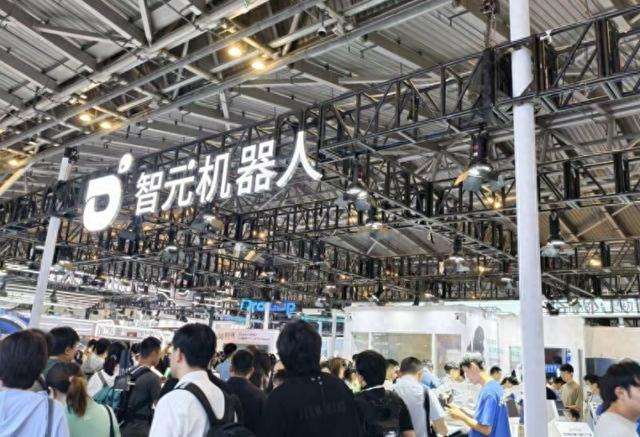
「机器人+」从入股上纬新材到股改,智元机器人资本棋局双线并进
Hua Xia Shi Bao· 2025-11-11 11:39
Core Viewpoint - Zhiyuan Robotics has completed a significant corporate restructuring by changing its company type from a limited liability company to a joint-stock company, indicating a step towards an independent IPO while simultaneously pursuing a strategic acquisition of a listed company platform [2][3][5] Group 1: Corporate Actions - Zhiyuan Robotics has changed its name to Zhiyuan Innovation (Shanghai) Technology Co., Ltd. and its company type to a joint-stock company, which prepares it for an independent IPO [3] - The company has appointed a new board member, Yao Maoqing, indicating a strengthening of its management team [3] - The speculation around Zhiyuan Robotics' potential reverse merger with Shangwei New Materials has cooled following its recent corporate restructuring [5] Group 2: Market Position and Strategy - The company is positioned as a leading player in the humanoid robotics sector, having attracted significant investment from major firms like Tencent, BYD, and JD.com [7] - Zhiyuan Robotics aims to maximize value through a dual strategy of preparing for an independent IPO while also acquiring a listed company to enhance its market presence [6] - The company is focusing on vertical integration to enhance operational efficiency and secure key resources, including quality material supply and customer base expansion [6] Group 3: Financial Performance and Orders - Zhiyuan Robotics has secured multiple significant orders, including a 120 million yuan contract with China Mobile and several other multi-million yuan projects, indicating strong demand for its products [7] - The company reported a substantial increase in delivery volume, achieving thousands of units delivered from January to September this year compared to the previous year [7] - The company anticipates that overseas revenue will account for over 30% of total revenue next year, driven by high demand for automation products in developed markets [8]