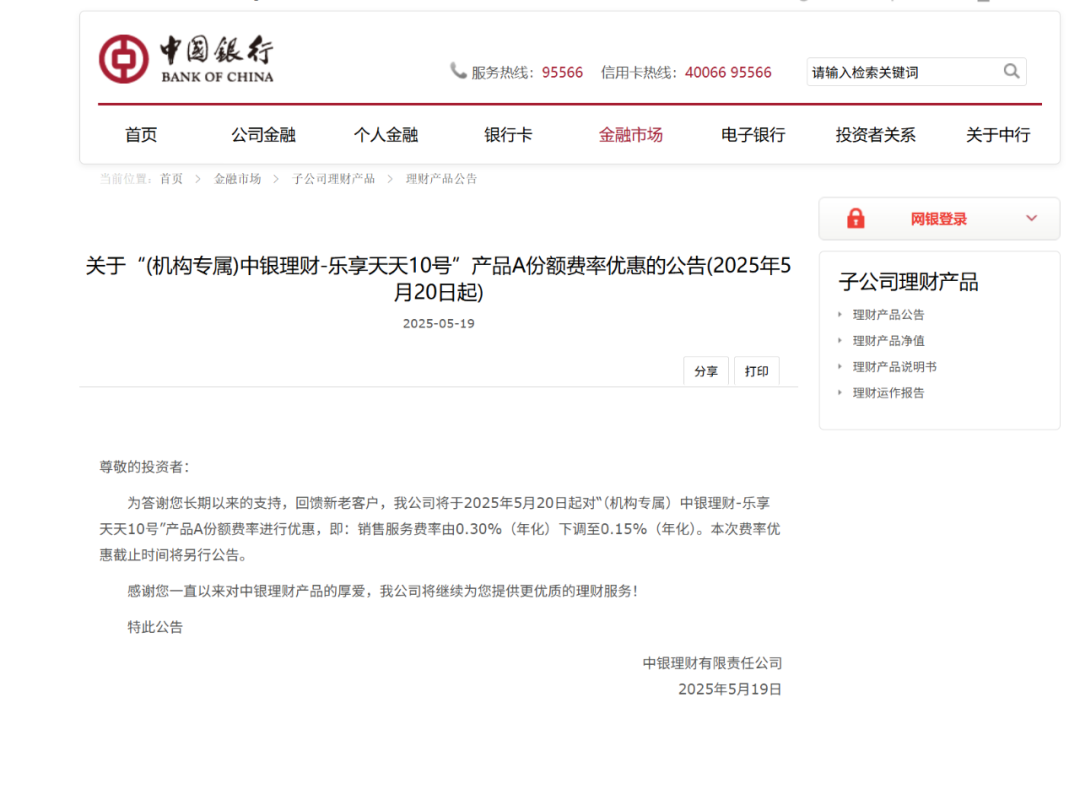
理财产品费率下调

Search documents
银行开年营销资源挪移:保险“吸金”理财“遇冷”
Zhong Guo Zheng Quan Bao· 2026-02-26 20:28
Core Viewpoint - The current performance of bank wealth management products is under pressure due to market volatility, leading to a mismatch between investor return expectations and risk preferences, which is expected to fully manifest by 2026 [1][6]. Group 1: Market Performance and Trends - In January 2026, the bank wealth management market showed minimal growth, with the focus of commercial banks on loan performance rather than wealth management products [1]. - The insurance products, particularly dividend and annuity insurance, have gained popularity due to their ability to lock in long-term returns amidst declining market interest rates [2][6]. - Many investors are hesitant to invest in bank wealth management products due to recent poor performance, opting instead for fixed deposits that offer guaranteed returns [2][3]. Group 2: Strategies to Attract Investment - Banks are launching special wealth management products, such as "Lantern Festival Exclusive" offerings, to attract customer funds during key financial planning periods [3][4]. - Several banks have reduced management and service fees for their wealth management products to attract clients, with significant fee reductions announced by institutions like China Merchants Bank and Bank of China [4][5]. - The fee reduction trend is seen as a temporary measure that primarily benefits existing customers rather than attracting new ones [5]. Group 3: Challenges and Solutions - The industry faces challenges in meeting investor return expectations while managing risk preferences, with a need for better alignment between the two [6][7]. - Two main strategies are being explored to enhance product returns: extending the duration of investments to lock in yields and diversifying asset allocations to improve performance [7]. - The strategy of extending investment duration faces constraints due to narrowing yield spreads and increased sensitivity of product net values to interest rate fluctuations [7].
多机构下调理财产品相关费率为哪般?
Xin Hua Wang· 2025-08-12 06:30
Core Viewpoint - Multiple banks and their wealth management subsidiaries have recently reduced the fees associated with wealth management products, primarily focusing on fixed management fees and sales service fees, with some rates even adjusted to zero [1][2][3]. Fee Adjustments - The fee reductions include fixed management fees and sales service fees, with institutions like Nanjing Bank and Bank of China announcing significant cuts [2][3]. - For example, Nanjing Bank's subsidiary reduced the fixed management fee from 0.8% per year to 0.4% per year for a specific product [2]. - Bank of China lowered the sales service fee for its products, with A-class shares dropping from 0.30% to 0.15% and C-class shares from 0.40% to 0.10% [2]. - Some products have had their fees reduced to zero, such as those from China Merchants Bank and Huaxia Bank [3]. Market Competition - The fee reductions are seen as a competitive strategy among banks to attract customers amid a slowdown in product issuance and subpar returns [4][5]. - The wealth management market, with a balance of 29 trillion yuan and a growth rate of around 12%, has the capacity to lower fees while still generating significant returns for investors [4]. - Analysts suggest that the competition among banks is intensifying, particularly as wealth management subsidiaries continue to emerge and adapt to new regulations [4][5]. Long-term Trends - Experts predict that while the current trend of fee reductions may continue in the short term, it is unlikely to be a permanent shift [6]. - The long-term outlook suggests that fee structures will stabilize as the market for net value products matures [6]. - Different banks and wealth management companies are expected to adopt varied pricing strategies, leading to further differentiation in fees and services [6].
低至0.01%!理财公司纷纷“降费”揽客
Jin Rong Shi Bao· 2025-05-23 08:51
Core Viewpoint - The recent reduction in bank deposit interest rates has led to a new wave of fee discounts on wealth management products, making them attractive to investors [1][6]. Summary by Sections Fee Reductions Announced - Several banks, including Bank of China Wealth Management, China Merchants Bank Wealth Management, and Everbright Wealth Management, have announced fee reductions for various wealth management products [1][5]. - Bank of China Wealth Management has reduced the sales service fee for its "Leisure Daily 10" product from 0.30% to 0.15% effective May 20, and the fixed management fee for "Enjoy Daily 86" from 0.30% to 0.05% from May 21 to June 21 [1]. - China Merchants Bank Wealth Management has lowered the fixed management fee for its "Stable Enjoy Dynamic 5" product from 0.20% to 0.05%, effective May 21 [2][4]. Competitive Landscape - Other banks, including China Everbright Bank and Xinyin Wealth Management, are also participating in the fee reduction trend, with Everbright reducing management fees from 0.15% to 0.07% and sales service fees from 0.20% to 0.08% for its "Sunshine Golden Abundant 198" product [5]. - Xinyin Wealth Management has announced significant fee cuts for its "Daily Profit 65" product, with management fees dropping from 0.30% to 0.01% and sales service fees from 0.30% to 0.20% starting May 23 [5]. Investor Sentiment - The reduction in fees is seen as a way to attract more clients, particularly small and medium-sized investors who are sensitive to costs [6][7]. - Some investors, however, remain skeptical, prioritizing past performance and stability over fee reductions when selecting wealth management products [7]. Long-term Considerations - Industry experts suggest that while fee reductions can enhance product competitiveness in the short term, they may not be sustainable long-term strategies [7]. - Recommendations include improving research capabilities and asset allocation to enhance returns rather than relying solely on fee reductions [7].