生态变现

Search documents
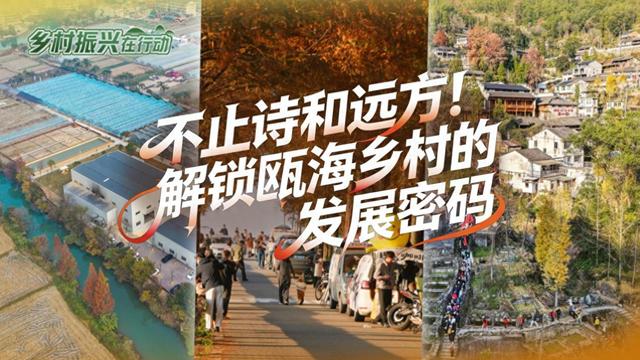
乡村振兴在行动丨不止诗和远方!解锁瓯海乡村的发展密码
Xin Lang Cai Jing· 2025-12-30 12:58
Core Insights - The article highlights the comprehensive revitalization of rural areas in Wenzhou's Ouhai District, integrating traditional agriculture with modern technology and innovative practices to enhance productivity and economic growth [1][3]. Group 1: Technological Empowerment in Agriculture - The use of agricultural drones has significantly improved efficiency in transporting crops, with a single drone capable of transporting up to 20,000 pounds per day, compared to the 4,000-6,000 pounds that can be carried by manual labor in a day [3][5]. - A new variety of rice tested in Ouhai achieved a yield of 1,500 pounds per acre, showcasing advancements in agricultural practices and crop management [5]. - The establishment of the Qiangcun Agricultural Service Center aims to provide standardized services to farmers, enhancing the mechanization and intelligence of agriculture in the region [5]. Group 2: Ecological Transformation and Economic Growth - The transformation of Yanzhai Village from a "garbage village" to a scenic area involved the removal of over 2,500 tons of waste and the creation of public spaces, leading to increased tourism and economic activity [6][8]. - The integration of natural landscapes with events and markets has turned previously overlooked areas into popular tourist destinations, benefiting local farmers and businesses [8]. Group 3: Creative Initiatives and Youth Engagement - Ouhai is transforming rural areas into hubs for young talent through innovative projects like the immersive game "Zeya Continent," which connects youth with local culture [9][11]. - A multi-layered support system has been established to attract young professionals to rural areas, including the introduction of rural managers and practice stations linked to universities [11]. - New recreational activities such as ATV rides and paragliding are emerging, driving stable visitor traffic and supporting local hospitality and dining industries [11]. Group 4: Overall Impact on Rural Revitalization - The combined efforts in technology, ecology, and creativity are effectively driving the comprehensive revitalization of rural areas in Ouhai, demonstrating a successful model for rural development [13].

车企集体跨界智能终端AI入口争夺战中开启生态破局
Zhong Guo Zheng Quan Bao· 2025-12-11 20:17
Core Insights - The launch of Li Auto's AI glasses, Livis, signifies a shift in the competitive landscape of the new energy vehicle (NEV) industry, expanding from single automotive products to a comprehensive smart ecosystem [1][2] - Major Chinese NEV companies, including NIO and Xpeng, are diversifying into smart wearables and digital products to break through homogenized competition and capture user engagement in the AI era [1][2] Group 1: Product Features and Market Strategy - Livis features a lightweight design at 36 grams, an impressive battery life of 18.8 hours, and deep integration with vehicle systems, enhancing user interaction and experience [1][2] - The glasses are not standalone hardware but part of a "car + glasses" ecosystem, which increases user stickiness by transitioning customers from car buyers to participants in a smart lifestyle [2][3] Group 2: Industry Trends and Competitive Landscape - The global smart glasses market is experiencing significant growth, with a 64.2% year-on-year increase in shipments, and NEV-related products contributing 15% to this growth [3] - Li Auto's Livis achieved over 12,000 orders on its first sales day, with 80% of orders coming from existing Li Auto vehicle owners, indicating a shift towards an ecosystem competition involving multiple smart terminals [3] Group 3: Business Model and Challenges - Domestic NEV companies face longer profit cycles in their smart device ventures compared to international competitors like Tesla, which has successfully integrated robotics into its business model [4] - The development of smart devices by companies like Xpeng and Li Auto requires substantial investment and innovative business models to ensure long-term cash flow and profitability [4][5] Group 4: Consumer Behavior and Market Potential - A significant 72% of Chinese smart device users are willing to pay a premium for cross-terminal services, compared to only 45% in Western markets, indicating a strong market potential for innovative cross-device solutions [4] - The strategy of extending smart cockpit ecosystems to personal devices is seen as a necessary response to industry homogenization and a way to secure a foothold in the AI-driven market [5]


(乡村行·看振兴)山西太原万柏林绘就金秋丰收画卷:科技赋能 荒山生金
Zhong Guo Xin Wen Wang· 2025-09-26 06:36
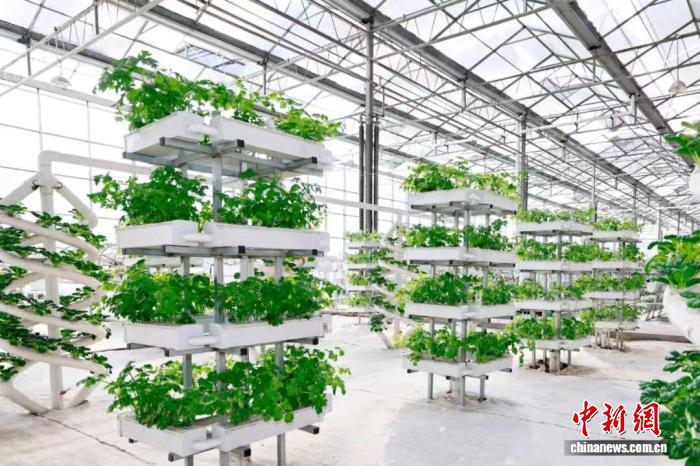
Core Insights - The article highlights the transformation of agricultural practices in Wanbailin District, Taiyuan, Shanxi Province, through the integration of digital technology and ecological concepts, leading to increased productivity and environmental improvement [1][5][9] Group 1: Digital Agriculture - The Jiurun Digital Agriculture Park spans 150 acres, featuring a variety of crops including high-yield sunflowers and a 20,000 square meter smart greenhouse with organized sections for strawberries, leafy vegetables, and various fruits [2][4] - The use of soilless cultivation and a water-fertilizer integration system has led to highly mechanized planting and harvesting processes [4] Group 2: Calcium Fruit Production - A retired individual transformed 80 acres of barren land into a calcium fruit orchard, utilizing sheep manure for fertilization, resulting in a projected yield of 20 tons this year [5][7] - The orchard not only attracts tourists for fruit picking but also generates orders from external merchants, thereby improving local employment and ecological conditions [7] Group 3: Mushroom Cultivation - A former coal washing plant has been repurposed for mushroom cultivation, marking a shift from a "black" to a "green" economy [8][10] - The use of local corn straw for mushroom production, supported by agricultural technology, has created new income opportunities for villagers, with the spent mushroom substrate being processed into organic fertilizer for resource recycling [9]