
科技强农

Search documents
财政资金“集约灌溉”农业农村
Su Zhou Ri Bao· 2026-02-09 00:45
Core Viewpoint - The emphasis on "technology empowering agriculture" has been reiterated in recent policy documents, with Suzhou's financial investment in this area projected to reach 24.45% of total agricultural funding by 2025, significantly enhancing the effectiveness of fund utilization [1] Group 1: Financial Strategy and Integration - Suzhou's financial bureau aims to modernize agriculture by integrating and optimizing agricultural funding, moving from a fragmented approach to a systematic one, thereby enhancing the efficiency of financial resources [2] - The consolidation of five types of agricultural funding into a unified "land construction and utilization" fund allows for more flexible and effective use of resources while ensuring compliance with mandatory tasks [2] Group 2: Performance-Based Funding - The implementation of a performance-based payment model for wastewater treatment links service fees to key performance indicators, projected to save 25.93 million yuan in fiscal funds by 2025 [3] - A closed-loop management system has been established to ensure precise allocation of funds based on a comprehensive list of 114 agricultural policies, focusing on three key areas: technology empowerment, livable rural areas, and wealth generation for villages [3] Group 3: Efficiency and Accessibility - The introduction of a streamlined subsidy distribution system allows for rapid disbursement of agricultural subsidies, significantly reducing the payment processing time from 15 days to within 3 days, benefiting approximately 129,800 households [4] - The establishment of a dynamic project database and real-time tracking of fund allocation enhances transparency and compliance in fund usage, ensuring effective management [5] Group 4: Collaborative Financial Tools - The integration of policy tools such as credit guarantees and interest subsidies aims to reduce financing costs for agricultural operators, thereby stimulating entrepreneurial activities and growth in the agricultural sector [5] - Suzhou's approach is shifting from a "scattered drip" funding model to a "concentrated irrigation" model, providing robust financial support for rural revitalization and high-quality agricultural development [5]
躬耕田野,用科技铺就强农路
Xin Lang Cai Jing· 2026-02-05 22:20
Group 1 - The core focus of the provincial government is to enhance the comprehensive benefits and competitiveness of agriculture, emphasizing high-quality agricultural development paths [1] - The introduction of technology in agriculture is transforming traditional practices, as seen in the case of the Xiaolongxia (small crayfish) farming in Luguo community, which has evolved from traditional agriculture to a high-tech industry demonstration base [1] - The development of new agricultural varieties and technologies, such as the "Sunongyan No. 1" grass variety, is expected to significantly improve yield and quality, with projected yields exceeding 15 tons per acre [1] Group 2 - The garlic industry is shifting from reliance on experience and manual labor to a focus on technology and data, with mechanization rates expected to rise significantly by 2024 [2] - The agricultural machinery industry in Jiangsu is experiencing growth, but challenges such as innovation bottlenecks and ineffective results transformation still hinder development [2] - There is a call for enhanced support for agricultural technology enterprises, including better financing options and increased investment in research and promotion funding [3]
推动农业科技与产业创新深度融合培育新质生产力江苏以科创为笔擘画科技强农新图景
Xin Hua Ri Bao· 2026-01-30 00:39
Core Viewpoint - Jiangsu province is leveraging technological innovation as a driving force to enhance agricultural modernization, aiming to integrate agricultural technology innovation with industry innovation for sustainable growth [1][7]. Group 1: Policy Measures - The Jiangsu provincial government has introduced several policy measures to strengthen the role of technological innovation in agricultural development, focusing on immediate technical challenges and long-term productivity growth [2]. - The measures are categorized into four parts: layout of innovation forces, strengthening innovation entities, implementation of innovation results, and ensuring innovation support [2]. - Key areas of focus include biological agriculture, smart agriculture, and marine technology, with plans to enhance strategic platforms like national key laboratories and breeding research centers [2]. Group 2: Implementation Strategies - A new system for promoting agricultural innovations has been established to facilitate the transition from laboratory results to practical applications in the field [3]. - The integration of agricultural education, technology, and talent development is emphasized, aligning research topics with industry needs and optimizing agricultural education programs [3]. - Financial innovations such as technology insurance and intellectual property pledges are being introduced to provide diverse funding channels for agricultural tech startups [3]. Group 3: Local Practices and Innovations - Various regions in Jiangsu are implementing unique strategies for technological agriculture, such as the "Yazhuang Experience" in Jiujiang, which creates a comprehensive technology service network [4]. - Suzhou Huaxuan Horticulture Co., Ltd. is focusing on seed innovation and has established modern smart greenhouses, achieving a 20% reduction in labor costs and a 95% seedling quality compliance rate [4]. - Nanjing is developing into an "agricultural Silicon Valley" with over 90 high-tech agricultural enterprises and numerous research platforms, fostering a robust innovation ecosystem [4]. Group 4: Future Directions - The Jiangsu provincial agricultural department plans to enhance the foundational support for agricultural technology, focusing on the development of key platforms and a nurturing environment for agricultural tech enterprises [6]. - There is a commitment to accelerate the supply of innovative results and establish mechanisms for collaborative problem-solving in technology [6]. - The aim is to address challenges in agricultural technology innovation, such as fragmentation and low conversion rates, by creating leading research centers in critical agricultural fields [6].
全省科技强农推进会举行刘小涛出席并讲话
Xin Hua Ri Bao· 2026-01-28 23:53
Group 1 - The provincial government emphasizes the importance of agricultural modernization through technological innovation, aiming to integrate agricultural science and industry to support the construction of a strong agricultural province [1][2] - The government plans to focus on key areas such as seeds, agricultural machinery, biomanufacturing, and marine fisheries to enhance research and development efforts, promoting a "five excellence" strategy in agriculture [2] - The meeting highlighted the establishment of a policy framework to support agricultural technology innovation, including the introduction of a modern biotechnology industry investment fund [3] Group 2 - The provincial government aims to attract strong agricultural technology enterprises and encourage non-agricultural tech companies to apply advanced technologies in agriculture [2] - The initiative includes optimizing policies, financial support, and talent mechanisms to empower young people and new farmers in rural areas [2] - The meeting featured expert lectures and experience sharing from various agricultural technology enterprises and institutions, indicating a collaborative approach to advancing agricultural technology [3]
刘小涛在镇江调研时强调 坚持创新引领聚力产业强市 推动经济持续向新向优发展
Zhen Jiang Ri Bao· 2025-12-30 23:39
Group 1 - The provincial government emphasizes the importance of implementing the spirit of the 20th National Congress and the central economic work conference to strengthen the real economy and focus on industrial development [1] - Companies are encouraged to leverage their comparative advantages and develop characteristic industries through technological innovation to enhance competitiveness and sustainability [1] - The government supports leading enterprises in forming innovation alliances and promoting industrial clustering to accelerate the establishment of a modern industrial system centered on advanced manufacturing [1] Group 2 - The focus on agricultural modernization includes promoting new varieties, technologies, and models to enhance agricultural productivity and quality, ultimately benefiting farmers' income [2] - The government aims to improve rural living environments and develop new business models in agriculture, such as e-commerce and cultural tourism, to create new growth points [2] - The expansion and renovation of key waterway projects are intended to enhance economic circulation, reduce logistics costs, and optimize the business environment [2] Group 3 - The government is addressing safety concerns in residential areas by improving fire safety facilities and electric vehicle charging infrastructure to ensure residents' safety and comfort [3] - There is a push for safety production measures to be effectively implemented through education and training initiatives [3]

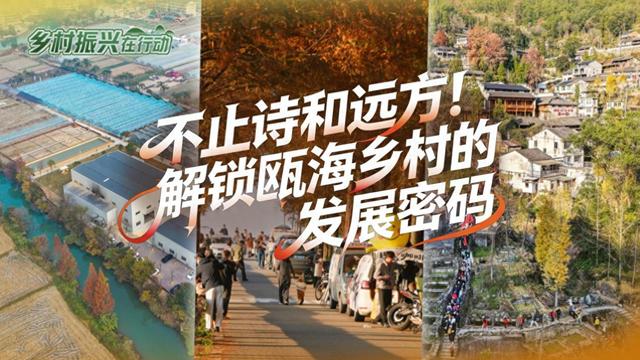
乡村振兴在行动丨不止诗和远方!解锁瓯海乡村的发展密码
Xin Lang Cai Jing· 2025-12-30 12:58
Core Insights - The article highlights the comprehensive revitalization of rural areas in Wenzhou's Ouhai District, integrating traditional agriculture with modern technology and innovative practices to enhance productivity and economic growth [1][3]. Group 1: Technological Empowerment in Agriculture - The use of agricultural drones has significantly improved efficiency in transporting crops, with a single drone capable of transporting up to 20,000 pounds per day, compared to the 4,000-6,000 pounds that can be carried by manual labor in a day [3][5]. - A new variety of rice tested in Ouhai achieved a yield of 1,500 pounds per acre, showcasing advancements in agricultural practices and crop management [5]. - The establishment of the Qiangcun Agricultural Service Center aims to provide standardized services to farmers, enhancing the mechanization and intelligence of agriculture in the region [5]. Group 2: Ecological Transformation and Economic Growth - The transformation of Yanzhai Village from a "garbage village" to a scenic area involved the removal of over 2,500 tons of waste and the creation of public spaces, leading to increased tourism and economic activity [6][8]. - The integration of natural landscapes with events and markets has turned previously overlooked areas into popular tourist destinations, benefiting local farmers and businesses [8]. Group 3: Creative Initiatives and Youth Engagement - Ouhai is transforming rural areas into hubs for young talent through innovative projects like the immersive game "Zeya Continent," which connects youth with local culture [9][11]. - A multi-layered support system has been established to attract young professionals to rural areas, including the introduction of rural managers and practice stations linked to universities [11]. - New recreational activities such as ATV rides and paragliding are emerging, driving stable visitor traffic and supporting local hospitality and dining industries [11]. Group 4: Overall Impact on Rural Revitalization - The combined efforts in technology, ecology, and creativity are effectively driving the comprehensive revitalization of rural areas in Ouhai, demonstrating a successful model for rural development [13].

坚持创新引领聚力产业强市 推动经济持续向新向优发展
Xin Hua Ri Bao· 2025-12-30 00:18
Group 1 - The provincial government emphasizes the importance of strengthening the real economy and targeting industrial development goals, leveraging local resources and comparative advantages to enhance enterprise competitiveness through technological innovation [1] - Companies such as Jiangsu Wode Agricultural Machinery, Jiangsu Hengshun Vinegar, and Mingyue Lens are highlighted for their efforts in capital expansion, equipment upgrades, and brand development, indicating a focus on enhancing production capabilities and market reach [1] - The government supports the establishment of innovation consortia led by leading enterprises to promote industrial clustering and accelerate the development of a modern industrial system centered on advanced manufacturing [1] Group 2 - The modern agricultural industrial park in Jurong City is being developed to enhance agricultural productivity and quality, with a focus on promoting new varieties, technologies, and business models to increase farmers' income [2] - The expansion and renovation of the canal lock project are aimed at leveraging the province's extensive waterway network to enhance economic circulation, reduce logistics costs, and improve the business environment [2] - The government is pushing for the improvement of safety measures in residential areas, including the regulation of electric vehicle parking and charging facilities, to enhance community safety and living conditions [3]
浙江粮食生产有望实现“十连增”
Zhong Guo Xin Wen Wang· 2025-11-26 12:29
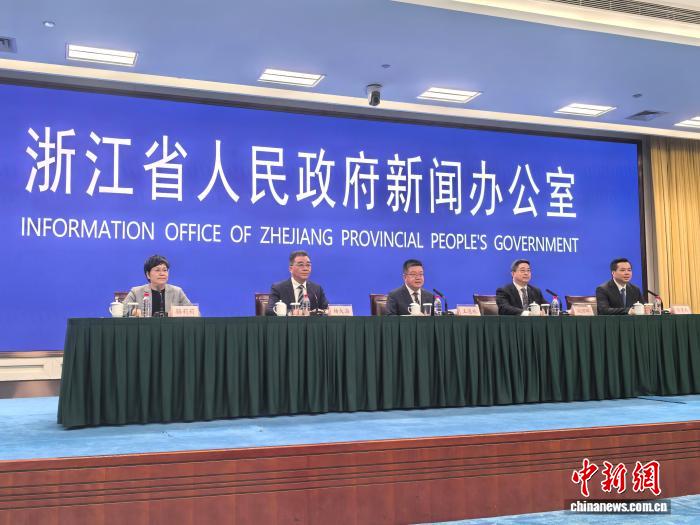
Core Insights - Zhejiang Province is expected to achieve "ten consecutive increases" in grain production during the 14th Five-Year Plan period, with a projected total grain output of 13 billion jin (approximately 6.5 million tons) in 2024, an increase of 890 million jin compared to 2020 [3][4] Group 1: Grain Production - The total sown area for grain in Zhejiang is projected to reach 15.705 million mu (approximately 1.05 million hectares) in 2024, an increase of 804,000 mu from 2020 [3] - The province has focused on technological advancements in agriculture, particularly in conventional early indica rice and indica-japonica hybrid rice, leading to significant increases in grain yield [3][4] - Zhejiang has recognized 14 national super rice varieties, accounting for 27.4% of the national total, ranking first in the country [3] Group 2: Agricultural Innovation - Over the past five years, Zhejiang has implemented a modern seed industry enhancement project, resulting in the cultivation of 362 new agricultural varieties during the 14th Five-Year Plan period [3][4] - The establishment of the first provincial public laboratory for southern breeding and a provincial germplasm resource bank has enabled comprehensive coverage of the industry [3] - The province has developed alternative varieties to replace imported ones, such as the broccoli varieties "Tai Green 630" and "Zhejiang Green 161," effectively breaking the monopoly of foreign varieties [3] Group 3: Marine Fisheries Development - Zhejiang is investing 100 million yuan in building marine biological germplasm resource banks in both southern and northern Zhejiang, focusing on key species like large yellow croaker and South American white shrimp [4] - The marine fisheries sector is projected to generate a primary industry output value of 107.92 billion yuan in 2024, accounting for 25.9% of the total agricultural output value [4] - The total output value of the entire industrial chain of distant-water fisheries is expected to reach 55 billion yuan, making it the largest in the country [4]
三位一体板块联动 苏州农业招商服务体系初步成型
Su Zhou Ri Bao· 2025-08-01 00:27
Core Points - The establishment of the Suzhou Agricultural Investment Service Center marks a significant step in Suzhou's exploration of integrated sector collaboration and agricultural technology investment [1][2] - The "One Institute, One Center, One Fund" framework aims to enhance agricultural innovation and cooperation in Suzhou [2] Group 1: Structure and Components - "One Institute" refers to the Suzhou Agricultural Industry Research Institute, established by the Suzhou Agricultural Rural Bureau, Suzhou Agricultural Development Group, Suzhou Academy of Agricultural Sciences, and Suzhou Agricultural Vocational and Technical College, providing intellectual support for the agricultural industry [2] - "One Center" is the newly unveiled Suzhou Agricultural Investment Service Center, which will leverage the city's agricultural technology resources and focus on project attraction and service [2] - "One Fund" is the Suzhou Agricultural Industry Science and Innovation Fund, with a total scale of 2 billion yuan (approximately 300 million USD), initially set at 600 million yuan (approximately 90 million USD), targeting six key areas including smart agriculture and biotechnology [2] Group 2: Future Plans and Objectives - The Suzhou Agricultural Development Group aims to strengthen sector collaboration and utilize the advantages of the Agricultural Industry Research Institute, Investment Service Center, and Science and Innovation Center to facilitate the transition from research to industry [2] - The first batch of four intended investment projects was announced during the unveiling ceremony, indicating immediate action towards attracting investment [2]
琼海早稻屡创高产纪录
Hai Nan Ri Bao· 2025-06-23 02:01
Core Insights - The article highlights the record-breaking rice yields in Qionghai, with the highest yield reaching 1710 jin per mu and an average yield exceeding 1300 jin per mu, marking a significant increase of nearly 300 jin compared to local averages [2][3] Group 1: High Yield Achievements - Qionghai's rice production has seen continuous improvements, with notable yields reported from various towns, including 1585 jin per mu in Wanquan and 1640 jin per mu in Jiaji [2][3] - The record yields are attributed to the introduction of specialized agricultural cooperatives and a collaborative model involving farmers, cooperatives, and village committees [3] Group 2: Land Management and Financial Support - The revival of previously abandoned land has contributed to increased production, with financial support from insurance companies facilitating agricultural investments [4] - The cooperative model allows for different management styles, such as full and semi-management, providing farmers with guaranteed yields and financial incentives [3][4] Group 3: Seed Selection and Crop Management - The selection of superior rice varieties, such as Weiliang Youzhan and Teyou 131, has been crucial for achieving high yields, with extensive testing conducted to ensure optimal performance [5][6] - Advanced agricultural technologies, including drones for field monitoring and precise management practices, have enhanced production efficiency and crop health [7][8] Group 4: Ongoing Agricultural Development - Continuous support from agricultural technicians has been instrumental in guiding farmers through the planting and harvesting processes, ensuring a successful transition to high-yield practices [9]