生物医学工程

Search documents
吴华强、叶甜春等学者当选IEEE Fellow
半导体芯闻· 2025-12-04 10:09
Core Insights - The 2026 IEEE Fellow selection list has been announced, recognizing 347 scholars for their outstanding contributions in engineering and technology fields, with over 70 from mainland China and Hong Kong, marking a new high for Chinese representation [1] Group 1: IEEE Fellow Recognition - IEEE Fellow is the highest membership honor awarded by the IEEE, recognizing significant breakthroughs in research, technology leadership, or exceptional engineering contributions [1] - The selection process is rigorous, with an acceptance rate of less than 0.1% of the total membership [1] Group 2: Areas of Contribution - The newly elected fellows' research spans critical fields such as artificial intelligence, integrated circuits, wireless communication, quantum computing, biomedical engineering, renewable energy, and cybersecurity [1] - Their work has not only achieved theoretical breakthroughs but also has had a profound practical impact on industry upgrades and solving major engineering challenges [1] Group 3: Key Technologies - Several elected fellows played core roles in tackling "bottleneck" technologies, including high-performance computing architectures, next-generation mobile communication standards, high-end chip design, and intelligent sensing systems [1]


中国高校三个学科首度问鼎世界第一
第一财经· 2025-11-28 03:00
Core Viewpoint - The article discusses the latest "Soft Science World-Class Discipline Ranking" (GRAS) released by a higher education evaluation agency, highlighting the significant progress of Chinese universities in various disciplines, particularly in emerging fields like artificial intelligence and biomedical engineering [3][4]. Group 1: Ranking Overview - In the 2025 GRAS ranking, Chinese universities achieved first place in three disciplines: Power Electronics Engineering, Biomedical Engineering, and Materials Science and Engineering, increasing the total number of world champion disciplines to 21 [3][6]. - The ranking includes over 3,000 universities globally, showcasing more than 20,000 discipline points from over 2,000 universities across 92 countries and regions [4]. Group 2: Performance of Chinese Universities - Chinese universities ranked second globally with 3,747 total appearances in various disciplines, with 359 universities listed. The United States led with 4,281 appearances across 27 disciplines [6]. - Tsinghua University has seven champion disciplines, ranking second only to Harvard University, which has eleven. Shanghai Jiao Tong University has two champion disciplines, while twelve other universities each have one [6][8]. Group 3: Emerging Disciplines - The newly added champion disciplines of Power Electronics Engineering and Biomedical Engineering reflect the growing importance of interdisciplinary studies in driving technological advancements [8][9]. - The Power Electronics Engineering discipline at Tsinghua University has a strong historical foundation, consistently ranking first in national assessments [8]. - Shanghai Jiao Tong University achieved first place in Biomedical Engineering, marking a significant milestone for Chinese universities in this field [9]. Group 4: Educational Reforms and Future Directions - Recent adjustments in academic disciplines, as outlined in the "Reform Plan" by the Ministry of Education, aim to optimize and adjust 20% of higher education programs by 2025, leading to the establishment of 3,229 new undergraduate programs and the cancellation of 2,534 [10]. - The focus on artificial intelligence and integrated circuits in educational reforms indicates a strategic push towards cultivating top-tier innovative talent in critical fields [10][11]. Group 5: Artificial Intelligence and Robotics - The demand for professionals in artificial intelligence is projected to increase sixfold by 2030 compared to 2022, prompting rapid development in related academic programs [12]. - Tsinghua University and Shanghai Jiao Tong University are leading in artificial intelligence education, with Tsinghua establishing an AI college and Shanghai Jiao Tong launching an AI talent program [13][14]. - The newly ranked Robotics Science and Engineering discipline features 100 universities globally, with Shanghai Jiao Tong University and Tsinghua University among the top in China [14].

复旦虹桥医学创新园区“落子”前湾 预计2030年左右初步建成
Jie Fang Ri Bao· 2025-11-09 02:33
Core Insights - Fudan University has received approval to establish the Hongqiao Medical Innovation Park, which is expected to be completed around 2030, located in the Hongqiao International Central Business District [1] - The park will serve as a comprehensive innovation hub integrating education, research, industry, and services, aiming to align with world-class medical centers and enhance the integration of medical and industrial resources [1][2] Group 1 - The Hongqiao Medical Innovation Park will consist of five plots and is strategically positioned within the core area of the Hongqiao International Open Hub [1] - The park aims to create an integrated experimental zone for medical education and technology talent, a full-chain gathering area for the biopharmaceutical industry, and high-level international medical services [1][2] Group 2 - The establishment of the park is not merely an expansion of space but a strategic move to position Fudan University as a leader in new medical disciplines and interdisciplinary integration [2] - The park will focus on cutting-edge fields such as biomedicine, artificial intelligence, and biomedical engineering, facilitating seamless connections between basic research, clinical transformation, and industrial application [2] Group 3 - The park will leverage Fudan University's multidisciplinary strengths to advance in emerging fields like intelligent medicine and brain-machine interfaces, while also expanding into areas such as genetic medicine, cell and gene therapy, and vaccine safety [3]
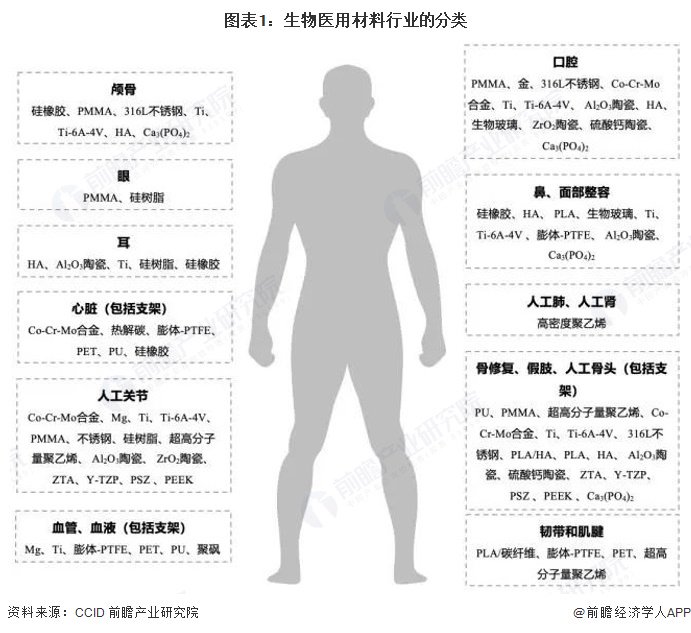
2025年中国生物医用材料行业科学研究现状 近年来研究热度有所下降【组图】
Qian Zhan Wang· 2025-08-21 09:18
Core Viewpoint - The research activity in the field of biomedical materials in China has been declining from 2014 to 2024, with a decrease in the number of related papers published from 258 to 152 [3]. Group 1: Definition and Overview - Biomedical materials are defined as high-tech materials used for diagnosing, treating, repairing, or replacing human tissues and organs, categorized by their applications such as bone, soft tissue, cardiovascular, and medical membrane materials [1]. Group 2: Research Trends - The number of papers published in the biomedical materials field has shown a downward trend, indicating a decrease in research interest over the years [3]. - As of July 2025, higher education institutions are the primary contributors to the literature in this field, with Tianjin University leading by publishing 102 related papers [5]. Group 3: Research Themes - Medical polymer materials are identified as a popular research theme within the biomedical materials sector, alongside composite materials [9]. - Biomedical engineering is recognized as a prominent research discipline in this field, with significant contributions from organic chemistry, metallurgy, and metal processing [11].