
生长激素缺乏症治疗

Search documents
维昇药业-B(02561):注射用隆培生长激素的生物制品上市许可申请获国家药监局批准
智通财经网· 2026-01-26 10:49
Core Viewpoint - The approval of the long-acting growth hormone, Lonapegsomatropin (SKYTROFA®), by the National Medical Products Administration of China marks a significant advancement in the treatment of pediatric growth hormone deficiency (PGHD) in children aged 3 and above, providing a more convenient weekly dosing option compared to daily injections [1][2]. Group 1: Product Approval and Efficacy - Lonapegsomatropin is the first long-acting growth hormone that has demonstrated superior efficacy and equivalent safety compared to short-acting daily injections in a positive parallel-controlled trial [2][3]. - In a pivotal Phase 3 trial involving children aged 3 to 17 with PGHD, Lonapegsomatropin showed an annualized height velocity of 10.66 cm/year, compared to 9.75 cm/year for short-acting growth hormone, with a statistically significant difference of 0.91 cm/year (P=0.0010) [3]. - The height standard deviation score (SDS) for the Lonapegsomatropin group increased by 1.01, while the short-acting group saw an increase of 0.83, with a p-value of 0.0015, indicating significant improvement from week 13 onwards [3]. Group 2: Commercialization Strategy - Following the BLA approval, the company has initiated a comprehensive commercialization plan to ensure supply and expand market coverage for Lonapegsomatropin [4]. - The company has established a commercialization supply agreement with Ascendis Pharma to secure market launch supplies [4]. - Strategic partnerships have been formed with Shanghai Pharmaceuticals, United Family Healthcare, and Anke Bioengineering to enhance distribution and promotional activities for Lonapegsomatropin [4].
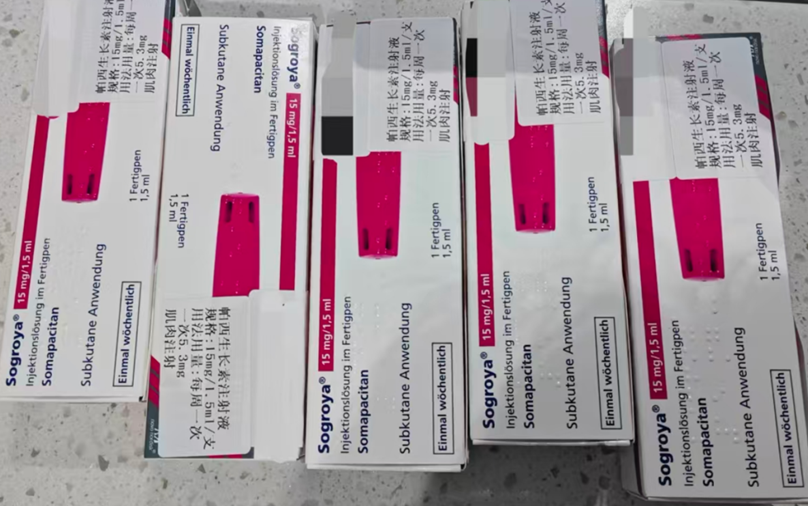
乐城引进帕西生长激素注射液 为GHD患儿提供新选择
智通财经网· 2025-12-08 10:51
Core Viewpoint - The introduction of the long-acting growth hormone, Pasi Growth Hormone Injection, in Hainan Boao Lecheng International Medical Tourism Pilot Zone provides a new treatment option for children with growth hormone deficiency (GHD), despite the availability of domestic alternatives. This is attributed to its advanced technology, clinical efficacy, and international safety standards [1][8]. Group 1: Technology and Efficacy - The Pasi Growth Hormone Injection utilizes a mature fatty acid derivatization technology, differing significantly from the domestic product that employs PEG technology. This allows for a longer half-life and reduced dosing frequency, requiring only weekly administration instead of daily [3][6]. - Clinical data indicates that children treated with Pasi Growth Hormone can achieve an annual height increase of approximately 11.0 cm, with reported height growth of 3-4 cm within three months of treatment in the Boao Lecheng area [6][8]. Group 2: Safety and Metabolism - The drug demonstrates a high metabolic recovery rate, with over 94% of the administered dose being excreted through urine and feces by day 28, surpassing the European Medicines Agency's standard of 90% [5]. - Safety profiles show that the adverse reactions reported are common childhood illnesses, with no new safety concerns arising from the use of Pasi Growth Hormone, indicating a safety level comparable to traditional short-acting growth hormones [6][8]. Group 3: Market Implications - The introduction of Pasi Growth Hormone in the Boao Lecheng area highlights China's commitment to synchronizing international medical resources and providing better treatment options for domestic patients, thereby enhancing the overall healthcare landscape [1][8].


长春高新:子公司GenSci134注射液临床试验申请获受理
Zheng Quan Shi Bao Wang· 2025-08-26 12:17
Group 1 - The core point of the article is that Changchun High-tech (000661) announced that its subsidiary, Gensci Pharmaceutical, has received the acceptance notice from the National Medical Products Administration for the clinical trial application of GenSci134 injection, a biopharmaceutical developed for treating growth hormone deficiency (GHD) [1] - GenSci134 is intended for the treatment of both adult growth hormone deficiency (AGHD) and pediatric growth hormone deficiency (PGHD), as well as non-GHD conditions such as idiopathic short stature (ISS) [1] - The application specifically targets children experiencing growth retardation due to endogenous growth hormone deficiency (PGHD) and idiopathic short stature (ISS) [1]

特宝生物: 特宝生物:关于益佩生新增适应症获得药物临床试验批准通知书的公告
Zheng Quan Zhi Xing· 2025-08-21 16:58
Core Viewpoint - Xiamen Te Bao Biological Engineering Co., Ltd. has received approval from the National Medical Products Administration for clinical trials of its product Yipeisheng (generic name: Yipei Growth Hormone Injection) for a new indication of Adult Growth Hormone Deficiency (AGHD) [1][2] Group 1: Drug Information - The product Yipeisheng is a long-acting growth hormone developed by the company, utilizing a 40kD Y-shaped branched polyethylene glycol for single-molecule modification [1] - Yipeisheng was previously approved for treating growth hormone deficiency in children aged 3 and above, with the approval granted in May 2025 [1] Group 2: Clinical Significance - Adult Growth Hormone Deficiency is caused by hypothalamic-pituitary dysfunction, leading to insufficient synthesis or secretion of growth hormone, resulting in growth and metabolic disorders [2] - Clinical features of AGHD include abnormal body composition and function, often accompanied by multiple complications that impair physical and mental health and affect quality of life [2] - Yipeisheng has the potential to provide effects equivalent to endogenous growth hormone for treating AGHD [2] Group 3: Company Impact - The approval for clinical trials does not have a significant immediate impact on the company's operating performance [2] - The drug development process is characterized by long cycles, high investment, and substantial risks, with many uncertainties regarding subsequent research progress and approval outcomes [2]
