用户资产运营

Search documents
营收涨25%利润却降了:高客单行业正集体掉进“流量陷阱”
3 6 Ke· 2025-12-30 07:59
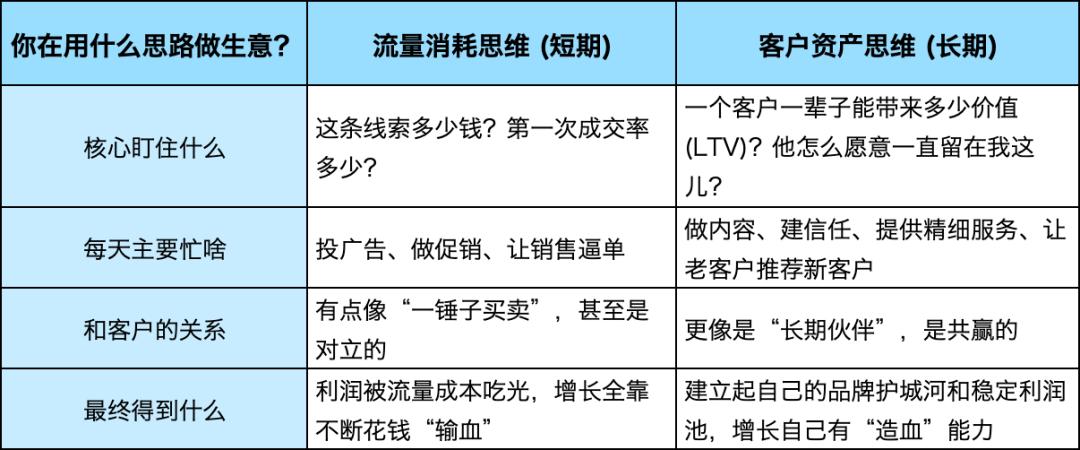
Core Insights - Many companies that appear to be industry leaders are actually struggling with profitability despite increasing revenues, primarily due to rising costs associated with customer acquisition and retention [1][2][4][6]. Group 1: Revenue vs. Profitability - Companies in high-ticket industries like health, elder care, and education are experiencing revenue growth, with one health company reporting a 25% increase in revenue [5][6]. - However, these companies are facing declining profits as they invest heavily in advertising and marketing to drive growth, leading to increased operational strain on their teams [6][10]. - The primary issues affecting profitability include rising platform costs, increased commissions for external channels, and higher internal sales incentives, all of which erode profit margins [7][8][10]. Group 2: Customer Retention Challenges - The focus on acquiring new customers often leads to neglecting existing customers, which is critical for high-ticket businesses where repeat purchases are essential for profitability [9][10]. - A case study indicates that reducing customer churn by just 5% could increase annual net profits by 15%, highlighting the importance of customer retention strategies [10]. - Companies are caught in a cycle of spending more on customer acquisition while failing to effectively manage and retain existing customers, leading to a situation where they are essentially "working for" platforms and sales teams [10][11]. Group 3: New Customer Acquisition vs. Long-term Value - High conversion rates for new customers can be misleading, as they may indicate a focus on easy sales rather than nurturing potential long-term customers [12][14]. - Companies are often prioritizing quick sales over developing relationships with customers who require more time and effort to convert, resulting in wasted marketing investments [14][15]. - This short-sighted approach can lead to significant losses, as valuable leads are neglected in favor of immediate gains [14][15]. Group 4: Strategic Recommendations - Companies need to shift from a "funnel" mentality focused on immediate sales to a "customer asset" approach that emphasizes long-term relationships and customer lifetime value [16][17]. - The current market environment necessitates a transition from broad growth strategies to more refined customer management practices, including enhancing customer loyalty and reducing churn [16][18]. - A systematic approach to customer activation, lead nurturing, and retention is essential for maintaining a healthy conversion chain and ensuring sustainable growth [18][20].

蓝海还是运营?2025年电商决胜关键在哪
Sou Hu Cai Jing· 2025-11-25 21:56
Core Insights - The article discusses the evolving priorities in the e-commerce sector, emphasizing the shift from seeking blue ocean markets to enhancing operational efficiency as traffic dividends diminish [2][11]. Group 1: Market Opportunities - The lower-tier market is projected to exceed 6 trillion yuan by 2025, accounting for over 40% of national e-commerce transaction volume, with users becoming less price-sensitive but more quality-conscious [2]. - The silver economy is identified as an underestimated trillion-yuan market, with over 320 million people aged 60 and above in China by 2025, and 65% of them being internet users, spending an average of over 5,000 yuan annually on online shopping [2]. - Southeast Asia is highlighted as the fastest-growing e-commerce market globally, with a projected GMV exceeding $230 billion by 2025 and a compound annual growth rate (CAGR) of over 22% [4]. Group 2: Operational Strategies - As traffic dividends peak, refined operations become crucial for survival, with private domain operations shifting from "traffic thinking" to "user asset management" [5]. - Public domain costs are rising, with CPM on platforms like Tmall and Douyin increasing by 50% year-on-year, leading businesses to build their own traffic pools [6]. - AI technology is reshaping operational logic, with 78% of live commerce applications utilizing generative AI to optimize processes [7]. Group 3: Marketing and Sales Techniques - Content marketing is becoming a powerful tool for conversion, with TikTok Shop achieving conversion rates of 5%-8% through short video promotions and live sales, significantly higher than traditional e-commerce rates of 2%-3% [9]. - Companies like Anker Innovations' Eufy successfully navigate the smart home niche by combining blue ocean strategies with differentiated operational positioning [10]. Group 4: Future Directions - The future winners in e-commerce will need to master three key areas: identifying promising niche markets, building efficient operational systems particularly through AI-enabled private domain strategies, and maintaining strategic investments that promote synergy between blue ocean opportunities and operational capabilities [11].

Club Med换帅落定:法国零售老将接棒,回应“东移”传言
Bei Jing Shang Bao· 2025-07-22 14:26
Core Viewpoint - Club Med has appointed Stéphane Maquaire as the new CEO, marking a significant leadership change amid strategic shifts within the company [1][3][4] Leadership Change - The appointment of Stéphane Maquaire is part of a succession plan initiated in early 2024, which was collaboratively developed with former CEO Henri Destin [1][3] - Destin's claims of being abruptly replaced due to strategic disagreements have been refuted by Club Med, which emphasizes the planned nature of the transition [3][4] Strategic Shift - Maquaire's extensive experience in the retail sector is seen as a strategic move to enhance Club Med's user insight capabilities, which are crucial for the brand's personalized interaction model [1][4] - The company aims to adapt to the rising expectations of "digital-native" consumers, focusing on AI assistance, instant responses, and personalized experiences [5] International Governance - Club Med will maintain its international strategy and French roots, with the decision-making center remaining in France despite the leadership change [7] - The addition of two new board members aims to enhance international governance and diversify the company's leadership [7][8] Market Challenges - Club Med faces challenges in the Chinese market, with a slowdown in the opening of new resorts compared to previous years [11][12] - The company must adapt to changing consumer behaviors, which are increasingly focused on value and cost-effectiveness, necessitating innovation in products and services [12][14]