电力现货市场

Search documents
现货环境下的电力中长期交易
广东电力交易中心· 2026-02-28 03:20
Investment Rating - The report does not explicitly state an investment rating for the electricity mid-to-long term market. Core Insights - The electricity mid-to-long term market is designed to provide adequate market liquidity while mitigating risks associated with price fluctuations in the spot market. It aims to align with the actual production needs of the electricity industry and facilitate the stable operation of enterprises [12][74]. Summary by Sections Overview of the Electricity Mid-to-Long Term Market - The market is categorized by trading cycles: multi-year, annual, monthly, and weekly markets, allowing users to respond to price fluctuations effectively [11]. - The market is also classified by trading objects, including energy markets, capacity markets, ancillary service markets, and financial transmission rights markets [11]. Design Principles of the Electricity Mid-to-Long Term Market - The design reflects the unique attributes of electricity commodities and serves the development of the real economy [12]. - It aims to achieve a good connection with the spot market to avoid risks from price volatility [12]. Basic Requirements of the Electricity Mid-to-Long Term Market - Market participants include various electricity enterprises (generation, grid, and supply companies), consumers, and market managers [13][15]. - The market contract elements include delivery methods (physical and financial), delivery times, trading prices, and trading curves [19][23]. Trading Mechanisms and Products - The market employs various trading mechanisms, including bilateral negotiations, centralized bidding, and listing trading [26][43]. - Centralized bidding allows for a unified price that reflects market supply and demand, while bilateral negotiations offer flexibility [47]. Risk Management in the Market - The report discusses market price risks, credit risks, and market power risks, emphasizing the need for effective risk management strategies [50][52][61]. - Measures include price review for mid-to-long term contracts and establishing a credit management system to minimize default risks [52][54]. Comparison with International Markets - The report compares the domestic market with international counterparts like the US PJM and Nordic markets, highlighting differences in contract types and trading mechanisms [66][68]. - It notes that most international mid-to-long term contracts are physical, while domestic contracts are primarily financial [68]. Trading Frequency and Types - The report outlines various trading types and their frequencies, including annual, monthly, and weekly centralized competitive trading, as well as bilateral negotiations [80][84]. - It emphasizes the importance of diverse trading products to enhance market participation and liquidity [80].
国家电投PPT:电力现货市场的基本原理及其带来的挑战
Sou Hu Cai Jing· 2026-02-26 07:39
Core Insights - The report discusses the fundamental principles of the electricity spot market, its operational status in typical provinces, and the opportunities and challenges it presents for the industry [1][2]. Group 1: Basic Principles of the Electricity Spot Market - The electricity spot market is a crucial phase in the development of China's electricity market, complementing the medium- and long-term markets, with an overall structure that includes medium- and long-term, day-ahead, and real-time markets [1][2]. - The medium- and long-term market accounts for over 70% of the trading volume, while the spot market facilitates precise balancing of electricity supply and demand through competitive bidding [1][2]. - The trading methods in the spot market include bilateral, centralized, and auction trading, utilizing a nodal pricing mechanism to optimize clearing and form time-based prices [1][2]. Group 2: Operational Status in Typical Provinces - Provinces such as Guangdong, Shanxi, and Shandong have adopted centralized market models, primarily using nodal marginal pricing mechanisms, with varying participation from power sources and users [1][2]. - Guangdong has transitioned to formal operation, while regions like Mengxi and Jiangsu are in trial phases, with spot prices influenced by supply-demand dynamics and coal costs [1][2]. - The scale of green electricity trading is expanding in provinces like Gansu, Mengxi, and Zhejiang, with innovative trading models emerging [1][2]. Group 3: Opportunities and Challenges in the Electricity Market - The development of the electricity spot market has led to industry transformation, with increasing shares of renewable energy generation, which also raises system adjustment demands due to its intermittent nature [2]. - The high proportion of renewable energy entering the market has caused marginal electricity prices to decline, with some regions experiencing zero or negative prices [2]. - Market participants are encouraged to leverage policy opportunities, explore inter-provincial green electricity trading, and adopt technologies like AI and machine learning to enhance electricity and price forecasting accuracy [2].


华能集团能源研究院:构建预期稳定的电价形成机制
Zhong Guo Dian Li Bao· 2026-02-05 00:44
Core Viewpoint - The introduction of the "114 Document" aims to establish a stable electricity pricing mechanism in the context of a rapidly evolving electricity market, where prices are influenced by market expectations and investment decisions rather than solely production costs [2][11]. Group 1: Improvement of Electricity Pricing Logic - The value of electricity is shifting from quantity-based pricing to a system contribution-based model, especially with the increasing share of volatile renewable energy sources [3][4]. - The current downward trend in electricity prices reflects the market's adjustment to the instantaneous value of energy, but it fails to capture the long-term reliability value of the power system [4][5]. - The "1502 Document" allows for flexibility in long-term contracts and links a portion of electricity prices to real-time market prices, thus providing a more accurate reflection of system costs [5][11]. Group 2: Changes in Electricity Fee Structure - The revenue model for power generation is transitioning from scale-driven to value-driven, with capacity pricing providing a stable foundation for fixed cost recovery [6][7]. - The average settlement price for coal power exceeds the long-term contract price in many provinces, indicating a shift towards generating power at optimal times rather than maximizing output [6][7]. - Renewable energy projects benefit from a dual structure of market competition and guaranteed pricing, which stabilizes returns and reduces investment uncertainty [7][8]. Group 3: Systemic Impact of Pricing Structure Changes - Changes in the end-user electricity pricing structure encourage proactive demand management, enhancing overall system safety and efficiency [9][10]. - The capacity pricing mechanism provides a stable income anchor for power generation assets, ensuring cash flow stability amid declining electricity prices [9][10]. - The new pricing structure reflects a collective societal contribution to energy transition costs, promoting transparency and fairness in cost distribution [10][11].
国内大储深度-放量在即-如何量化实际需求
2026-02-03 02:05
Summary of Key Points from the Conference Call Industry Overview - The conference call focuses on the domestic energy storage industry in China, highlighting the expected growth and dynamics of energy storage installations through 2026 and beyond [1][2][3]. Core Insights and Arguments - **Growth Projections**: Energy storage installations are expected to maintain a growth rate of over 50% in 2026, with a slight increase in 2027, driven by the demand for grid regulation from wind and solar power generation [1][2]. - **Market Drivers**: The implementation of spot market trading and capacity pricing policies are crucial for the development of energy storage. By the end of 2025, nine provinces have introduced capacity pricing policies, providing revenue assurance for new energy storage projects [1][5]. - **Auxiliary Services Market**: The development of auxiliary services, such as frequency regulation, has increased demand and profitability for energy storage projects. In Shanxi and Guangdong, frequency regulation projects have shown returns exceeding 10% [1][6]. - **Regional Demand Variations**: Shandong province has a high demand for large-scale, high-frequency regulation capabilities, with a two-hour storage demand estimated at approximately 3,755 MW at the 40th percentile [1][11]. In contrast, Inner Mongolia has a lower requirement for long-duration, large-capacity regulation but is expected to see faster growth in electricity demand [1][11]. Important but Overlooked Content - **Future Capacity Estimations**: The future storage capacity is estimated based on the development pace of the spot market and representative data from various provinces. For example, Shandong's electricity demand is expected to grow at about 5%, with wind and solar growth at around 30% [1][9]. - **Impact of Pricing Mechanisms**: The pricing mechanisms in the spot market are essential for determining the reasonable amount of energy storage needed. The analysis of price differences can help assess the profitability of different storage configurations [1][9]. - **Long-term Market Potential**: The overall energy storage market in China is projected to have significant growth potential, with annual demand estimates ranging from 150 to 200 GW on the lower end and potentially reaching up to 1,000 GW on the upper end by 2028 [1][19]. Regional Highlights - **Inner Mongolia's Performance**: Inner Mongolia achieved over 55 GW of installations in 2025, surpassing expectations and indicating strong investment interest driven by favorable policies and economic returns [1][20]. - **Shanxi's Growth Potential**: Shanxi's power demand is estimated to be around 2 GW at the lower end, with potential capacity needs exceeding 20 GWh if configured for 8-hour storage [1][13]. Policy Implications - **Future Policy Developments**: The upcoming release of detailed provincial policies regarding spot market and capacity pricing in mid-2026 will significantly influence market dynamics and investment decisions [1][21]. - **Investor Sentiment**: The anticipation of these policies has led to increased proactive measures from companies, indicating a strong foundation for future growth in the energy storage sector [1][15].
零电价体现市场供需规律 ——黑龙江电力现货市场阶段性低位现象观察
Zhong Guo Dian Li Bao· 2026-01-27 02:19
Core Viewpoint - The key role of the spot market in price discovery and supply-demand adjustment is crucial for accelerating the construction of a unified national electricity market and promoting high-quality energy development [1] Group 1: Market Dynamics - The recent low clearing price in the Heilongjiang electricity spot market is a normal market response under specific boundary conditions during the heating period, influenced by multiple factors such as stable electricity demand and increased renewable energy generation [2] - Since the beginning of winter 2025, Heilongjiang has faced multiple rounds of cold air, putting pressure on electricity supply and heating, leading to a high output scale from all heating units to meet demand [2] - The trading frequency in the region has significantly increased from "hundreds of times a year" to "hundreds of times a day," enhancing the efficiency of cross-regional electricity resource allocation [1][2] Group 2: Impact on Companies - The impact of zero clearing prices on renewable and thermal power companies is limited, as most renewable energy companies have a high coverage of medium- and long-term contracts, locking in prices for the majority of their electricity [2] - Thermal power companies have diversified income sources, including capacity fees and auxiliary service revenues, which help mitigate risks associated with fluctuations in spot market prices [2] Group 3: User Perspective - The price transmission mechanism reflects the stability of the electricity market, with over 90% of user-side medium- and long-term contracts in place, keeping the impact of short-term low prices on overall electricity costs manageable [3] Group 4: Future Development - The "15th Five-Year Plan" for Heilongjiang emphasizes the development of a new energy system, including the construction of high-voltage power transmission channels and the promotion of renewable energy integration [4] - The plan includes initiatives for energy storage, smart grids, and distributed energy, which are essential for the deep collaboration with the electricity spot market [4] Group 5: Regulatory Focus - The National Energy Administration has prioritized ensuring reliable electricity and heating supply while closely monitoring energy supply and demand dynamics [5] - The focus on regional market collaboration and the establishment of auxiliary service markets will enhance the efficiency of electricity trading and resource optimization [5][6]
南网储能:公司目前参与电力现货市场的电站包括梅州抽水蓄能电站、梅州宝湖储能站、文山丘北宝池储能站
Mei Ri Jing Ji Xin Wen· 2026-01-22 08:00
Core Viewpoint - The company is actively participating in the electricity market with several power stations involved in the spot market [1] Group 1: Company Participation in Electricity Market - The company currently has several power stations participating in the electricity spot market, including Meizhou Pumped Storage Power Station (Phase I and II), Meizhou Baohu Energy Storage Station, and Wenshan Qiubei Baochi Energy Storage Station [1]

热潮之下,中国储能的四个变量
Sou Hu Cai Jing· 2026-01-15 09:32
Core Insights - The core viewpoint of the articles is that the growth dynamics of China's energy storage industry have shifted from being policy-driven to market-driven, with four key variables influencing its future trajectory [2][3][7]. Group 1: Growth Dynamics - China's energy storage installed capacity (excluding pumped storage) is projected to grow from less than 3 million kW in 2020 to over 100 million kW by October 2025, representing a more than 30-fold increase in five years [2]. - The tender volume for energy storage projects in the first ten months of 2025 reached 372.5 GWh, which is 2.2 times that of 2024 and 3.3 times that of 2023, indicating a significant increase in construction enthusiasm despite earlier pessimism following policy changes [2][3]. - The construction cycle for energy storage projects typically ranges from 12 to 24 months, suggesting that operational capacity will see triple-digit growth in the coming years [2]. Group 2: Market Mechanisms - Energy storage systems are now treated as independent entities, requiring them to find profit points in the evolving electricity spot and ancillary service markets, with capacity compensation and capacity pricing becoming critical variables [3]. - The current commercial model for user-side energy storage, which relies on time-of-use pricing, is undergoing significant adjustments, affecting investment returns in key regions like Jiangsu and Zhejiang [3][11]. - The adjustment of time-of-use pricing policies across various provinces aims to respond to market feedback, impacting the overall electricity price and investment attractiveness [12][13]. Group 3: Investment Landscape - The investment landscape is shifting, with third-party enterprises now accounting for over half of the operational scale of energy storage projects, surpassing state-owned enterprises for the first time [7][15]. - High-energy-consuming industries are increasingly becoming the main investors in energy storage, with their share rising to 73% of total commercial storage capacity by September 2025 [17]. - The decline in investment from state-owned enterprises is attributed to the completion of their clean energy installation targets and increased uncertainty regarding storage profitability [16]. Group 4: Future Projections - The flexibility of the new power system, primarily driven by wind and solar energy, will determine the scale of energy storage needed, with significant implications for the industry's growth pace [14][15]. - The anticipated addition of 1.17 billion kW of non-fossil energy power installations in the next five years highlights the critical role of flexibility in integrating renewable energy [14]. - The development of capacity compensation mechanisms is crucial for stabilizing investor confidence and ensuring the economic viability of energy storage projects [10][15].
南网储能:储能电站进入电力现货市场后,充电电价和放电电价都是按照所在节点交易出清形成的
Zheng Quan Ri Bao· 2026-01-08 14:09
Group 1 - The core viewpoint of the article is that Nanwang Energy Storage has stated that after entering the electricity spot market, both the charging and discharging prices of energy storage stations are determined by the clearing prices at their respective nodes [2] Group 2 - Nanwang Energy Storage is actively engaging with stakeholders through research inquiries regarding its operations in the electricity market [2] - The pricing mechanism for energy storage in the spot market is based on market dynamics, reflecting the importance of node-specific trading [2]
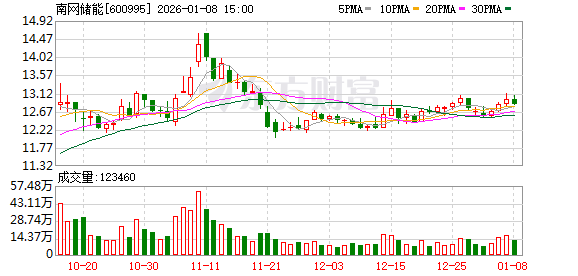
南网储能:电力现货市场中电价差的形成受多种因素综合影响
Zheng Quan Ri Bao Wang· 2026-01-08 13:47
Group 1 - The core viewpoint of the article highlights that the formation of price differentials in the electricity spot market is influenced by multiple factors [1] Group 2 - The company, Nanguang Energy Storage (600995), indicated that future supply and demand dynamics play a significant role in price formation [1] - Other factors affecting price differentials include the capacity of proposed market entry points, connection locations, and the utilization hours of energy storage [1]
电力交易人,跟着政策跑
Sou Hu Cai Jing· 2026-01-06 13:36
Core Insights - The article discusses the rapid development of the electricity spot market in China, highlighting the importance of understanding policies and data analysis for profitability in this evolving sector [3][4][5]. Group 1: Market Development - The construction of the electricity spot market has accelerated in 2023, with 28 provinces engaging in continuous spot trading, and 7 of them have transitioned to formal operations [3]. - The electricity trading market is expected to grow rapidly from 2024 to 2025, with most provinces completing coverage of spot trading, indicating significant market potential [8]. Group 2: Company Strategy - The company, Dadi Quantum, initially focused on agricultural data but pivoted to electricity trading after recognizing the value of meteorological data for power forecasting [6][7]. - Dadi Quantum has developed a software named Dadi Quant that provides meteorological data and trading strategies, but it also engages in agency trading to better meet market demands [9]. Group 3: Trading Mechanisms - Electricity trading operates similarly to futures trading, with transactions based on future power generation and consumption, and the shortest trading interval being 15 minutes [7][10]. - The company emphasizes the need for skilled traders to capture low-price orders and navigate the complexities of the electricity market, which differs from traditional financial markets [10][12]. Group 4: Policy Impact - The ongoing reform of the electricity market is leading to changes in trading rules, such as the introduction of a capped retail price mechanism in 2026, which will require adjustments in trading strategies [13][18]. - The company anticipates that the market for agency trading will remain viable for another 3 to 5 years, after which it plans to shift towards selling software and services [18].