电动汽车竞争

Search documents
雷军:福特CEO试驾小米SU7之后,爱不释手,甚至不想跟车分开!
Sou Hu Cai Jing· 2026-02-06 06:49
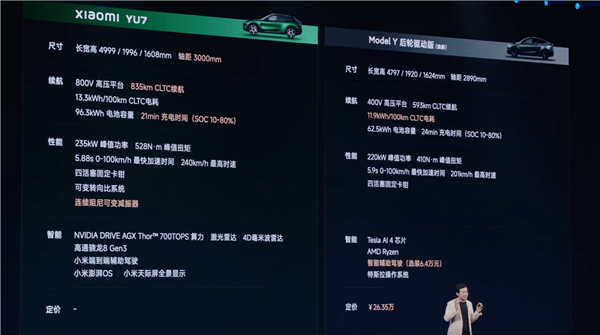
Core Insights - Xiaomi's SU7 Max has garnered positive reviews for its driving experience and technology integration, positioning it as a strong competitor in the electric vehicle (EV) market despite not being available in the U.S. yet [1][8][20] - Ford's CEO, Jim Farley, expressed admiration for the Xiaomi SU7 after test-driving it, indicating a recognition of the competitive threat posed by Chinese EV manufacturers [4][9][24] Company Performance - The Xiaomi SU7 Max features advanced technology, including a 16.1-inch infotainment screen running HyperOS, and offers a battery range of approximately 500 miles (810 kilometers) [10][18] - The vehicle's pricing in China starts at 299,900 Chinese yuan (around $43,000), which is competitive with the Tesla Model Y, yet offers a more premium experience [20] Industry Trends - Chinese EV manufacturers, including Xiaomi, BYD, and Geely, are noted for delivering vehicles with longer battery ranges and superior digital platforms compared to Western competitors [8][9] - There is a growing sentiment that Chinese automakers are poised to enter the U.S. market, especially if manufacturing occurs domestically, as indicated by comments from industry executives [21][22] Competitive Landscape - Ford is exploring partnerships with various Chinese manufacturers, including Xiaomi, Geely, and BYD, to enhance its EV offerings and address the competitive gap with Chinese brands [24][26] - The current U.S. market is hindered by tariffs and restrictions on Chinese-made EVs, but these barriers may change in the future, allowing for greater competition [21][22]


“中国是700磅大猩猩,我们这几家算不上真正对手”
Guan Cha Zhe Wang· 2025-09-30 12:46
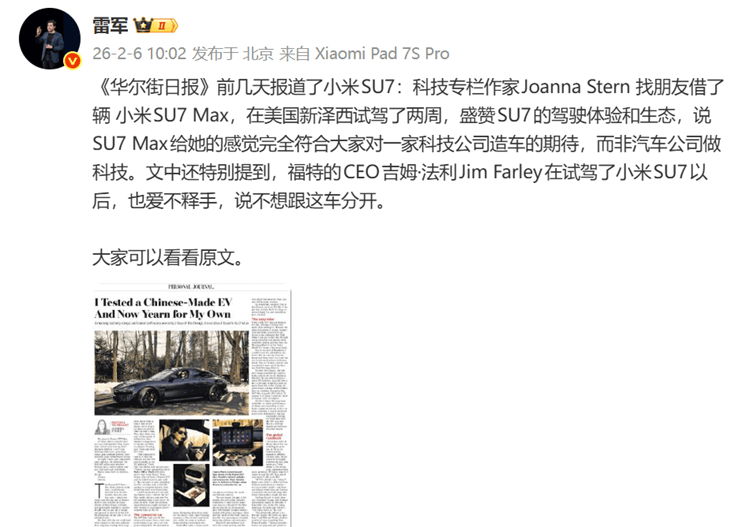
Core Viewpoint - The article highlights the dominance of Chinese electric vehicle (EV) manufacturers in the global market, with U.S. automakers like Ford feeling a sense of urgency to compete effectively [1][4]. Group 1: Chinese EV Dominance - Jim Farley, CEO of Ford, stated that China is the "700-pound gorilla" in the EV industry, indicating that U.S. companies lack the competitive edge to challenge Chinese firms [1]. - Farley emphasized that 70% of the world's electric vehicles are manufactured in China, showcasing the advanced in-car technology and lower production costs of Chinese EVs [1][4]. - The article notes that Chinese EVs are rapidly expanding in markets like Mexico and Latin America, despite high tariffs and regulatory barriers in the U.S. [4]. Group 2: Ford's Strategic Response - To enhance its competitiveness in the EV sector, Ford announced a $5 billion investment to transform its production methods, including a $2 billion overhaul of its Louisville plant and a $3 billion investment in a new battery factory in Michigan [3]. - Ford's first product under the new "Universal Electric Vehicle Platform" will be a four-door mid-size electric pickup, expected to launch in 2027, with a starting price of $30,000 due to reduced production costs [3]. Group 3: Challenges Ahead - Analysts believe that U.S. electric vehicles currently lag behind Chinese counterparts in both price and quality, making it difficult for companies like Ford to compete effectively [4]. - The article mentions that while Ford is making changes, Chinese EV manufacturers are not waiting and are quickly gaining market share in developing countries [4].

Tesla's European car sales nosedive for fifth month as customers switch to Chinese EVs
CNBC· 2025-06-25 10:38
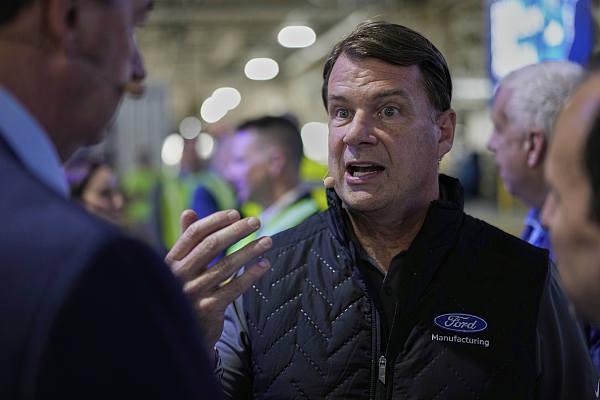
Core Insights - Tesla's new car sales in Europe have declined for five consecutive months, with a significant drop of 27.9% year-on-year in May, totaling 13,863 units sold [2] - The company's market share in Europe has decreased from 1.8% in May 2024 to 1.2% in May 2025, indicating a downward trend in the region [2] - The decline in sales is attributed to increased competition from cheaper Chinese electric vehicles, which have gained market share despite EU tariffs [4] Sales Performance - In May, Tesla's sales in Europe fell to 13,863 units, marking a 27.9% decrease compared to the previous year [2] - Chinese automakers sold 65,808 units in the same month, more than doubling their market share to 5.9% [4] - Tesla's sales performance is further challenged by traditional automakers and the rise of competitors like BYD, which recently outsold Tesla in pure electric car sales in Europe for the first time [4] Brand and Reputation - Tesla's brand and reputation have suffered due to CEO Elon Musk's controversial political activities and rhetoric, leading to protests at Tesla dealerships across Europe [2][3] - Musk's financial support for U.S. President Donald Trump and subsequent political initiatives have contributed to the backlash against the company [3] Product Impact - The revamped Model Y was expected to help improve Tesla's sales performance, with indications that it has positively impacted new car sales in Norway [5]

小米YU7发布,海外媒体称其为“马斯克的潜在对手”
Sou Hu Cai Jing· 2025-05-23 12:41
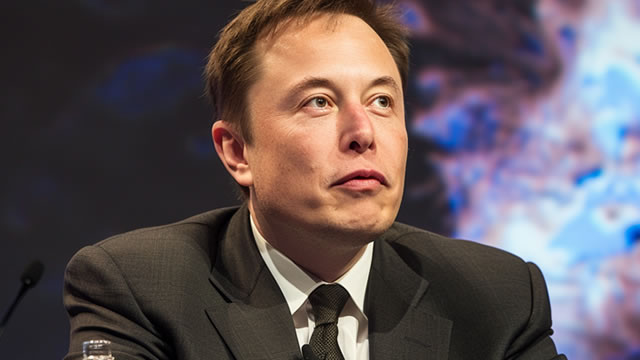
Core Viewpoint - Xiaomi has officially launched its second car, the Xiaomi YU7, positioning it as a strong competitor to Tesla's Model Y, emphasizing its high cost-performance ratio with superior features and battery capacity [1][6][7] Group 1: Product Comparison - Xiaomi founder Lei Jun highlighted that the standard version of the YU7 has configurations that are at least 60,000 to 70,000 yuan higher than those of the Tesla Model Y, along with a larger battery capacity and longer range [1] - Analysts from Morgan Stanley noted that the design of the YU7 is impressive, combining styles reminiscent of Ferrari or Aston Martin, yet priced comparably to Volkswagen vehicles, indicating high cost-effectiveness [6] Group 2: Market Impact - The YU7 has generated significant global attention, with many overseas media outlets suggesting it could become a formidable rival to Tesla, potentially causing concern for Elon Musk [3] - The YU7 is set to begin sales in July, and analysts predict it may replicate the sales success of the Xiaomi SU7, which received 120,000 orders within 36 hours of its launch [6] - The launch of the YU7 is viewed as a potential challenge to Tesla's dominance in the Chinese electric vehicle market, with Xiaomi explicitly stating its intention to compete with the Model Y [7]