电池企业出海

Search documents
电解液海外短缺,韩企五年供货被头部电池厂锁定
高工锂电· 2025-12-01 09:45
Core Viewpoint - The global supply of electrolyte is experiencing a time lag, prompting battery companies to consider introducing Korean suppliers to stabilize their supply chains [2][10]. Group 1: Supply Agreements - Korean electrolyte company Enchem is preparing to sign a five-year supply agreement for 70,000 tons per year, totaling approximately 350,000 tons, with an estimated contract value of about 1.5 trillion KRW (approximately 1.03 billion USD) [2]. - The specific partner for this agreement has not been named, but the market widely interprets it as CATL (Contemporary Amperex Technology Co., Limited) [3]. - As of the report's release, neither CATL nor Enchem has publicly confirmed the news [4]. Group 2: Market Context - The timing of this market news is sensitive, as several leading battery companies have recently announced overseas expansion plans [5]. - CATL has laid the foundation for a lithium iron phosphate battery factory in Zaragoza, Spain, with a total investment of 4.1 billion euros and an annual production capacity of 50 GWh [5]. - In contrast, local production capacity for electrolytes in Europe and North America is still in the ramp-up phase [6]. Group 3: Chinese Electrolyte Production - Chinese electrolyte companies have been expanding overseas, but the overall capacity remains in a "spot layout + gradual ramp-up" phase, making it difficult to match the pace of Chinese battery companies' overseas expansion [7]. - Tianqi Materials has initiated its first North American electrolyte factory in Texas with an investment of about 200 million USD and a planned annual capacity of 200,000 tons, currently under construction [8]. - New Zobang's 40,000-ton electrolyte project in Poland has officially started production in 2023, with plans to expand to 60,000-80,000 tons to meet European demand [8]. Group 4: Long-term Supply Strategies - Battery companies have locked in long-term supply agreements for electrolytes and upstream materials in the domestic market over the past year [9]. - Tianqi Materials' subsidiary signed a material supply agreement with CATL, expected to supply 58,600 tons of electrolyte products by the end of 2025, equivalent to about 500,000 tons of electrolyte [9]. - The long-term agreement with Enchem can be seen as an extension of battery companies' long-term strategies into overseas localized supply chains [10]. Group 5: Price Dynamics - Since the third quarter of this year, the price of lithium hexafluorophosphate has surged by approximately 150%, leading to an increase in electrolyte prices from about 17,500 CNY per ton to over 25,000 CNY per ton [12]. - The price environment has prompted battery and material companies to manage cyclical fluctuations through "locking volume + price following the market" strategies [12]. - If Enchem's five-year contract is finalized, it will replicate a similar negotiation structure in the overseas market, allowing leading battery manufacturers to secure compliant capacity while maintaining price flexibility [13].


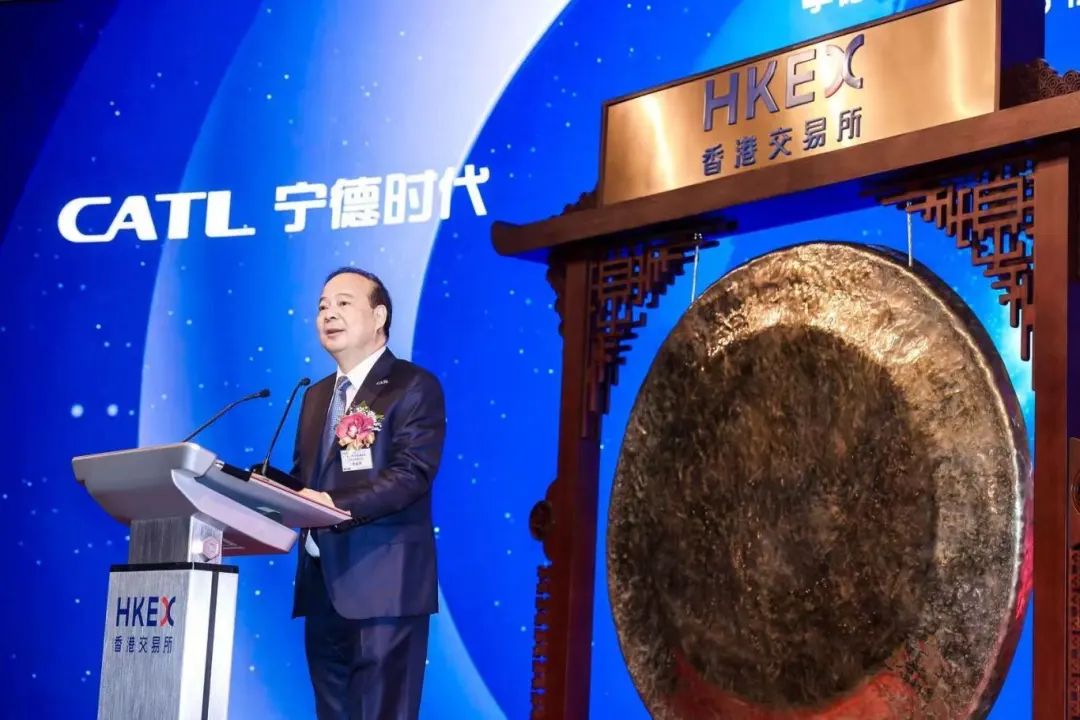
光环背后的电池企业,需要“八仙过海”
3 6 Ke· 2025-05-23 02:06
Core Viewpoint - The battery industry is currently undergoing a significant adjustment period, with various companies facing challenges and opportunities in the evolving market landscape [1][6]. Group 1: Industry Trends - The cylindrical battery technology is gaining traction, with companies like CATL and EVE Energy accelerating production, despite uncertainties about its market share compared to prismatic batteries [4][6]. - In the first four months of the year, China's power battery installation volume reached 184.3 GWh, a year-on-year increase of 52.8%, with lithium iron phosphate batteries accounting for 81.4% of the total [6][8]. - The market is witnessing a dispersion of the top players, with CATL's market share declining by 4.77%, indicating increased competition [6][12]. Group 2: Technological Developments - Solid-state and sodium-ion batteries are being developed, but mass production is not expected until around 2027, with challenges in commercialization for the sulfide route [9][11]. - The cost of sodium-ion batteries remains higher than lead-acid batteries, which may hinder their widespread adoption [11]. Group 3: Global Market Dynamics - CATL's recent Hong Kong listing has accelerated the globalization of domestic battery companies, with CATL projected to capture 27% of the overseas market share by 2024, surpassing LG Chem [12][15]. - Domestic companies are expected to maintain a competitive edge in lithium iron phosphate production, with a significant share of global output [15][17]. - The market share of Chinese automotive companies in the global new energy vehicle market has risen to 70.8%, reflecting the growing competitiveness of domestic firms [19]. Group 4: Competitive Landscape - International battery manufacturers are under pressure as domestic companies expand their market presence, with LG and Samsung SDI struggling to keep pace [12][15]. - The reliance of overseas battery companies on Chinese supply chains is significant, with Chinese production accounting for 64.4% of global ternary cathode materials and over 90% of lithium iron phosphate components [15][17].