电池技术合作

Search documents
沃尔沃旗下电池子公司暂停运营
起点锂电· 2026-01-18 11:25
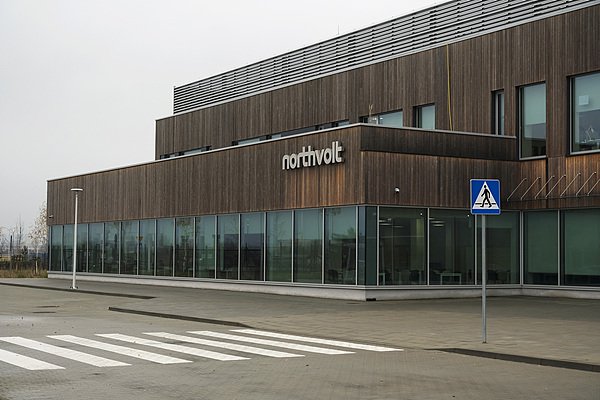
Core Viewpoint - NOVO Energy, a subsidiary of Volvo Cars, has officially announced the suspension of operations and initiated a full-scale layoff process affecting all 75 positions due to the lack of a new battery technology partner [1][2]. Group 1: Company Operations - The core reason for NOVO Energy's operational suspension is the inability to identify a new battery technology partner, which has hindered the advancement of subsequent business plans [1]. - NOVO Energy was established in 2021 as a joint venture between Volvo and Northvolt, with each holding a 50% stake, aiming to build a battery factory in Gothenburg with an annual capacity of 50 GWh to support Volvo's electric vehicle models [1]. - Following Northvolt's financial crisis and subsequent bankruptcy filing in 2025, Volvo acquired all shares of NOVO Energy at nearly zero cost, becoming the sole owner but losing critical technical support [1]. Group 2: Employment and Production Capacity - In May 2025, NOVO Energy had already initiated a round of layoffs due to the lack of technical collaboration, reducing its workforce by 50% and retaining only core technical and factory operation teams [1]. - The battery factory in Gothenburg is approximately 80% complete, but due to the loss of technical support, production equipment has not been installed, and the original production capacity target has been reduced from 15 GWh to 5 GWh, leaving the factory in a state of stagnation [2].

宁德时代与岚图签署十年深化合作协议
Zheng Quan Shi Bao Wang· 2025-12-18 01:16
Core Viewpoint - CATL and Lantu Motors have signed a 10-year deepening cooperation agreement to enhance collaboration in technology, supply chain, and market expansion in the high-end electric vehicle sector [1] Group 1: Technology Collaboration - CATL will prioritize providing advanced battery technologies to Lantu, including the application of Kirin, Xiaoyao, and Shenging battery brands in Lantu's models [1] - Both companies will work on new ecosystem technologies such as battery swapping, integrated intelligent chassis (CIIC), Panshi chassis, and V2G, while enhancing battery big data collaboration [1] - The goal is to create a comprehensive management loop covering R&D, manufacturing, and operations to improve user experience in terms of range, charging, and safety [1] Group 2: Supply Chain Strategy - The focus will be on promoting localized production capacity and collaborative layout to enhance supply chain agility and security [1] - This strategy aims to effectively respond to external volatility risks and ensure a stable and reliable battery supply for Lantu as it scales up production and competes in the market [1] Group 3: Market Expansion - CATL and Lantu will collaborate on brand innovation and overseas market expansion to enhance their brand influence and competitiveness in the global high-end electric vehicle market [1] - The partnership aims for a comprehensive win-win situation from product development to brand recognition [1]

欧洲金属巨头:从零开始发展电池行业行不通,欧洲必须拥抱中国
Guan Cha Zhe Wang· 2025-05-28 11:39
Core Viewpoint - European companies are significantly lagging behind China in battery technology and must seek collaboration with Chinese firms to develop a local battery industry [1][3][4] Group 1: Industry Challenges - The bankruptcy of Swedish battery manufacturer Northvolt in March 2023 has severely impacted Europe's ambition to establish a domestic battery industry [1][3] - Executives from Eramet and Umicore believe that Europe cannot develop a fully autonomous battery industry and must embrace cooperation with Chinese companies [1][3] - Market research indicates that completely decoupling from China is unrealistic for the European battery industry [3][4] Group 2: Collaboration Opportunities - Chinese companies are already investing in Europe, forming partnerships with local firms, such as CATL's €4.1 billion investment in a battery factory in Spain [3][4] - Executives from European firms suggest that instead of imposing tariffs on Chinese companies, Europe should encourage collaboration to localize production [1][3] Group 3: Market Dynamics - China supplies approximately 80% of the world's lithium-ion batteries, with six out of the ten largest electric vehicle battery manufacturers being Chinese [4] - The challenges faced by European battery manufacturers, including design flaws and production scalability issues, have been highlighted by industry leaders [4]