电网接入审批

Search documents
靠Megapack储能电池绕开电网封锁,特斯拉瑞典启用新超级充电站
Sou Hu Cai Jing· 2026-01-18 07:24
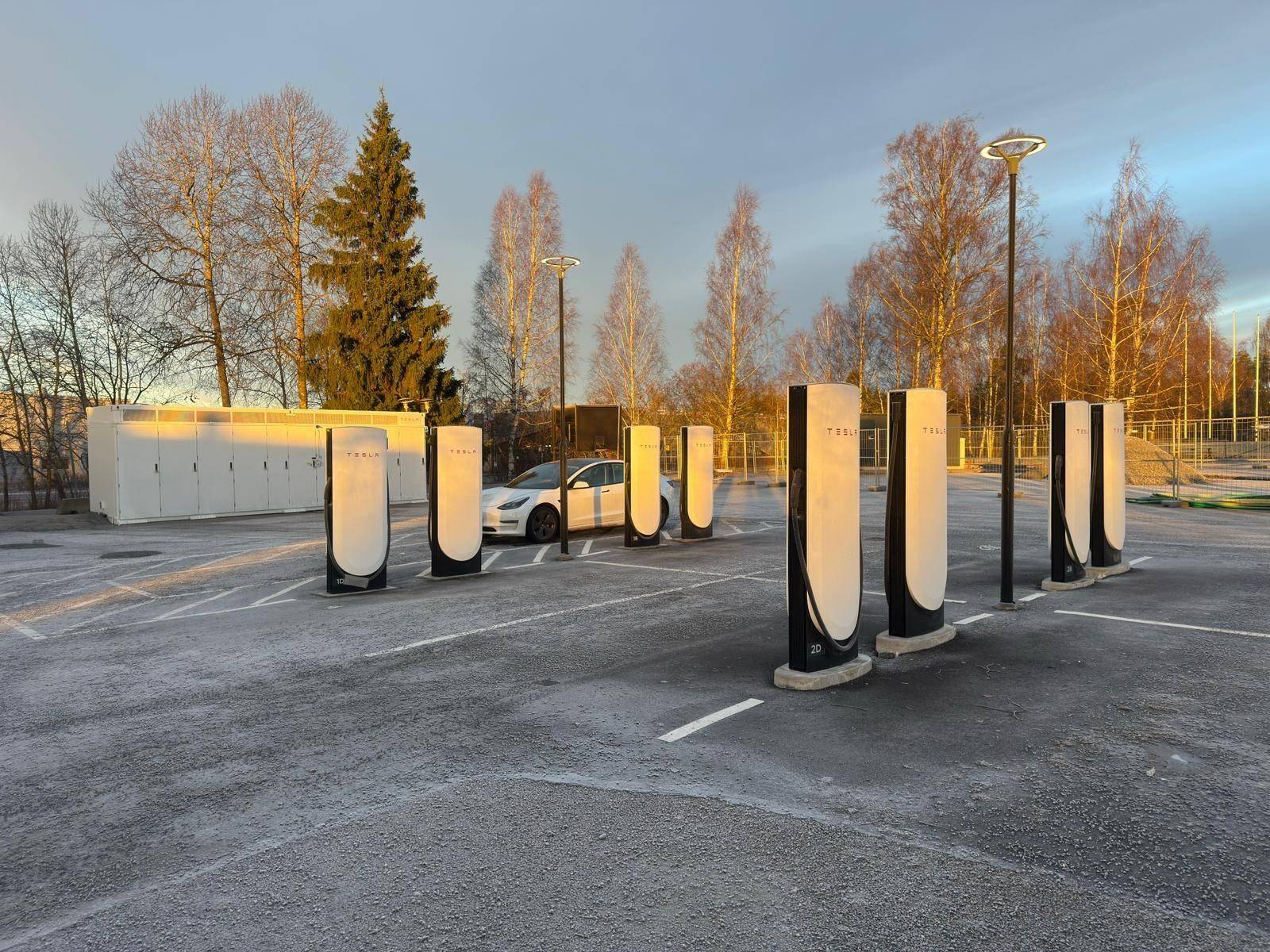
Core Viewpoint - Tesla's Swedish division successfully launched a new Supercharger station powered by Megapack batteries, circumventing the ongoing blockade by Swedish unions that hindered traditional grid connections [1][3]. Group 1: Charging Station Launch - Despite the blockade from the Swedish Service Union (Seko), Tesla proceeded with the launch of a new Supercharger station in Arlandastad, Stockholm, which operates independently of the traditional power grid [3]. - The new charging station has eight charging spots, which is only one-fifth of the originally planned 40 spots, and it is open to non-Tesla electric vehicles as well [4]. Group 2: Challenges and Strategies - The blockade led to the rejection of all grid connection applications for Tesla's new Supercharger stations, making traditional activation nearly impossible [3]. - Tesla's strategy involved utilizing Megapack batteries to bypass the stalled grid connection approval process, likely through private agreements with nearby businesses that are already connected to the grid [3][5]. Group 3: Impact of Union Actions - The blockade's impact on Tesla's vehicle sales is considered limited, as the sales decline is relative to the record high sales in 2024, during which the union also imposed a blockade [5]. - The blockade is seen as significantly damaging for Tesla as a charging operator, but it does not substantially affect Tesla's vehicle manufacturing and sales, as consumers will still seek convenient charging options [5].


从5年压缩至60天,特朗普政府拟大力加速数据中心电网审批
Di Yi Cai Jing· 2025-10-24 09:24
Core Insights - The energy demand of data centers in the U.S. is expected to nearly double by 2027, increasing from approximately 17 gigawatts to over 30 gigawatts [3][4] - The Trump administration is pushing for a 30-fold increase in the speed of regulatory approvals for data center connections to the power grid, with proposed review timelines limited to 60 days [1][6] - AI-related data centers are projected to experience a compound annual growth rate of 47.9%, significantly outpacing non-AI data centers [3] Energy Demand and Supply - FTI Consulting forecasts that global data center power demand will reach 71 gigawatts by 2027, driven by surging AI-related needs [3] - The average waiting time for projects in the U.S. interconnection queue has increased to over five years, with many projects ultimately being withdrawn [4][5] - Historical data shows that 72% of projects in the interconnection queue from 1999 to 2018 were eventually withdrawn, indicating significant challenges in project completion [4] Regulatory Challenges - High costs associated with grid upgrades are a major barrier to new project viability, alongside issues like land control and financing difficulties [5] - The Trump administration's initiatives aim to simplify the permitting process for data centers and related infrastructure, including new exemptions under the National Environmental Policy Act [6][7] - The proposed rules by the Department of Energy include expedited reviews for data centers that either bring new power plants or agree to reduce power usage during peak demand [6] Economic Implications - The rising demand for electricity from data centers is expected to lead to increased transmission upgrade costs, which may ultimately be passed on to consumers [7] - The anticipated costs for transmission upgrades in the PJM interconnection region are projected to reach $4.4 billion in 2024, reflecting the financial burden of accommodating data center demands [7]