算力资源

Search documents
机构预计2026年全球AR眼镜出货达95万台,消费电子ETF(561600)交投活跃
Xin Lang Cai Jing· 2026-02-04 05:22
Group 1 - The core viewpoint of the articles highlights the significant growth potential in the AR glasses market, driven by the integration of AI and wearable devices, with Meta Ray-Ban Display Glasses exceeding market expectations [1][2] - TrendForce forecasts that global AR glasses shipments will reach 950,000 units by 2026, representing a year-on-year growth rate of 53% [1][2] - The performance of the China Securities Consumer Electronics Theme Index (931494) shows mixed results among component stocks, with notable gainers including Crystal Optoelectronics up 5.22% and major decliners like Xunwei Communication down 10.03% [1][2] Group 2 - The China Securities Consumer Electronics Theme Index tracks 50 listed companies involved in component production and consumer electronics, reflecting the overall performance of the sector [2] - As of January 30, 2026, the top ten weighted stocks in the index account for 53.34% of the total index weight, including companies like Cambricon, Luxshare Precision, and SMIC [2]
谷歌云宣布涨价,算力资源稀缺性凸显
Xuan Gu Bao· 2026-01-28 14:50
Industry Overview - Google Cloud announced a price increase for global data transmission services starting May 2026, with North America rates expected to double from current levels [1] - The price adjustments by major cloud service providers like Google Cloud and AWS indicate a shift in the industry, moving away from a long-standing trend of price reductions due to rising costs in AI computing power, hardware, and energy [1] - There is a widespread expectation that other major cloud service providers may follow suit with similar pricing strategies in the near future [1] Market Trends - The industry-wide price increase reflects the ongoing high demand for global AI computing power and the long-term trend of rising infrastructure costs [1] - The importance of scarce computing resources and network transmission in the revenue structure is becoming increasingly significant within the industry [1] Company Insights - UCloud is recognized as a leading neutral third-party cloud computing service provider in China, with its private cloud product solutions included in the Xinchang Committee's Xinchang map [1] - Capital Online has developed a platform that enables global-level instant activation, management, and scheduling of cloud services and network resources, covering core regions worldwide [1]




央行:继续实施适度宽松的货币政策;今日一只新股申购……盘前重要消息还有这些
证券时报· 2026-01-23 00:17
Key Points - The People's Bank of China will continue to implement a moderately loose monetary policy in 2026, focusing on stabilizing economic growth and reasonable price recovery [3] - On January 23, 2026, the People's Bank of China will conduct a 900 billion yuan MLF operation with a one-year term to maintain liquidity in the banking system [3] - Beijing plans to increase computing power resources, aiming to build a total computing power scale of around 200,000 P by 2027 [4] - Blue Arrow Aerospace's IPO status has changed to "inquired" on the Sci-Tech Innovation Board [5] - The "CYZ1" spacecraft from Beijing Chuan Yue Technology Co. has received bookings for over 20 space tourists, with the first manned flight expected in 2028 [5] - Xiaomi Group has initiated a share repurchase plan of up to 2.5 billion HKD [7] - Several companies, including Hengyi Petrochemical and Huayuan Technology, have announced share repurchase plans ranging from 250 million to 1 billion yuan [7][9] - Various companies are projecting significant profit increases for 2025, with some expecting net profit growth of over 200% [9]


并行科技:拟购置算力设备形成自有算力资源池
Zheng Quan Shi Bao Wang· 2025-12-19 15:05
Core Viewpoint - The company is planning to procure CPU and GPU computing servers along with related IT equipment, indicating a strategic move to enhance its computing resources for service provision [1] Group 1: Procurement Details - The company intends to purchase CPU computing servers and associated switches and memory from Longsi Cloud (Beijing) Technology Co., Ltd. with a total contract amount not exceeding 28 million yuan [1] - Additionally, the company plans to acquire GPU computing servers from Chaoronghe (Shanghai) Technology Co., Ltd. with a contract amount not exceeding 10.89 million yuan [1] Group 2: Strategic Importance - The establishment of a self-owned computing resource pool through these purchases is deemed essential for the company's core business operations and service offerings [1]
港股科技公司掀“回购热潮”,恒生科技ETF易方达(513010)近一个月“吸金”近35亿元
Mei Ri Jing Ji Xin Wen· 2025-12-16 06:57
Core Viewpoint - The Hong Kong stock market, particularly the technology sector, is experiencing a period of low volatility and correction, yet companies are actively engaging in share buybacks, signaling confidence in future industry developments [1]. Group 1: Market Performance - As of December 16, the Hang Seng Technology Index has declined by 2.3% [1]. - Nearly 260 Hong Kong-listed companies have implemented buybacks this year, totaling approximately 170 billion HKD [1]. Group 2: Company Actions - Major technology firms such as Tencent Holdings, Xiaomi Group, and Kuaishou are among the top companies in terms of buyback amounts, indicating strong corporate confidence in the sector's future [1]. Group 3: Investment Insights - Minsheng Securities maintains a positive outlook on the revaluation of AI in China, suggesting investors focus on platform-based internet companies with computational resources and application capabilities [1]. - The Hang Seng Technology Index consists of the 30 largest stocks related to technology themes, focusing on sectors like semiconductors and robotics, with key companies including Meituan, Tencent Holdings, Alibaba, and SMIC [1]. - The current rolling price-to-earnings ratio of the index is 23 times, which is at the 31.7% percentile since its inception in 2020, indicating potential long-term investment value [1]. Group 4: ETF Performance - The Hang Seng Technology ETF (E Fund, 513010) has seen a net inflow of nearly 3.5 billion CNY over the past month, with a total product size of approximately 26 billion CNY, reflecting good liquidity for investors looking to access core Hong Kong technology companies [2].






斯坦福人均≈0.1张GPU,学术界算力遭“屠杀”,LeCun急了
3 6 Ke· 2025-12-09 03:28
Core Insights - The academic sector is facing a severe GPU shortage, with many top universities having insufficient resources for AI research compared to industry giants [1][12][17] - The disparity in computational resources between academia and industry is leading to a talent drain, as researchers prefer to work in industry due to better access to GPUs [12][16][20] Group 1: GPU Availability in Academia - Top universities like Princeton and Stanford have an average of 0.8 and 0.14 GPUs per researcher, respectively, which is far below the required amount for substantial AI research [4][3] - Major tech companies have access to tens of thousands of GPUs, with Microsoft's Fairwater Atlanta data center capable of running 23 times the training of GPT-4 in a month [7][12] - Some universities, like the University of Texas at Austin, are investing heavily in AI infrastructure, acquiring over 5,000 NVIDIA GPUs to enhance their research capabilities [27][28] Group 2: Impact on Research and Education - The GPU shortage is reshaping how computer science and engineering are taught, with universities increasingly incorporating GPU-related courses into their programs [15][16] - The lack of resources is making it difficult for academic researchers to conduct experiments, as they often have to queue for GPU access and deal with limited operational hours [21][20] - Some universities are attempting to mitigate the GPU shortage by establishing dedicated AI facilities, such as Cal Poly's AI factory equipped with NVIDIA DGX systems [30][33] Group 3: Talent Migration - The widening gap in computational resources is causing academic researchers to reconsider their career paths, with many opting for industry positions where resources are more abundant [16][12] - The trend is evident in discussions among graduate students, who express frustration over the lack of access to high-performance GPUs for their projects [35][36]

中国算力平台辽宁节点上线,汇聚多类算力资源
Bei Ke Cai Jing· 2025-11-26 05:56
Core Viewpoint - The China Computing Power Platform (Liaoning) has officially launched, serving as a key component of the national integrated computing power network and showcasing computing resources in Liaoning Province [1] Group 1: Platform Overview - The platform integrates various computing resources from Liaoning Province, including general computing, intelligent computing, and supercomputing [1] - It aims to meet the diverse computing needs of different industries and enterprises of varying sizes [1] Group 2: Target Industries - Users from sectors such as industrial manufacturing, financial services, education and research, and healthcare can find suitable computing support on the platform [1]

锐财经丨工业经济高质量发展扎实推进
Ren Min Ri Bao Hai Wai Ban· 2025-11-17 05:33
Group 1 - The industrial added value in China from January to October increased by 6.1% year-on-year, which is 0.3 percentage points higher than the same period last year, indicating a sustained rapid growth trend [1] - In October, the industrial added value increased by 4.9% year-on-year, with a month-on-month increase of 0.17% after seasonal adjustment [2] - Among the 41 major industrial categories, 29 categories saw a year-on-year increase in added value, resulting in a growth coverage of 70.7% [2] Group 2 - The equipment manufacturing industry showed a year-on-year increase of 8.0% in added value, with all eight sectors within this category experiencing growth [2] - The automotive and electronics sectors grew rapidly, with growth rates of 16.8% and 8.9% respectively, contributing 22.8% and 19.3% to the overall industrial growth [2] - High-end equipment products, such as railway locomotives and civil steel vessels, saw significant production increases of 71.3% and 21.4% respectively [2] Group 3 - The competitiveness of industrial enterprises is continuously improving, as evidenced by advancements in technology and production processes [3][4] - Companies are focusing on optimizing their core business and enhancing product quality, such as the successful development of new mining equipment and the application of AI technology in manufacturing [4] Group 4 - The manufacturing purchasing manager index for October was recorded at 49.0%, while the business activity expectation index was at 52.8% [5] - From January to October, industrial investment increased by 4.9%, contributing 1.7 percentage points to overall investment growth [5] Group 5 - Local governments are implementing practical measures to strengthen the foundation for industrial economic growth, focusing on high-end, intelligent, green, and cluster development [6] - Experts believe that China's economic fundamentals are strong, with many favorable factors supporting further stabilization and recovery of the industrial economy [6]
从5年压缩至60天,特朗普政府拟大力加速数据中心电网审批
Di Yi Cai Jing· 2025-10-24 09:24
Core Insights - The energy demand of data centers in the U.S. is expected to nearly double by 2027, increasing from approximately 17 gigawatts to over 30 gigawatts [3][4] - The Trump administration is pushing for a 30-fold increase in the speed of regulatory approvals for data center connections to the power grid, with proposed review timelines limited to 60 days [1][6] - AI-related data centers are projected to experience a compound annual growth rate of 47.9%, significantly outpacing non-AI data centers [3] Energy Demand and Supply - FTI Consulting forecasts that global data center power demand will reach 71 gigawatts by 2027, driven by surging AI-related needs [3] - The average waiting time for projects in the U.S. interconnection queue has increased to over five years, with many projects ultimately being withdrawn [4][5] - Historical data shows that 72% of projects in the interconnection queue from 1999 to 2018 were eventually withdrawn, indicating significant challenges in project completion [4] Regulatory Challenges - High costs associated with grid upgrades are a major barrier to new project viability, alongside issues like land control and financing difficulties [5] - The Trump administration's initiatives aim to simplify the permitting process for data centers and related infrastructure, including new exemptions under the National Environmental Policy Act [6][7] - The proposed rules by the Department of Energy include expedited reviews for data centers that either bring new power plants or agree to reduce power usage during peak demand [6] Economic Implications - The rising demand for electricity from data centers is expected to lead to increased transmission upgrade costs, which may ultimately be passed on to consumers [7] - The anticipated costs for transmission upgrades in the PJM interconnection region are projected to reach $4.4 billion in 2024, reflecting the financial burden of accommodating data center demands [7]

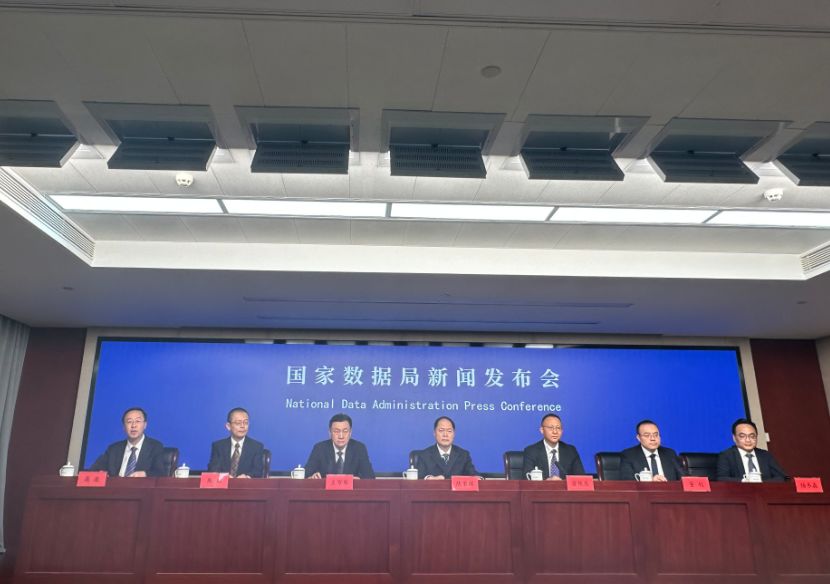
浙江经济和信息化厅答每经问:数据要素为燃料、人工智能为引擎、产业场景为落点 构建“数据—技术—应用”全链条闭环
Mei Ri Jing Ji Xin Wen· 2025-10-16 15:50
Core Viewpoint - The National Data Bureau has approved the construction plans for digital economy innovation development pilot zones in seven regions, focusing on 158 reform measures across various sectors, aiming to enhance the synergy between these zones and promote a "1+1>2" effect in development [1][2]. Group 1: Pilot Zone Construction - The pilot zones include Tianjin, Hebei (Xiong'an New Area), Shanghai, Jiangsu, Zhejiang, Guangdong, and Sichuan, with a focus on innovative development in the digital economy [1]. - Zhejiang Province is simultaneously advancing the construction of both the national digital economy innovation development pilot zone and the data element comprehensive pilot zone, aiming for coordinated development [1][2]. Group 2: Mechanism and Task Coordination - A cross-departmental collaborative mechanism has been established to enhance policy integration and resource allocation, ensuring a unified approach to the pilot zone initiatives [2][4]. - The construction of the two zones will leverage data elements as fuel and new-generation information technologies, such as artificial intelligence, as engines to create a closed-loop system of "data-technology-application" [2][3]. Group 3: Data Element Focus - The data element comprehensive pilot zone will concentrate on efficient data supply, convenient data circulation, and valuable data application, aiming to maximize the multiplier effect of data elements [3][4]. - The digital economy innovation development pilot zone will focus on strengthening digital industry clusters, deepening the integration of real and digital economies, and solidifying data infrastructure [3][4]. Group 4: Support for Digital Innovation Enterprises - The National Data Bureau has introduced measures to enhance data resource supply and computing power for digital innovation enterprises, addressing high costs associated with data usage [5][6]. - The measures encourage the establishment of public data authorization mechanisms and collaborative models for cost-sharing and revenue-sharing among digital innovation enterprises [5][6]. Group 5: Computing Power Enhancement - The measures aim to optimize the deployment of computing power resources, ensuring low-cost and reliable services for digital innovation enterprises [6]. - A new infrastructure for computing power will be developed to facilitate efficient matching of computing resources with the needs of digital innovation enterprises [6].