瘦身计划

Search documents
豪华公寓也流拍
Jing Ji Guan Cha Wang· 2026-01-16 12:12
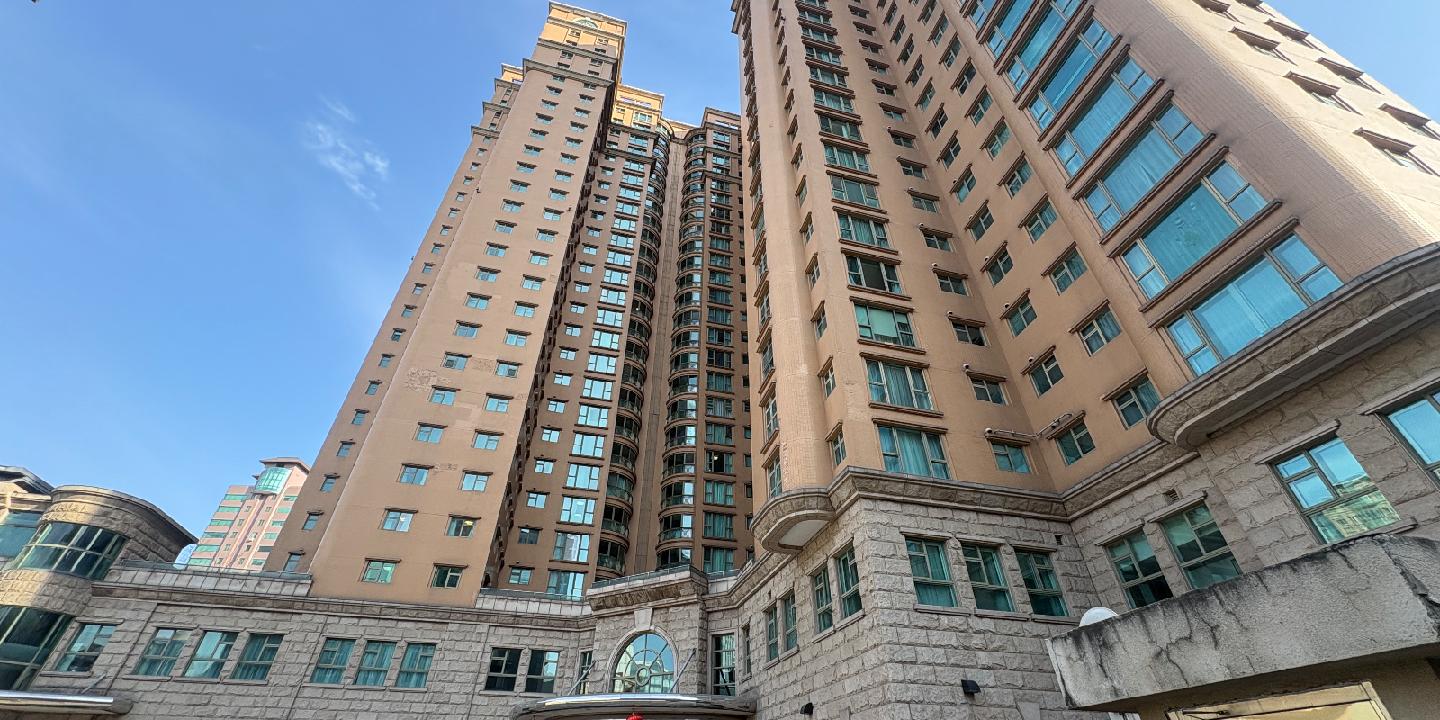
Core Viewpoint - The auction of 120 residential units and over 200 underground parking spaces at Sanquan Apartment in Beijing failed due to lack of bids, highlighting the financial struggles of Jingrui Holdings, which is attempting to resolve a debt of approximately 720 million yuan through asset liquidation [2][6][8]. Group 1: Asset Sale Details - The Sanquan Apartment project covers an area of 10,000 square meters with a total construction area of 54,000 square meters, consisting of three high-rise residential buildings and one commercial podium [4]. - The 120 residential units for sale have a total area of 13,824.7 square meters, with most units being two-bedroom apartments ranging from 110 to 130 square meters [4][5]. - The starting price for the residential units is approximately 58,000 yuan per square meter, while the commercial space was sold for 61.5 million yuan, equating to about 15,000 yuan per square meter [4][6]. Group 2: Financial Context - Jingrui Holdings is unable to repay its debt of 720 million yuan to Everbright Jinou, which has led to the auction of the Sanquan Apartment assets as collateral [2][5][8]. - The company had previously acquired the Sanquan Apartment assets for a total of 1.27 billion yuan, with the initial purchase price for the 120 units being 630 million yuan, indicating a potential appreciation in value despite current financial difficulties [7][10]. - The rental yield for the Sanquan Apartment is reported at 2% for residential units and 5.5% for commercial spaces, with rental prices for two-bedroom apartments ranging from 17,000 to 20,000 yuan per month [7][9]. Group 3: Industry Trends - The sale of mature assets in first-tier cities has become a strategy for real estate companies to alleviate debt amidst a gradually stabilizing real estate market [3]. - Jingrui Holdings has been transitioning from a traditional developer to an asset management service provider since 2017, focusing on rental business expansion [10][11]. - The company has faced significant pressure on financing and debt repayment due to a debt default in 2022, leading to a strategic plan aimed at reducing leverage and liabilities through asset sales [11].

梦龙“单飞”:640亿冰淇淋巨头独立上市,中国市场能否扛起增长大旗?
Xin Lang Cai Jing· 2025-12-17 10:50
Core Viewpoint - The independent listing of the world's largest ice cream company, Dream Ice Cream Company, marks a significant strategic shift for Unilever, allowing Dream to operate with greater agility and focus as it aims to capture market opportunities and address challenges in the global ice cream market [1][3][4]. Company Overview - Dream Ice Cream Company was spun off from Unilever and achieved a market capitalization exceeding 64 billion RMB on its first day of trading [1]. - The company holds a 21% global market share in 2024 and includes popular brands such as Dream, Cornetto, and Häagen-Dazs [1][3]. Strategic Shift - The spin-off is part of Unilever's "slimming plan," which aimed to divest non-core assets that had lower profit margins compared to the overall group [1][4]. - Unilever will retain approximately 19.9% of Dream's shares for up to five years to facilitate ongoing collaboration in supply chain and R&D [2][4]. Market Challenges - The global ice cream market is facing challenges such as rising costs in packaging materials (up 8%) and logistics (up 5%), which are compressing overall profit margins [3][16]. - There is a growing consumer trend towards healthier options, with demand for low-sugar and additive-free products increasing by 8%, while traditional high-sugar products are experiencing slower growth [3][15]. Financial Performance - Dream reported a revenue of 7.9 billion euros (approximately 66.6 billion RMB) in 2024, with an adjusted EBITDA of 1.3 billion euros [3][16]. - In the first half of 2025, revenue increased from 4.394 billion euros to 4.503 billion euros [3][16]. Cost-Saving Initiatives - Dream aims to save 500 million euros over the next five years through supply chain optimization, organizational restructuring, and technology integration [4][17]. - The supply chain transformation is expected to yield savings of 350 to 380 million euros by addressing inefficiencies and upgrading aging assets [4][17]. Market Position in China - Dream holds an 11% market share in China, with revenues of 270 million euros in the first half of 2025 [6][18]. - The company faces strong competition from local brands, which are growing rapidly, with notable revenue increases from competitors like Yili and Mengniu [6][18]. B2B Expansion - To address market challenges, Dream is expanding into the B2B food service sector, launching products aimed at restaurants and food service providers [7][19]. - This strategy includes forming a dedicated team to manage B2B operations, reflecting a broader industry trend towards catering to the food service market [7][19]. Product Innovation - 2025 is set to be a record year for new product launches in China, with a focus on diverse price points to cater to varying consumer preferences [8][21]. - The company is innovating flavors and product offerings, responding to consumer demand for unique and healthier options [8][21]. Growth Targets - Dream has set a target for annual revenue growth of 3% to 5% starting in 2026, with plans to improve profitability by 400 to 500 basis points [10][23]. - The company will focus on local acquisitions and expanding its product offerings to enhance its competitive position in the market [10][23].
业绩公布前夜,宝洁闪电换帅
3 6 Ke· 2025-07-29 08:48
Core Viewpoint - Procter & Gamble (P&G) is undergoing a leadership change with CEO Jon Moeller stepping down and COO Shailesh Jejurikar taking over, amid challenges such as slowing organic growth and rising costs [1][3][4] Leadership Transition - Jon Moeller's tenure as CEO lasted less than four years, during which P&G's stock rose approximately 13%, aligning closely with the S&P 500 index [1] - Shailesh Jejurikar, who has been with P&G for 36 years, will officially assume the CEO role on January 1, 2026 [3] Financial Performance and Market Conditions - P&G's stock price closed at $157 on July 28, 2023, reflecting a decline of about 6% year-to-date [4] - The company lowered its sales and profit guidance for the fiscal year in April, attributing this to cautious consumer spending [4] - P&G anticipates organic sales growth of 2% for 2025, down from a previous forecast of 3%-5% [4] Restructuring Plans - P&G is implementing a "non-core business restructuring plan" aimed at streamlining its product portfolio and exiting certain categories [5][16] - The company plans to cut 7,000 jobs over the next two years, representing a 15% reduction in non-manufacturing roles [6] - The restructuring is expected to have a negative impact of 30-50 basis points on organic sales growth over the next two fiscal years [16] Market Challenges - P&G faces challenges in its beauty and healthcare segments, with declines in baby and feminine care categories offsetting growth [7] - The company's organic growth rate has decreased from 7% to 4% and then to 2% over the past seven years, raising concerns among investors about its growth trajectory [7] Strategic Focus - P&G's management emphasizes a shift away from reliance on price increases for growth, as consumer spending becomes more cautious [11] - The company is focusing on improving operational efficiency through automation and digitalization, with a projected pre-tax cost of $1-1.6 billion for the restructuring [11][16] - P&G aims to maintain a focused portfolio of brands with scalable profit potential, indicating that transformative acquisitions are not a key part of its growth strategy [17]


宝洁“瘦身”,谁是下一个“弃子”
经济观察报· 2025-06-19 12:50
Core Viewpoint - Procter & Gamble (P&G) is initiating a significant restructuring plan aimed at focusing on core brands and divesting non-core businesses, which includes a global workforce reduction of 7,000 positions over the next two years [2][6][10]. Group 1: Restructuring Plan - The restructuring plan will be implemented over two years starting July 1, 2023, and is the largest adjustment in a decade for P&G [2][6]. - The plan includes exiting specific markets, product categories, and brands, as well as potential divestitures of certain brands [6][10]. - P&G aims to enhance efficiency and reduce costs in response to increasing competition and market uncertainties [4][6]. Group 2: Financial Performance - In the third quarter of fiscal year 2025, P&G reported a sales decline of 2% year-over-year, with total sales of $19.776 billion and net profit remaining stable at approximately $3.77 billion [8]. - The fabric and home care segment contributes the most to P&G's overall sales, accounting for 36%, followed by the baby and family care segment at 24% [2][16]. - P&G's net sales for fiscal year 2024 reached $84 billion, a 2% increase, driven by price increases, although personal care sales experienced a slight decline [16][17]. Group 3: Brand Focus and Market Strategy - P&G has previously divested around 100 brands since 2014, focusing on 70 to 80 core brands that contribute over 95% of its profits [3][4]. - The company is facing challenges in its beauty and personal care segments, with SK-II being a key brand that has seen sales declines in recent years [9][10]. - P&G's strategy includes enhancing its e-commerce capabilities and adapting to the rapidly changing Chinese market, where it has faced criticism for slow responses [21][22]. Group 4: Leadership Changes - Recent leadership changes include the resignation of Colin Walsh, CEO of P&G's professional beauty division, and other significant appointments aimed at addressing challenges in the Asia-Pacific region [13][14]. - The restructuring also involves adjustments in organizational structure, with a focus on empowering local teams and enhancing operational autonomy in key markets [26][27].