盈利兑现

Search documents
睿思飞股价近期波动,机构评级稳定但盈利仍待兑现
Jing Ji Guan Cha Wang· 2026-02-11 20:04
Group 1 - The stock price of RSKD.N exhibited volatility over the past week, with a range of 2.33% and an amplitude of 10.23% [1] - Daily closing prices showed fluctuations: $4.14 on February 5 (down 3.72%), $4.29 on February 6 (up 3.62%), $4.49 on February 9 (up 4.66%), $4.51 on February 10 (up 0.45%), and $4.40 on February 11 (down 2.44%) [1] - The trading volume during this period was approximately $12.53 million, indicating a low turnover rate and moderate market activity [1] Group 2 - Among the seven institutions covering RSKD.N, 43% have a buy or hold rating, while 14% recommend selling, indicating overall stable ratings [1] - Positive forecasts include a projected 1100% year-over-year increase in earnings per share for Q4 2025, a 351.19% increase in net profit, and a 7.59% increase in revenue, reflecting market expectations for business improvement [1] - The current trailing twelve months (TTM) price-to-earnings ratio is negative at -19.13, indicating the company is still in a loss phase, necessitating attention to the progress of profitability [1]
首席展望|招商基金李湛:中国市场将迈入“盈利改善+估值抬升”的双重驱动阶段
Xin Lang Cai Jing· 2026-02-05 00:42
Core Viewpoint - The international capital market is optimistic about China's economic transformation and development prospects in 2026, with major foreign investment banks recommending increased allocations to A-shares and Hong Kong stocks, indicating a shift towards a dual-driven phase of profit improvement and valuation uplift [1][3]. Group 1: Investment Environment and Trends - In 2026, the investment focus is expected to be on "industrial innovation-driven + profit realization + resource supply-demand optimization," with emphasis on technology innovation, high-end manufacturing, and cyclical recovery [2][16]. - The global economic landscape in 2025 showed resilient growth amid uncertainties, with emerging markets becoming the main growth engines, which, combined with China's policy support and industrial upgrades, creates structural opportunities in the capital market [3][4]. - The investment environment is anticipated to shift from single valuation recovery to a dual-driven phase of profit improvement and valuation uplift [3][4]. Group 2: Capital Inflows and Funding Sources - The most certain source of incremental capital in 2026 is expected to be insurance funds, with foreign capital gradually shifting from trading to allocation, particularly in high-end manufacturing and technology sectors [2][7]. - Resident savings represent a significant potential slow variable, with some funds expected to migrate to equity markets through wealth management and public funds [2][7]. - The structure of incremental capital in 2026 is likely to be characterized by "multiple channels, low volatility, and long cycles," with insurance funds, foreign capital, and resident savings being the main contributors [7]. Group 3: Sector Opportunities and Focus Areas - The technology sector remains the main line of industry allocation, with a focus on the performance visibility and elasticity of computing infrastructure and key hardware being higher than that of application layers [8][10]. - High-end manufacturing and advanced industrial systems are expected to continue benefiting from manufacturing upgrades, while energy transition and new power systems are also important directions for investment [10]. - Industries related to resource security and supply chain safety, such as non-ferrous metals and key materials, are anticipated to have stable medium- to long-term demand support [10]. Group 4: Risk Assessment and Market Dynamics - The evolution of risks related to real estate and local government debt is transitioning from "emergency response" to "long-term management," while external demand uncertainty is identified as the most significant variable affecting the market in 2026 [5][6]. - The core of external demand uncertainty lies in the unpredictable external environment, which can directly disrupt domestic economic recovery and influence macro policy adjustments [6]. Group 5: Asset Allocation Recommendations - For balanced investors in 2026, an initial asset allocation recommendation is 55%-60% in stocks, 30%-35% in bonds, and 5%-10% in gold, focusing on capturing structural opportunities in hard technology, high-end manufacturing, and cyclical upgrades [12][13]. - Stocks should be the core allocation, while bonds can provide stability against market volatility, and gold should serve as a long-term strategic asset to hedge against geopolitical risks and external demand fluctuations [14][15].
药明康德:2025年四季度盈利超预期
citic securities· 2026-01-14 12:16
Investment Rating - The report indicates a positive investment outlook for WuXi AppTec, with a consensus target price of HKD 131.35, suggesting potential upside from the current price of HKD 110.8 [13]. Core Insights - WuXi AppTec reported a 9% year-over-year revenue growth for Q4 2025, with adjusted net profit increasing by 36%, exceeding market expectations by 2% and 3% respectively [5]. - The strong performance is attributed to the company's robust CRDMO integrated business model and significant growth in the WuXi TIDES business, alongside China's competitive position in the global small molecule supply chain [5]. - Looking ahead to 2026, earnings realization in the Chinese healthcare sector is expected to be more critical than valuation expansion [5]. Summary by Sections Financial Performance - WuXi AppTec's revenue for 2025 increased by 15.8% to CNY 45.5 billion, with core business sales rising by 21.4%, surpassing previous guidance by 3-4% and Bloomberg consensus by 2% [8]. - Adjusted net profit rose by 41.3% to CNY 15 billion, again exceeding market expectations by 3% [8]. - The company has shown a 41% year-over-year increase in order volume for the first nine months of 2025, significantly outpacing the global average growth rate of 14% [8]. Business Overview - WuXi AppTec operates as a global enterprise with services spanning small molecule R&D and manufacturing, biologics R&D and manufacturing, cell and gene therapy R&D and manufacturing, medical device testing, and molecular diagnostics and genomics [9]. - The company provides comprehensive services throughout the R&D cycle, supporting global innovation and transformative therapies [9]. Market Position - WuXi AppTec's order growth visibility is superior to its peers, with expectations for continued outperformance in 2026 [8]. - The potential for margin expansion exists through the divestiture of low-margin clinical CRO businesses and an acceleration in order growth in 2026 [8].
药明康德(02359):2026年一季度催化因素蓝图
citic securities· 2026-01-08 13:29
Investment Rating - The report does not explicitly provide an investment rating for WuXi AppTec [2][3]. Core Insights - The report highlights three major catalysts that may drive WuXi AppTec's stock performance in Q1 2026: 1) Updates from the industry summit scheduled for January 12-15, which is expected to support the CRO industry's outlook; 2) The release of the 1260H list in January-February 2026, which should alleviate the impact of pending policy decisions; 3) The company's full-year guidance for 2026, to be announced in March 2026 [5]. - The report indicates that in 2026, the focus for the Chinese healthcare sector will shift towards earnings realization rather than valuation multiple expansion, with WuXi AppTec expected to lead in visibility of earnings growth [7]. - The report anticipates a recovery in outsourcing demand in 2026 due to the resolution of policy and tariff uncertainties, which had previously delayed biotech financing and new R&D initiatives in 2025 [6]. Summary by Sections Company Overview - WuXi AppTec is a global enterprise with operations across Asia, Europe, and North America, providing a comprehensive range of R&D and manufacturing services to advance the pharmaceutical and healthcare industries [10]. - The company covers the entire drug development cycle through five core business segments: small molecule R&D and manufacturing, biologics R&D and manufacturing, cell and gene therapy R&D and manufacturing, medical device testing, and molecular testing and genomics [10]. Revenue Breakdown - Revenue by product category: Chemical business (72.3%), Testing business (16.2%), Biological business (6.3%), High-end therapeutic CTDMO (3.2%) [11]. - Revenue by region: Middle East and Africa (8.7%), Asia (36.5%), Europe (27.3%), Americas (27.5%) [11]. Stock Information - Stock price as of January 5, 2026: 104.2 HKD - Market capitalization: 40.33 billion USD - Consensus target price (Refinitiv): 130.76 HKD [13].

在沪指13连阳中走向2026:一份真诚的ETF年度配置思路
Sou Hu Cai Jing· 2026-01-06 10:23
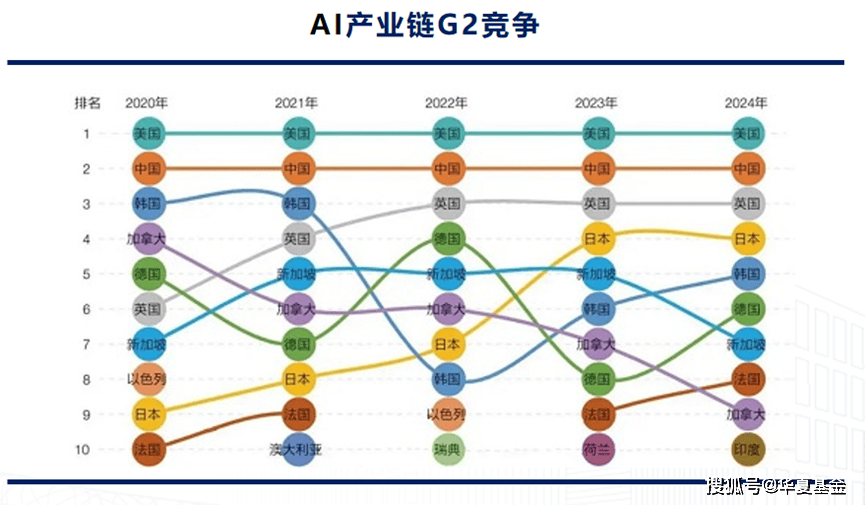
Core Insights - The article discusses the transition into 2026, highlighting the need for investors to adapt their strategies in response to market changes and macroeconomic trends [3][4]. Group 1: Macro Drivers - The two main macro growth drivers for 2026 are the deepening G2 competition in the AI industry chain and the upward initiation of the global capital expenditure cycle [5][11]. - The AI sector is identified as a key area of global technological competition, with both the US and China advancing their strategies to integrate AI into various industries [6][9]. - The global capital expenditure cycle is expected to rise due to developed countries focusing on re-industrialization and developing countries accelerating their industrialization processes, supported by favorable policies [12][14]. Group 2: Profitability Focus - The market's focus is shifting from "valuation expansion" to "profit realization," with expectations for a further increase in overall profitability in 2026 [15][18]. - The recovery in profitability is anticipated to be supported by policy initiatives aimed at expanding domestic demand and promoting technological innovation [21][24]. - A market driven by profitability rather than valuation expansion is seen as healthier and more discerning, rewarding genuine growth [23]. Group 3: Investment Framework - Investors are encouraged to establish an investment framework that aligns with the current market dynamics, emphasizing the use of index-based tools to achieve average market returns [25][26]. - The recommended investment strategy includes three layers: a stable base with broad market indices, a focus on high-growth sectors like AI and advanced manufacturing, and defensive positions to mitigate volatility [27][30]. Group 4: ETF Allocation Strategy - A specific ETF allocation strategy is proposed, focusing on balanced broad-based ETFs for stability, growth-oriented ETFs for capturing industry trends, and dividend-focused ETFs for cash flow stability [31][32]. - The strategy emphasizes the importance of selecting indices that reflect the evolving economic landscape and capitalizing on high-growth sectors such as AI and advanced manufacturing [33][36]. - Additionally, diversifying into low-correlation assets like gold and international equities is suggested to further mitigate risk [42].