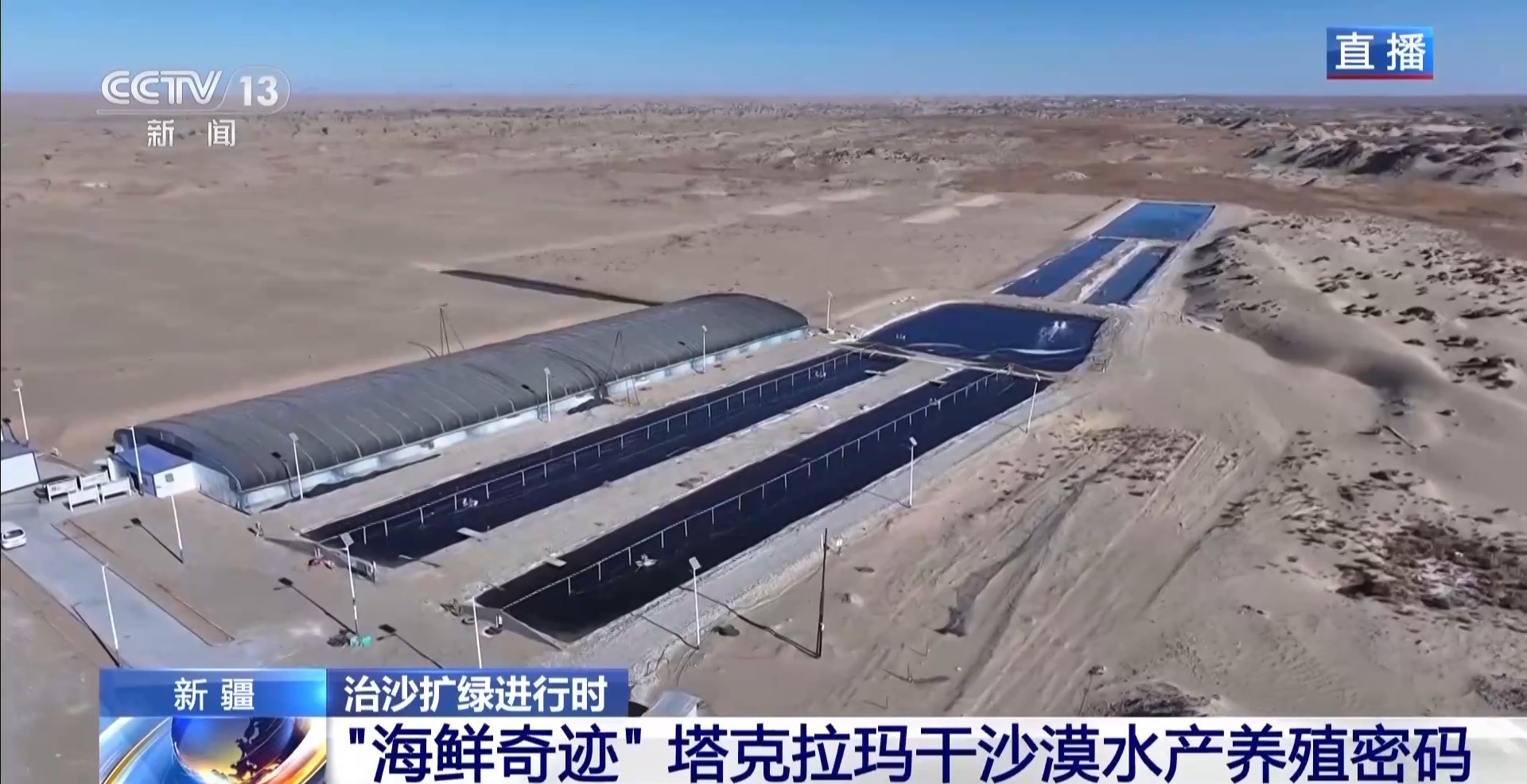
盐碱水还原海水技术

Search documents
视频丨沙漠里如何养海鲜?解锁塔克拉玛干沙漠的水产养殖密码
Yang Shi Xin Wen Ke Hu Duan· 2025-11-29 13:30
Core Insights - The article discusses the innovative practice of seafood farming in the Taklamakan Desert, specifically in Qemai County, Xinjiang, where a 25-acre aquaculture base has successfully raised 230,000 marine fish in a desert environment [3][9]. Group 1: Aquaculture Development - The aquaculture base features an indoor ecological farming greenhouse, outdoor fish ponds, and a breeding pool, demonstrating the feasibility of seafood farming in arid conditions [3]. - The facility utilizes 68 breeding barrels with a diameter of 5 meters, equipped with an electric heating system to maintain a stable temperature for the fish [5]. - Monthly fish sorting is conducted to prevent larger fish from preying on smaller ones, ensuring optimal growth conditions [5][7]. Group 2: Water Management Technology - The primary challenge of seafood farming in the desert is water availability, with the aquaculture relying on underground saline-alkaline water sourced from 2 meters below the surface [9]. - The pH level of the original saline-alkaline water is high (9 to 9.5), but through a 45-day water conditioning process, it is adjusted to below 8.6, mimicking the natural water quality of the South China Sea [11]. - The aquaculture employs a zero-emission, fully-circulating ecological farming model, utilizing smart farming technology for efficient water management and waste recycling [13]. Group 3: Growth and Production - The aquaculture base has successfully cultivated various fish species, including Gold Tiger Grouper and Pearl Grouper, which are set to be marketed in the coming month [7]. - The use of specific lighting in the farming greenhouses has been shown to enhance fish growth and health by simulating natural marine conditions [15]. - In addition to marine fish, efforts are being made to adapt marine shrimp to freshwater environments, expanding the diversity of aquaculture in the region [17]. Group 4: Regional Impact - The aquaculture industry in Xinjiang has seen significant growth, with a reported total aquatic product output of 192,500 tons last year, establishing it as a vital industry for local economic development [17]. - The surrounding areas of the Taklamakan Desert, such as Aral City and Hetian County, have also reported substantial increases in aquaculture production, contributing to local food supply and economic prosperity [17].

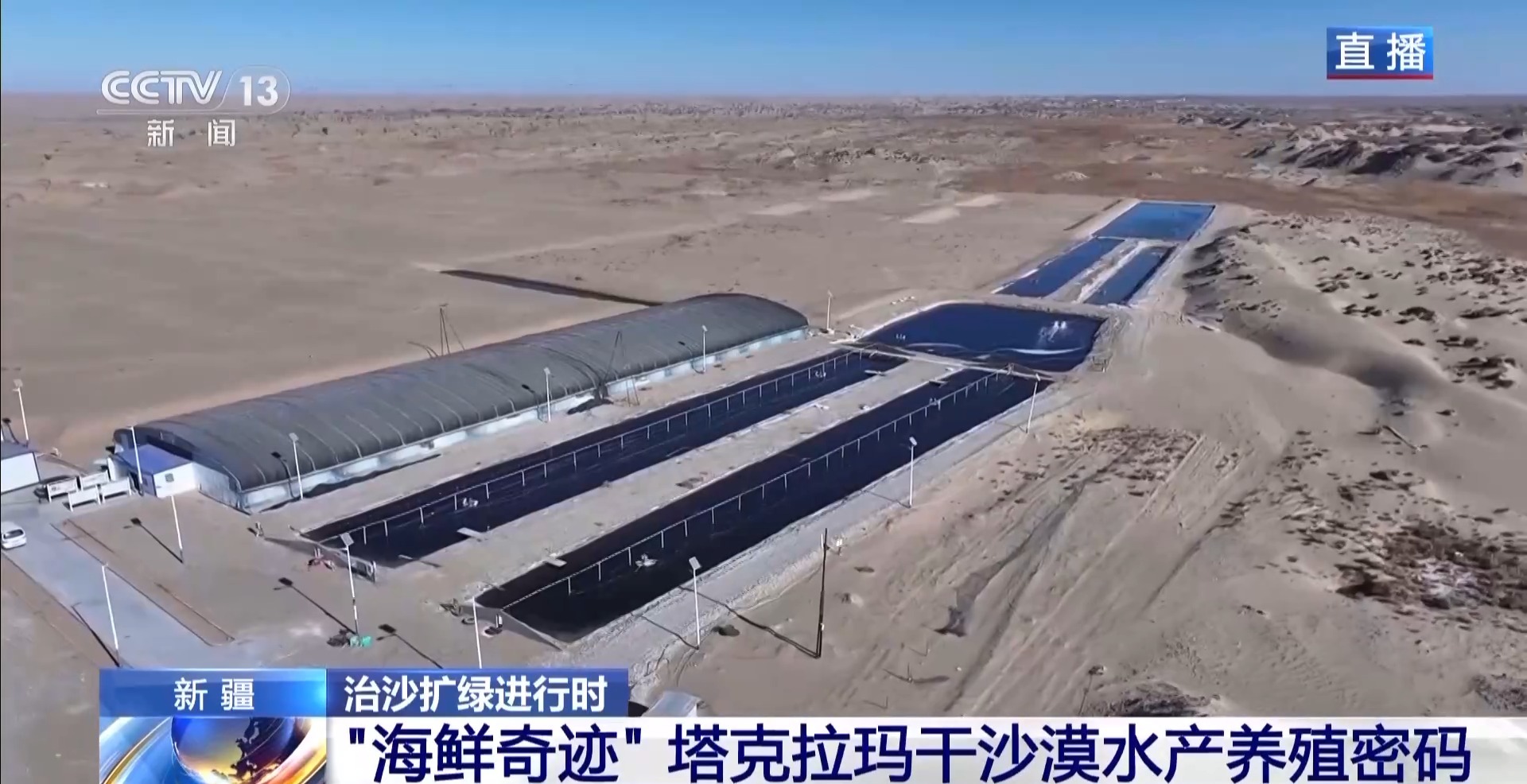
沙漠里如何养海鲜?解锁塔克拉玛干沙漠的水产养殖密码
Yang Shi Xin Wen Ke Hu Duan· 2025-11-29 12:29
Core Viewpoint - The article highlights the innovative seafood farming practices in the desert region of Xinjiang, specifically in Qemai County, where a successful aquaculture operation has been established despite the harsh desert environment [1][3]. Group 1: Aquaculture Development - A 25-acre aquaculture base has been developed in the Taklamakan Desert, successfully raising 230,000 sea fish over two years [1][3]. - The facility includes an indoor ecological farming greenhouse, outdoor fish ponds, and a breeding pool, demonstrating adaptability to the desert climate [3]. - The use of 68 circular tanks with a diameter of 5 meters and an electric heating system provides a stable temperature for the seafood [5]. Group 2: Fish Management Practices - Monthly manual fish sorting is conducted to prevent larger fish from preying on smaller ones, ensuring optimal growth conditions [5][7]. - The star species, including tiger grouper and pearl grouper, are set to be marketed soon, with distribution planned across various regions [7]. Group 3: Water Management Technology - The aquaculture relies on underground saline-alkaline water, which is treated to mimic seawater conditions, achieving a pH level similar to that of natural seawater [9][11]. - The water treatment process involves a 45-day adjustment period using specific microorganisms to create a suitable ecological environment for the fish [11]. Group 4: Sustainable Practices - The facility employs smart aquaculture technology, allowing for efficient management of water, feeding, and waste recycling, achieving a zero-emission, fully circular farming model [14]. - Special lighting in the greenhouses promotes fish growth and provides disinfection, enhancing the overall health of the seafood [16]. Group 5: Regional Aquaculture Expansion - The surrounding areas of the Taklamakan Desert are also seeing increased aquaculture activities, with significant areas dedicated to the farming of various seafood species [18]. - In the first half of this year, local water product output exceeded 1,000 tons, contributing to the economic development of the region [18]. - Xinjiang's total aquatic product output reached 192,500 tons last year, establishing aquaculture as a vital industry for local prosperity [18].