
石油产业国有化

Search documents
委内瑞拉若重返产油大国行列,低油价时代将至?
财富FORTUNE· 2026-01-08 13:04
Core Insights - The article discusses the potential takeover of Venezuela's oil industry by the U.S. following the arrest of President Nicolás Maduro, highlighting the challenges and opportunities in reviving the country's oil production [1][2]. Group 1: Oil Production and Investment - Venezuela has proven oil reserves of approximately 303 billion barrels, accounting for 17% of global reserves, which explains the interest from international oil companies [2]. - Current oil production in Venezuela is about 1.1 million barrels per day, significantly down from 3.5 million barrels per day in 1999, due to mismanagement, corruption, and U.S. sanctions [2][3]. - Analysts suggest that with significant investment, Venezuela's oil production could potentially increase to 2-3 million barrels per day in a relatively short time frame [1][3]. Group 2: Political and Legal Environment - The political stability and contract enforcement in Venezuela are critical for attracting foreign investment, as past nationalizations have deterred international companies [3][4]. - Legal disputes may arise regarding the ownership of Venezuela's oil resources, as the U.S. government may claim that the Venezuelan government never legitimately owned these resources [4]. Group 3: Market Dynamics - The demand for Venezuela's heavy crude oil is high, particularly for diesel and asphalt production, as U.S. refineries have been optimized to process this type of oil [3]. - The global oil market is currently oversupplied, and Venezuela's production levels are already included in OPEC's quotas, which may limit immediate price fluctuations despite geopolitical developments [1][2].


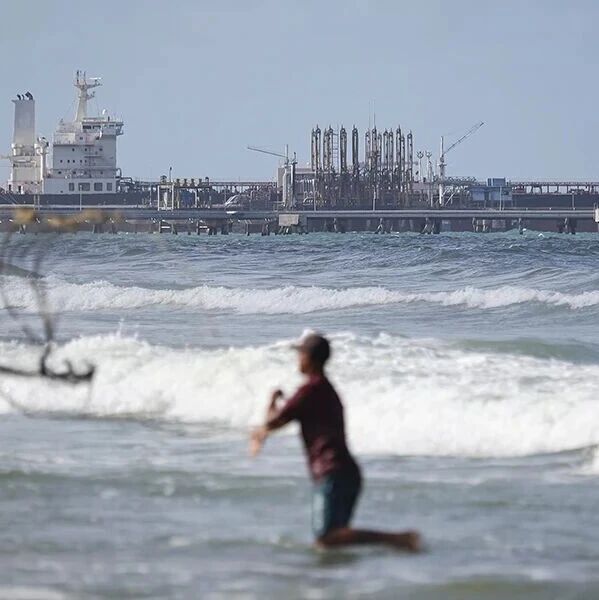
图说|美欲将委石油变“提款机” ,行业巨头为何顾虑重重
Sou Hu Cai Jing· 2026-01-07 08:51
Core Viewpoint - The U.S. President Trump announced that the interim government of Venezuela will transfer 30 to 50 million barrels of oil to the U.S. for sale at market prices, with funds being monitored to benefit both Venezuelan and American people [1][3]. Group 1: Political and Economic Context - The transfer of oil is seen as a politically symbolic action to pave the way for U.S. intervention in Venezuela's oil resources [3]. - Trump has expressed intentions for U.S. oil companies to invest in Venezuela to rebuild oil infrastructure and generate revenue for the U.S. [3]. - However, U.S. oil giants are cautious due to high political risks, outdated infrastructure, and low international oil prices [3][22]. Group 2: Venezuela's Oil Industry Status - Venezuela holds the world's largest proven oil reserves at approximately 303 billion barrels, accounting for 17% of the global total [6]. - The country's oil production has drastically declined to about 900,000 barrels per day, only 1% of global oil production, due to sanctions and underinvestment [9][30]. - The oil industry has faced severe challenges, including infrastructure decay, corruption, and theft, leading to a fragmented state of operations [30][32]. Group 3: Investment Challenges - U.S. oil companies exhibit low investment willingness in Venezuela, primarily due to uncertainties regarding the local government's future [24][27]. - Major oil companies like Chevron and ConocoPhillips have refrained from commenting on potential increases in production capacity [24]. - Analysts suggest that significant investment, potentially in the hundreds of billions, and a stable political environment are prerequisites for U.S. companies to return to Venezuela [30][34].
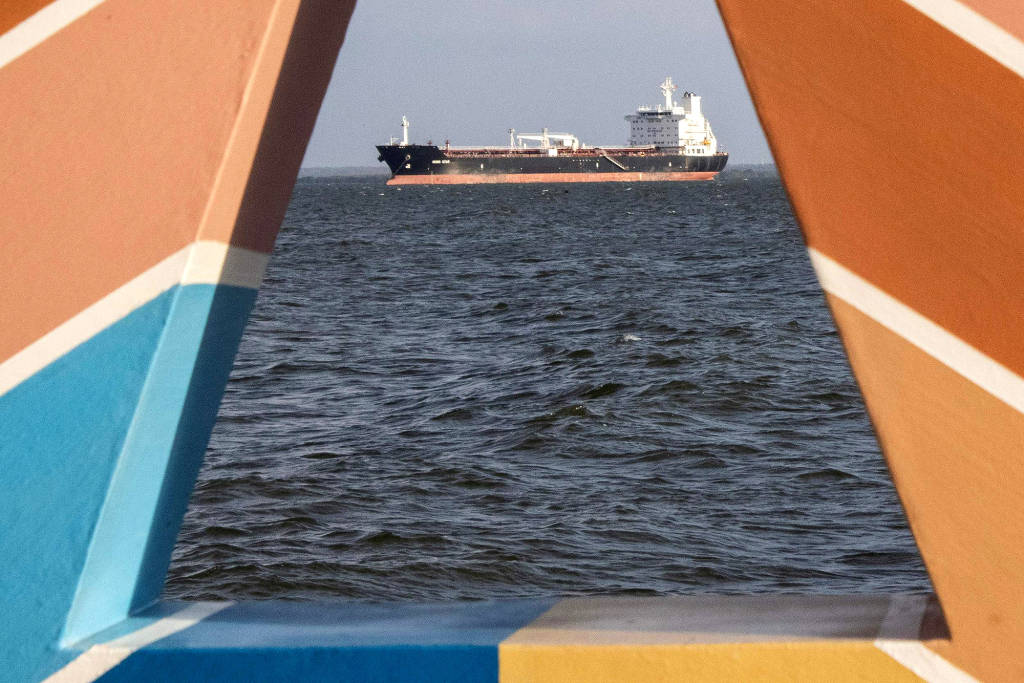
委内瑞拉石油业能成美国“提款机”?机构:耗时耗钱
Di Yi Cai Jing· 2026-01-06 10:46
Group 1 - The Venezuelan oil industry faces significant challenges and is unlikely to generate immediate returns despite U.S. interest in increasing oil production [1][3] - U.S. President Trump plans to convene oil executives to discuss investments in Venezuela's oil resources, which are seen as a potential source of revenue for the U.S. [1][3] - Venezuela's oil exports are currently paralyzed, and the state-owned oil company PDVSA is considering production cuts due to export blockages and storage capacity issues [3][5] Group 2 - Venezuela holds approximately 17% of the world's proven oil reserves, primarily consisting of heavy crude oil, which has higher production costs compared to light crude [3][4] - The country nationalized its oil industry in the 1970s, leading to a peak production of 3.5 million barrels per day, but has since struggled with production due to lack of investment and technology [3][4] - Chevron has managed to maintain operations in Venezuela through joint ventures, while competitors like ExxonMobil and ConocoPhillips have withdrawn and sought compensation for losses [4] Group 3 - The Venezuelan oil sector is in dire need of investment and skilled personnel, with many professionals having left the country due to economic decline [5][6] - An estimated $110 billion is required to restore Venezuela's oil production to levels seen 15 years ago, which is double the total global investment planned by U.S. oil companies for 2024 [6] - Analysts express skepticism about the potential for U.S. oil companies to profit from Venezuelan oil, citing historical precedents where military interventions did not yield significant benefits [6]


