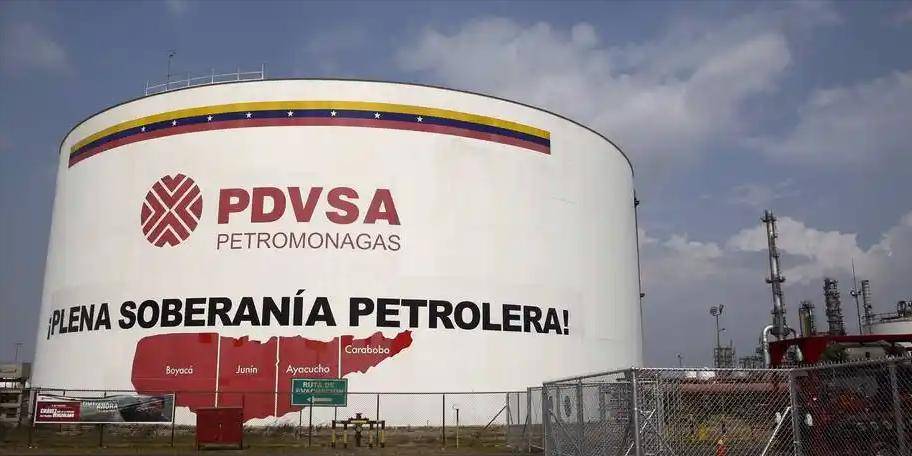
重质原油

Search documents
委内瑞拉新油法重塑格局外资准入全面升级行业迎来大变革
Sou Hu Cai Jing· 2026-02-12 18:23
Core Viewpoint - Venezuela's new oil law, signed by acting president Delcy Rodríguez, represents a radical shift in the country's oil policy, allowing foreign companies to directly participate in oil extraction and sales, and even gain operational control of oil fields [1][3]. Group 1: Changes in Oil Policy - The new law significantly opens up the Venezuelan oil sector, allowing foreign companies to hold majority stakes and reducing administrative intervention [3]. - The government has lowered the royalty fee from 33% to 15%, making it a highly attractive incentive for foreign investment [3]. - An international arbitration mechanism has been introduced to address disputes, ensuring that conflicts will not be settled domestically but through international channels [3]. Group 2: Historical Context - Two decades ago, under Hugo Chávez, Venezuela nationalized its oil assets and expelled foreign companies, asserting control over its resources [5]. - The current shift marks a return to a more open approach, indicating a significant reversal in policy within a relatively short time frame [5]. Group 3: Current Industry Challenges - Venezuela's oil industry is in a dire state, with aging infrastructure, frequent accidents, and a significant loss of technical talent, as over 100,000 oil experts have left the country in the past decade [7]. - Despite having the world's largest oil reserves of 300 billion barrels, the actual production is less than one-third of its peak levels [7]. Group 4: External Pressures and Opportunities - The country's financial situation has deteriorated, with nearly depleted fiscal revenues and foreign exchange reserves, prompting the need for foreign assistance [9]. - U.S. oil companies are eager to capitalize on this opportunity, as many refineries are designed to process Venezuela's heavy crude oil [9]. Group 5: Geopolitical Implications - The U.S. aims to gain pricing power over Venezuelan oil, attempting to set terms for Chinese purchases, but faces resistance from China, which insists on resource sovereignty [11]. - The diversification of global energy supply sources means that while Venezuelan oil is significant, it is not irreplaceable [11]. Group 6: Future Outlook - The new oil law could potentially impact global oil prices if foreign investment leads to increased production, possibly adding one to two million barrels per day [11]. - However, the high extraction costs of Venezuela's heavy oil and potential political instability could deter foreign investment if international oil prices remain low [11]. - The situation serves as a cautionary tale about the "resource curse," highlighting the need for Venezuela to transform oil revenues into sustainable development rather than relying solely on oil extraction [13].

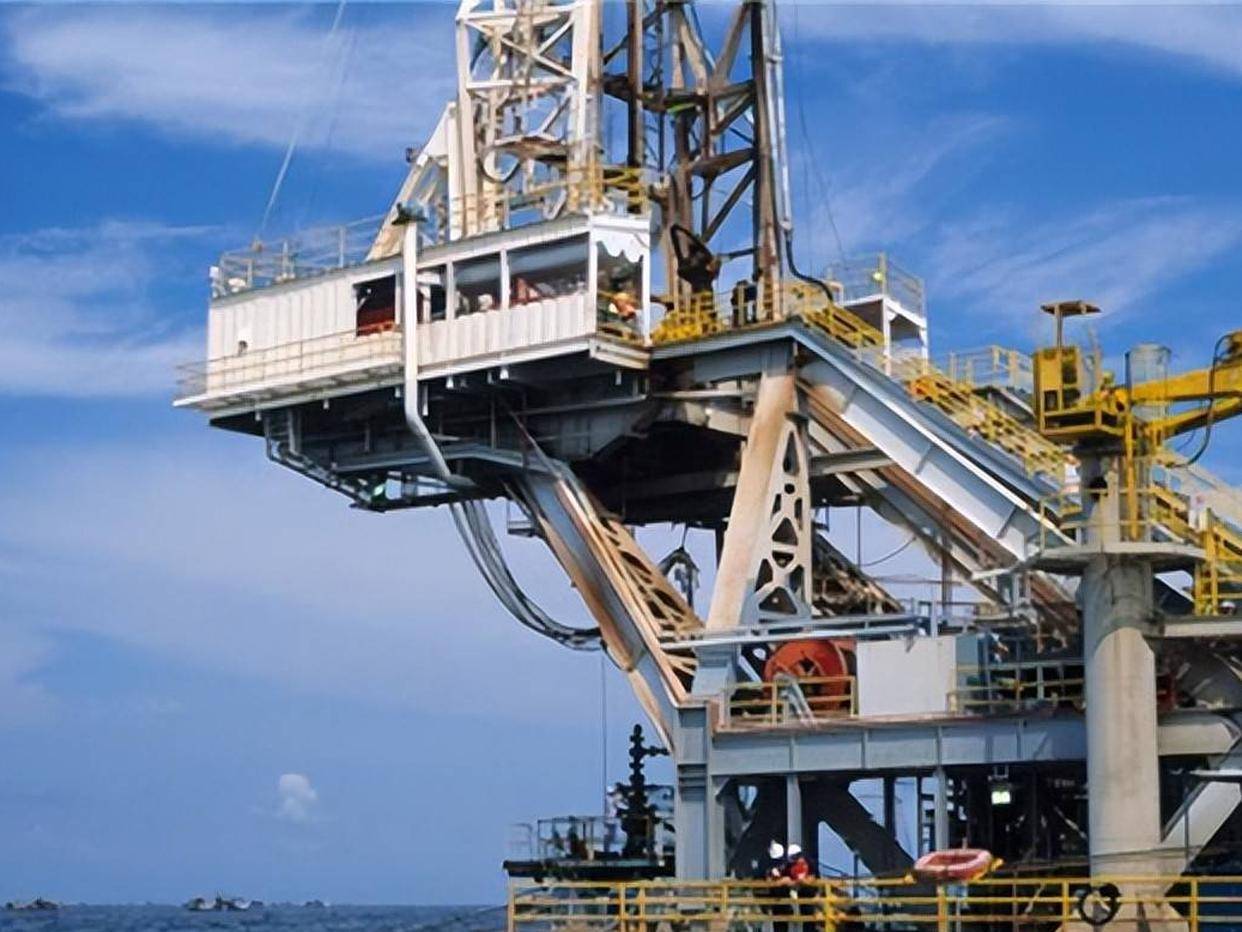
委内瑞拉新油法重塑格局 外资准入全面升级 行业迎来大变革
Sou Hu Cai Jing· 2026-02-11 04:47
Core Viewpoint - Venezuela's new oil law, signed by acting president Delcy Rodríguez, marks a significant shift in the country's approach to foreign investment in its oil sector, allowing foreign companies to take control of oil fields and significantly reducing government fees [1][4][11]. Group 1: Changes in Oil Policy - The new law allows foreign companies to hold majority stakes in oil projects, a departure from the previous requirement that the state-owned oil company must hold at least 51% [4][6]. - The government has reduced the royalty fee from 33% to 15%, making it more attractive for foreign investment [4][6]. - The introduction of international arbitration aims to provide foreign investors with more security and confidence in their investments [4][6]. Group 2: Historical Context - Historically, Venezuela's oil industry was characterized by nationalization and a strong stance against foreign involvement, especially during the Chávez era when foreign companies were expelled [6][9]. - The current situation represents a dramatic reversal, as the country now seeks foreign assistance to revitalize its oil production, which has drastically declined [6][9]. Group 3: Economic Conditions - Venezuela's oil industry is in a dire state, with outdated infrastructure and a significant loss of skilled labor, leading to production levels that are less than one-third of their peak [9][11]. - The country faces severe economic challenges, including dwindling foreign reserves and skyrocketing inflation, making it imperative to revitalize its oil sector [11][16]. Group 4: Global Implications - The opening of Venezuela's oil sector could lead to fluctuations in global oil prices, especially if foreign investment successfully increases production by one to two million barrels per day [13][15]. - The U.S. and China are both vying for influence in Venezuela's oil market, with the U.S. looking to establish pricing norms while China emphasizes resource sovereignty [13][15]. Group 5: Future Considerations - The long-term success of Venezuela's new oil policy will depend on its ability to transform oil revenues into technological advancements and a diversified economy, rather than merely replacing one group of operators with another [19].
全球重质原油市场将出现结构性调整
Qi Huo Ri Bao Wang· 2026-01-29 03:13
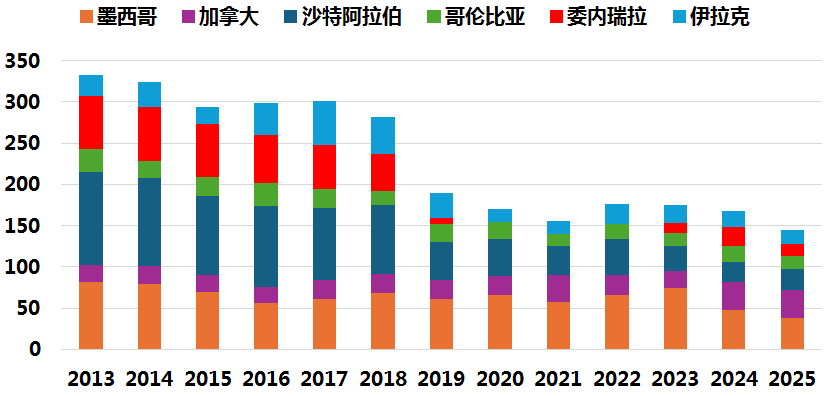
Group 1 - The situation in Venezuela has changed significantly following a large-scale military action by the U.S., which has taken control of President Maduro and his wife, aiming to manage Venezuela and promote investment from U.S. oil companies [1] - Venezuela, a major producer of heavy crude oil, is expected to have its oil production released, which will negatively impact global oil prices amid an oversupply in the market [1][12] - The U.S. has completed its first sale of Venezuelan oil worth $500 million and plans to expand sales, indicating a restructuring of the global heavy crude oil market [1] Group 2 - The U.S. imports heavy crude oil primarily from Canada and Mexico, with projections for 2025 showing imports of 380,000 barrels per day from Mexico, 330,000 barrels per day from Canada, and 140,000 barrels per day from Venezuela [3] - Following the U.S. military action, Venezuela is expected to transfer between 30 million to 50 million barrels of oil to the U.S., which will increase the availability of Venezuelan heavy crude in the U.S. market [3] - The PADD3 region in the U.S. has complex refining capabilities that can process large amounts of Venezuelan heavy crude, leading to a decrease in refining costs [3][5] Group 3 - The situation in Venezuela will have structural impacts on China's heavy crude oil imports, as Venezuela is the second-largest supplier to China [5] - If Venezuelan oil begins to be sold globally, China will face competition for supplies from countries like the U.S. and India, potentially leading to a shift in import sources [5] - The expansion of Canada's TMX pipeline is expected to increase heavy crude oil exports to Asia, providing an alternative supply source for China [7][8] Group 4 - Canada is looking to diversify its crude oil exports, which could reduce geopolitical risks in the global oil supply chain, especially with the uncertainty surrounding Venezuelan oil exports [7] - By increasing imports from Canada, China can reduce its reliance on traditional suppliers in the Middle East, optimizing its energy import structure [7] - In 2025, Canada is projected to export 360,000 barrels per day of crude oil to China, accounting for 60% of its total exports [8] Group 5 - Venezuela's oil production is expected to rise to over 1 million barrels per day by the end of 2026 and nearly 2 million barrels per day by 2028, but significant investment will be required to reach higher production levels [9] - The U.S. government's indefinite control over Venezuelan oil sales could lead to a substantial increase in Venezuela's market share in the global oil supply [12]
“以油换油” 美国借委内瑞拉重油巧补美油储备
Ge Long Hui A P P· 2026-01-17 00:36
Core Viewpoint - The U.S. Department of Energy is exploring a plan to exchange medium-sulfur crude oil from the U.S. for heavy crude oil from Venezuela to replenish the Strategic Petroleum Reserve [1] Group 1: Exchange Mechanism - The Trump administration aims to transport Venezuelan crude oil to storage tanks at the offshore oil port in Louisiana, from where it will be sent to refineries [1] - Companies involved in the exchange will provide U.S. medium-sulfur crude oil that can be directly stored in the Strategic Reserve [1] - Historically, the government has utilized such exchange mechanisms to release and acquire oil during emergencies [1] Group 2: Context of Exchange - Oil refiners typically borrow from the Strategic Reserve during short-term supply disruptions, such as hurricanes, and are required to return the borrowed oil along with an additional quantity as a premium [1]
特朗普刚绑走马杜罗,白宫分赃会当场炸锅,石油巨头竟集体哑火
Sou Hu Cai Jing· 2026-01-15 19:00
Group 1 - The Trump administration's attempt to attract investment in Venezuela's oil resources faced rejection from 17 top energy companies, highlighting the conflict between capital logic and geopolitical ambitions [1][3] - Capital is driven by financial metrics rather than political promises, leading to a cautious stance from investors regarding Venezuela's oil sector due to high risks and uncertain returns [3][5] - Venezuela's oil industry is in a state of collapse, with production dropping from 3.5 million barrels per day to less than 1 million, requiring an estimated $530 billion to maintain and $580 billion to restore its former glory [5][10] Group 2 - Historical memories of asset seizures during Chavez's nationalization policies create a significant barrier for foreign investment, as companies like ConocoPhillips and ExxonMobil still face unresolved losses [7][10] - The geopolitical landscape has shifted, with countries like China, India, and Russia having their own interests in Venezuela, making it less likely that U.S. companies will dominate any potential investment opportunities [9][12] - The Trump administration's approach undermines the fundamental principles of capital operation, such as clear property rights and stable legal environments, deterring rational investors [10][12] Group 3 - The complexity of rebuilding Venezuela's oil industry involves numerous factors beyond political changes, including workforce training, supply chain restructuring, and community relations, which are not addressed by military intervention [15][19] - The silence from oil companies during the White House meeting signals a collective rejection of the notion that political control equates to resource control, emphasizing the need for collaboration and trust in capital investment [12][18] - The erosion of U.S. credibility in the eyes of global south countries may lead to a reluctance to engage in future investment opportunities, as past actions have demonstrated a lack of commitment to business promises [16][21]
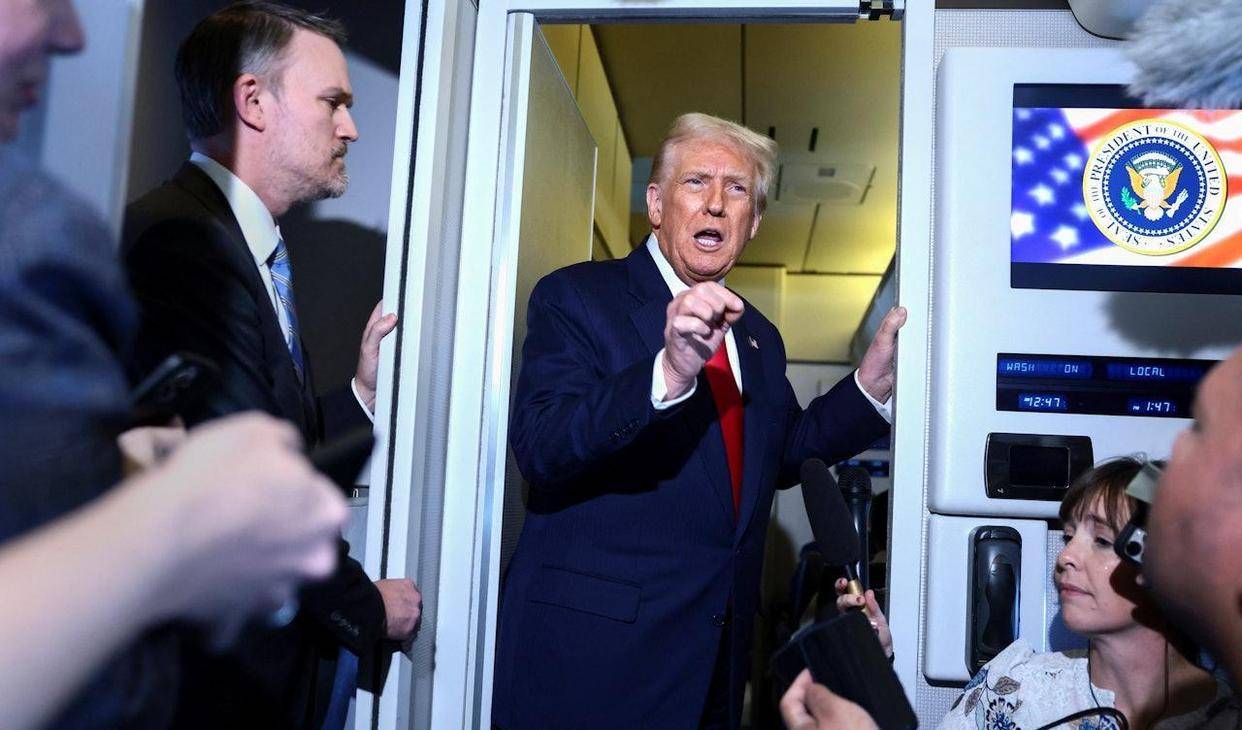
明抢5000万桶石油后,特朗普发现卖不出去,这垃圾油只有中国会买
Sou Hu Cai Jing· 2026-01-15 04:43
Core Viewpoint - The article discusses the challenges faced by the Trump administration in attempting to seize and control Venezuelan oil, highlighting the difficulties in selling the low-quality heavy crude oil and the legal and logistical issues involved in this aggressive strategy [1][3][4]. Group 1: Seizure and Control of Venezuelan Oil - Trump initially planned to sell 50 million barrels of Venezuelan oil to China but faced the issue of no oil companies willing to invest in Venezuela's oil market [1] - The U.S. military and Coast Guard have seized five vessels carrying Venezuelan oil and sought court orders to further target dozens of oil tankers linked to Venezuela [1][3] - An emergency declaration was made, asserting that Venezuelan oil revenues in U.S. Treasury accounts are sovereign assets protected from seizure, allowing the U.S. government to control these funds [3] Group 2: Quality and Processing Challenges - Venezuelan oil is classified as "heavy crude," which poses significant challenges in extraction and processing due to its high density, viscosity, and impurity content [4] - The processing of heavy crude oil requires expensive equipment and high energy consumption, making it less attractive for most countries compared to lighter crude oil [4][5] - Only countries with advanced refining technology, like the U.S. and China, can economically process heavy crude oil, while most smaller nations lack the necessary facilities [4] Group 3: Market and Legal Implications - The U.S. faces a dilemma as the seized Venezuelan oil cannot find buyers due to its low quality and the complexities involved in its processing and transportation [5] - China, previously a major buyer of Venezuelan oil, is now unable to engage in transactions due to U.S. sanctions, complicating the sale of the seized oil [5] - The international community questions the legality and morality of the U.S. actions regarding Venezuelan oil, indicating a significant shift in the perception of Trump's oil strategy [5]
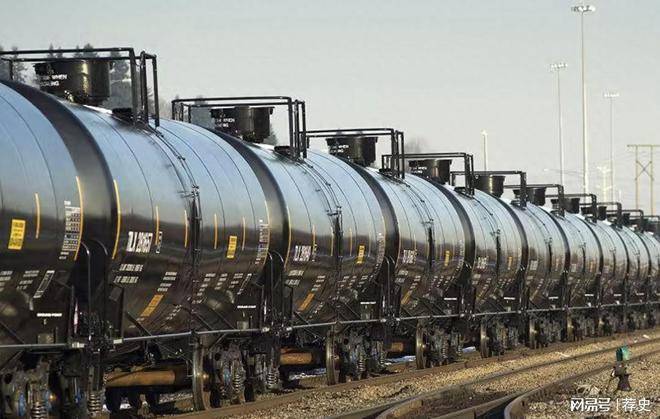
委内瑞拉对华石油出口被堵截,特朗普的死对头成最大赢家?
Sou Hu Cai Jing· 2026-01-12 17:09
Core Viewpoint - The U.S. oil blockade against Venezuela has unexpectedly triggered a chain reaction in global energy trade, leading Chinese refineries to turn to Canadian heavy oil, marking a significant shift in North American energy dynamics and positioning Canada as a new player in the Asian market [1] Group 1: Impact of U.S. Actions - The U.S. implemented a maritime blockade against Venezuela, cutting off approximately 500,000 barrels per day of Venezuelan heavy crude oil supply to Chinese refineries [3] - This heavy crude oil, characterized by high viscosity and sulfur content, is particularly suitable for producing asphalt and occupies a unique position in the production formulas of independent Chinese refineries [3] Group 2: Response from Chinese Refineries - Chinese independent refineries, referred to as "teapot" refineries, quickly activated emergency measures, assessing Canadian heavy oil as a substitute [5] - Alberta's oil sands crude is highly similar to Venezuelan Merey crude in viscosity and sulfur content, allowing for immediate use in existing production lines without major equipment modifications [5] Group 3: Logistics and Supply Chain Adjustments - The current buffer period is crucial, with approximately 22 million barrels of Venezuelan crude floating in Asian waters, sufficient to meet Chinese refinery needs for about 75 days [7] - The volume of crude oil shipped from Vancouver to China surged to 7.3 million barrels in March 2025, with expectations for continued increases in April [7] Group 4: Canadian Energy Strategy - Canada is pursuing a trade diversification strategy, aiming to double exports to non-U.S. markets within ten years, with China as a key target [10] - By June 2024, China is expected to become the largest buyer of crude oil from the Trans Mountain pipeline, with an average daily import of 207,000 barrels, surpassing shipments to the U.S. [10] Group 5: Geopolitical Context - The geopolitical landscape is accelerating the shift in energy flows, with U.S. Energy Secretary Chris Wright announcing indefinite control over Venezuelan oil sales [9] - The Canadian Prime Minister's visit to China marks the first by a Canadian leader in eight years, with energy cooperation as a core agenda item [9] Group 6: Market Dynamics and Future Outlook - Despite higher prices for Canadian crude, the reduced shipping time enhances cash flow and flexibility in tanker scheduling, partially offsetting the price disadvantage [13] - The logistics infrastructure in Vancouver has been upgraded, increasing the monthly unloading capacity significantly, reflecting the growing importance of the trade route to China [18]
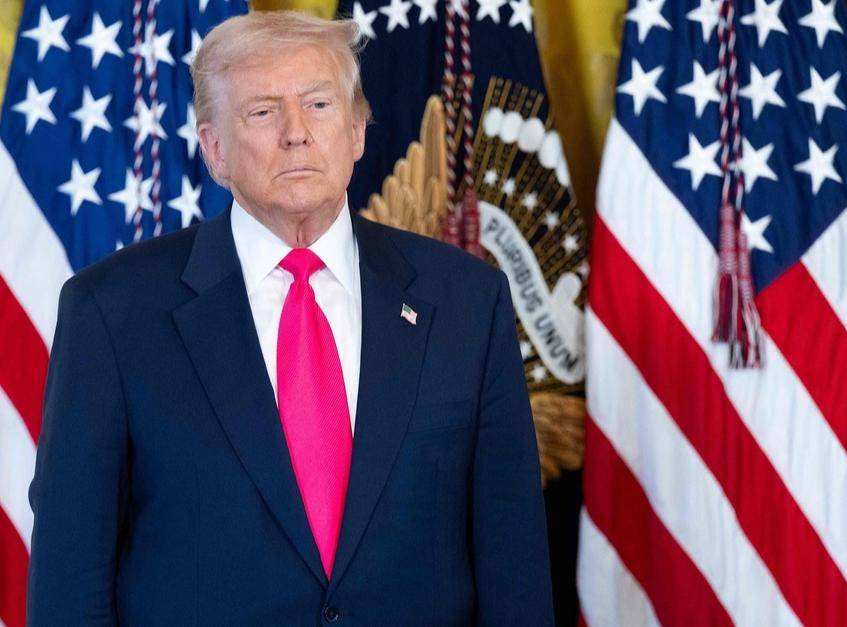
炼厂买不到委内瑞拉原油,开始纷纷转向加拿大,白宫这下彻底尴尬了!
Sou Hu Cai Jing· 2026-01-12 06:43
Core Insights - Independent small refineries have been relying on heavy crude oil from a South American country, which, despite its high sulfur content and processing difficulties, offers significant discounts during volatile international oil price fluctuations, making it attractive for low-margin businesses [1] Group 1: Supply Chain Challenges - Refineries are unable to halt production and must seek alternative sources globally, but there are limited countries capable of supplying heavy crude oil in stable quantities [3] - Mexico's production is declining, Iraq's oil is lighter, and another major energy country has logistical constraints despite having heavy oil [3] Group 2: Market Dynamics - The situation changed dramatically with U.S. military intervention in the South American country, leading to a near halt in heavy oil trade, as U.S. authorities intensified efforts by seizing at least three oil tankers, making it difficult for buyers to continue [4] - This disruption has forced buyers to abandon their reliance on the South American crude [4] Group 3: Opportunities for Canada - For Canada, this presents a significant opportunity as over 90% of its oil sands crude has historically been exported to a single northern country, which has led to price suppression [6] - New buyers have emerged, and the transactions are reportedly being settled in local currency, which has caused frustration among U.S. officials who prefer dollar-denominated transactions [6]
大摩-因果与外汇-委内瑞拉-石油与货币
2026-01-12 01:41
Summary of Conference Call Notes Industry Overview - The notes primarily discuss the oil industry in Venezuela and its implications for the broader Latin American market and currency dynamics, particularly focusing on the relationship between the U.S. and various Latin American countries [1][2][3]. Key Points and Arguments - **U.S. Relations with Latin America**: The U.S. adopts a differentiated strategy towards Latin American countries, maintaining close ties with Brazil and Uruguay while having a more strained relationship with Mexico and Colombia, which may lead to tougher trade negotiations [1][2]. - **Venezuela's Oil Industry Recovery**: The U.S. plans to restructure Venezuela's oil sector, with short-term expectations of a quick recovery in oil production. In an optimistic scenario, production could rise to 2 million barrels per day, contingent on government stability, sanctions, and fiscal terms [1][4]. - **Impact on Global Oil Market**: The production of heavy crude oil in Venezuela is expected to significantly influence the global oil market. Canada, as a major exporter of heavy sour crude, may face challenges if the U.S. adopts a tougher stance in USMCA negotiations due to increased oil imports from Venezuela [1][5]. - **Canadian Dollar Vulnerability**: The Canadian dollar may depreciate due to concerns over increased Venezuelan oil production and its impact on the price differential between Western Canadian Select (WCS) and West Texas Intermediate (WTI) crude [1][5]. - **Emerging Market Currency Outlook**: The situation in Venezuela could lead to a weaker U.S. dollar, benefiting non-U.S. currencies such as the euro and Asian currencies. Emerging market currencies are generally expected to appreciate due to low inflation driven by supply-side factors and improved risk appetite [3][6]. Other Important Insights - **Geopolitical Risks**: The U.S. government's focus on Latin America is likely to increase geopolitical risk premiums, although the direct impact on markets may be limited. Countries like Argentina and Ecuador may benefit from favorable trade agreements and financial support, while Mexico and Colombia may face tougher negotiations [2]. - **Long-term Investment Opportunities**: Despite potential short-term declines due to the Venezuelan situation, the overall outlook for emerging market assets remains positive, with investors encouraged to seek related investment opportunities [3][6].
开采成本高,冶炼难度大!为什么美国要抢委内瑞拉的“垃圾油”?
Sou Hu Cai Jing· 2026-01-11 09:45
Core Viewpoint - The pursuit of Venezuelan oil by the U.S. is fraught with challenges, as the oil is difficult to extract and the infrastructure is in disrepair, making the idea of easily acquiring this resource unrealistic [1][14][19]. Group 1: Challenges of Venezuelan Oil Extraction - Venezuela holds the world's largest oil reserves, accounting for 17% of global reserves, but the oil is heavy and difficult to extract, often referred to as "garbage oil" due to its high sulfur content and viscosity [3][5]. - Extracting this oil requires advanced technology and significant investment, estimated at over $100 billion, with a recovery timeline of more than ten years [7][14]. - The country's oil infrastructure is severely degraded, with many oil wells abandoned and in need of extensive repairs, complicating any potential extraction efforts [5][7]. Group 2: U.S. Dependency on Heavy Oil - The U.S. has a rich supply of light crude oil, primarily from shale, but lacks sufficient heavy oil, which is essential for its refineries that have been adapted to process such oil [12][14]. - Historically, the U.S. has relied on imports of Venezuelan heavy oil to meet refinery demands, making the acquisition of Venezuelan oil strategically important [12][14]. Group 3: Operational and Logistical Issues - The operational challenges include reliance on Chinese-manufactured equipment for oil extraction, which complicates maintenance and operational control if the U.S. were to take over [9][10]. - The Venezuelan power grid is in disarray, leading to insufficient electricity for oil extraction and refining processes, further hindering any potential recovery of oil production [7][10]. Group 4: Economic and Strategic Implications - The notion of quickly "taking over" Venezuelan oil fields is likened to a "pitfall game," where the complexities and costs involved are underestimated [16][22]. - The U.S. faces a significant investment and time commitment to achieve any meaningful control over Venezuelan oil, with the reality presenting a stark contrast to the initial allure of the resource [14][17].