石油贸易政策

Search documents
美国颁发许可证,允许部分俄罗斯石油销售
财联社· 2026-03-13 00:37
Core Viewpoint - The article discusses the new general license issued by the U.S. Treasury, allowing the sale of Russian crude oil and petroleum products loaded onto vessels starting from March 12, with a deadline for sales set for April 11 at 12:01 AM Eastern Time [1] Group 1 - The U.S. has issued a new general license regarding the sale of Russian oil [1] - The license permits the sale of Russian crude oil and petroleum products that are already loaded on ships [1] - The effective date for this license is March 12, with a sales deadline of April 11 [1]


美国颁发许可证,允许俄罗斯向印度出售部分石油
凤凰网财经· 2026-03-06 13:15
Core Viewpoint - The U.S. government has issued a general license allowing certain Russian oil to be sold to India, providing India with more fuel procurement options amid rising tensions in the Gulf and supply disruptions in major oil-producing regions [1][2]. Group 1: License Details - The license permits transactions involving Russian crude oil and petroleum products that were loaded onto ships before March 5, provided they are purchased and transported by Indian companies to India [2]. - This measure is a temporary exemption lasting 30 days, aimed at ensuring oil continues to flow into global markets without providing significant financial benefits to the Russian government, as it only authorizes transactions involving oil already at sea [3]. Group 2: Context and Implications - The issuance of this license comes just months after the U.S. imposed tariffs on Indian goods, indicating a shift in strategy to pressure the Indian government regarding its energy purchases from Russia [3]. - As of last weekend, approximately 9.5 million barrels of Russian oil were reported to be stranded in Asian waters, highlighting the ongoing logistical challenges in the oil supply chain [4].

美国发布30天豁免令
中国能源报· 2026-03-06 11:36
Core Viewpoint - The article discusses the temporary exemption granted by the U.S. government allowing India to purchase Russian oil that is currently stranded at sea, aimed at alleviating global oil market pressures [3]. Group 1 - The U.S. has issued a 30-day temporary exemption permit for the sale of stranded Russian crude oil to India [3]. - This general license only authorizes transactions involving Russian crude oil that is already at sea [3]. - U.S. President Trump communicated with Indian Prime Minister Modi on February 2, where Modi agreed to halt purchases of Russian oil, and the U.S. would reduce tariffs on Indian goods from 25% to 18% [3]. Group 2 - The Indian Ministry of External Affairs reiterated that India's oil purchasing strategy is always guided by national interests, despite the discussions with the U.S. [3].
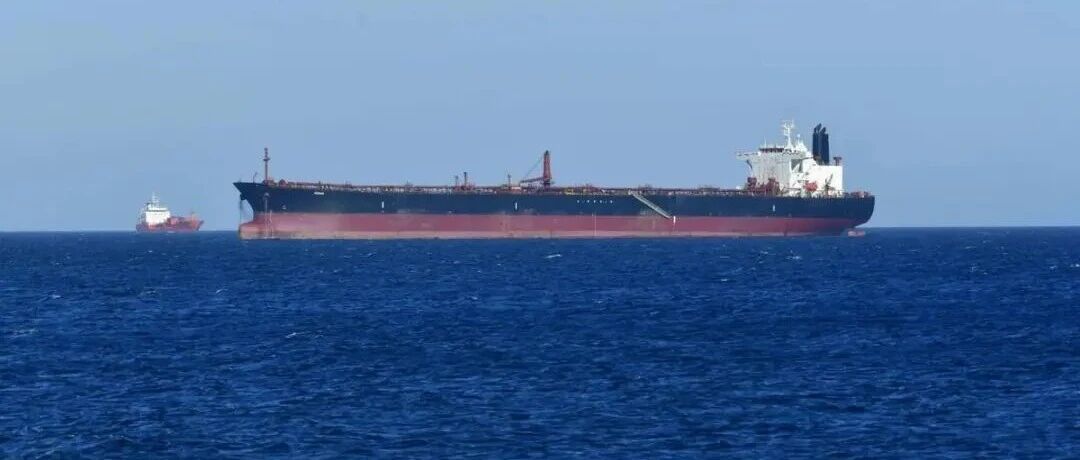
伊通社编译版:印度要求美国允许其进口伊朗石油
Shang Wu Bu Wang Zhan· 2025-10-01 15:07
Core Viewpoint - The Indian government is requesting the United States to allow imports of Iranian and Venezuelan oil if the U.S. demands a reduction in Indian imports of Russian oil [1] Group 1 - Indian representatives argue that simultaneous disruptions in oil supplies from Russia, Iran, and Venezuela could lead to a rise in global oil prices [1]
Frontline(FRO) - 2025 Q2 - Earnings Call Transcript
2025-08-29 14:00
Financial Data and Key Metrics Changes - Frontline reported a profit of $0.35 per share and an adjusted profit of NOK 80.4 million or $0.36 per share in Q2 2025, with adjusted profit increasing by $40 million compared to the previous quarter due to higher TCE earnings [5][6] - TCE earnings rose from SEK 241 million in the previous quarter to SEK 283 million in Q2 2025, driven by increased TCE rates [5][6] - The company has strong liquidity with $844 million in cash and cash equivalents, and no meaningful debt maturities until 2030 [6] Business Line Data and Key Metrics Changes - The TCE numbers for the fleet in 2025 are as follows: $43,100 per day for VLCCs, $38,900 for Suezmax, and $29,300 for LR2Aframax, showing an increase from Q1 but falling short of expectations [3][4] - 82% of VLCC days are booked at $38,700 per day, 76% of Suezmax days at $37,200, and 73% of LR2Aframax days at $36,600 [3] Market Data and Key Metrics Changes - The compliant tanker fleet is experiencing improved utilization as compliant oil exports grow, with significant increases in global crude production and exports expected [11][12] - The EIA projects a year-on-year growth of 3 million barrels per day in global oil supply by Q4, translating to an increase of approximately 2 million barrels per day in exports [13][14] - The market is seeing a shift in oil flows, with U.S. exports to Asia increasing, which could impact long-haul VLCC trade dynamics [28][29] Company Strategy and Development Direction - The company is focusing on the compliant fleet's utilization and the impact of trade policies on crude sourcing, indicating a potential "compliant bull market" [24][25] - There is a limited order book for new vessels, with expectations that the tanker market will remain tight due to an aging fleet and limited newbuilding activity [22][23] Management's Comments on Operating Environment and Future Outlook - Management noted that the tanker market is currently in a challenging environment due to global conflicts and trade policies, but there are signs of improvement in oil demand and compliant fleet utilization [2][11] - The company anticipates a stable demand growth for compliant oil, supported by improving refinery margins and a seasonal strong summer market [24][25] Other Important Information - The average cash breakeven rates for the next twelve months are estimated at approximately $28,700 per day for VLCCs and $22,900 for Suezmax and LR2 tankers [7][8] - The fleet consists of 41 VLCCs, 21 Suezmax tankers, and 18 LR2 tankers, all of which are eco vessels [6][7] Q&A Session Summary Question: Follow-up on U.S. and VLCC exports to Asia - Management acknowledged the potential for increased U.S. exports to Asia and discussed the impact of OPEC's incremental volume on long-haul VLCC trade dynamics as winter approaches [28][29][30] Question: Recent gains in VLCC spot rates - Management attributed the recent gains in VLCC spot rates to a shift in oil supply dynamics, with compliant sources replacing Russian and Iranian oil, and expressed optimism about breaking through the $50,000 per day ceiling [32][33][34]