石油资源开发

Search documents
石油巨头忙推诿,特朗普气呼呼:你们不干有的是人干!
Xin Lang Cai Jing· 2026-01-10 09:09
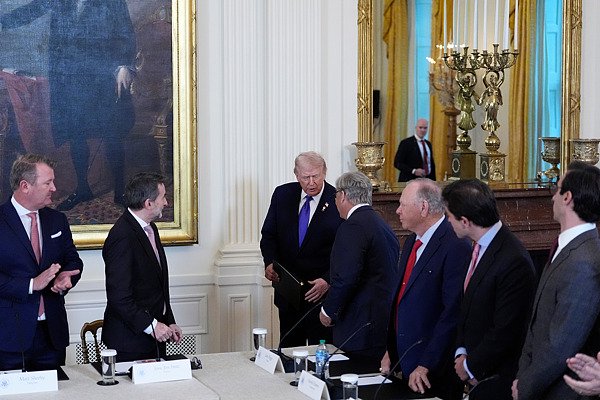
Core Viewpoint - The article discusses the aggressive push by the Trump administration to exploit Venezuela's oil resources following the seizure of the Maduro couple, highlighting a meeting where Trump pressured U.S. oil executives to invest in Venezuela's oil sector despite their cautious stance [1][3]. Group 1: U.S. Oil Companies' Response - Major U.S. oil companies, including Chevron, ExxonMobil, and ConocoPhillips, attended the meeting but showed little interest in making large-scale investments in Venezuela, citing the need for significant changes in the country's business framework and legal system before considering re-entry [7][8]. - ExxonMobil's CEO emphasized that the company would only consider sending an exploration team if security guarantees were provided, reflecting the overall cautious attitude of the oil giants towards investing in Venezuela [8]. - Chevron, the only U.S. company currently operating in Venezuela, reiterated its commitment to employee safety and compliance with legal regulations, indicating a careful approach to any potential expansion [8]. Group 2: Investment and Economic Implications - Trump announced that U.S. companies could invest at least $100 billion in Venezuelan oil production, claiming that this would allow the U.S. to control over half of the world's oil resources [4][5]. - Analysts estimate that $54 billion would be needed over the next 15 years to stabilize Venezuela's oil production at 1.1 million barrels per day, with additional investments required to increase output further [3]. - The article notes that historically, no major oil-producing country has achieved rapid production growth following a regime change, suggesting significant challenges ahead for U.S. companies looking to invest in Venezuela [3]. Group 3: Political and Legal Context - The Venezuelan government has not confirmed whether it will allow U.S. companies to enter the market, with officials accusing Trump of attempting to steal national resources [1][3]. - The U.S. Energy Secretary mentioned that the U.S. Export-Import Bank could provide credit support for companies investing in Venezuela, indicating potential government backing for these ventures [9]. - There are ongoing arbitration claims from ExxonMobil and ConocoPhillips against Venezuela for past asset seizures, with amounts owed estimated at $10 billion to $12 billion for ConocoPhillips and $2 billion for ExxonMobil, complicating the investment landscape [9][10].


【comex白银库存】1月6日COMEX白银库存较上一日减少9.66吨
Jin Tou Wang· 2026-01-07 08:41
Group 1 - COMEX silver inventory recorded at 13,972.04 tons on January 6, a decrease of 9.66 tons from the previous day [1][2] - COMEX silver price closed at $81.17 per ounce on January 6, up 6.67%, with an intraday high of $81.48 and a low of $75.70 [1] Group 2 - The latest COMEX silver inventory data shows a reduction from 13,981.70 tons on January 5, which was a decrease of 7.83 tons [2]
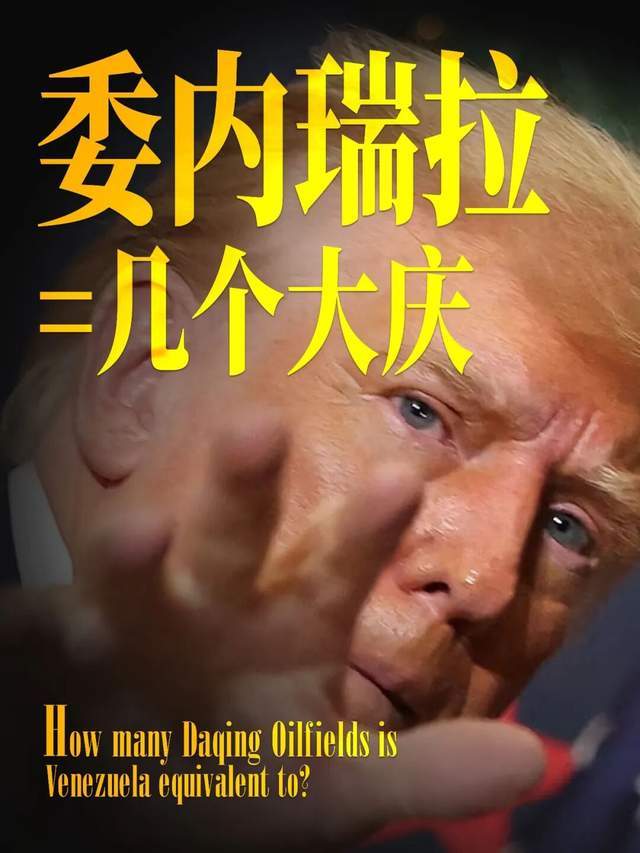
委内瑞拉=几个大庆?答案是三位数
虎嗅APP· 2026-01-05 13:28
Core Viewpoint - The article highlights that Venezuela possesses the largest proven oil reserves in the world, surpassing countries like Saudi Arabia, Iran, and Russia, yet it remains economically impoverished due to various factors [3][8]. Oil Reserves and Production - Venezuela's proven oil reserves are equivalent to two times that of Iraq, four times that of Russia, four times that of the United States, and eleven times that of China [8]. - The oil reserves in Venezuela can be compared to 101 times the recoverable reserves of China's Daqing oil field, which has approximately 3 billion barrels [9]. - The country has experienced a significant decline in oil production, particularly from the Maracaibo Lake region, which once produced over 3 million barrels per day but has now dropped to one-fifth of that amount [21][22]. Economic Context - Venezuela's GDP per capita has remained stagnant between $3,000 and $4,000 over the past five years, which is notably lower than several cities in China [11]. - The heavy oil produced in Venezuela is characterized by high sulfur content and impurities, making it less desirable compared to lighter crude oils from the U.S. and the Middle East [13][14]. Development Challenges - The extraction of Venezuela's heavy oil is costly, with production costs ranging from $60 to $70 per barrel, compared to $30 to $40 for Russia and under $20 for Saudi Arabia [18]. - The country faces a paradox where it must import lighter crude oil to dilute its heavy oil for export, complicating its economic situation [17]. Political Implications - Following the removal of President Maduro, the interim president Rodriguez has expressed a willingness to collaborate with the U.S. government to develop a cooperative agenda, indicating potential changes in the management of Venezuela's oil resources [22].
委内瑞拉=几个大庆?答案是三位数 | 地球知识局
Sou Hu Cai Jing· 2026-01-05 12:43
Core Viewpoint - Venezuela holds the largest proven oil reserves in the world, surpassing countries like Saudi Arabia, Iran, and Russia, yet it remains economically impoverished due to the quality of its oil and historical mismanagement [1][3][10]. Group 1: Oil Reserves and Economic Context - Venezuela's oil reserves are equivalent to two Iraqs, four Russias, four Americas, and eleven Chinas [5]. - The country has a per capita GDP fluctuating between $3,000 and $4,000 over the past five years, which is significantly lower than many regions in China [9]. - Despite having the world's largest oil reserves, Venezuela's living standards are comparable to lower-tier cities in China [10]. Group 2: Oil Quality and Production Challenges - The majority of Venezuela's oil is heavy and extra-heavy crude, which is considered low-quality due to high sulfur content and viscosity, making it difficult to transport without dilution [11][13]. - The extraction cost for Venezuelan heavy oil ranges from $60 to $70 per barrel, significantly higher than Russia's $30 to $40 and Saudi Arabia's less than $20 [17]. - To export its heavy oil, Venezuela must import lighter crude for blending, creating a paradox where it relies on foreign oil to sell its own [17]. Group 3: Historical Context and Future Prospects - The nationalization of the oil industry in 1976 led to a decline in production due to aging equipment, lack of investment, and loss of technology [21]. - The peak production from the Maracaibo Lake oil field was over 3 million barrels per day, which has now plummeted to one-fifth of that amount [23]. - Following the removal of Maduro, the interim president has expressed willingness to collaborate with the U.S. government, indicating potential for foreign investment in the oil sector [23].
甘肃庆阳发现大量油田,被世界瞩目,能否成为第二个迪拜
Sou Hu Cai Jing· 2025-12-16 22:52
Core Viewpoint - The discovery of significant oil reserves in Gansu, particularly in Qingyang, raises speculation about the potential for Qingyang to become a second Dubai, although various factors suggest this is unlikely [1][14][17]. Group 1: Oil Reserves and Discovery - Qingyang is home to the Changqing Oilfield, which has been recognized as one of China's important energy bases, covering five provinces [8][12]. - The Changqing Oilfield was discovered in the early years of the People's Republic of China, with its potential only recognized in the 1970s due to technological advancements [10][12]. - By 2019, the oil and gas reserves of the Changqing Oilfield reached 858.8 million tons of oil and 107 trillion cubic meters of natural gas, making it the largest oilfield in China [12]. Group 2: Economic Potential and Challenges - Despite the rich reserves, Qingyang's ability to replicate Dubai's wealth accumulation is hindered by the complex distribution of oil resources across multiple provinces, leading to disputes over profit sharing [14][17]. - National development policies have also limited the rapid extraction of resources, with annual production remaining significantly lower than that of Daqing Oilfield, indicating a cautious approach to resource management [16]. - The larger population of Gansu province compared to smaller oil-rich nations like Dubai means that even if Qingyang benefits from oil development, the wealth would not be concentrated enough to create a similar economic model [17]. Group 3: Future Outlook - There remains potential for Qingyang to become an economic hub in the inland region if national policies change to provide more support for development and resource extraction [18].