矿产安全伙伴关系

Search documents
34国没签协议,美盟友倒戈中国,特朗普防稀土卡脖子,第一步走错
Sou Hu Cai Jing· 2026-02-11 07:43
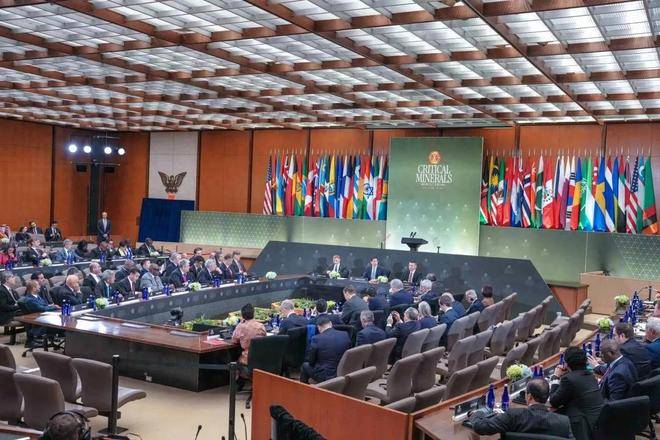
Group 1 - The U.S. Department of State announced the signing of critical mineral agreements or memorandums of understanding with 11 countries during the first ministerial meeting on critical minerals in Washington, bringing the total to 21 countries that have reached cooperation intentions with the U.S. in this area [1] - The U.S. aims to reduce its dependence on China for mineral supplies, particularly in rare earths and lithium, through a strategic reserve plan worth $12 billion [3] - The meeting revealed that less than half of the 55 participating countries signed agreements, indicating that many are aware of China's dominance in the critical minerals market, which accounts for 70% to 90% of global processing capacity [5] Group 2 - Countries that did not sign agreements are cautious about the potential economic consequences of breaking away from existing mineral cooperation systems, which could lead to significant economic losses and even systemic crises for resource-dependent nations [7][8] - Notably, U.S. allies South Korea and Canada chose to strengthen cooperation with China instead of signing agreements with the U.S., indicating a rift in relationships and challenges for U.S. strategies in the critical minerals sector [9]

巴西梦想成为稀土大国,吸引脱中投资
36氪· 2025-06-20 13:06
Core Viewpoint - Brazil is positioning itself to become a major player in the rare earth market, leveraging its significant reserves and the global demand for these resources, particularly in light of China's export controls [3][11][17]. Group 1: Rare Earth Reserves and Production - Brazil has the world's second-largest rare earth reserves, estimated at approximately 21 million tons, which is significantly higher than India's 6.9 million tons and over ten times that of the United States [8][9]. - Despite its vast reserves, Brazil's current production accounts for only 0.02% of the global total, with China producing around 70% [4][9]. Group 2: Government Initiatives and Investments - Brazilian President Lula has expressed a strong commitment to developing the country's mineral resources, indicating that only about 30% of Brazil's land has been explored for minerals [5][6]. - The Brazilian government plans to advance rare earth development investigations and streamline licensing processes by 2025 [6][11]. - The Brazilian Development Bank (BNDES) announced a loan of 5 billion reais (approximately 640 million yuan) for investment projects related to rare earths, lithium, and copper, with a significant number of proposals focused on rare earth investments [13]. Group 3: International Collaboration and Market Dynamics - The geopolitical landscape, particularly the tensions between the U.S. and China, has heightened global interest in Brazil's rare earth resources, as countries seek stable supply chains [11][17]. - Brazil is attracting foreign investments, with several international companies, including those from the U.S. and the Middle East, planning significant investments in Brazilian mineral exploration [14][15]. - Japan has signed a memorandum with Brazil to establish a supply chain for critical minerals, highlighting the importance of Brazilian resources for Japanese companies [15]. Group 4: Challenges and Future Outlook - Despite the potential, Brazil's ability to replace China in rare earth production remains uncertain, as the refining technology is predominantly held by China [17]. - Brazil's diplomatic strategy, which includes partnerships with countries like Russia and China, raises concerns among Western nations about Brazil's alignment in the global mineral market [17].