硬件+服务

Search documents
谁想库克退休?
3 6 Ke· 2026-02-08 23:44
Core Viewpoint - The ongoing speculation about Tim Cook's retirement has intensified, with discussions about Apple's future leadership and the potential impact on the company post-Cook era [1][15]. Group 1: Tim Cook's Leadership and Legacy - Tim Cook, at 65 years old, has been CEO of Apple for nearly 15 years, during which the company's market value has surged from approximately $300 billion to over $4 trillion, marking a growth of about 1254% [11][12]. - Under Cook's leadership, Apple has transformed from a hardware-centric company to a hardware and services ecosystem, with services like App Store and Apple Music becoming core growth drivers [13]. - Cook's management style is characterized by stability and efficiency, contrasting with Steve Jobs' more flamboyant approach, which has led to concerns about innovation under his tenure [3][21]. Group 2: Market Position and Competitors - Apple's operational cash flow reached $54 billion in Q1 2026, an 80% increase year-over-year, with earnings per share growing by 19%, indicating strong financial health [9]. - Competitors such as Samsung and Huawei view Cook's leadership as a formidable barrier, as his mastery of supply chain management has made Apple a difficult target in the high-end smartphone market [5][6]. - The company's gross margin remained robust at 48% in Q4 2025, up from 46.9% the previous year, showcasing its strong profitability amidst rising storage prices [9]. Group 3: Succession Planning - Apple's succession plan appears to be evolving towards a dual-leadership model, with hardware and software heads expected to jointly lead the company in the future [21][22]. - John Ternus, a key figure in Apple's hardware engineering, is considered a strong candidate for succession due to his alignment with Cook's management style and deep understanding of Apple's operations [21][22]. - The company's internal promotion strategy aims to minimize cultural disruption and ensure a smooth transition, reflecting Cook's commitment to maintaining stability post-retirement [22][23]. Group 4: Broader Implications of Cook's Retirement - Cook's potential retirement raises concerns about the stability he has provided in a complex global trade environment, particularly regarding Apple's extensive supply chain [16][17]. - The fear of uncertainty following Cook's departure stems from his ability to navigate geopolitical challenges and maintain Apple's market position, especially in China, where sales grew by 38% year-over-year in Q1 2026 [16][18]. - The narrative surrounding Cook emphasizes that while innovation is crucial, the stability and efficiency he has brought to Apple may be equally significant in sustaining the company's success [20][24].

智能穿戴设备引领消费升级 打造消费新范式
Zheng Quan Ri Bao Wang· 2026-01-23 12:57
Group 1 - The core viewpoint of the articles highlights that by 2025, China's total retail sales of consumer goods are expected to exceed 50 trillion yuan, with significant growth in smart wearable devices, including smart glasses, watches, and bands, projected to surpass 40% [1] - The shift in consumer preferences towards practical functionality, stylish design, and high cost-performance ratio in smart wearable devices is evident, as consumers prioritize features like real-time meeting transcription and multilingual translation [1] - The emergence of a new consumption paradigm characterized by "hardware + services" is noted, indicating a transition from traditional one-time purchases to a long-term consumption cycle that enhances the sustainability of domestic demand [2] Group 2 - Experts believe that smart wearable devices may become the next "national-level" consumer product, potentially succeeding smartphones and electric vehicles, with expectations for supportive policies to enhance product affordability and accelerate widespread adoption [3] - The rapid growth of the smart wearable sector is driving advancements in upstream component manufacturing, pushing the electronics industry towards self-reliance in core technologies, which is strategically significant for stabilizing high-end manufacturing in China [2]
康力源:从器械制造商到场景生态服务商的二次创业路
Shang Hai Zheng Quan Bao· 2026-01-09 18:34
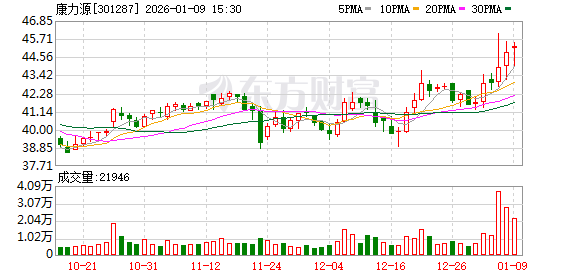
Core Viewpoint - The company, Kangliyuan, is transforming from a traditional manufacturing enterprise into a technology service-oriented company, focusing on innovation and high-quality development in the sports industry, aligning with national policies to promote sports consumption and development [2][7]. Group 1: Company Transformation and Vision - Kangliyuan aims to evolve its equipment into immersive experiences and its factory into an ecosystem, reflecting a commitment to a "second entrepreneurship" in response to the national "14th Five-Year Plan" [2]. - The company is dedicated to continuous innovation, with R&D expenses accounting for 3.3% of total revenue in the first three quarters of 2025, despite market pressures [3]. Group 2: Product Innovation and Market Strategy - The introduction of smart fitness equipment, such as an intelligent treadmill that acts as a "personal fitness coach," showcases the company's focus on integrating technology with fitness solutions [3]. - Kangliyuan is developing safety features for its smart strength training equipment to address safety concerns associated with traditional weight machines, enhancing user experience and product safety [3]. Group 3: Intellectual Property and Global Expansion - The company holds 242 national patents, including 9 invention patents, and is working towards national-level certification for its testing center, emphasizing its commitment to innovation and quality [4]. - A new manufacturing facility in Malaysia is set to begin operations by the end of the year, aimed at serving Southeast Asia and Australia, thereby enhancing supply chain resilience and market reach [4]. Group 4: Business Model Evolution - Kangliyuan is shifting from selling equipment to providing comprehensive solutions, creating a "scene-data-R&D" cycle that opens new growth opportunities [5]. - The "Smart Fitness Management System" allows companies to track employee fitness data, enhancing the value proposition of fitness solutions beyond mere equipment sales [5]. Group 5: Corporate Governance and Brand Development - Post-IPO, Kangliyuan emphasizes strict governance and transparency, with a focus on long-term development rather than short-term stock price fluctuations [6]. - The company is enhancing its brand presence through strategic marketing initiatives, aiming to strengthen its brand recognition among consumers [6]. Group 6: Industry Outlook - The government aims for the sports industry to exceed 7 trillion yuan by 2030, positioning Kangliyuan to become a globally recognized sports technology enterprise [7].

Garmin推出Connect+战略转型或将撼动市场格局
Canalys· 2025-05-12 06:51
Core Insights - Garmin has launched Connect+, a subscription-based service aimed at enhancing its wearable device ecosystem, priced at $6.99 per month, with a free trial for existing users, marking a strategic shift from hardware-centric sales to exploring new revenue streams [1] - The introduction of Connect+ aligns Garmin with industry trends where companies seek closer connections with users and high-profit growth opportunities, similar to strategies adopted by tech giants like Apple and Xiaomi [1] - The success of Connect+ hinges on effective communication with Garmin's loyal user base regarding the differentiation between optional services and core experiences tied to hardware [2] Subscription Service Opportunities and Challenges - As the device market saturates and hardware profits decline, manufacturers are increasingly looking to software layers for sustainable growth, with subscription services becoming a core business model for some [2] - Garmin faces challenges in clearly communicating its future vision to users, particularly in defining the boundaries between free and paid features, which could lead to user dissatisfaction if expectations are not managed [2][3] - The balance between thoughtful product strategy and transparent communication is crucial for Garmin's transition to a "hardware + service" model [2] Key Communication Points for Service Launch - The differentiation of paid features must be clear and provide tangible value beyond free services; ambiguity could hinder user adoption of the subscription model [3] - Users prioritize functionality clarity over novelty, and if the new features do not enhance the user experience, it may lead to concerns about the potential locking of core functionalities behind a paywall [3] - Past experiences with other platforms have shown that locking essential features can damage brand trust and user loyalty, which Garmin must avoid [3] Community Engagement and User Sentiment - Garmin's competitive edge lies in its established user community, and introducing paywalls could disrupt engagement and diminish the brand's unique advantages [4] - Historical examples, such as Fitbit's community feature removal leading to user backlash, highlight the risks of alienating users during monetization efforts [4] - Finding a balance between revenue growth and community vitality is essential for the success of Garmin's service products [4] Market Positioning and Competitive Landscape - With the launch of Connect+, Garmin enters a competitive subscription service market dominated by platforms like Strava, necessitating a clear value proposition as a comprehensive sports service provider [5] - The competitive landscape includes brands like Apple, Samsung, and Xiaomi, which are vying for attention in the fitness and outdoor segments, making brand loyalty less of a given [5] - Garmin must enhance its brand differentiation and clearly communicate the unique value of its subscription services within its overall product offering to maintain market position [5] Future Considerations - Trust and confidence from users are built over time, and maintaining transparency about future features and community functionalities is vital for Garmin [7] - The adoption rate of Connect+ and its cross-selling performance will be closely monitored by investors and analysts as indicators of early success [7] - The subscription model presents significant potential for the industry, but companies must balance core strengths with consistent brand messaging and user value creation to achieve long-term growth [7]