
消费预期

Search documents
《求是》杂志特约评论员:积极推动物价合理回升
Xin Lang Cai Jing· 2026-02-02 02:01
Core Viewpoint - The article emphasizes the importance of maintaining a reasonable price level for economic stability and social harmony, highlighting the need for proactive macroeconomic policies to promote a gradual recovery of prices to a reasonable range [2][9]. Group 1: Understanding Price Dynamics - The public often perceives low prices as beneficial, equating them with increased purchasing power and reduced production costs, but this view overlooks the negative impacts of prolonged low prices on consumption and economic expectations [3][4]. - A cycle of low prices leading to weak consumer expectations and reduced spending can create a detrimental feedback loop, affecting corporate profits and household incomes [4][5]. - Low prices can also suppress long-term investment intentions, as declining sales prices may narrow profit margins and increase debt pressures on companies [4][6]. Group 2: Factors Influencing Low Prices - The current low price environment is influenced by both cyclical factors, such as post-pandemic income stagnation and global commodity price fluctuations, and structural factors, including demographic changes and shifts in supply and demand dynamics [6][16]. - The real estate market's adjustment and the maturation of emerging industries have contributed to a mismatch between supply and demand, further suppressing price increases [6][16]. - Institutional factors, such as inadequate market mechanisms for resource allocation and rigid pricing in essential services, hinder the ability of prices to reflect true supply and demand [6][16]. Group 3: International Context - There is a notable price disparity between China and other economies, with many developed countries experiencing high inflation while China maintains low price levels [7][17]. - The contrasting macroeconomic policies adopted by China and Western economies, particularly in response to the pandemic, have led to different inflationary outcomes, with China opting for a more restrained monetary policy [7][17]. Group 4: Recent Economic Indicators - Recent data indicates that the core consumer price index, excluding food and energy, has shown a year-on-year increase of over 1%, suggesting that the current low price situation may be temporary [8][18]. - The broad money supply has also maintained a growth rate of over 8%, indicating a stable economic environment that supports price recovery [8][18]. Group 5: Policy Recommendations - A systematic approach is necessary to promote a reasonable price recovery, relying on market-oriented strategies rather than direct administrative interventions [9][19]. - Policies should focus on stabilizing employment and income, enhancing market competition, and reforming pricing mechanisms to facilitate a gradual return to reasonable price levels [9][20]. - The government should implement proactive fiscal and monetary policies, including targeted spending and liquidity measures, to support economic stability and price recovery [10][20].


全球棉花供需与价格推演
2026-01-26 02:49
Summary of Cotton Market Conference Call Industry Overview - The global cotton supply and demand for the 2025-2026 season is expected to be balanced, with supply around 26 million tons and demand approximately 25.89 million tons, resulting in a stock-to-use ratio of 62.6%, consistent with the averages of the past three to five years [1][2] - China's cotton market in 2026 is projected to be in a tight balance, with production estimated at 7.5 million tons, imports at 1 million tons, and total demand around 8.6 million tons, indicating a slightly tight market [1][2] - The U.S. cotton market is expected to have a relatively loose supply-demand balance due to a lack of demand from China, with exports to China accounting for only 5% of total exports in 2026 [2] Key Points on Cotton Prices - Future cotton prices will be influenced by several factors, including planting area reductions in the U.S., Brazil, China, and Australia, particularly in the U.S. due to low cotton prices and high planting costs [1][3] - The recent increase in cotton prices since November 2023 is driven by low valuations, rapid sales progress, expectations of reduced production in Xinjiang, and strong consumer performance [4][5] - The monthly consumption in China from September to December 2023 has been stable at around 750,000 tons, which, if maintained, would result in an annual consumption of 9 million tons, the best performance since the pandemic recovery [1][5] Factors Affecting Future Price Trends - Key factors to monitor for future cotton price trends include: 1. Changes in planting area policies in Xinjiang, with expectations of a 10% reduction [8] 2. Sustained monthly consumption levels around 750,000 tons [8] 3. National policies regarding stockpiling and quotas [8] 4. The price gap between domestic and international markets affecting import flows [8] U.S. Cotton Market Insights - U.S. cotton prices are currently at a near 10-year low, with the main contract at 64 cents, reflecting a long-term balance in supply and demand [9] - Recent weeks have seen a significant improvement in U.S. cotton export volumes, with exports reaching 84,000 tons in the week ending January 8, 2024, and 90,000 tons in the week ending January 15, 2024, marking the highest levels for this period in a decade [13] Brazilian Cotton Production - Brazil is expected to reduce cotton production in 2026 due to unfavorable price ratios with other crops, leading some farmers to switch to corn or leave land fallow [12] - The increase in planting costs, primarily driven by fertilizer prices, is not expected to significantly impact planting area due to prior purchases [16] Price Projections - If major cotton-producing countries like the U.S., Brazil, Australia, and China reduce their production, and global consumption remains stable or slightly increases, the market could shift from a surplus of 110,000 tons in 2026 to a deficit of 400,000 tons in the following year, potentially driving prices up from 67 cents to 77 cents [18] - Increased purchases of U.S. cotton by China could further elevate prices, potentially reaching 85 cents or higher if trade relations improve [19]
消费者的预期是决定性的
Sou Hu Cai Jing· 2026-01-09 05:36
Group 1 - The core argument emphasizes that without expectations, measures like subsidies to stimulate consumption will not achieve the multiplier effect described by Li Daokui [1] - The discussion has shifted from how to stimulate consumption to focusing on expectations [2] - High mortgage debt is a significant issue for Chinese households, with leverage rates rising from 18% in 2008 to 60%-70% in many cities, primarily due to real estate [3] Group 2 - The real benefit for residents lies in reducing debt levels, with suggestions for implementing zero interest rates to decrease rigid expenditures [4] - The key to boosting consumption is tied to income expectations; without job and income prospects, subsidies become unnecessary [7] - There is a clear policy direction to increase residents' income and improve the social security system, with hopes for more substantial increases in low-income groups' income by 2026 [7]

中国家庭财富与消费报告
Sou Hu Cai Jing· 2025-11-30 16:08
Group 1: Income and Asset Allocation - The average annual income per household in China reached 55,500 yuan in Q3 2025, with wage income accounting for 62.1% of total income, indicating its core role in household finances [1][10][27]. - Middle-aged groups in first-tier cities exhibit strong income growth, with their average annual income being 2.05 times that of their counterparts in non-first-tier cities, reflecting the advantages of urban employment quality and salary levels [1][10][29]. - The proportion of families without mortgage loans reached 56.1%, indicating reduced financial pressure from housing assets, while the overall household debt ratio shows a "U-shaped" distribution, with 49.2% of families being debt-free [1][11][46]. Group 2: Consumption Expenditure and Consumer Groups - The average monthly consumption expenditure per household reached 3,004 yuan, with first-tier city households spending an average of 4,442 yuan, significantly higher than other city tiers [2][11][12]. - Young consumers are active in entertainment and dining, focusing on quality and personalized experiences, while middle-aged consumers prioritize education and healthcare due to family responsibilities [2][12]. - Households with housing assets show higher consumption capabilities across all age groups, particularly in first-tier cities, where homeownership correlates with increased spending in various categories [12][13]. Group 3: Consumer Expectations and Influencing Factors - Consumer expectations improved in Q3, with about 69% of households planning to maintain their consumption levels, and 11% intending to increase spending [3][14]. - Employment stability is a key factor influencing consumer confidence, with those unemployed for over three months planning to cut back on discretionary spending [3][14]. - Households with annual incomes below 50,000 yuan show a higher tendency to reduce flexible spending, highlighting the impact of income levels on consumption plans [3][15]. Group 4: Recommendations and Policy Suggestions - To enhance consumer confidence, policies should focus on supporting employment and income for youth and low-income groups, guiding rational financial asset allocation, and improving housing security [16][17]. - Introducing inclusive financial products and optimizing housing finance structures can alleviate the pressure of housing costs on other consumption categories [16][17]. - Establishing a consumption support system tailored to different life stages can stimulate demand across all age groups, particularly for youth and middle-aged consumers [17].

新能源及有色金属日报:乐观消费预期及情绪仍在,碳酸锂再次增仓上涨-20251120
Hua Tai Qi Huo· 2025-11-20 03:03
Report Summary 1. Report Industry Investment Rating No relevant content provided. 2. Core View The lithium carbonate futures market showed an increase in positions and prices, driven by inventory reduction and optimistic consumption expectations. However, with the potential resumption of mining production, attention should be paid to the inflection points of consumption and inventory. If consumption weakens and mining resumes, inventory may shift from reduction to accumulation. Currently, the market is highly volatile, and the downstream's acceptance of spot prices is limited, so the risk of further chasing high prices is relatively large [1][2][4]. 3. Summary by Related Catalogs Market Analysis - On November 19, 2025, the main contract 2601 of lithium carbonate opened at 93,800 yuan/ton and closed at 99,300 yuan/ton, with a 4.97% change in the closing price compared to the previous settlement price. The trading volume was 1,767,428 lots, and the open interest was 503,132 lots, an increase from the previous trading day's 484,357 lots. The current basis was -10,880 yuan/ton, and the number of lithium carbonate warehouse receipts was 26,766 lots, a change of 155 lots from the previous trading day [1]. - According to SMM data, the price of battery - grade lithium carbonate was 85,400 - 92,400 yuan/ton, a change of 1,500 yuan/ton from the previous trading day, and the price of industrial - grade lithium carbonate was 84,600 - 88,400 yuan/ton, a change of 1,450 yuan/ton. The price of 6% lithium concentrate was 1,200 US dollars/ton, a change of 60 US dollars/ton from the previous day. The lithium carbonate futures price reached 100,000 yuan/ton, with positive bullish sentiment on the disk [2]. - On November 19, Liontown held a lithium spodumene concentrate auction. The auction item was 10,000 wet tons of 5.2% lithium spodumene, and the final transaction price was CIF SC6 1,254 US dollars/dry ton, with the goods expected to be shipped in the first half of January 2026 [3]. - As of the end of October 2025, the total number of electric vehicle charging infrastructure (guns) in China reached 18.645 million, a year - on - year increase of 54.0%. Among them, the number of public charging facilities (guns) was 4.533 million, a year - on - year increase of 39.5%, with a total rated power of 20.3 billion kilowatts and an average power of about 44.69 kilowatts; the number of private charging facilities (guns) was 14.112 million, a year - on - year increase of 59.4%, and the reported power consumption capacity of private charging facilities reached 124 million kVA [3]. Supply and Demand Analysis - On the supply side, the overall operating rate of lithium salt plants remained high, with the operating rates of the lithium spodumene and salt lake ends both above 60%. It is expected that the domestic lithium carbonate production in November can maintain the same level as in October, with a roughly flat month - on - month change [2]. - On the demand side, both the commercial and passenger new energy vehicles in the power market grew rapidly, and the energy storage market had strong supply and demand, with supply remaining tight. The production schedules of battery cells and cathode materials continued to improve in November, and it is expected that lithium carbonate will continue to show inventory reduction in November [2]. Strategy - Unilateral: Adopt a short - term wait - and - see approach, pay attention to the inflection points of inventory and consumption and the resumption of mining production, and choose the opportunity to sell hedging at high prices [4]. - Options: Sell out - of - the - money call options [4].
宏观积极情绪主导下 沪铝延续上行通道偏强运行
Jin Tou Wang· 2025-11-03 06:49
Core Viewpoint - The domestic futures market for non-ferrous metals shows a mixed performance, with aluminum futures experiencing a slight upward trend, influenced by macroeconomic factors and supply-demand dynamics [1] Macroeconomic Factors - The Federal Reserve lowered interest rates by 25 basis points in October, but Chairman Powell's hawkish remarks led to a significant decrease in the market's expectations for a rate cut in December [1] - The recent meeting between Chinese and U.S. leaders has positively impacted market sentiment regarding economic cooperation [1] Supply Dynamics - As winter approaches, northern regions are entering a production restriction phase, which is expected to affect the production of electrolytic aluminum, although the actual decline in output will take time to manifest [1] Demand Dynamics - Improved macroeconomic sentiment is boosting consumption expectations, particularly in sectors such as new energy vehicles and photovoltaics, which is driving demand for aluminum products [1] Market Outlook - The positive macro sentiment is expected to dominate the aluminum market, although the fundamental support remains limited. Domestic inventory levels are average, and the spot market response is muted [1] - Short-term forecasts suggest that aluminum futures will continue to operate within a strong upward channel, with resistance levels looking towards the high point of November 2024 [1]
铅:花旗大量提铅、河北环保督察点评
Guo Tou Qi Huo· 2025-10-24 10:15
Report Summary 1) Report Industry Investment Rating No relevant content provided. 2) Core Viewpoints of the Report - The LME lead inventory has decreased from a high level, but the overall inventory is still high. With the news of Citigroup's plan to extract a large amount of lead from Singapore warehouses, the market sentiment has shifted from the weak reality of LME lead oversupply to the strong expectation of inventory reduction. The lead ingot spot import window has opened, and overseas lead ingots can be smoothly transferred to China, alleviating the overseas inventory accumulation pressure, leading to a rebound in LME lead [2]. - After the National Day in China, the downstream consumption of lead has been good. The production reduction of primary and secondary lead smelters has led to a shortage of market supply, and the low lead price has stimulated downstream purchasing. The battery enterprises' inventory has decreased, and their production has recovered after the holiday, with good orders and a slight increase in battery prices. The domestic lead ingot inventory accumulation is less than expected. The cost - side support of lead has strengthened, and the actual resumption of secondary lead production is slower than expected, not exerting much downward pressure on Shanghai lead. The news of environmental inspections in Hebei has further stimulated the entry of long - position funds, breaking the previous stalemate and causing Shanghai lead to break through the previous consolidation range [3]. - In the future, the shift of capital sentiment should be closely monitored. Against the backdrop of the US disrupting the global supply chain and the government shutdown, funds are flowing into precious metals and non - ferrous metals. The news of Citigroup's extraction of lead from Singapore warehouses has opened up upward space for LME lead. The external market may drive the domestic market to rise. Technically, Shanghai lead is expected to break through the previous high of 17,800 yuan/ton. However, due to factors such as the competitiveness of lithium batteries, pre - consumption caused by "trade - in" in China, and the impact of tariffs on battery exports, as well as the expected increase in secondary lead production after the lead price rises, the high - price range of Shanghai lead in the fourth quarter is expected to be 18,300 - 18,500 yuan/ton [4]. 3) Summary by Related Contents News - Citigroup plans to extract a large amount of lead from LME - approved Singapore warehouses as it seeks other rent - sharing transactions [2]. - Hebei will control incoming vehicles, and vehicles of China V emission standard and below are not allowed to enter factories. The transportation of waste materials and lead ingots in local secondary lead enterprises and lead - acid battery enterprises is affected, and the transportation cycle is extended [2]. Market Situation Analysis - As of October 23, 2025, the LME lead inventory has decreased to 239,750 tons, with a high proportion of cancelled warrants (68.1%). The opening of the lead ingot import window has alleviated the overseas inventory pressure [2]. - After the National Day in China, the downstream consumption of lead is good. The reduction in primary and secondary lead production has led to a shortage of supply, and the low lead price has stimulated purchasing. Battery enterprises' production has recovered, and the inventory accumulation of lead ingots is less than expected [3]. - In the primary lead sector, some enterprises have复产 and减产, and the pre - winter storage of some smelters has intensified the shortage of lead concentrates, leading to a decrease in lead concentrate TC and stronger cost - side support [3]. - In the secondary lead sector, the actual resumption of production is slower than expected, and the price difference between refined and scrap lead fluctuates in the range of 50 - 75 yuan/ton, not exerting much downward pressure on Shanghai lead [3]. Future Price Forecast - The shift of capital sentiment is crucial. Funds are flowing into precious metals and non - ferrous metals. The news of Citigroup's lead extraction has opened up upward space for LME lead, and the external market may drive the domestic market to rise [4]. - Technically, Shanghai lead is expected to break through the previous high of 17,800 yuan/ton. However, due to various factors, the high - price range of Shanghai lead in the fourth quarter is expected to be 18,300 - 18,500 yuan/ton [4].
当前中国消费者消费意愿呈现温和回暖态势
Zhong Guo Jing Ji Wang· 2025-10-21 14:45
Core Insights - The consumer willingness index in China for Q3 2025 is reported at 120.6, indicating a mild recovery in consumer sentiment, surpassing the critical threshold of 100, with a slight increase of 0.4 points from the previous quarter [1] Group 1: Consumer Sentiment - The report indicates that "stable expectations" and "strengthened guarantees" are key factors in boosting consumer confidence [1] - The survey covers a wide range of areas from first-tier cities to rural regions, with an effective sample size of 5,000, aimed at tracking changes in consumer confidence, behavior, and willingness [1] Group 2: Recommendations for Improving Consumption - Stronger policy measures are recommended to stabilize consumer expectations [2] - Deepening social security system reforms is suggested, focusing on enhancing healthcare effectiveness and alleviating the pension burden on low- to middle-income groups [2] - Creating an "anti-involution" institutional ecosystem to shift competition from price wars to value creation is advised [2] - Emphasizing the silver economy to transform aging challenges into new consumption opportunities [2] - Promoting deep integration of the cultural and tourism industries, moving from mere sightseeing to immersive experiences [2] - Reconstructing a healthy development ecosystem for the catering industry to balance the interests of platforms, enterprises, and consumers [2] - Recognizing the shift in the automotive industry from an "incremental expansion" era to a "stock optimization" era, with a focus on incentivizing differentiated innovation [2]
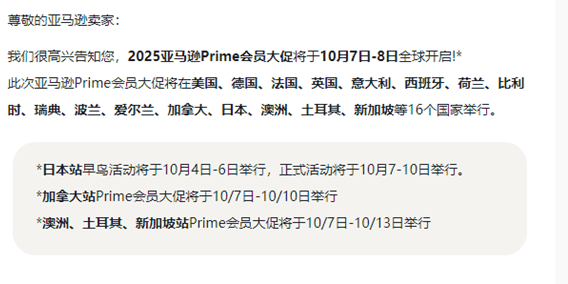
亚马逊秋促遇冷!卖家心更“凉”了
Sou Hu Cai Jing· 2025-10-09 09:23
Core Insights - The Amazon Prime Big Deal Days promotion from October 7 to 8, 2025, has not generated the expected sales boost for sellers, leading to widespread disappointment in the seller community [1][2][3] Group 1: Advertising and Traffic Dynamics - Sellers are facing increased advertising costs with low profit margins, leading to a sentiment of despair among many [2][3] - The auction mechanism for Amazon's internal advertising has become more competitive, with top brands dominating traffic, leaving smaller sellers struggling for visibility and conversion [5][6] - Amazon has resumed limited collaboration with Google Ads in non-U.S. markets, but the overall impact on sales has been minimal, indicating a shift in traffic dynamics [5][6] Group 2: Promotional Timing and Consumer Behavior - The overlap of multiple promotional events, including Prime Day and Back to School, has led to consumer fatigue, making it difficult for the fall promotion to generate significant new purchases [7][8] - Competing promotions from other platforms, such as Temu and Walmart, have further diluted consumer attention during the Amazon fall promotion [7][8] Group 3: Economic Factors and Consumer Sentiment - Economic pressures, including inflation and rising living costs, have led to a decrease in consumer spending expectations, with a projected 5% decline in holiday spending compared to 2024 [10][11] - A significant portion of consumers (84%) plan to reduce overall spending in the coming months, impacting the effectiveness of price promotions during the fall event [10][11] Group 4: Supply and Competition - Chinese sellers now represent over 50% of active sellers on Amazon globally, leading to increased competition and price wars that further compress profit margins [12][14] - The structural competition has transformed the fall promotion into a defensive strategy for many small and medium-sized sellers, focusing on maintaining sales rather than achieving significant growth [14]

新能源及有色金属日报:消费预期较强,碳酸锂盘面偏强运行-20250916
Hua Tai Qi Huo· 2025-09-16 05:22
Report Summary 1. Market Analysis - On September 15, 2025, the main lithium carbonate contract 2511 opened at 71,260 yuan/ton and closed at 72,680 yuan/ton, with a 2.31% change from the previous day's settlement price. The trading volume was 482,790 lots, and the open interest was 309,446 lots, compared to 309,402 lots the previous day. The current basis is 50 yuan/ton (average price of electric carbon - futures). The lithium carbonate warehouse receipts were 38,963 lots, a change of 338 lots from the previous trading day [1]. - According to SMM data, the battery - grade lithium carbonate is priced at 71,300 - 73,600 yuan/ton, with no change from the previous day, and the industrial - grade lithium carbonate is priced at 69,600 - 7,0800 yuan/ton, also unchanged. The price of 6% lithium concentrate is 810 US dollars/ton, a change of 10 US dollars/ton from the previous day. Downstream material factories are generally in a cautious wait - and - see attitude, and market transactions have weakened. However, due to the peak demand season and pre - National Day stockpiling needs, their purchasing willingness is strong when prices are relatively low [1]. - In terms of supply, lithium carbonate produced from spodumene accounts for over 60% of the market supply, while that from lepidolite has dropped to 15%. In September, the market shows a situation where both supply and demand increase, but demand grows faster, and a temporary supply shortage is expected this month [1]. - The weekly production increased by 544 tons to 19,963 tons, with small increases in production from spodumene, mica, and salt lakes. The weekly inventory decreased by 1,580 tons to 138,512 tons. Downstream inventory continued to increase, while inventory in the intermediate links and smelters decreased significantly, indicating good downstream restocking willingness [2]. - According to the National Bureau of Statistics, in August, among 623 products of large - scale industries, 319 had year - on - year production growth. For example, steel production was 122.77 million tons, a 9.7% increase; cement was 148.02 million tons, a 6.2% decrease; ten non - ferrous metals were 6.98 million tons, a 3.8% increase; ethylene was 3.14 million tons, a 10.4% increase; automobile production was 2.752 million vehicles, a 10.5% increase, among which new - energy vehicles were 1.333 million vehicles, a 22.7% increase; power generation was 936.3 billion kWh, a 1.6% increase; and crude oil processing volume was 63.46 million tons, a 7.6% increase [2]. 2. Core View - The futures market showed a strong and volatile trend yesterday, mainly affected by leading companies' upward revision of battery cell shipment expectations. With support from the peak consumption season, the short - term supply - demand pattern is good, inventory is continuously decreasing, and the market has some support. It is expected that the market will fluctuate in the short term. After the resumption of mining production and the weakening of consumption, the market may decline [3]. 3. Strategy - Unilateral: Short - term range trading, sell - hedging on rallies. - Inter - delivery spread: None. - Cross - product: None. - Spot - futures: None. - Options: None [3].