科教产深度融合

Search documents
大湾区大学,正式成立!
DT新材料· 2025-12-07 16:05
Core Viewpoint - The establishment of the Greater Bay Area University marks a significant step towards enhancing research capabilities in science and engineering, focusing on high-level research talent development to meet the demands of future industries [3]. Group 1: Greater Bay Area University - The university is positioned as a "small but refined, high-level research-oriented" institution, concentrating on six key fields: material science, advanced engineering, life sciences, information science and technology, natural sciences, and financial management [3]. - The first batch of undergraduate programs includes mathematics, physics, materials science and engineering, computer science and technology, and industrial engineering, allowing students to explore their interests before specializing [3]. - The university has over 300 research faculty members, all holding PhDs, including 10 academicians from home and abroad, establishing a high-level teaching team [3]. Group 2: Innovation and Collaboration - The university aims to create a "University + Collaborative Innovation Model" by integrating education with major scientific facilities, key research institutions, and leading technology enterprises to foster technological innovation and emerging industry development in the Bay Area [3]. - The university's location in Dongguan, a center for advanced manufacturing in the Guangdong-Hong Kong-Macau Greater Bay Area, positions it strategically for collaboration with local industries [3]. Group 3: Future Industry Expo - The 2026 Future Industry New Materials Expo (FINE) will focus on common needs in future industries such as robotics, automotive, drones, data centers, aerospace, AI, and new energy, featuring six major exhibition areas [1]. - The expo will include sections on lightweight, high-strength, and sustainable materials, advanced batteries, thermal management, and advanced semiconductors, showcasing innovations and facilitating transactions in new materials technology [6].


大湾区大学正式成立!
券商中国· 2025-12-06 09:41
Core Viewpoint - The establishment of the Greater Bay Area University (GBAU) marks a significant step in creating a new type of research-oriented university focused on science and engineering, aiming to cultivate high-quality research talents to meet the region's development needs [1][2]. Group 1: University Establishment and Focus - GBAU is positioned as a "small but refined, high-level research-oriented" institution, concentrating on six key fields: material science, advanced engineering, life sciences, information science and technology, natural sciences, and financial management [1]. - The university received official approval from the Ministry of Education in June 2023 and has already commenced operations with its first cohort of 80 students from 53 high schools across 16 cities in Guangdong [1]. Group 2: Innovative Educational Model - GBAU adopts an innovative educational model where students do not declare majors upon entry, allowing for self-exploration in their first year, with the option to choose from various disciplines starting in their second year [2]. - The university has established a high-caliber faculty team, with over 300 research teachers, all holding PhDs, and more than 70% having international experience [2]. Group 3: Strategic Collaborations and Future Plans - GBAU has formed strategic partnerships with major scientific institutions like the China Spallation Neutron Source and the Songshan Lake Materials Laboratory to enhance technological innovation and talent development [3]. - The university aims to integrate education with industry through innovative models such as "University + Major Scientific Facilities" and "University + Leading Technology Enterprises," supporting the development of new productivity in the Greater Bay Area [3].
大湾区大学正式成立
21世纪经济报道· 2025-12-06 06:13
Core Viewpoint - The establishment of the Greater Bay Area University (GBAU) aims to cultivate high-quality research talents in response to the region's development needs, focusing on six key fields: material science, advanced engineering, life sciences, information technology, natural sciences, and financial management [2]. Group 1: University Establishment and Structure - The GBAU was officially approved by the Ministry of Education on June 19, marking a rapid transition from planning to establishment, with the first cohort of 80 students enrolled from 53 high schools across 16 cities in Guangdong [2]. - The university adopts an innovative educational model, allowing students to explore their interests in the first year before selecting their majors in the second year, with options including mathematics, physics, computer science, materials science, industrial engineering, artificial intelligence, and future robotics [4]. Group 2: Faculty and Research Team - GBAU has assembled a high-level faculty team of over 300 research teachers, all holding PhDs, with more than 70% having overseas study or work experience, including 10 academicians and 78 national-level talents [4]. Group 3: Collaborative Innovation Model - Located in Dongguan, the GBAU is developing a "University + Collaborative Innovation" model, partnering with major scientific facilities and leading enterprises like Huawei and OPPO to enhance technology innovation and talent development [6]. - The university provides each student with academic mentors and industry mentors from leading companies to cater to personalized development needs [6]. Group 4: Future Development and Goals - GBAU aims to integrate education with scientific research and industry, supporting the development of new productive forces in Dongguan and the Greater Bay Area, thereby contributing to technological innovation and emerging industry growth [6].
大湾区大学正式成立!
中国基金报· 2025-12-06 05:03
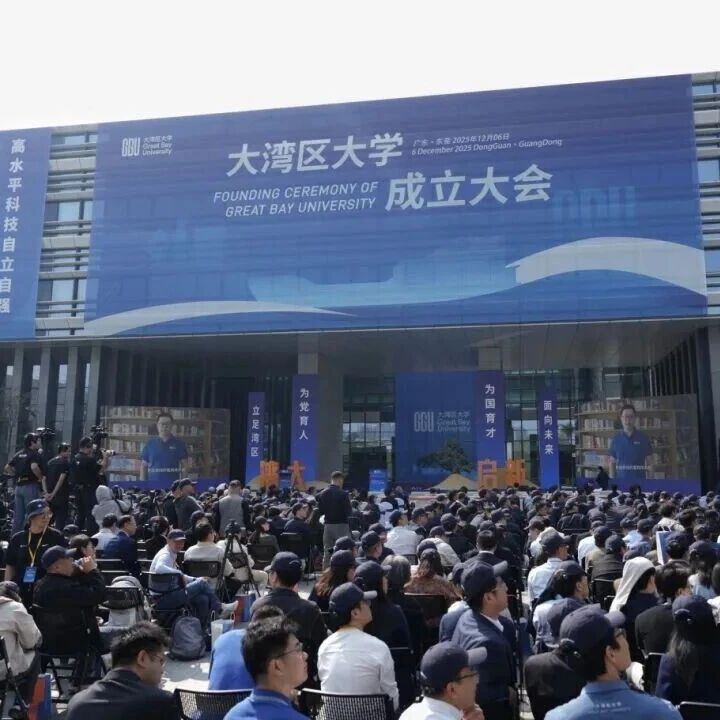
Core Viewpoint - The establishment of the Greater Bay Area University (GBAU) marks a significant step in creating a new type of research-oriented university focused on science and engineering, aiming to cultivate high-quality research talents to meet the demands of the Greater Bay Area [2][4]. Group 1: University Establishment and Structure - GBAU was officially approved by the Ministry of Education in June 2023, showcasing the rapid development pace referred to as "Greater Bay Area speed" [4]. - The university has commenced operations with its first cohort of 80 students from 53 high schools across 16 cities in Guangdong [4]. - GBAU offers five undergraduate programs initially, including Mathematics, Physics, Materials Science, Computer Science, and Industrial Engineering, allowing students to explore their interests before declaring a major [5]. Group 2: Faculty and Research Collaboration - The university has assembled a high-level faculty team of over 300 research teachers, all holding PhDs, with more than 70% having overseas experience [5]. - GBAU is located in Dongguan, near major scientific facilities and leading companies like Huawei, fostering a collaborative innovation model [5]. - Strategic partnerships have been established with major scientific institutions to enhance technology innovation and talent development [6]. Group 3: Future Development and Goals - GBAU aims to integrate education with scientific research and industry, supporting the development of new productive forces in the Greater Bay Area [6]. - The university plans to explore innovative educational models that combine university resources with major scientific installations and leading technology enterprises [6].
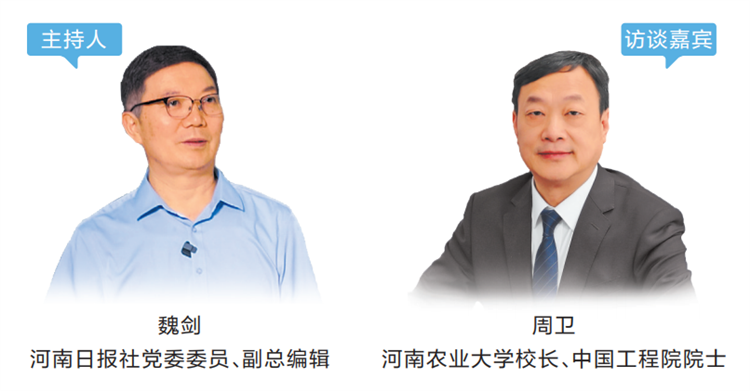
总编有约·“两高四着力”大家谈丨畅通教育、科技、人才良性循环
He Nan Ri Bao· 2025-07-17 23:31
Core Viewpoint - The integration of education, technology, and talent development is a strategic requirement emphasized in the 20th National Congress report and the 3rd Plenary Session of the 20th Central Committee, highlighting the need for a collaborative approach to enhance innovation and productivity in the agricultural sector [2] Group 1: Integration Strategies - A virtuous cycle mechanism among education, technology, and talent is essential, requiring a systematic approach and top-level design for policy formulation and resource allocation [2] - The current higher education system faces challenges such as an inadequate evaluation system, inefficient results transformation, talent supply-demand mismatch, and insufficient collaborative innovation [2][3] Group 2: Initiatives by Henan Agricultural University - Henan Agricultural University is focusing on deepening reforms in the agricultural sector by optimizing professional settings and developing emerging interdisciplinary programs like smart agriculture and food processing [3] - The university has initiated a "famous schools and enterprises integration innovation strategy" to promote collaborative education and resource integration [3] - The establishment of the "China Modern Agriculture Joint Graduate School" aims to create an innovative platform for integrated development in education, technology, and talent [3] Group 3: Talent Development Efforts - The university emphasizes talent as a primary support, having introduced 3 academicians from the Chinese Academy of Engineering and cultivated 1, ranking third among agricultural universities in China [4] - A talent recruitment campaign named "Hundred Talents Gathering at Agricultural University" has been launched, focusing on attracting high-level talents through various strategic approaches [4] - The university aims to align its talent cultivation with national strategies and industry needs, enhancing collaboration with leading enterprises and establishing research institutes and laboratories [4]